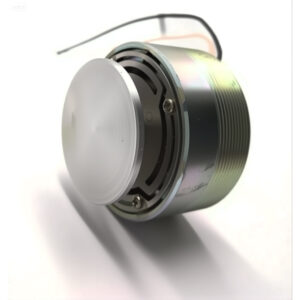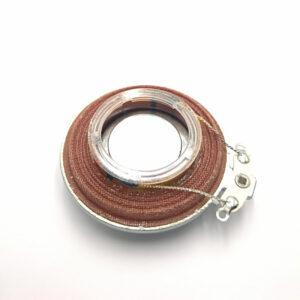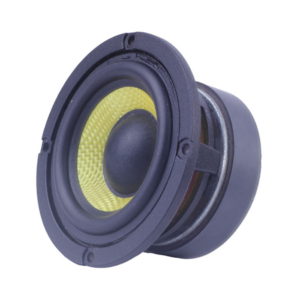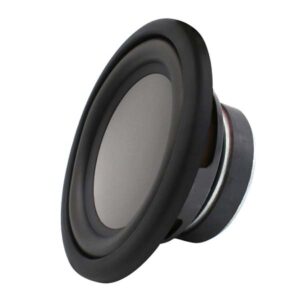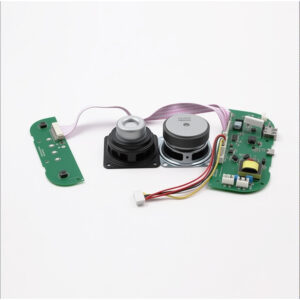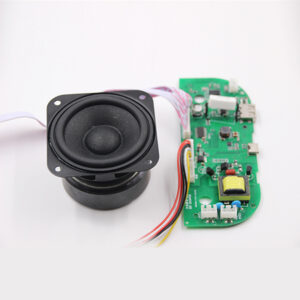
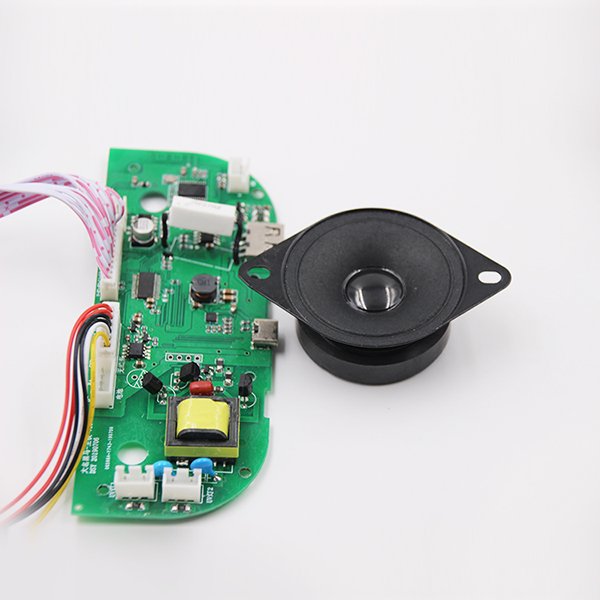
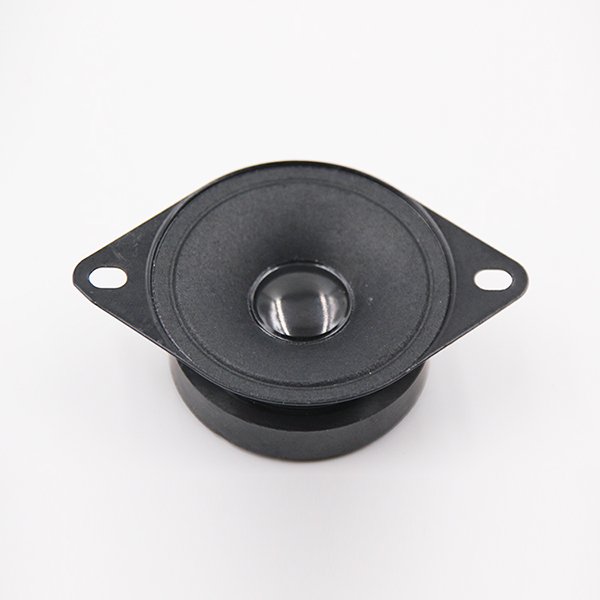
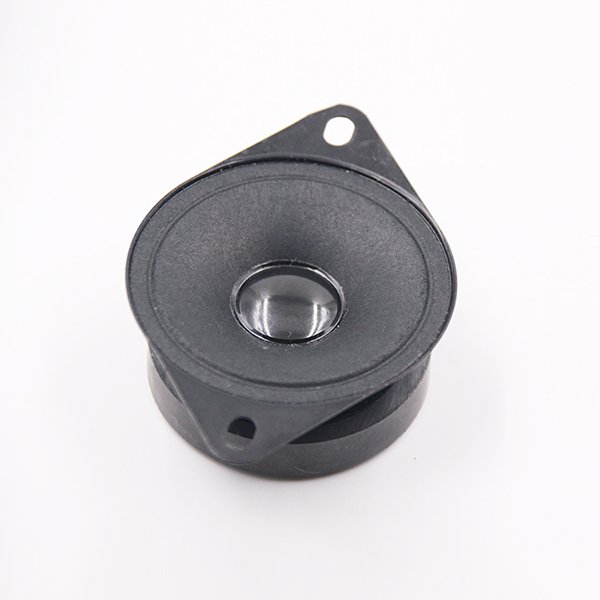
Tweeter rated 4, 6, 8, 16, 32 or 64 Ω / 0.5–100 W, specified by the cavity it has to work in and tuned for audio equipment brands (ZEH-953).
Overview
Dome material sets the character more than the magnet does: silk or PEI domes damp their first mode and are forgiving of a shallow crossover, while aluminium and titanium domes push the breakup above 25 kHz but need a steeper filter. ZEH-953 uses a ferrofluid-filled gap on the 4, 6, 8, 16, 32 or 64 Ω coil, which both centres the coil and conducts heat to the top plate; the fluid’s viscosity falls with temperature, so long-term power handling depends on the magnet’s thermal mass rather than on the fluid alone.
Specifications
| Model | ZEH-953 |
|---|---|
| Product type | Tweeter (custom build) |
| Rated power | 0.5–100 W |
| Nominal impedance | 4 Ω / 6 Ω / 8 Ω / 16 Ω / 32 Ω / 64 Ω |
| Design feature | PCB / SMD termination |
| Termination | Solder pads, lead wires or connector — to drawing |
| Customisation | Termination, dimensions, housing and tuning to your drawing |
| Compliance | RoHS 2011/65/EU and REACH; declarations with each shipment |
Design notes for audio equipment brands
Audio-equipment brands specify by ear and then by measurement, so a dome tweeter here has to be repeatable from lot to lot. Sensitivity binning, a documented break-in period and a published impedance curve are what make a driver usable in a product that is reviewed by ear. The enclosure, the crossover and the damping are designed together with the driver; a part that measures well on a baffle but shifts 3 dB in the box is a part that will be rejected at the prototype stage.
Typical applications
- Bookshelf and monitor speakers
- Portable and party speakers
- Instrument and PA cabinets
- Custom install and ceiling audio
Customisation and verification
The build is defined by your drawing rather than by a stock list. Impedance, termination, magnet grade, diaphragm material and housing are fixed at sample approval, then held by a controlled BOM so that a later order does not drift acoustically. Units are 100 % swept, sensitivity-binned where the product needs it, and packed with the test data for the lot.
FAQ
What crossover frequency should I use?
2.5–4 kHz for a compact dome at 0.5–100 W; use a second-order or steeper high-pass, and never run the tweeter full-range.
Is ferrofluid reliable long term?
Yes, when the gap is sealed and the fluid is specified for the temperature range. It thickens at −30 °C, which raises output slightly at low temperature, and thins at +80 °C.
Can the tweeter be built into a coaxial assembly?
Yes. The dome, magnet and waveguide can be combined with a mid-bass driver on a shared chassis, with the crossover mounted on the rear terminal.
Related pages
tweeters · ZEH-946 · ZEH-P2998 · High Audio Frequency Speaker Design Guide