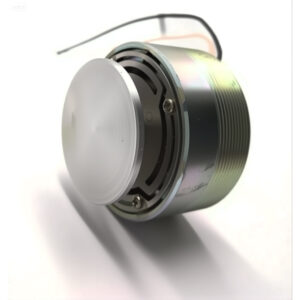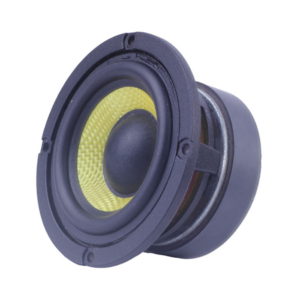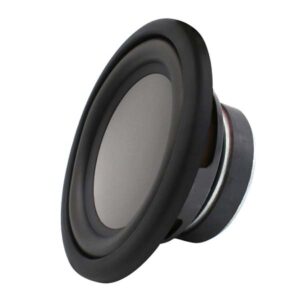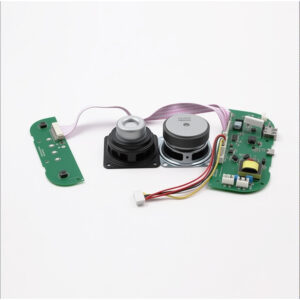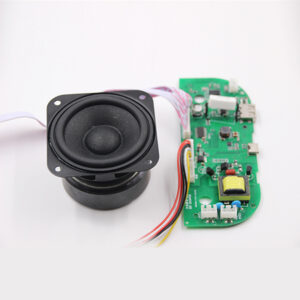
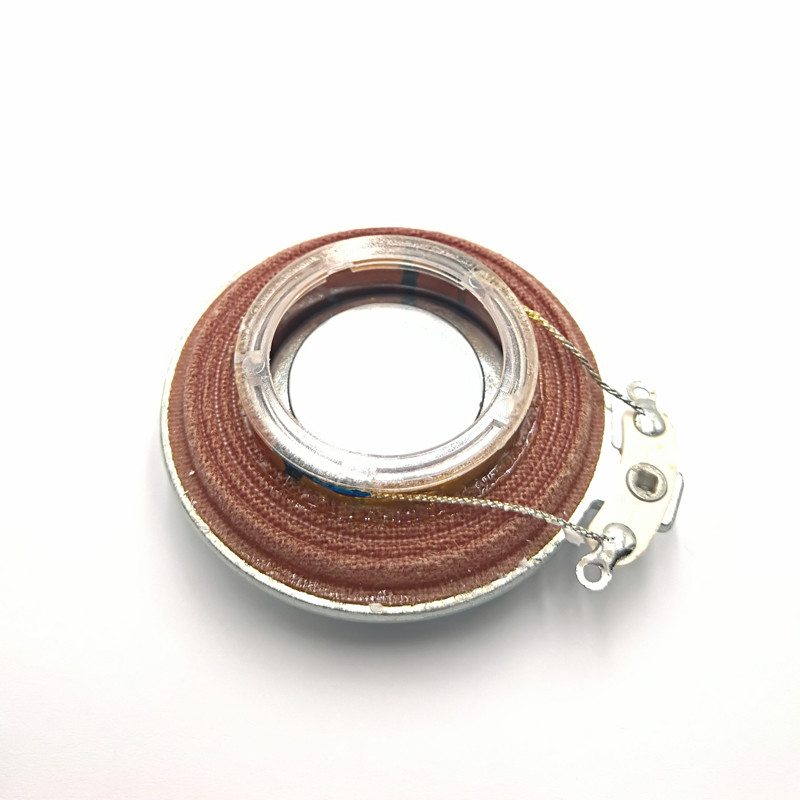
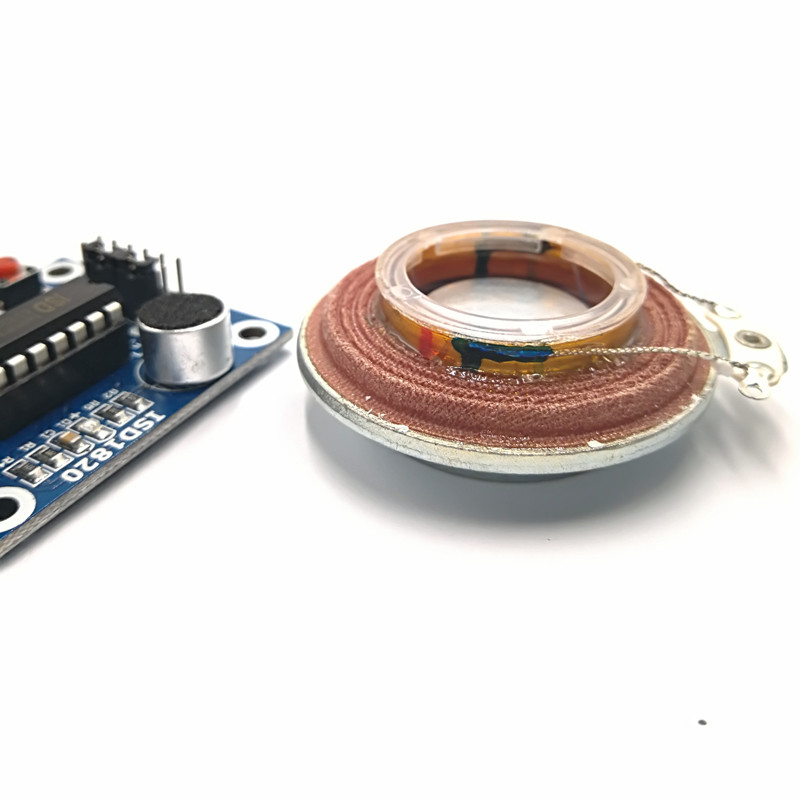
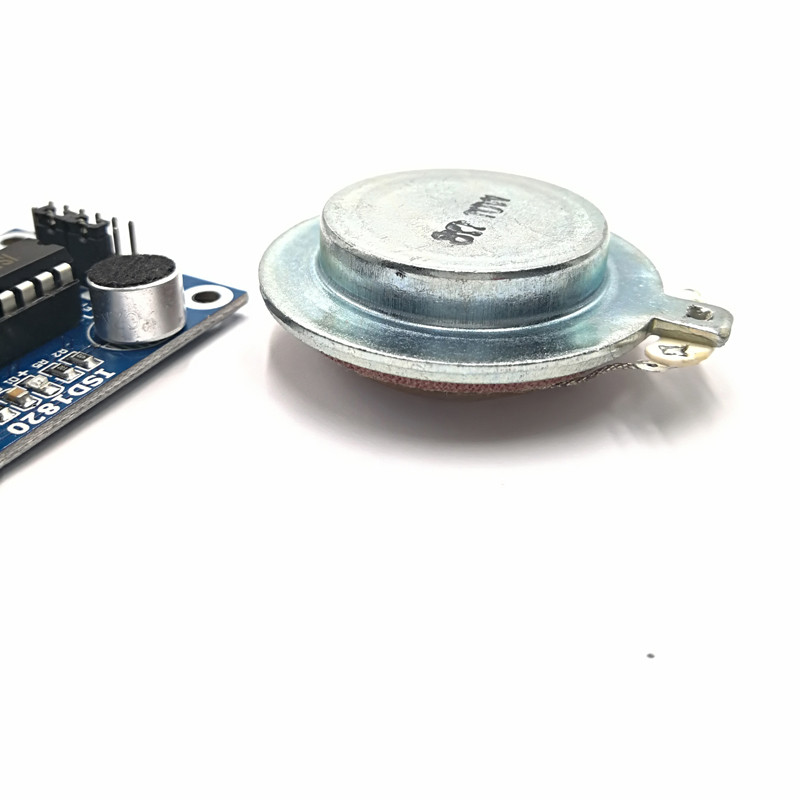
34 mm round exciter rated 4, 8, 6, 16, 32 or 64 Ω / 5–100 W, specified by the cavity it has to work in and tuned for portable consumer audio (ZEH-P354).
Overview
The practical bandwidth of a panel exciter is 150 Hz to 10 kHz, with a ragged response that is smoothed by distributed-mode damping. Adding a constrained-layer damper or a rib pattern to the panel flattens the 300–800 Hz region by 4–6 dB. ZEH-P354 is normally combined with a 4–8 Ω amplifier of 10–30 W and a high-pass at 120–150 Hz to keep the panel from buzzing at its fundamental.
A 34mm frame with a 4, 8, 6, 16, 32 or 64 Ω coil draws roughly 1.8 A from a 3.7 V rail at full drive, which fixes the supply and limiter settings before acoustics are considered. The cavity behind a 34mm part is normally 0.3–2 cm³; send the housing drawing and the tuning is confirmed before tooling.
Specifications
| Model | ZEH-P354 |
|---|---|
| Product type | Exciter (custom build) |
| Nominal size | 34 mm, round frame |
| Rated power | 5–100 W |
| Nominal impedance | 4 Ω / 8 Ω / 6 Ω / 16 Ω / 32 Ω / 64 Ω |
| Termination | Solder pads, lead wires or connector — to drawing |
| Customisation | Termination, dimensions, housing and tuning to your drawing |
| Compliance | RoHS 2011/65/EU and REACH; declarations with each shipment |
Design notes for portable consumer audio
Portable products trade bandwidth for size and battery life. A surface exciter in a Bluetooth speaker or a pair of headphones is expected to deliver 100 Hz–15 kHz from a small cavity, and the amplifier’s rail is usually the limiting factor rather than the driver. The practical design question is efficiency: a 4 Ω load extracts more output from a 3.7 V rail than an 8 Ω one, but it also doubles the current and shortens runtime, so the impedance is chosen together with the battery and the DSP’s limiter settings.
Typical applications
- Portable Bluetooth speakers
- Headphones and headsets
- Soundbars and TV audio
- Gaming and VR audio
Customisation and verification
Customisation covers the electrical and the mechanical side together: coil impedance, lead and connector, gasket height, mounting interface and finish. First article is measured against the drawing before mass production, and subsequent lots are compared with the approved sample by swept response and impedance. RoHS and REACH declarations are issued with each shipment.
FAQ
Why does my panel buzz at high volume?
The panel is being driven at a structural mode. Add damping, stiffen the mounting points, or raise the high-pass filter to 150 Hz.
What adhesive should be used?
Structural acrylic or epoxy for metal panels, and a high-tack double-sided tape for painted plastics. Surface energy below 34 mN/m needs a primer.
Can ZEH-P354 be used on glass?
Yes, with a compliant adhesive and a rigid frame; glass is stiff but heavy, so output below 250 Hz will be limited by mass.
Related pages
vibration exciters · ZEH-P360 · ZEH-P4330 · High Audio Frequency Speaker Design Guide