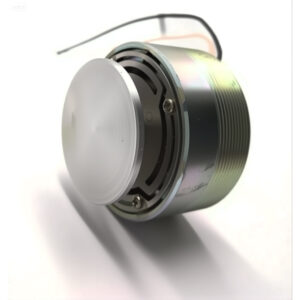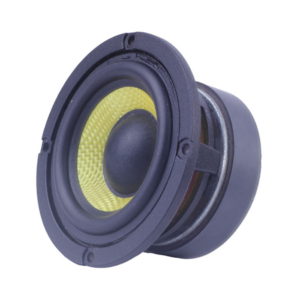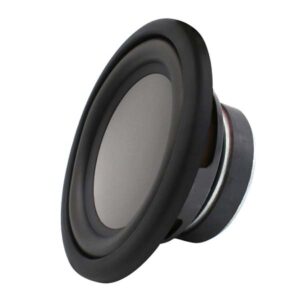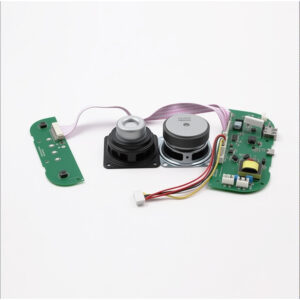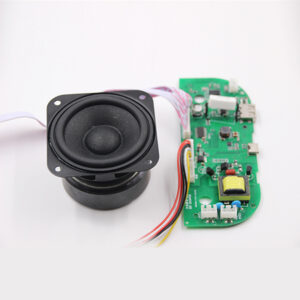
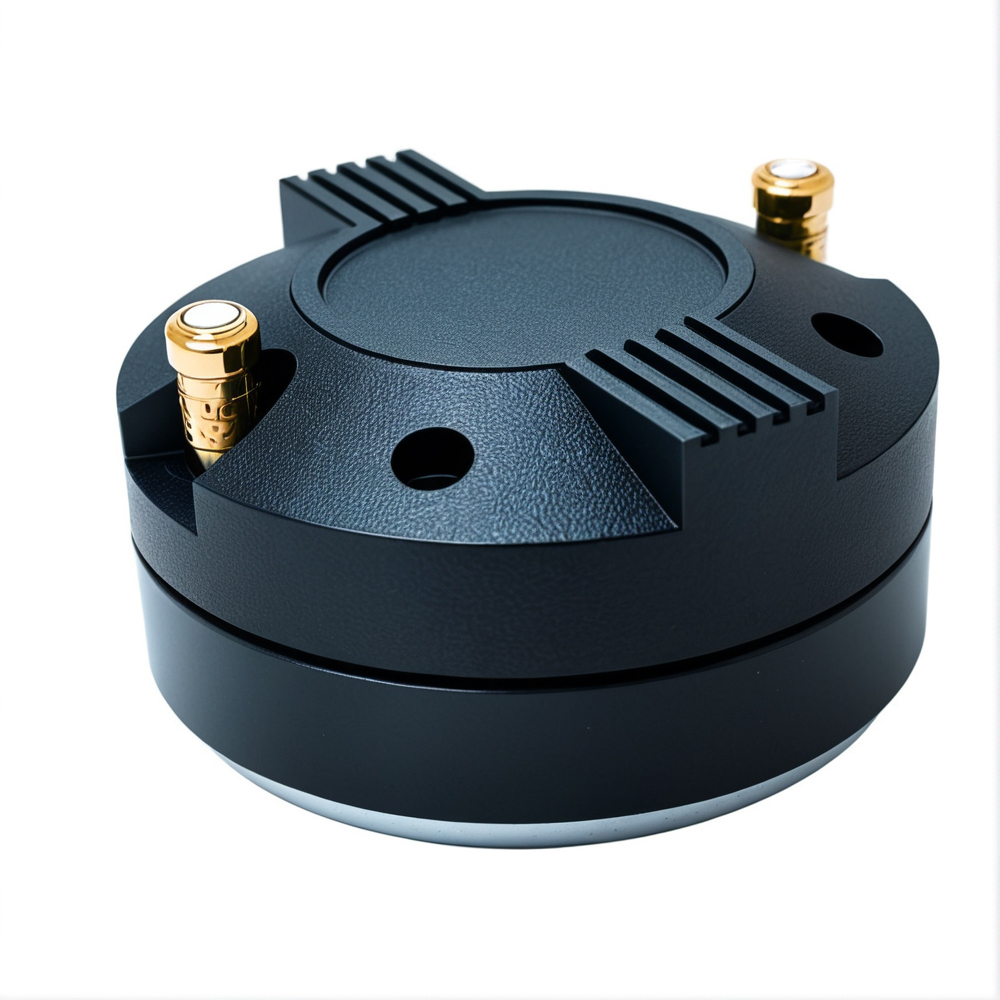
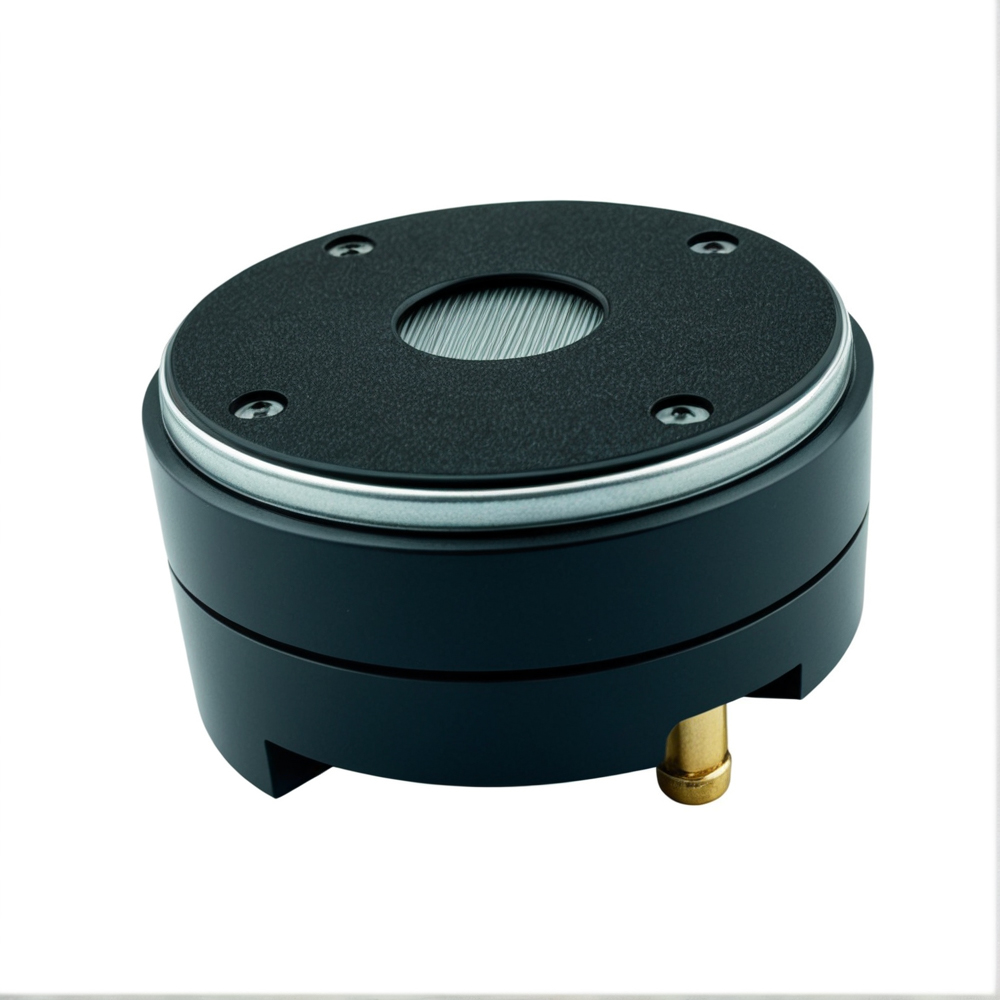
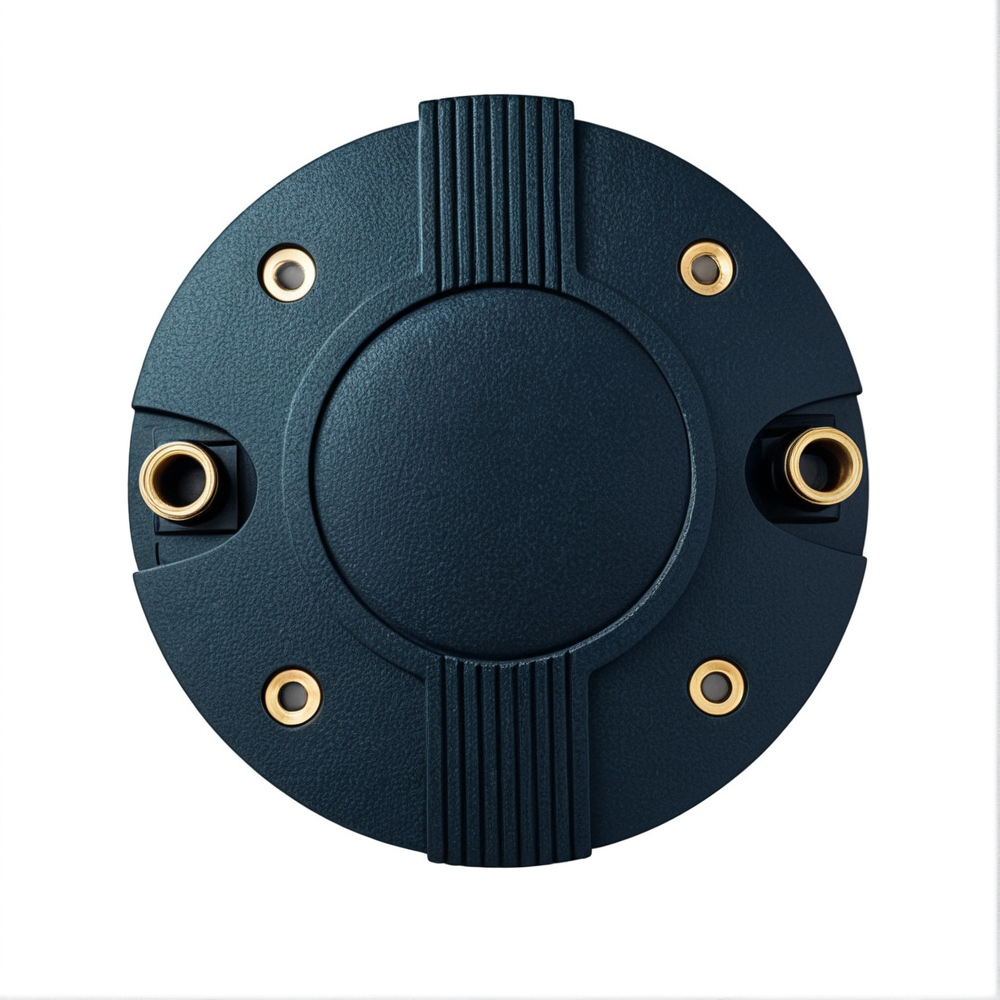
Exciter at 4, 6, 8, 16, 32 or 64 Ω / 20–0.5 W for portable consumer audio, supplied as a custom build with your connector, lead length and mounting detail (ZEH-P4330).
Overview
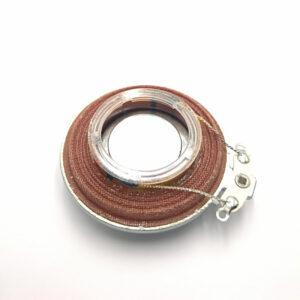
Because there is no cone surround, the exciter’s compliance comes from its own suspension and from the adhesive joint to the panel. A 0.2 mm bond-line variation shifts the resonance by 10–15 %, so the mounting jig matters as much as the part. ZEH-P4330 uses a neodymium motor to keep moving mass low; the double-sided tape or structural adhesive is selected for the panel material — ABS, PC-ABS, aluminium or glass — because peel strength differs sharply between them.
Specifications
| Model | ZEH-P4330 |
|---|---|
| Product type | Exciter (custom build) |
| Rated power | 20–0.5 W |
| Nominal impedance | 4 Ω / 6 Ω / 8 Ω / 16 Ω / 32 Ω / 64 Ω |
| Design feature | Metal frame |
| Termination | Solder pads, lead wires or connector — to drawing |
| Customisation | Termination, dimensions, housing and tuning to your drawing |
| Compliance | RoHS 2011/65/EU and REACH; declarations with each shipment |
Design notes for portable consumer audio
Portable products trade bandwidth for size and battery life. A surface exciter in a Bluetooth speaker or a pair of headphones is expected to deliver 100 Hz–15 kHz from a small cavity, and the amplifier’s rail is usually the limiting factor rather than the driver. The practical design question is efficiency: a 4 Ω load extracts more output from a 3.7 V rail than an 8 Ω one, but it also doubles the current and shortens runtime, so the impedance is chosen together with the battery and the DSP’s limiter settings.
Typical applications
- Portable Bluetooth speakers
- Headphones and headsets
- Soundbars and TV audio
- Gaming and VR audio
Customisation and verification
The build is defined by your drawing rather than by a stock list. Impedance, termination, magnet grade, diaphragm material and housing are fixed at sample approval, then held by a controlled BOM so that a later order does not drift acoustically. Units are 100 % swept, sensitivity-binned where the product needs it, and packed with the test data for the lot.
FAQ
Why does my panel buzz at high volume?
The panel is being driven at a structural mode. Add damping, stiffen the mounting points, or raise the high-pass filter to 150 Hz.
What adhesive should be used?
Structural acrylic or epoxy for metal panels, and a high-tack double-sided tape for painted plastics. Surface energy below 34 mN/m needs a primer.
Can ZEH-P4330 be used on glass?
Yes, with a compliant adhesive and a rigid frame; glass is stiff but heavy, so output below 250 Hz will be limited by mass.
Related pages
vibration exciters · ZEH-379 · ZEH-P354 · High Audio Frequency Speaker Design Guide