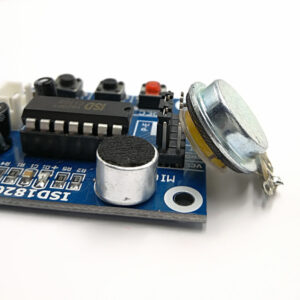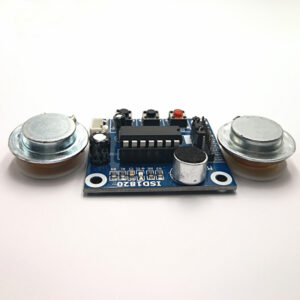
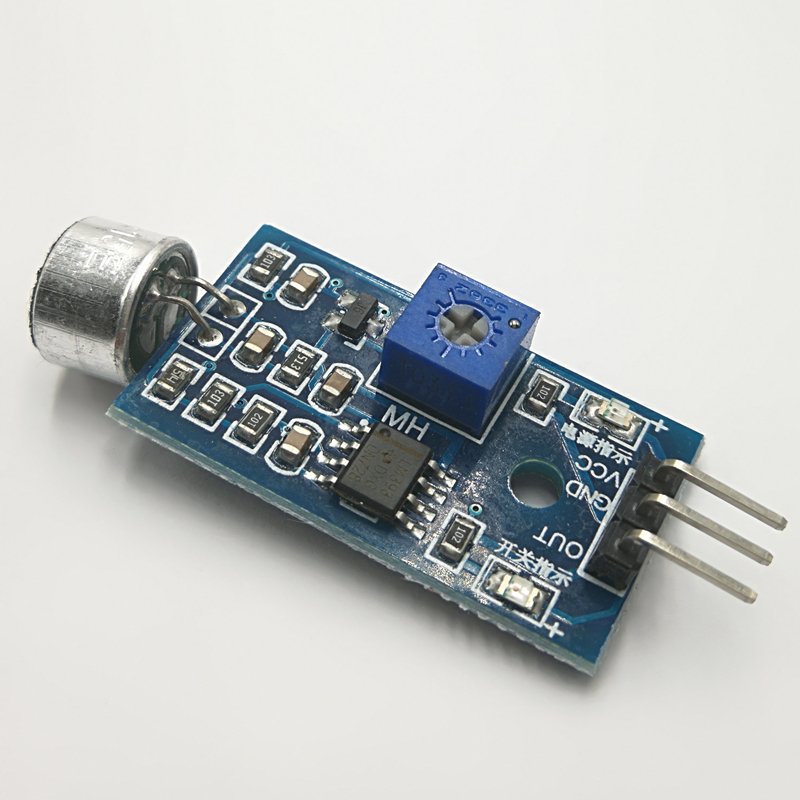
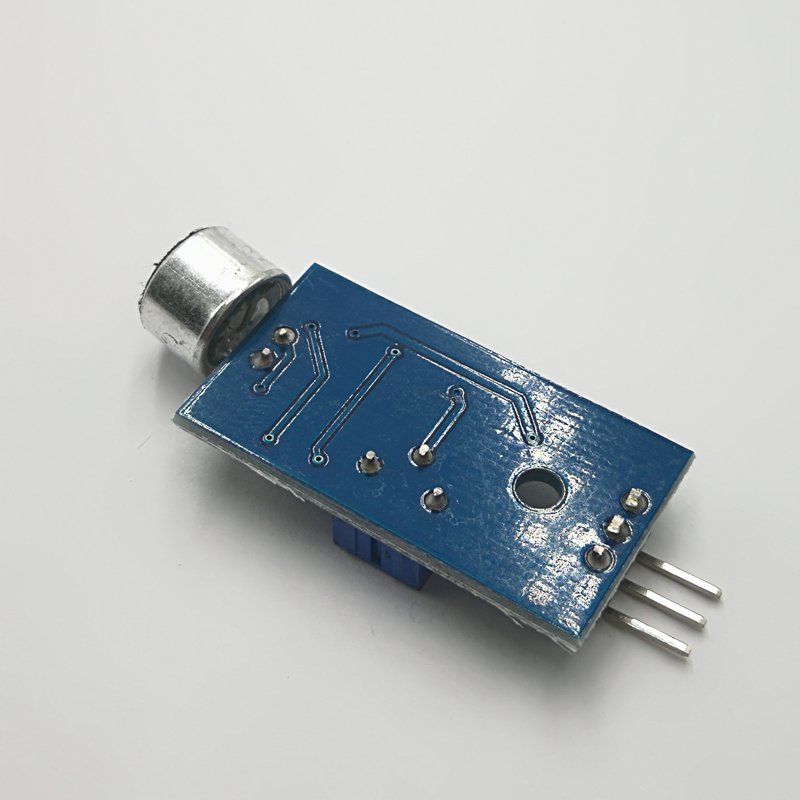
6 mm electret microphone for smart-home and voice products — omnidirectional capsule with sealed rear port, defined front cavity and sensitivity binned to the project (ZEH-MIC-6027001209).
Overview
The JFET’s gate sits at the capsule, so the signal is buffered before it leaves the housing — that is what makes an ECM tolerant of long unshielded leads in a voice product. The trade-off is a maximum sound pressure level around 110–120 dB SPL at 1 % THD, above which the JFET clips; for loud environments a MEMS capsule with a higher AOP is the better choice. ZEH-MIC-6027001209 is sealed at the rear port, so the port depth and the front cavity set the high-frequency lift that gives speech its presence.
Sensitivity is binned before packing; a 3 dB spread between capsules in a stereo pair is audible as an image shift, so arrays are supplied from a single bin.
Specifications
| Model | ZEH-MIC-6027001209 |
|---|---|
| Product type | Electret Microphone |
| Capsule size | 6 mm |
| Directivity | Omnidirectional |
| Output | Analogue (JFET buffered) |
| Sensitivity | −38 dB ±3 dB (0 dB = 1 V/Pa, 1 kHz) |
| Supply | 1–10 V via bias resistor |
| Termination | Solder pads or lead wires — to drawing |
| Customisation | Termination, dimensions, housing and tuning to your drawing |
| Compliance | RoHS 2011/65/EU and REACH; declarations with each shipment |
Design notes for smart-home and voice products
Always-on voice products need a transducer that stays linear at conversation distance and does not colour speech. A electret condenser microphone in a smart speaker or a wall panel is mounted into a moulded cavity whose volume is fixed by the industrial design, so the tuning is done by the cavity and the gasket rather than by the driver alone. Far-field capture depends on signal-to-noise ratio at the port, and playback quality depends on how much the housing resonates — a 2 mm wall will buzz at 300–500 Hz long before the driver runs out of excursion.
Typical applications
- Smart speakers and displays
- Voice-assistant wall panels
- Doorbells and intercoms
- Robot vacuum voice prompts
Customisation and verification
The build is defined by your drawing rather than by a stock list. Impedance, termination, magnet grade, diaphragm material and housing are fixed at sample approval, then held by a controlled BOM so that a later order does not drift acoustically. Units are 100 % swept, sensitivity-binned where the product needs it, and packed with the test data for the lot.
FAQ
What does −38 dB sensitivity mean?
It is the output voltage for a 1 Pa (94 dB SPL) input at 1 kHz, referenced to 1 V. −38 dB equals about 12.6 mV/Pa.
Can ZEH-MIC-6027001209 run from a 3.3 V rail?
Yes. The capsule needs 1–10 V through a bias resistor; 3.3 V is inside the range, and sensitivity falls only slightly at the low end.
How do I reduce wind noise?
Use a rear-sealed capsule with a defined front port, add a mesh or foam windscreen, and high-pass the signal below 100 Hz in the DSP.
Related pages
electret condenser microphones · ZEH-MIC-9767005006 · ZEH-MIC-97450103 · Custom Microphone Supplier: From Design to Delivery for Consumer Elect