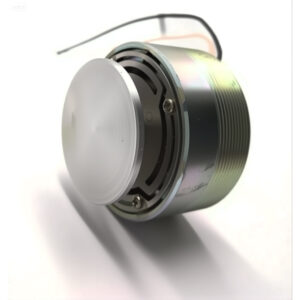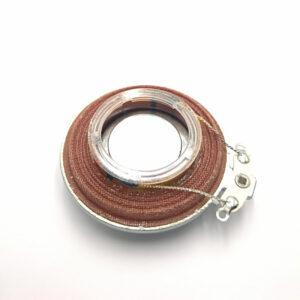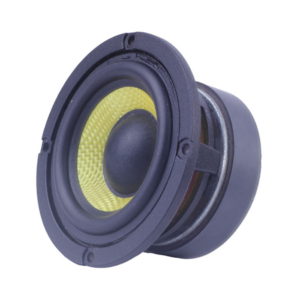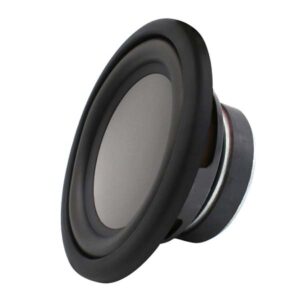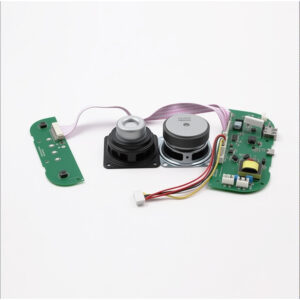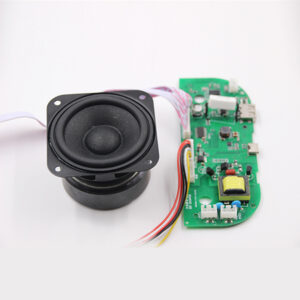
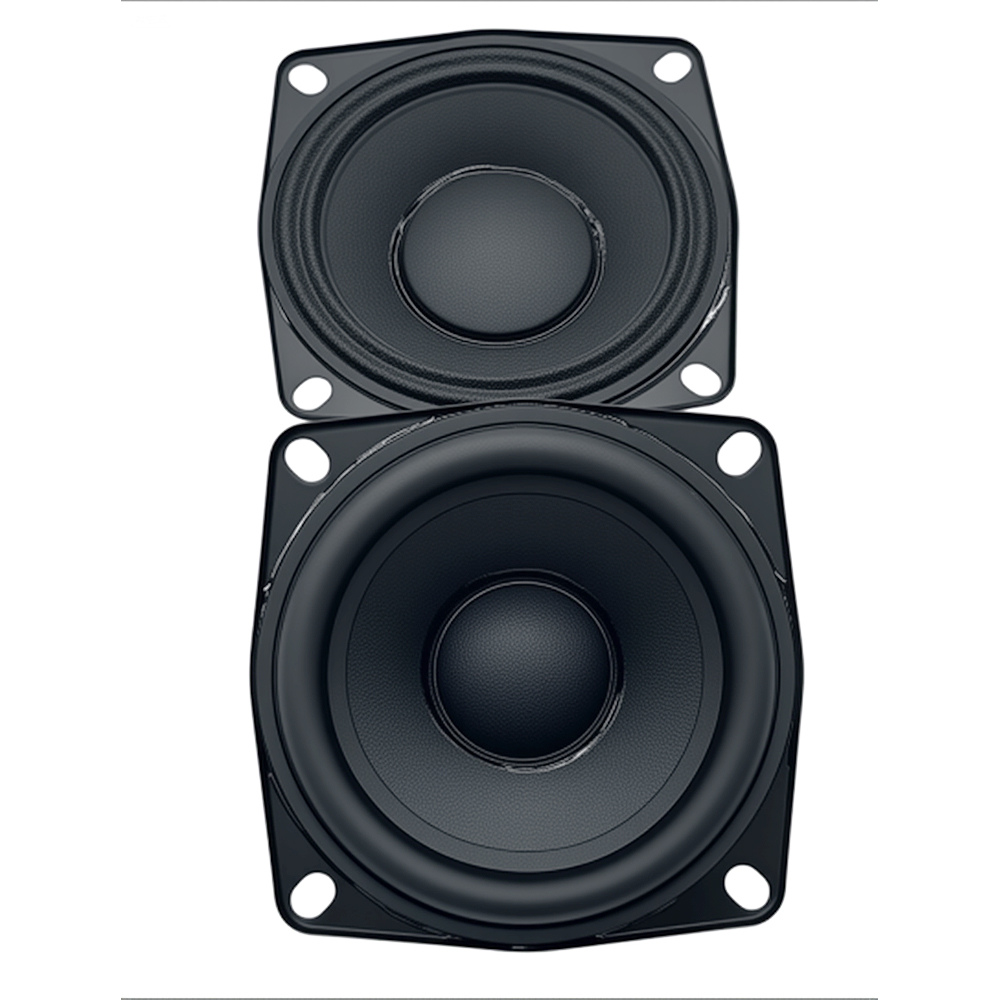
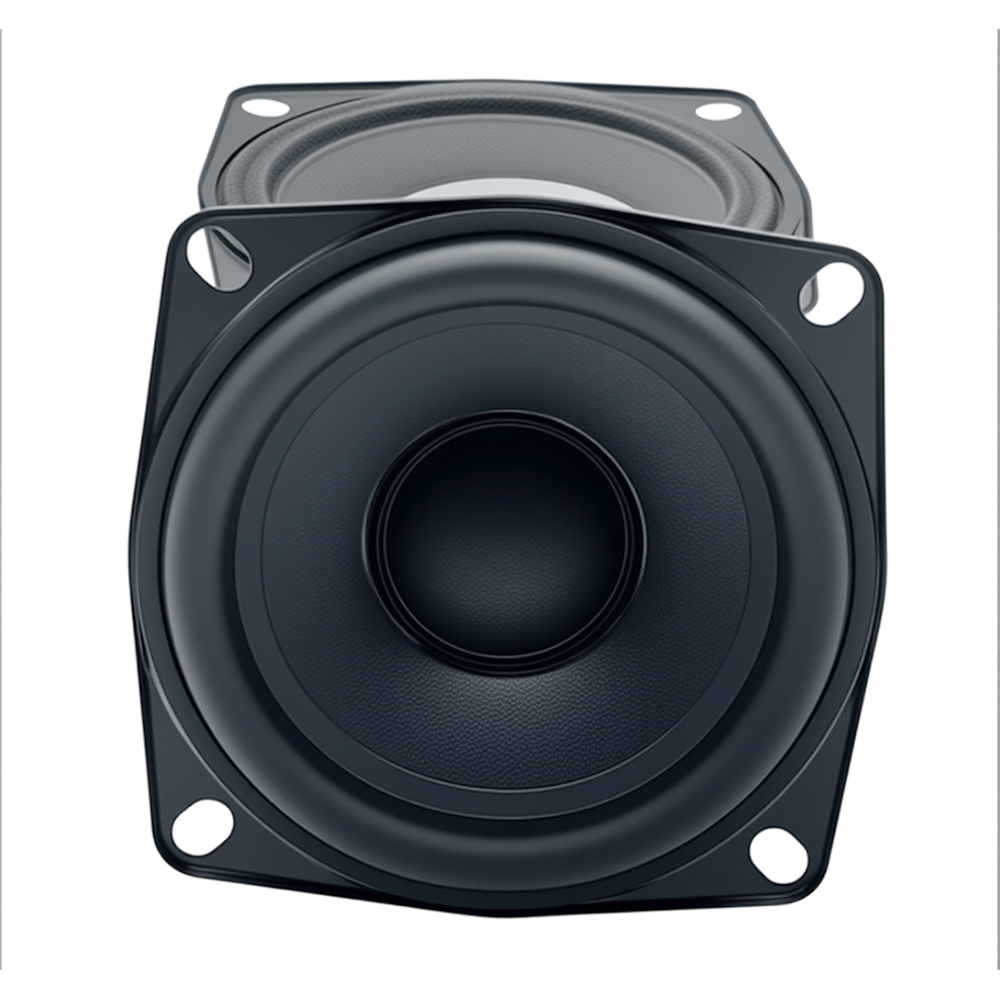
Square full range speaker at 4, 6, 8, 16, 32 or 64 Ω / 0.5–100 W for portable consumer audio, supplied as a custom build with your connector, lead length and mounting detail (ZEH-P2215).
Overview
A full-range driver removes the crossover, and with it the phase rotation and the impedance dip that a two-way design introduces around the crossover point. ZEH-P2215 covers roughly 150 Hz to 18 kHz in a compact frame, and the practical limit is directivity rather than bandwidth: once the cone diameter exceeds about 50 mm, output above 4 kHz narrows into a beam, so the listening axis has to be defined before the driver is chosen. With impedance options of 4, 6, 8, 16, 32 or 64 Ω, the same motor can be matched to a 5 V USB rail or to a 12 V automotive bus without changing the mechanical design.
Specifications
| Model | ZEH-P2215 |
|---|---|
| Product type | Full Range Speaker (custom build) |
| Rated power | 0.5–100 W |
| Nominal impedance | 4 Ω / 6 Ω / 8 Ω / 16 Ω / 32 Ω / 64 Ω |
| Termination | Solder pads, lead wires or connector — to drawing |
| Customisation | Termination, dimensions, housing and tuning to your drawing |
| Compliance | RoHS 2011/65/EU and REACH; declarations with each shipment |
Design notes for portable consumer audio
Portable products trade bandwidth for size and battery life. A full-range driver in a Bluetooth speaker or a pair of headphones is expected to deliver 100 Hz–15 kHz from a small cavity, and the amplifier’s rail is usually the limiting factor rather than the driver. The practical design question is efficiency: a 4 Ω load extracts more output from a 3.7 V rail than an 8 Ω one, but it also doubles the current and shortens runtime, so the impedance is chosen together with the battery and the DSP’s limiter settings.
Typical applications
- Portable Bluetooth speakers
- Headphones and headsets
- Soundbars and TV audio
- Gaming and VR audio
Customisation and verification
Every unit is built to a drawing: impedance, lead length, connector series, mounting bosses and the rear-cavity gasket are project-specific. Samples from existing tooling are typically ready in 7–10 days, and new tooling adds 25–35 days. Production parts are checked with a frequency sweep and an impedance curve against the approved sample, and the inspection record travels with the shipment.
FAQ
Do I need a crossover for a full-range driver?
Usually only a first-order high-pass at or below the box tuning to limit excursion, plus optional baffle-step correction. A full crossover at 3–4 kHz defeats the purpose of a single driver.
Why is 4 ohm louder than 8 ohm on the same amplifier?
For a fixed output voltage a 4 Ω load draws twice the current, so the amplifier delivers about 3 dB more power. The driver itself is not more efficient; sensitivity in dB/W/m is comparable.
What enclosure volume does ZEH-P2215 need?
Between 0.5 and 2 litres sealed for the compact class, depending on the target cut-off. Send us the internal dimensions and we will return a simulated response before tooling.
Related pages
full-range speakers · ZEH-P2225 · ZEH-P2209 · 4 Ohm vs 8 Ohm Speakers Full Engineering Guide