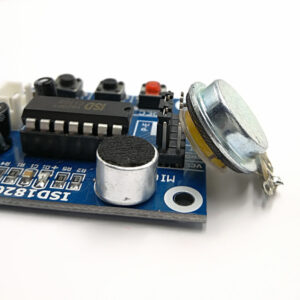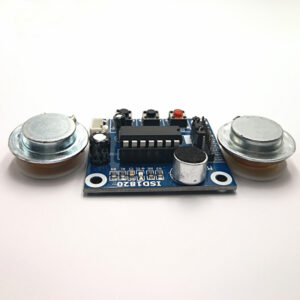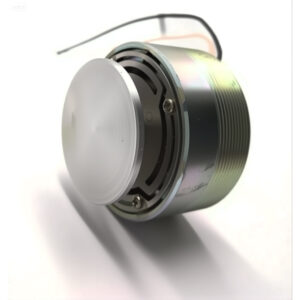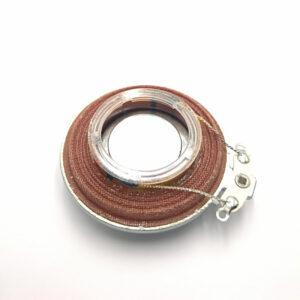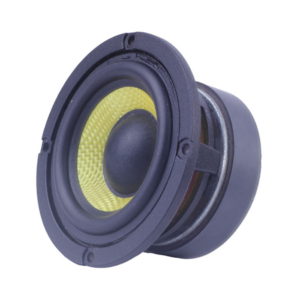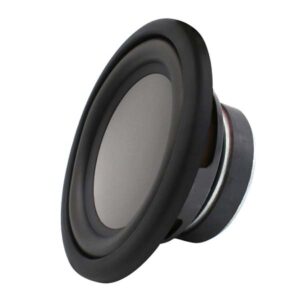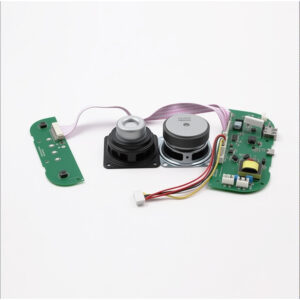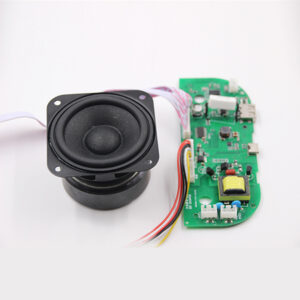
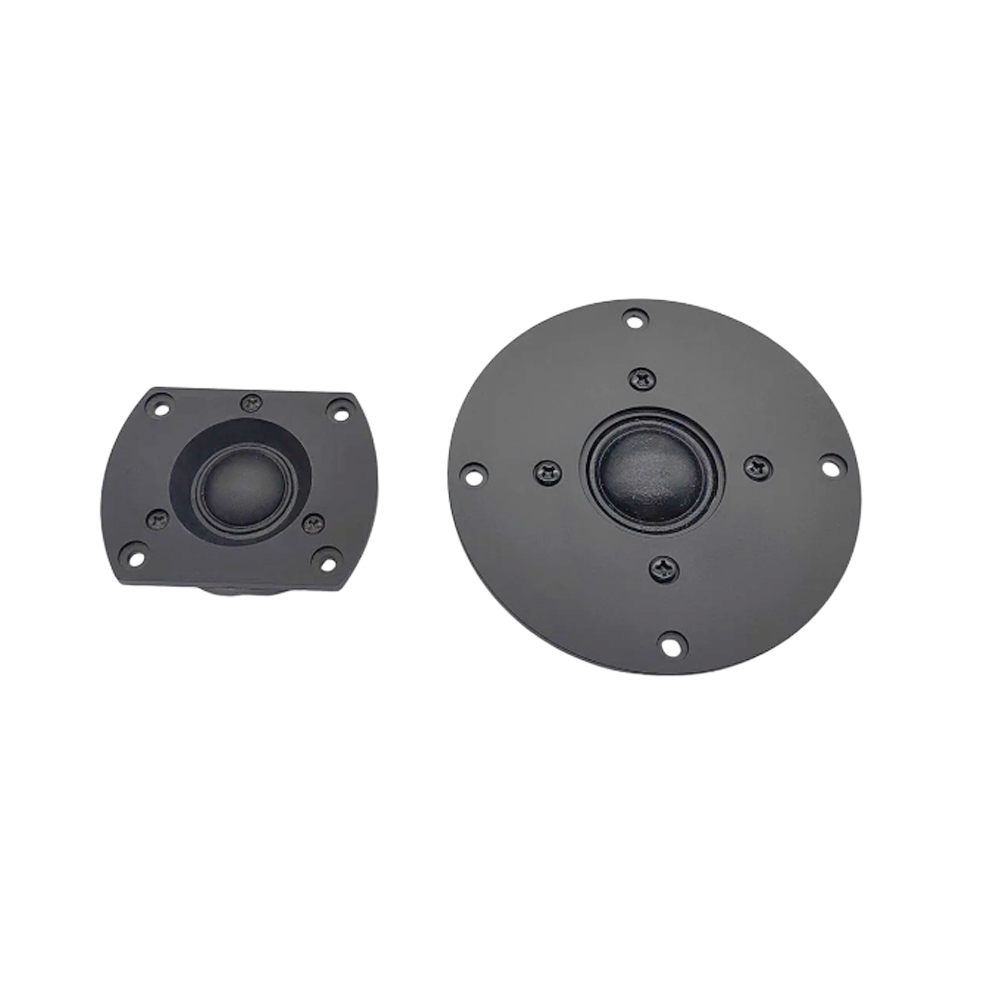
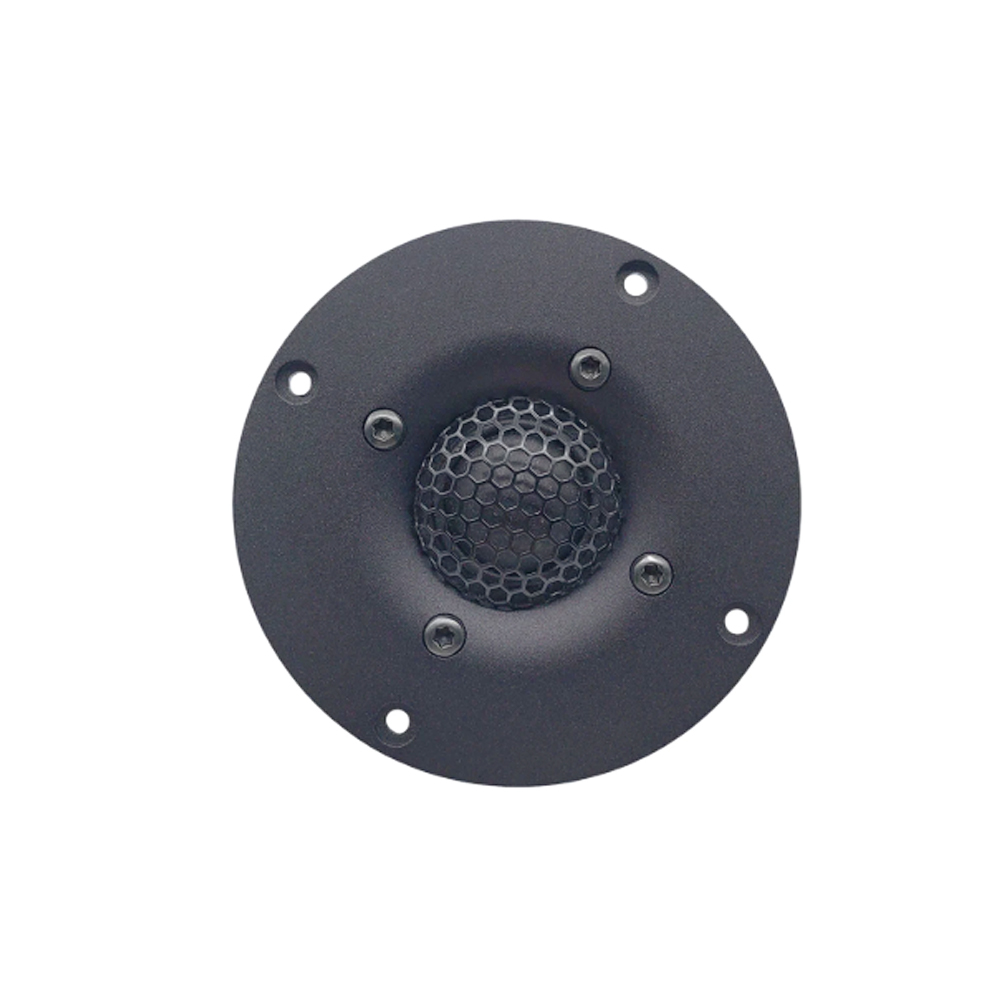
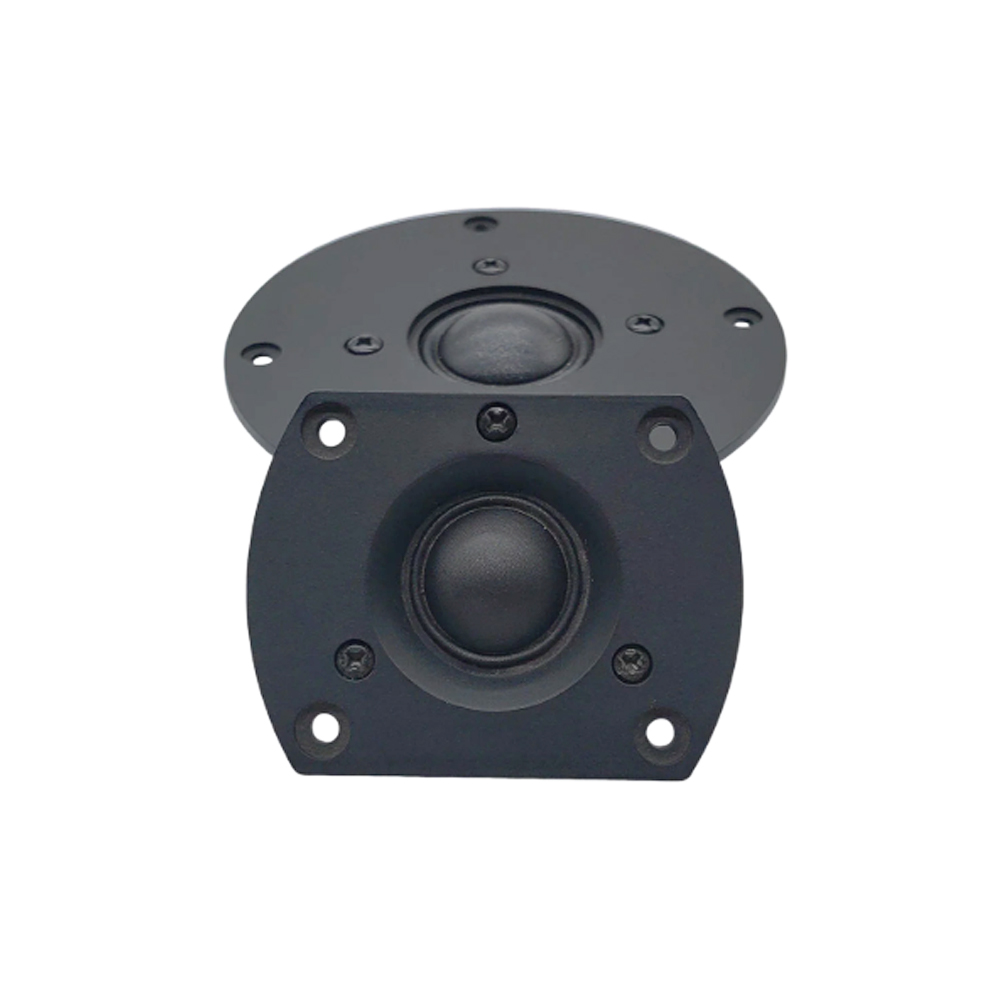
Tweeter rated 4, 6, 8, 16, 32 or 64 Ω / 0.5–100 W, specified by the cavity it has to work in and tuned for audio equipment brands (ZEH-P2144).
Overview
Off-axis behaviour matters more for a tweeter than on-axis response, because the listener is rarely on the design axis. A compact dome starts to narrow above 12 kHz; a short waveguide in front of ZEH-P2144 widens the ±30° window by roughly one octave. When the tweeter is mounted in a pillar or a coaxial assembly, keep at least 8 mm of clear space around the dome so that the waveguide is not short-circuited by the surrounding trim.
Specifications
| Model | ZEH-P2144 |
|---|---|
| Product type | Tweeter (custom build) |
| Rated power | 0.5–100 W |
| Nominal impedance | 4 Ω / 6 Ω / 8 Ω / 16 Ω / 32 Ω / 64 Ω |
| Termination | Solder pads, lead wires or connector — to drawing |
| Customisation | Termination, dimensions, housing and tuning to your drawing |
| Compliance | RoHS 2011/65/EU and REACH; declarations with each shipment |
Design notes for audio equipment brands
Audio-equipment brands specify by ear and then by measurement, so a dome tweeter here has to be repeatable from lot to lot. Sensitivity binning, a documented break-in period and a published impedance curve are what make a driver usable in a product that is reviewed by ear. The enclosure, the crossover and the damping are designed together with the driver; a part that measures well on a baffle but shifts 3 dB in the box is a part that will be rejected at the prototype stage.
Typical applications
- Bookshelf and monitor speakers
- Portable and party speakers
- Instrument and PA cabinets
- Custom install and ceiling audio
Customisation and verification
Customisation covers the electrical and the mechanical side together: coil impedance, lead and connector, gasket height, mounting interface and finish. First article is measured against the drawing before mass production, and subsequent lots are compared with the approved sample by swept response and impedance. RoHS and REACH declarations are issued with each shipment.
FAQ
What crossover frequency should I use?
2.5–4 kHz for a compact dome at 0.5–100 W; use a second-order or steeper high-pass, and never run the tweeter full-range.
Is ferrofluid reliable long term?
Yes, when the gap is sealed and the fluid is specified for the temperature range. It thickens at −30 °C, which raises output slightly at low temperature, and thins at +80 °C.
Can the tweeter be built into a coaxial assembly?
Yes. The dome, magnet and waveguide can be combined with a mid-bass driver on a shared chassis, with the crossover mounted on the rear terminal.
Related pages
tweeters · ZEH-P2136 · ZEH-P2128 · High Audio Frequency Speaker Design Guide