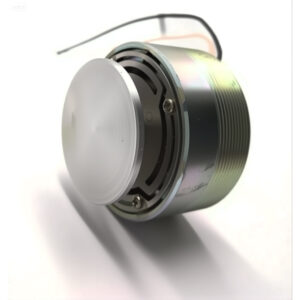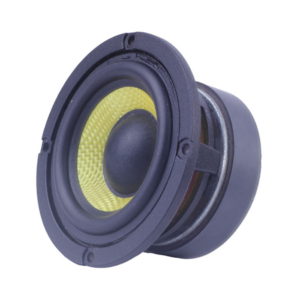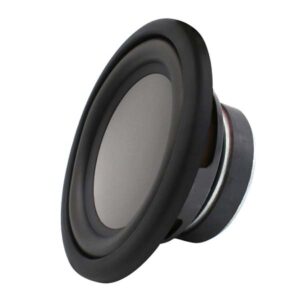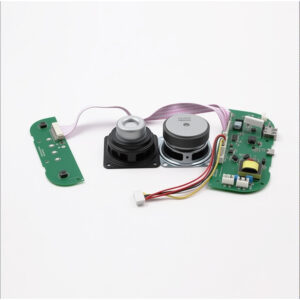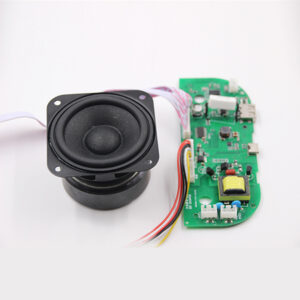
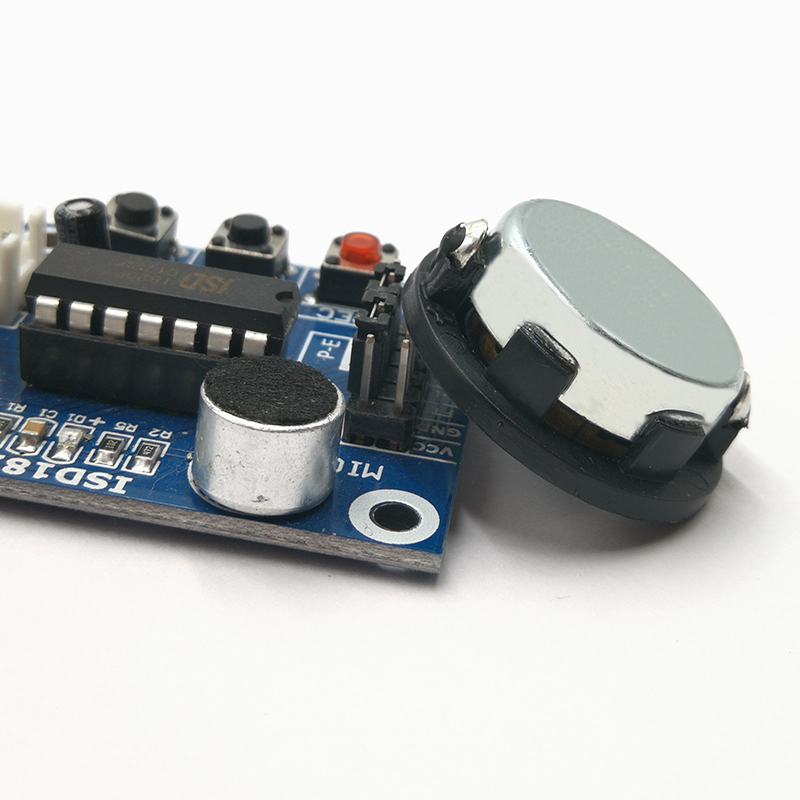
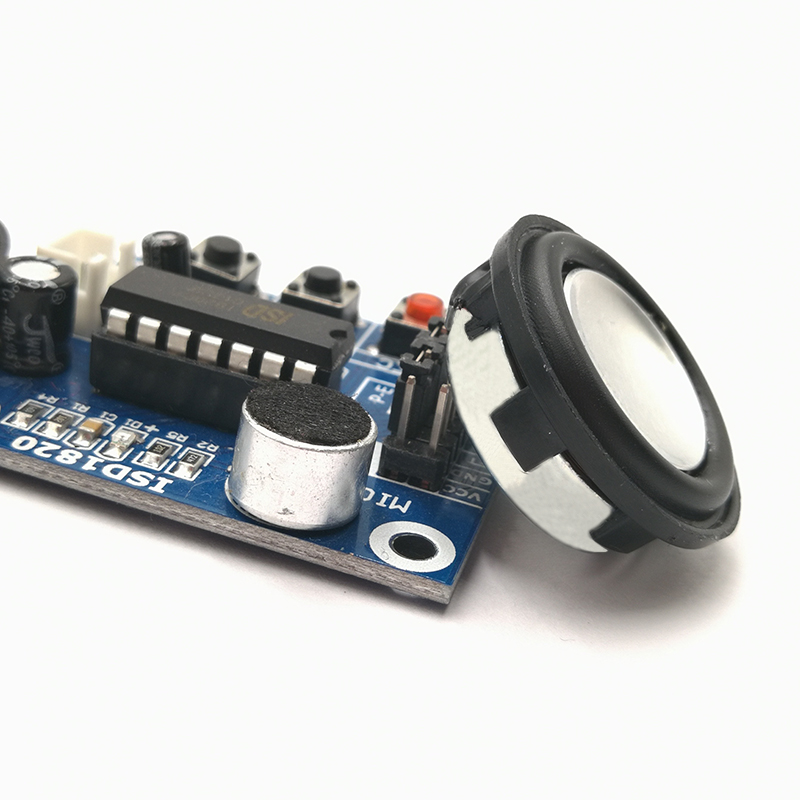
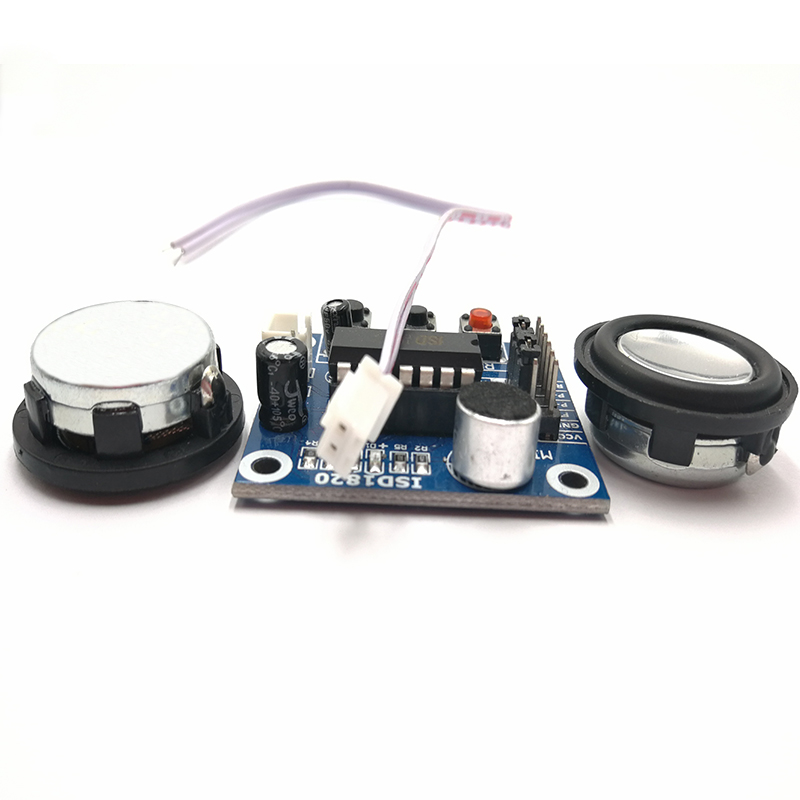
A 28 mm full range speaker rated 4, 6, 8, 16 or 32 Ω / 2–100 W for audio equipment brands, with tooling, tuning and termination open to the project rather than fixed at a catalogue value (ZEH-P3059).
Overview
A full-range driver removes the crossover, and with it the phase rotation and the impedance dip that a two-way design introduces around the crossover point. ZEH-P3059 covers roughly 150 Hz to 18 kHz in a 28 mm frame, and the practical limit is directivity rather than bandwidth: once the cone diameter exceeds about 50 mm, output above 4 kHz narrows into a beam, so the listening axis has to be defined before the driver is chosen. With impedance options of 4, 6, 8, 16 or 32 Ω, the same motor can be matched to a 5 V USB rail or to a 12 V automotive bus without changing the mechanical design.
A 28mm frame with a 4, 6, 8, 16 or 32 Ω coil draws roughly 1.8 A from a 3.7 V rail at full drive, which fixes the supply and limiter settings before acoustics are considered. The cavity behind a 28mm part is normally 0.3–2 cm³; send the housing drawing and the tuning is confirmed before tooling.
Specifications
| Model | ZEH-P3059 |
|---|---|
| Product type | Full Range Speaker (custom build) |
| Nominal size | 28 mm |
| Rated power | 2–100 W |
| Nominal impedance | 4 Ω / 6 Ω / 8 Ω / 16 Ω / 32 Ω |
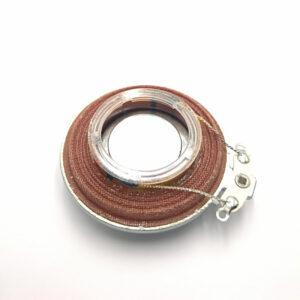
| Termination | Solder pads, lead wires or connector — to drawing |
| Customisation | Termination, dimensions, housing and tuning to your drawing |
| Compliance | RoHS 2011/65/EU and REACH; declarations with each shipment |
Design notes for audio equipment brands
Audio-equipment brands specify by ear and then by measurement, so a full-range driver here has to be repeatable from lot to lot. Sensitivity binning, a documented break-in period and a published impedance curve are what make a driver usable in a product that is reviewed by ear. The enclosure, the crossover and the damping are designed together with the driver; a part that measures well on a baffle but shifts 3 dB in the box is a part that will be rejected at the prototype stage.
Typical applications
- Bookshelf and monitor speakers
- Portable and party speakers
- Instrument and PA cabinets
- Custom install and ceiling audio
Customisation and verification
Every unit is built to a drawing: impedance, lead length, connector series, mounting bosses and the rear-cavity gasket are project-specific. Samples from existing tooling are typically ready in 7–10 days, and new tooling adds 25–35 days. Production parts are checked with a frequency sweep and an impedance curve against the approved sample, and the inspection record travels with the shipment.
FAQ
Do I need a crossover for a full-range driver?
Usually only a first-order high-pass at or below the box tuning to limit excursion, plus optional baffle-step correction. A full crossover at 3–4 kHz defeats the purpose of a single driver.
Why is 4 ohm louder than 8 ohm on the same amplifier?
For a fixed output voltage a 4 Ω load draws twice the current, so the amplifier delivers about 3 dB more power. The driver itself is not more efficient; sensitivity in dB/W/m is comparable.
What enclosure volume does ZEH-P3059 need?
Between 0.5 and 2 litres sealed for the 28 mm class, depending on the target cut-off. Send us the internal dimensions and we will return a simulated response before tooling.
Related pages
full-range speakers · ZEH-P3055 · ZEH-P3049 · 4 Ohm vs 8 Ohm Speakers Full Engineering Guide