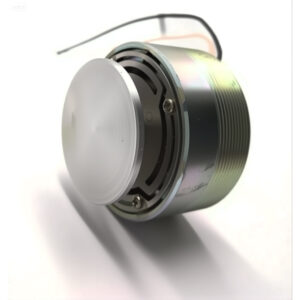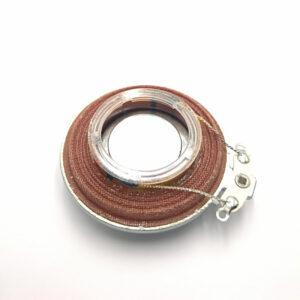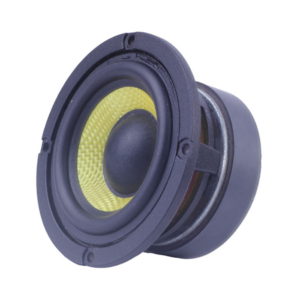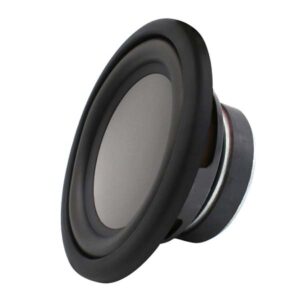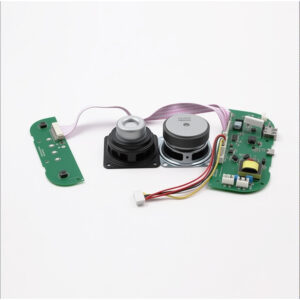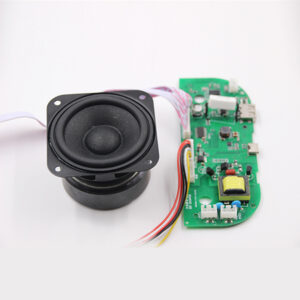
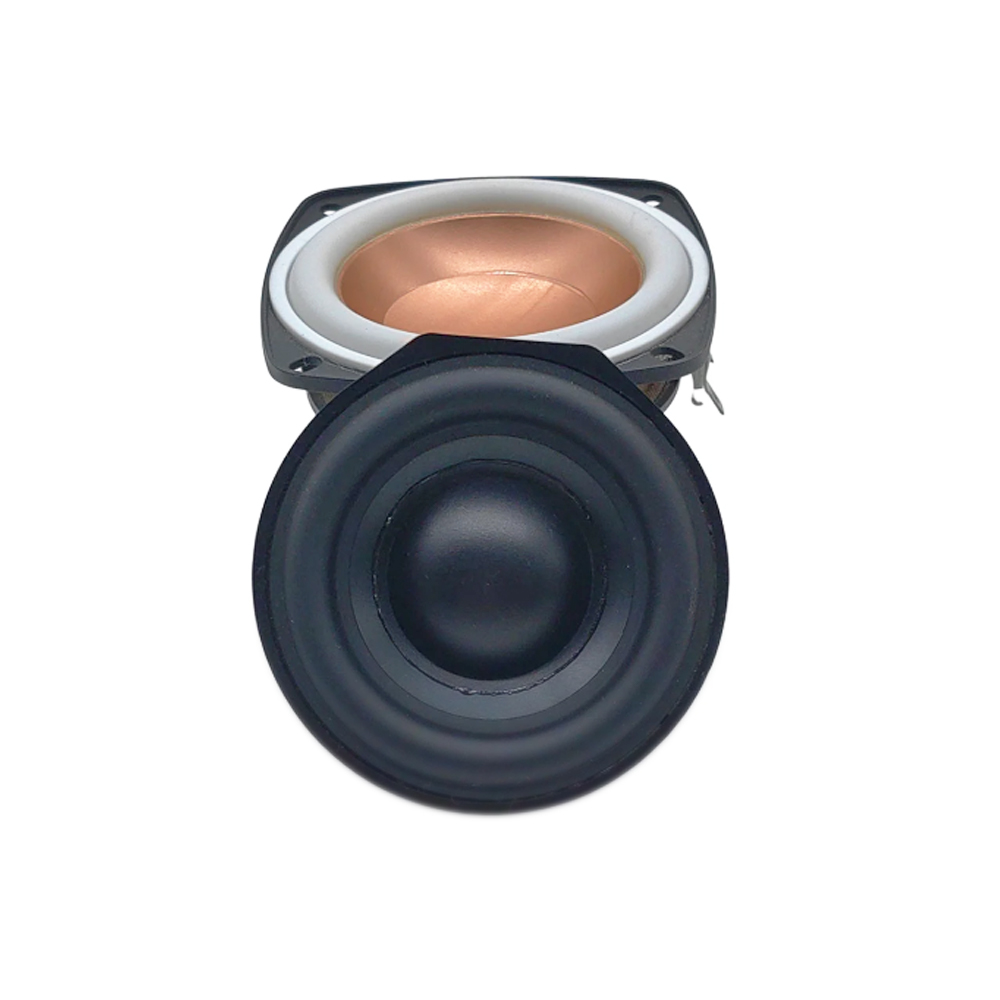
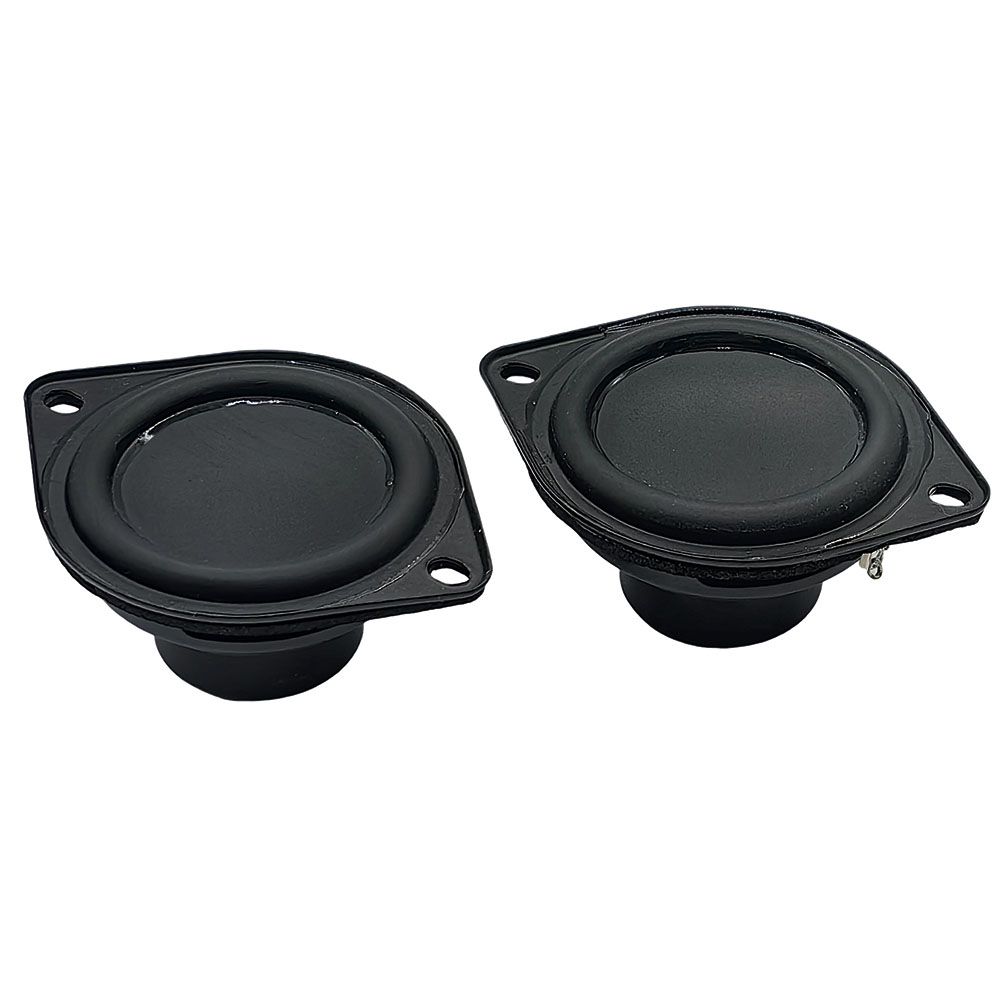
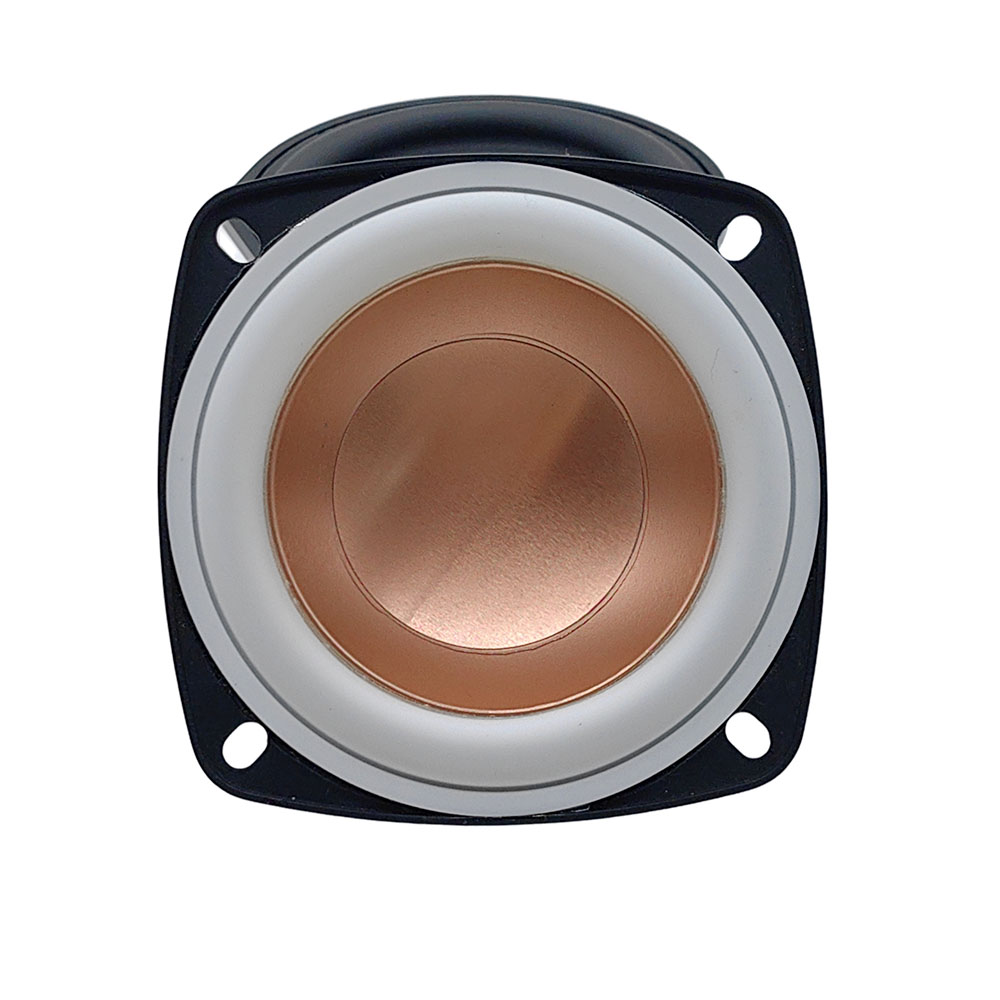
Full range speaker rated 4, 6, 8, 16, 32 or 64 Ω / 0.5–100 W, specified by the cavity it has to work in and tuned for portable consumer audio (ZEH-P2305).
Overview
Full-range drivers are usually specified together with the enclosure, because Qts decides whether a sealed or a vented alignment is appropriate. ZEH-P2305 is intended for sealed boxes of 0.5–2 litres in the compact class, where the box raises the low-frequency cut-off but keeps group delay short. If the target is maximum bass from a small enclosure, a vented design tuned near 70–90 Hz extracts another 3–4 dB, at the cost of a steeper roll-off below tuning. Both alignments are supported; the choice depends on whether the product is used for speech or for music.
Specifications
| Model | ZEH-P2305 |
|---|---|
| Product type | Full Range Speaker (custom build) |
| Rated power | 0.5–100 W |
| Nominal impedance | 4 Ω / 6 Ω / 8 Ω / 16 Ω / 32 Ω / 64 Ω |
| Termination | Solder pads, lead wires or connector — to drawing |
| Customisation | Termination, dimensions, housing and tuning to your drawing |
| Compliance | RoHS 2011/65/EU and REACH; declarations with each shipment |
Design notes for portable consumer audio
Portable products trade bandwidth for size and battery life. A full-range driver in a Bluetooth speaker or a pair of headphones is expected to deliver 100 Hz–15 kHz from a small cavity, and the amplifier’s rail is usually the limiting factor rather than the driver. The practical design question is efficiency: a 4 Ω load extracts more output from a 3.7 V rail than an 8 Ω one, but it also doubles the current and shortens runtime, so the impedance is chosen together with the battery and the DSP’s limiter settings.
Typical applications
- Portable Bluetooth speakers
- Headphones and headsets
- Soundbars and TV audio
- Gaming and VR audio
Customisation and verification
Customisation covers the electrical and the mechanical side together: coil impedance, lead and connector, gasket height, mounting interface and finish. First article is measured against the drawing before mass production, and subsequent lots are compared with the approved sample by swept response and impedance. RoHS and REACH declarations are issued with each shipment.
FAQ
Do I need a crossover for a full-range driver?
Usually only a first-order high-pass at or below the box tuning to limit excursion, plus optional baffle-step correction. A full crossover at 3–4 kHz defeats the purpose of a single driver.
Why is 4 ohm louder than 8 ohm on the same amplifier?
For a fixed output voltage a 4 Ω load draws twice the current, so the amplifier delivers about 3 dB more power. The driver itself is not more efficient; sensitivity in dB/W/m is comparable.
What enclosure volume does ZEH-P2305 need?
Between 0.5 and 2 litres sealed for the compact class, depending on the target cut-off. Send us the internal dimensions and we will return a simulated response before tooling.
Related pages
full-range speakers · ZEH-P2769 · ZEH-P2339 · 4 Ohm vs 8 Ohm Speakers Full Engineering Guide