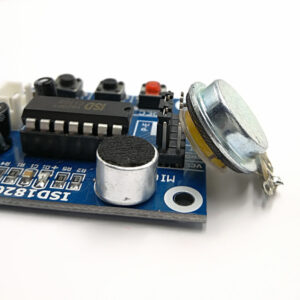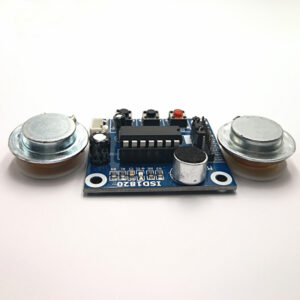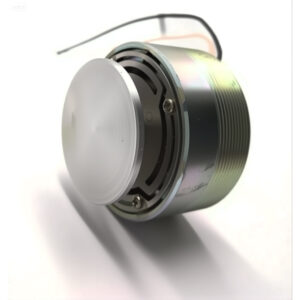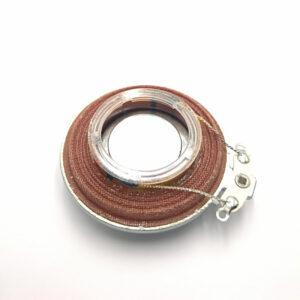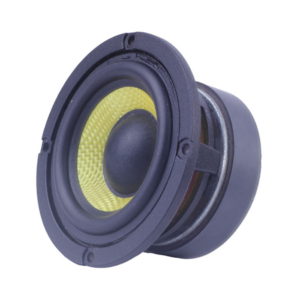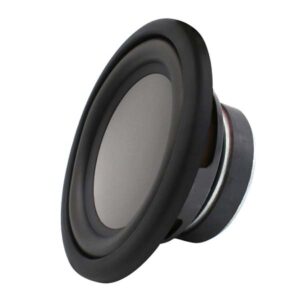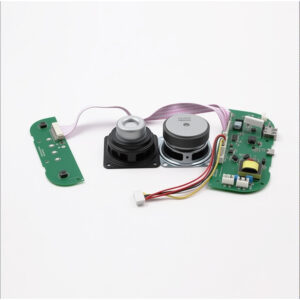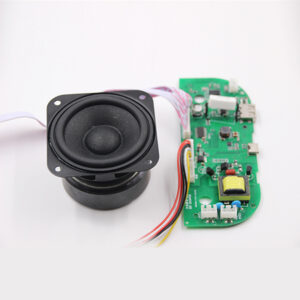
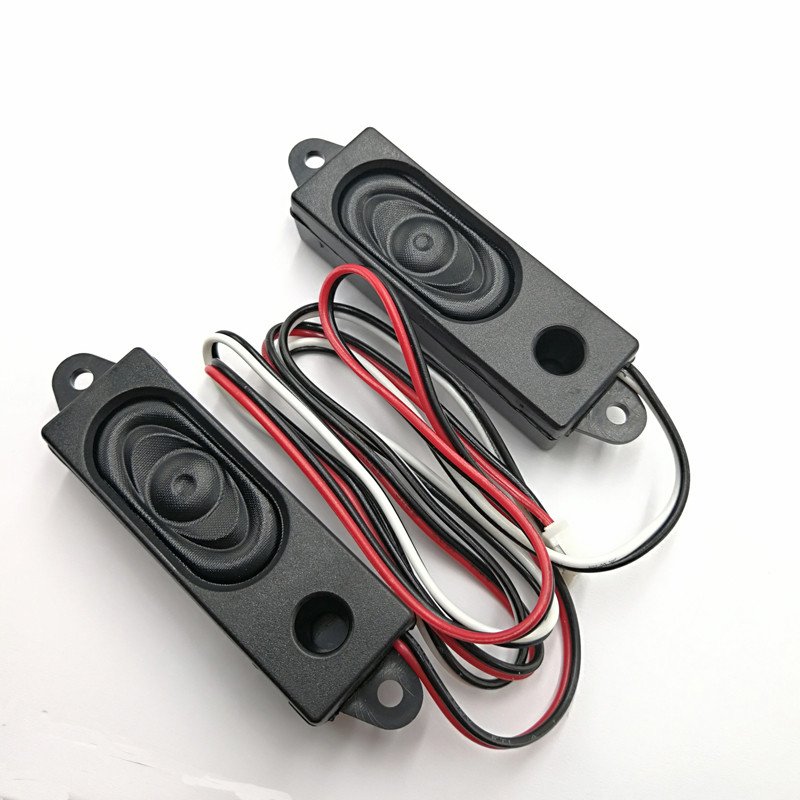
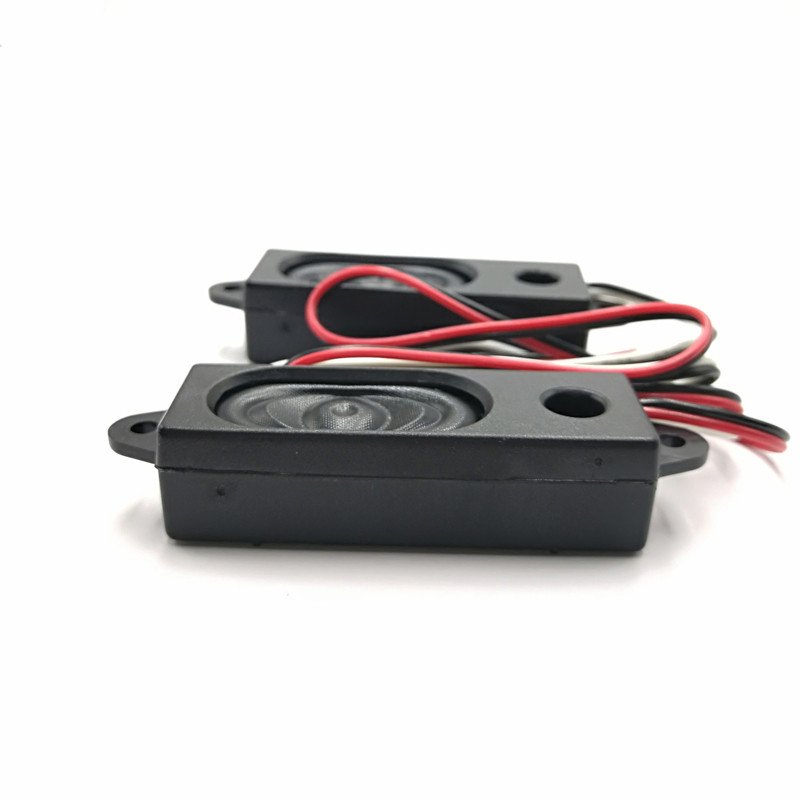
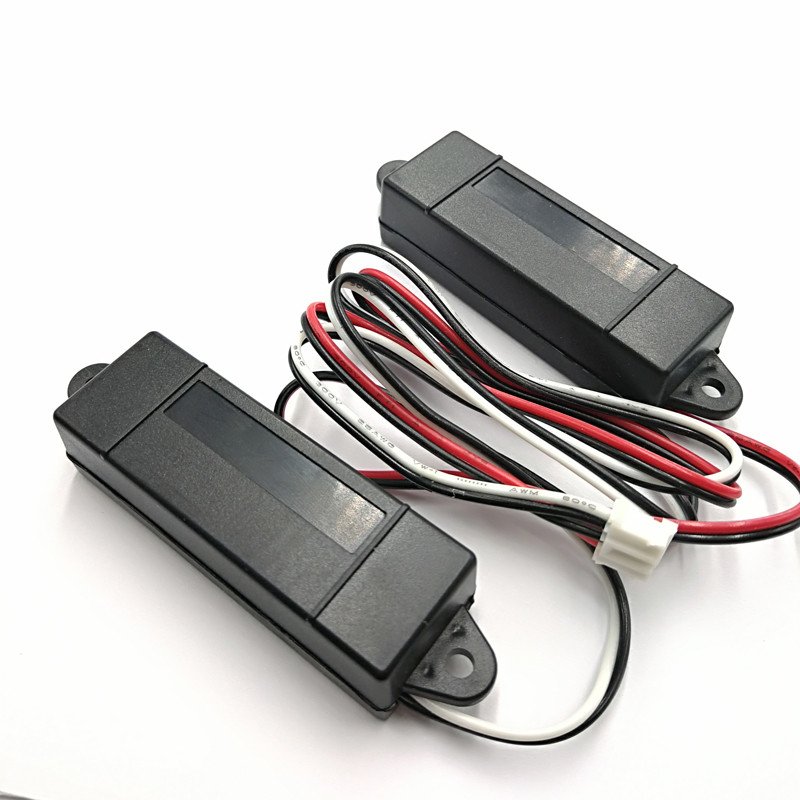
The 36 mm speaker module (8, 4, 6, 16, 32 or 64 Ω / 5–10 W) is part of the ZEH speaker modules range, built to your drawing rather than to a catalogue default (ZEH-1941).
Overview
The module’s back volume and port are the tuning elements. A sealed 1–3 cm³ chamber raises Fs and lowers excursion; a vented chamber of the same size extends output by 3–4 dB an octave above tuning but adds a port resonance that must be damped with mesh or felt. ZEH-1941 is assembled with a gasket and a mechanical retainer rather than adhesive alone, so the driver can be serviced and the seal verified by a leak test on the line.
A 36mm frame with a 8, 4, 6, 16, 32 or 64 Ω coil draws roughly 1.8 A from a 3.7 V rail at full drive, which fixes the supply and limiter settings before acoustics are considered. The cavity behind a 36mm part is normally 0.3–2 cm³; send the housing drawing and the tuning is confirmed before tooling.
Specifications
| Model | ZEH-1941 |
|---|---|
| Product type | Speaker Module (custom build) |
| Nominal size | 36 mm |
| Rated power | 5–10 W |
| Nominal impedance | 8 Ω / 4 Ω / 6 Ω / 16 Ω / 32 Ω / 64 Ω |
| Termination | Solder pads, lead wires or connector — to drawing |
| Customisation | Termination, dimensions, housing and tuning to your drawing |
| Compliance | RoHS 2011/65/EU and REACH; declarations with each shipment |
Design notes for smart-home and voice products
Always-on voice products need a transducer that stays linear at conversation distance and does not colour speech. A speaker module in a smart speaker or a wall panel is mounted into a moulded cavity whose volume is fixed by the industrial design, so the tuning is done by the cavity and the gasket rather than by the driver alone. Far-field capture depends on signal-to-noise ratio at the port, and playback quality depends on how much the housing resonates — a 2 mm wall will buzz at 300–500 Hz long before the driver runs out of excursion.
Typical applications
- Smart speakers and displays
- Voice-assistant wall panels
- Doorbells and intercoms
- Robot vacuum voice prompts
Customisation and verification
The build is defined by your drawing rather than by a stock list. Impedance, termination, magnet grade, diaphragm material and housing are fixed at sample approval, then held by a controlled BOM so that a later order does not drift acoustically. Units are 100 % swept, sensitivity-binned where the product needs it, and packed with the test data for the lot.
FAQ
Can the module include an amplifier?
Yes. A Class D stage can be mounted on the module’s rear cover, with the supply and signal on a single connector; thermal design then becomes the limiting factor.
How is the module sealed?
A compressed gasket plus a mechanical retainer, verified with a pressure-decay leak test at 10 kPa for 10 s on every unit.
What is the typical lead time?
Samples in 7–10 days from existing tooling; new housings add 25–35 days for tooling and first-article approval.
Related pages
speaker modules · ZEH-837 · ZEH-5212 · Smart Device Audio Module Supplier Guide