ما هي التقنيات التي تمكن من تحقيق حجم صوت عالٍ في وحدات مكبرات الصوت الصغيرة؟

جدول المحتويات

引言:从紧凑设计中追求宏大声音

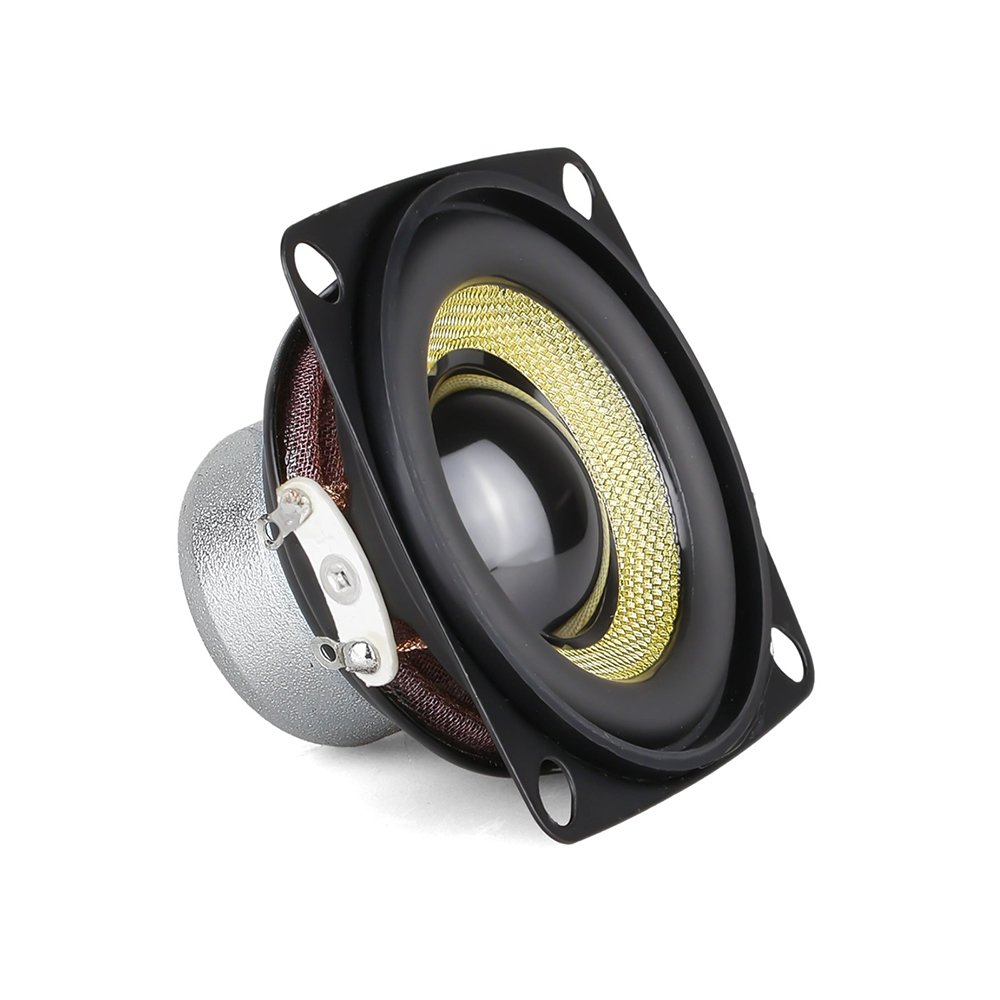
مكبر صوت كامل النطاق مقاس 3.5 بوصة، 4 أوم، 20 واط

从智能手机、无线耳机到便携式蓝牙音箱和纤薄家庭影院条形音箱,市场对紧凑型音频设备的需求推动了一场音频工程革命。消费者期望在日益缩小的外形尺寸中获得丰富、强劲且清晰的声音。在小型扬声器单元中实现高音量和保真度是一项复杂的挑战,它使基础物理学与创新工程学相互博弈。扬声器的核心是一种将电能转换为声能(声波)的换能器。传统上,实现更高音量和更深低音的途径依赖于更大的驱动器和箱体。为了打破这一常规,工程师们部署了一系列复杂的技术,专注于最大化效率、管理失真并利用心理声学原理。本文探讨了使小型扬声器单元能够产生惊人高音量和全频声音的关键技术支柱。.
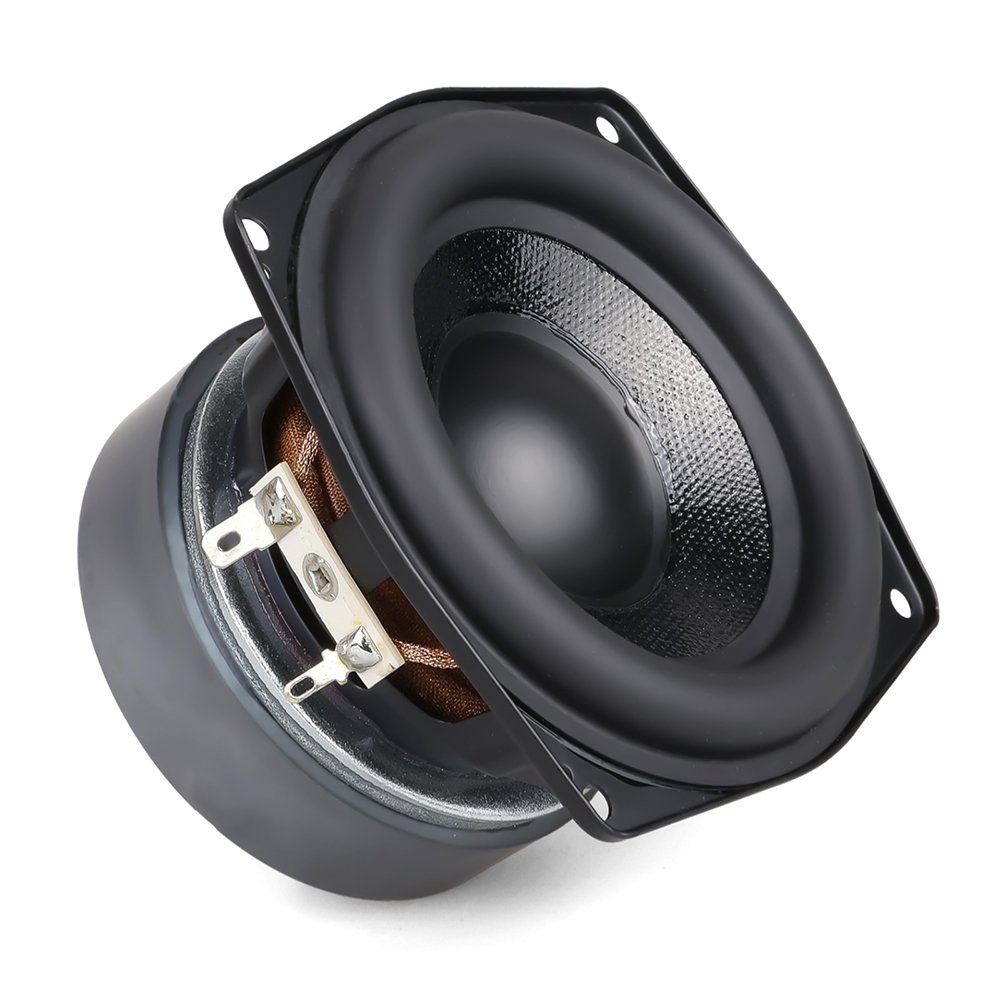
مكبر صوت كامل النطاق 2 بوصة، 4 أوم، 10 واط

核心换能器与磁路创新

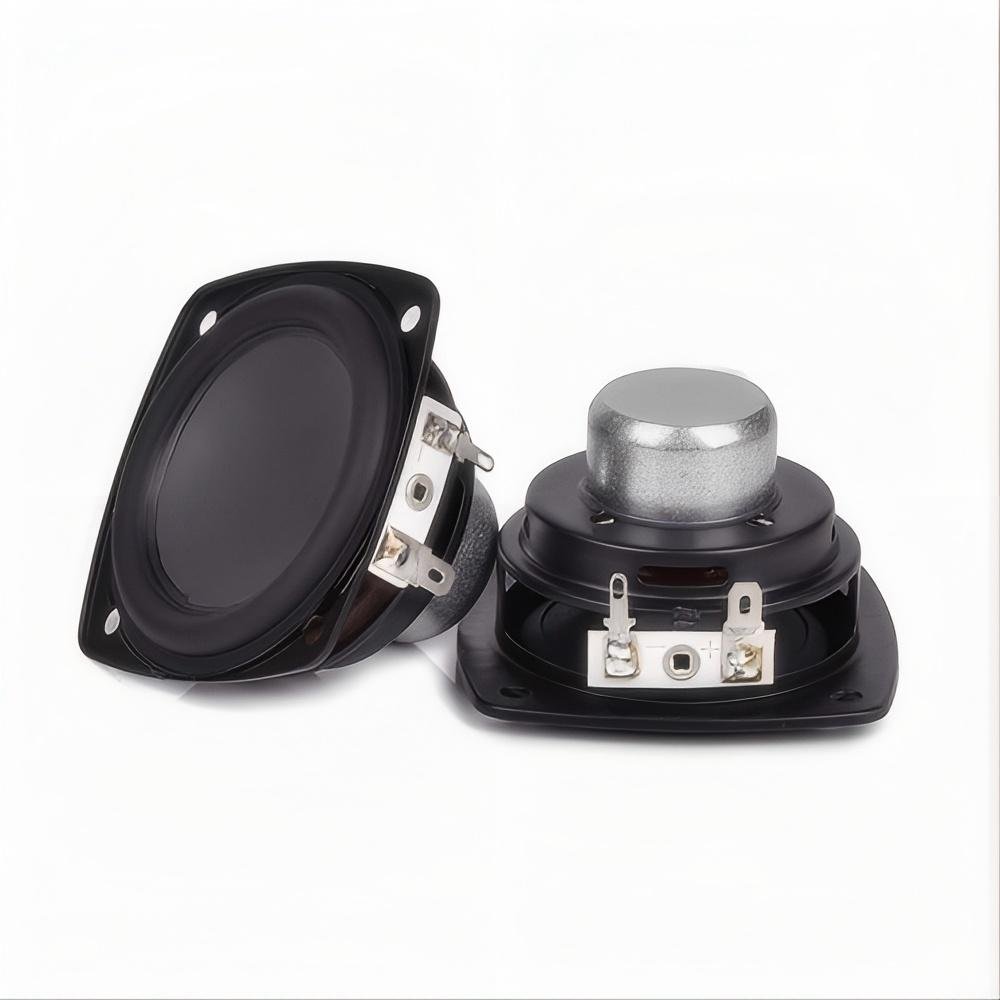
مكبر صوت كامل النطاق 2.5 بوصة، 8 أوم، 10 واط

任何扬声器的核心都是其驱动器,而驱动器将电能转换为声学输出的效率至关重要。以下关键进展是小型单元实现高音量性能的基础。.

高效磁路系统: 由磁体、音圈和极片组成的驱动结构至关重要。现代小型扬声器使用 钕铁硼(NdFeB)磁体, ,它提供了任何商用材料中最高的磁能积。其卓越的强度允许使用更小、更轻的磁体,在音圈所在的气隙中产生更强的磁通量。这导致在给定输入电流下对音圈施加更大的力(力因数,或 Bl),直接提高了灵敏度——即扬声器在给定输入功率下能发出多响声音的衡量指标。.

音圈与骨架设计: 先进的音圈采用更轻、更强的材料,如 铝包铜线(CCAW) 或纯铝,以减少运动质量。更轻的音圈加速和减速更快,改善了瞬态响应和效率。骨架(音圈的圆柱形支撑)可能由诸如 卡普顿(Kapton) أو 诺梅克斯(Nomex), 等材料制成,这些材料极其轻便且能承受高温。热量是性能的敌人(会导致“功率压缩”,即音圈发热时输出下降),因此设计通常包含 冷却特性 ,例如通风极片和允许空气流经音圈的定心支片结构。.

悬挂系统线性化: 定心支片(内部悬挂)和折环(外部悬挂)必须允许足够的振膜行程(冲程),同时保持完美的线性。非线性悬挂是失真的主要来源。现代 有限元分析(FEA) 使工程师能够建模和设计具有渐进刚度的悬挂系统,从而在紧凑空间内实现更长、更清洁的行程——这是小型驱动器产生更响亮声音和更低频率的前提条件。.

先进振膜与箱体材料工程

振膜(或锥盆)是辐射表面。其材料和形状决定了它推动空气的效率以及抵抗分割振动模式(高频失真)的能力。.

复合与合成振膜: 高性能微型驱动器使用简单纸盆的时代已经过去。当今的材料包括:

  • 碳纤维复合材料: 极其坚硬且轻便,提供出色的活塞运动性能和最小的分割振动。.
  • 硼增强材料: 比碳纤维更坚硬,用于高端微型驱动器,以实现极致清晰度和效率。.
  • 液晶聚合物(LCP)和聚醚酰亚胺(PEI)薄膜: 用于智能手机和可穿戴设备的超薄振膜,在刚度、阻尼和可制造性之间提供了良好的平衡。.
  • 陶瓷涂层或阳极氧化铝: 提供高刚度重量比,但需要仔细的阻尼处理。.

箱体与声学耦合设计: 箱体不仅仅是一个盒子;它是声学系统的一个组成部分。对于小型扬声器,无源辐射器已变得无处不在。与倒相式(低音反射)设计不同, المشع السلبي (一个没有音圈的从动锥盆)允许在完全密封的空间内实现调谐的低频共振,增强感知的低音输出,而无需大容积箱体或可能产生气流噪声的倒相管。此外,, 声学迷宫 أو 压力导向结构 越来越多地用于设备内部,以将声音从微型驱动器高效地引导到外部世界,最大限度地减少损耗,有时甚至通过共振原理放大某些频率。.

数字信号处理与心理声学增强

这可能是现代紧凑型音频系统中最重要的技术差异化因素。. 数字信号处理 数字信号处理(DSP)是补偿小型扬声器物理限制的大脑。.

主动均衡与低音增强: DSP算法应用精确的动态均衡,以增强小型驱动器自然较弱的频率(通常是低频低音),同时仔细削减其他频率以防止过度冲程和失真。诸如 动态低音增强 أو 谐波低音增强 等技术会实时分析信号,并添加基频低音音符的合成谐波。由于人耳利用这些谐波来推断基频,这便创造了物理扬声器无法直接再现的更深沉、更强劲低音的感知效果。.

Limiting and Thermal Protection: To prevent damage and manage distortion at high volumes, sophisticated multiband limiters و compressors are used. These act as a dynamic “governor,” clamping down on only the frequencies that would cause the driver to exceed its linear excursion limits or the amplifier to clip. Thermal models of the voice coil run in the DSP, predicting temperature rise and subtly reducing gain to prevent power compression before it audibly occurs.

Stereo Widening and Ambience Processing: To overcome the narrow “sweet spot” of small, closely-spaced speakers, DSP creates virtualized surround sound or a wider stereo image using Head-Related Transfer Function (HRTF) algorithms. This makes the soundstage feel much larger than the physical device, enhancing the listener’s experience of volume and immersion.

Real-Time Adaptive Algorithms: Premium systems from brands like Apple, Sony, and Bose now feature microphones that listen to the speaker’s output in real time. This feedback is processed by the DSP to adaptively correct for anomalies caused by the speaker’s placement (e.g., on a table, in a corner, or in free space), ensuring consistent, optimized output regardless of environment.

Technology CategorySpecific TechnologyPrimary FunctionReal-World Application Example
Magnetic & MotorNeodymium Magnet CircuitMaximizes magnetic force for higher sensitivity and efficiency.JBL Flip 6 portable speaker drivers.
الغشاءCarbon Fiber Composite ConeProvides high stiffness/low mass for accurate pistonic motion.KEF Uni-Q driver in compact meta-materials.
الغلافالمشع السلبيEnhances low-frequency output without a port or large enclosure.Almost all premium Bluetooth speakers (Ultimate Ears Boom, etc.).
Signal ProcessingDynamic Harmonic Bass EnhancementSynthesizes bass harmonics to perceptually extend low-frequency response.Apple HomePod mini’s computational audio.
System ControlReal-Time Adaptive EQ with Microphone FeedbackCorrects for room modes and placement in real-time.Sonos Era 300 spatial audio speaker.
AmplificationHigh-Efficiency Class-D with Integrated DSPDelivers clean, high power while managing thermal and excursion limits.Texas Instruments TAS series smart amp ICs in smartphones.

Integrated Amplification and System-Level Power Management

The amplifier is the engine. Modern مكبرات الصوت من الفئة D have revolutionized small speakers with efficiency ratings over 90%, compared to 50-70% for older Class-AB designs. This means minimal power is wasted as heat, allowing for more acoustic output from battery-powered or thermally-constrained devices.

“Smart” Amplifier ICs: Today’s leading amplifier chips (from companies like Texas Instruments, Qualcomm, and Maxim Integrated) are far more than simple power stages. They are system-on-chip (SoC) solutions with integrated DSP, sophisticated limiter algorithms, and real-time diagnostic capabilities. They can interface directly with the speaker driver’s impedance and back-EMF, allowing for precise control and protection that was impossible with discrete components.

Power Supply and Battery Management: For portable devices, achieving high peak volumes requires managing peak-to-average power ratio. Advanced power management systems use large capacitors and high-discharge-rate lithium-ion batteries to deliver the necessary current bursts for transient peaks without causing a system-wide voltage sag that would trigger shutdowns or distortion.

Conclusion: The Symphony of Technologies

Achieving high volume from small loudspeaker units is no longer about a single breakthrough. It is the result of a tightly integrated symphony of advancements in materials science (magnets, diaphragms), mechanical design (motor structures, suspensions), acoustic engineering (enclosures, radiators), and, most critically, digital software (DSP, adaptive algorithms). This multidisciplinary approach allows engineers to cheat physics—not by breaking its laws, but by working around them with intelligence and precision. As computational audio, machine learning, and new materials like graphene mature, we can expect the performance gap between small speakers and their larger counterparts to continue narrowing, bringing high-fidelity, high-volume sound to even the most miniature of devices.


أسئلة وأجوبة احترافية

Q1: From a thermal management perspective, what is the most common limiting factor for sustained high volume in a sealed micro-speaker, and how is it addressed?
أ: The primary limiting factor is voice coil thermal compression. As the coil heats up during operation, its electrical resistance increases. This reduces the current flow for a given voltage (from Ohm’s Law: I=V/R), thereby reducing the generated magnetic force and acoustic output. Power can be steadily supplied, but SPL drops. This is addressed through: 1) Physical cooling: Using materials with high thermal conductivity for the former and pole structure, and designing for air flow (e.g., vented poles). 2) Electrical/ DSP management: Using “smart” amplifier ICs with integrated thermal models. The DSP proactively reduces gain in anticipation of temperature rise based on real-time power usage models, maintaining a more consistent output and preventing damage.

Q2: How does the use of a passive radiator differ acoustically from a traditional port in a bass-reflex design for small enclosures?
أ: Both are forms of Helmholtz resonators that use a resonant system to amplify bass output near the tuning frequency. However, a port (or vent) moves a column of air, which at high excursions or in small diameters can lead to ضوضاء شخير (Chuffing Noise) (turbulent air noise) and pipe resonances. A المشع السلبي is a mass-spring system (the radiator’s mass and the enclosure’s air spring) that behaves like a tuned driver without a motor. Its key advantages for small units are: it requires no internal volume for the port tube, eliminates chuffing, and allows for lower tuning frequencies in a given volume because the effective moving mass can be made very high. It offers more design flexibility and cleaner output in space-constrained applications.

Q3: With the rise of DSP and synthetic bass enhancement, is there still a meaningful benchmark for “true” low-frequency extension in a micro-speaker specification sheet?
أ: This is a critical question for spec comparison. Traditional -3dB or -6dB points in the frequency response curve still matter, as they indicate the driver’s fundamental physical capability. However, they no longer tell the full story. A more informative benchmark is the **total harmonic distortion (THD) at a given SPL and frequency. For example, a spec might read: “Bass extension down to 55Hz at 80dB SPL with <3% THD." This tells you what the speaker can produce cleanly without heavy DSP intervention. Psychoacoustic enhancements work best when supplementing a driver that already has competent physical low-end performance. Therefore, looking at distortion-limited maximum SPL graphs** across the frequency spectrum provides the most honest picture of a small speaker’s high-volume capabilities.

رائع! شارك على: