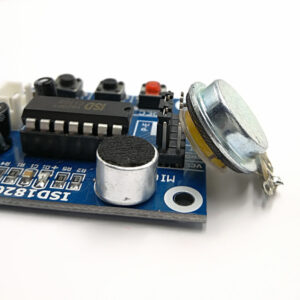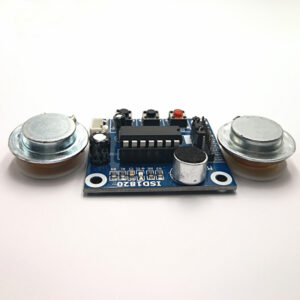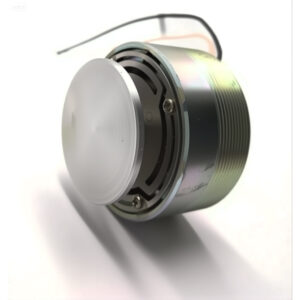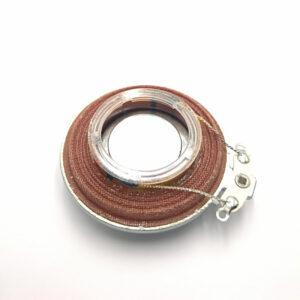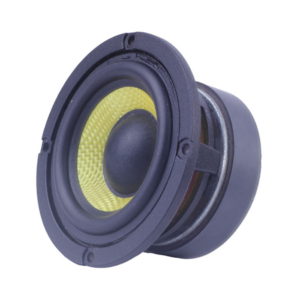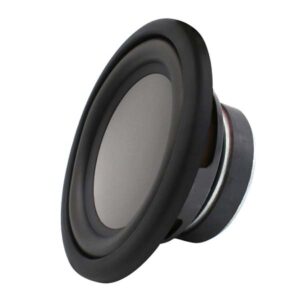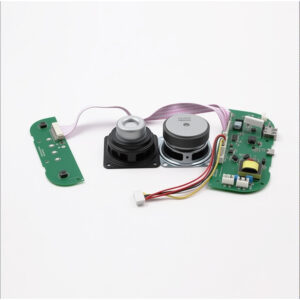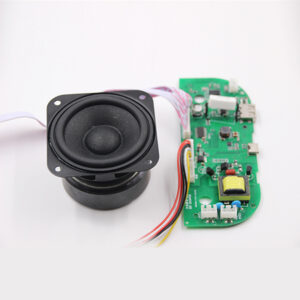
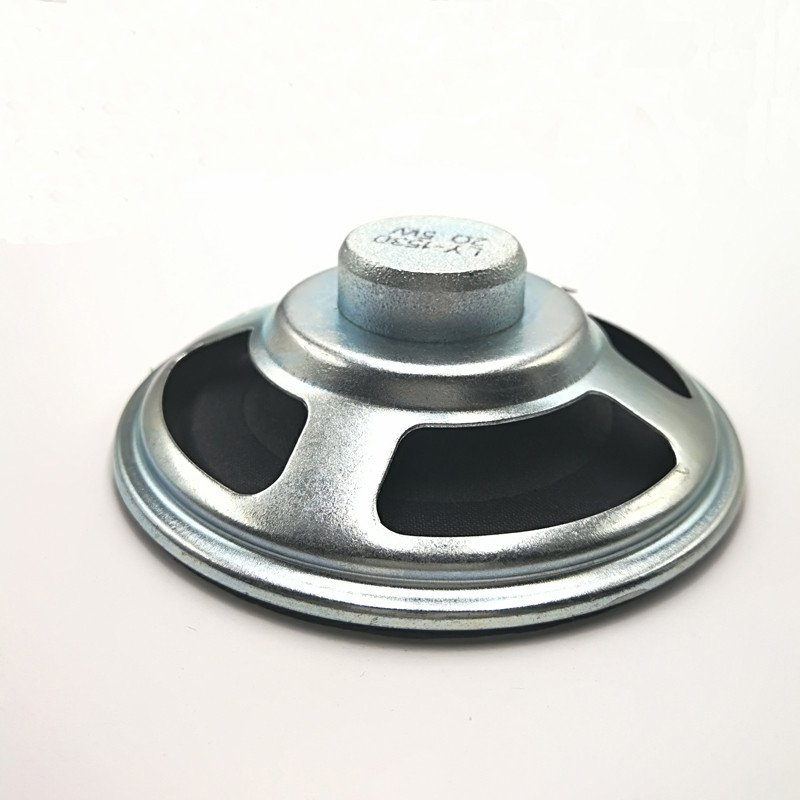
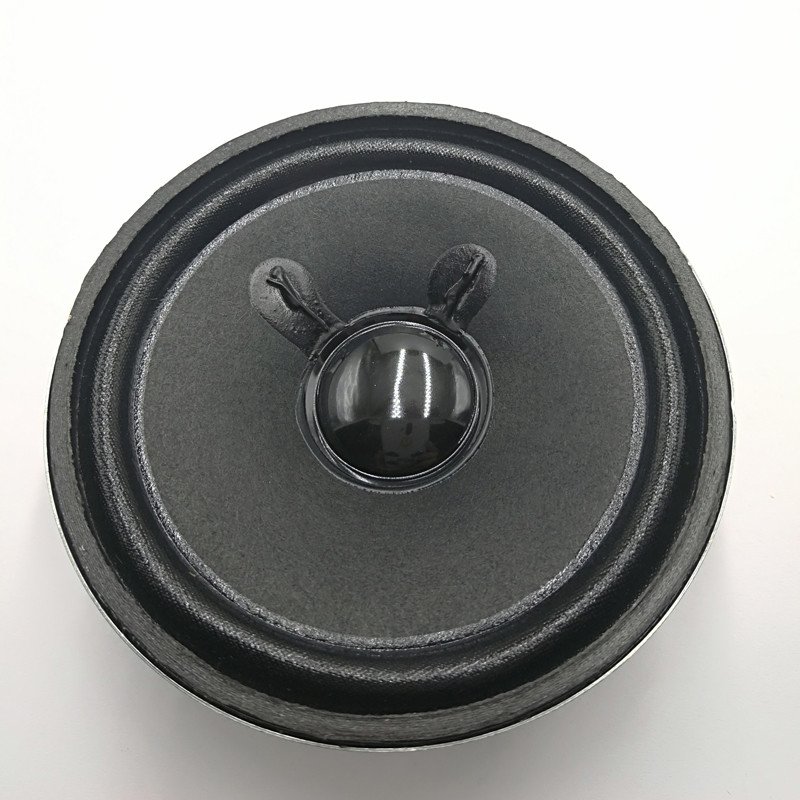
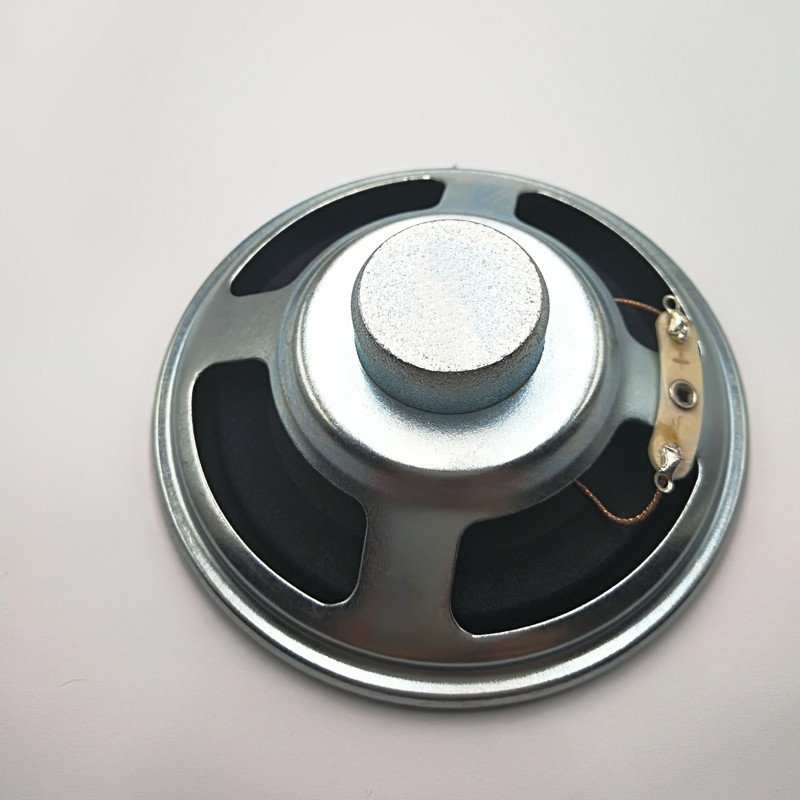
A 77 mm micro speaker rated 8, 4, 6, 16 or 32 Ω / 5–100 W for portable consumer audio, with tooling, tuning and termination open to the project rather than fixed at a catalogue value (ZEH-AU-77MM)).
Overview
For a 77 mm driver, the useful bandwidth is roughly 300 Hz to 12 kHz and the acoustic output is omnidirectional below about 2 kHz, so placement in the housing matters less than the cavity seal. Sensitivity is measured at 0.1 W / 10 cm under IEC 60268-5, and a 3 dB spread between production lots is normal unless units are sensitivity-binned. Total harmonic distortion at rated power should stay under 5 % above 500 Hz; below that, distortion rises quickly because the suspension stiffens. When ZEH-AU-77MM) is used behind a grille, keep at least 1.5 mm clearance so that the grille does not load the diaphragm.
A 77mm frame with a 8, 4, 6, 16 or 32 Ω coil draws roughly 1.8 A from a 3.7 V rail at full drive, which fixes the supply and limiter settings before acoustics are considered. The cavity behind a 77mm part is normally 0.3–2 cm³; send the housing drawing and the tuning is confirmed before tooling.
Specifications
| Model | ZEH-AU-77MM) |
|---|---|
| Product type | Micro Speaker (custom build) |
| Nominal size | 77 mm |
| Rated power | 5–100 W |
| Nominal impedance | 8 Ω / 4 Ω / 6 Ω / 16 Ω / 32 Ω |
| Termination | Solder pads, lead wires or connector — to drawing |
| Customisation | Termination, dimensions, housing and tuning to your drawing |
| Compliance | RoHS 2011/65/EU and REACH; declarations with each shipment |
Design notes for portable consumer audio
Portable products trade bandwidth for size and battery life. A built-in micro speaker in a Bluetooth speaker or a pair of headphones is expected to deliver 100 Hz–15 kHz from a small cavity, and the amplifier’s rail is usually the limiting factor rather than the driver. The practical design question is efficiency: a 4 Ω load extracts more output from a 3.7 V rail than an 8 Ω one, but it also doubles the current and shortens runtime, so the impedance is chosen together with the battery and the DSP’s limiter settings.
Typical applications
- Portable Bluetooth speakers
- Headphones and headsets
- Soundbars and TV audio
- Gaming and VR audio
Customisation and verification
Customisation covers the electrical and the mechanical side together: coil impedance, lead and connector, gasket height, mounting interface and finish. First article is measured against the drawing before mass production, and subsequent lots are compared with the approved sample by swept response and impedance. RoHS and REACH declarations are issued with each shipment.
FAQ
What is the difference between a micro speaker and a receiver?
A micro speaker is optimised for music and voice playback across a wide band, while a receiver (earpiece) is tuned for speech intelligibility in a narrow band at lower excursion. Both can share a 77 mm footprint, but the receiver needs a smaller back volume and a higher resonance.
Can the lead wires and connector be changed?
Yes. Lead length, wire gauge, stripping length, tinned ends, Molex or JST connectors, and pad-only termination are all tooling-independent options on ZEH-AU-77MM); the acoustic design is unaffected as long as the added mass stays off the diaphragm.
How is the rear cavity volume specified?
Give us the internal volume available behind the mounting face and the target low-frequency cut-off. We then recommend a gasket height and, if needed, a felt or mesh damping layer so the assembly meets the curve in your enclosure rather than on an open baffle.
Related pages
built-in micro speakers · ZEH-434 · ZEH-TV-2040-01) · Small Speaker Acoustic Design Principles