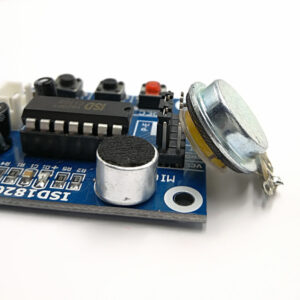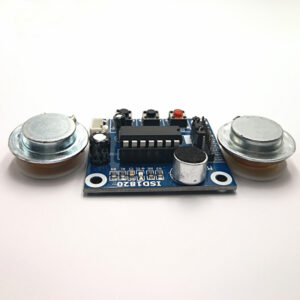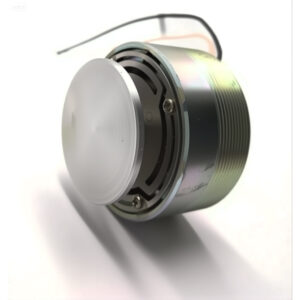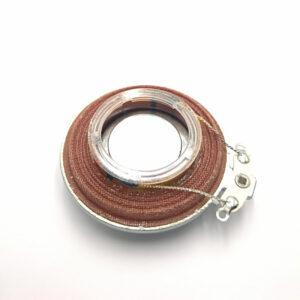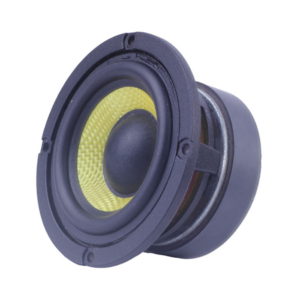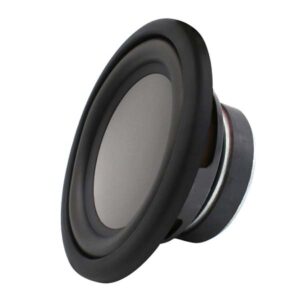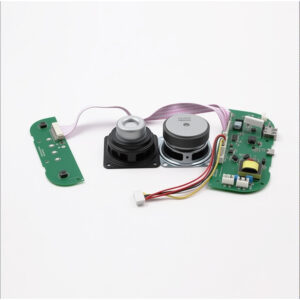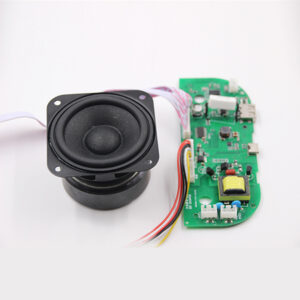
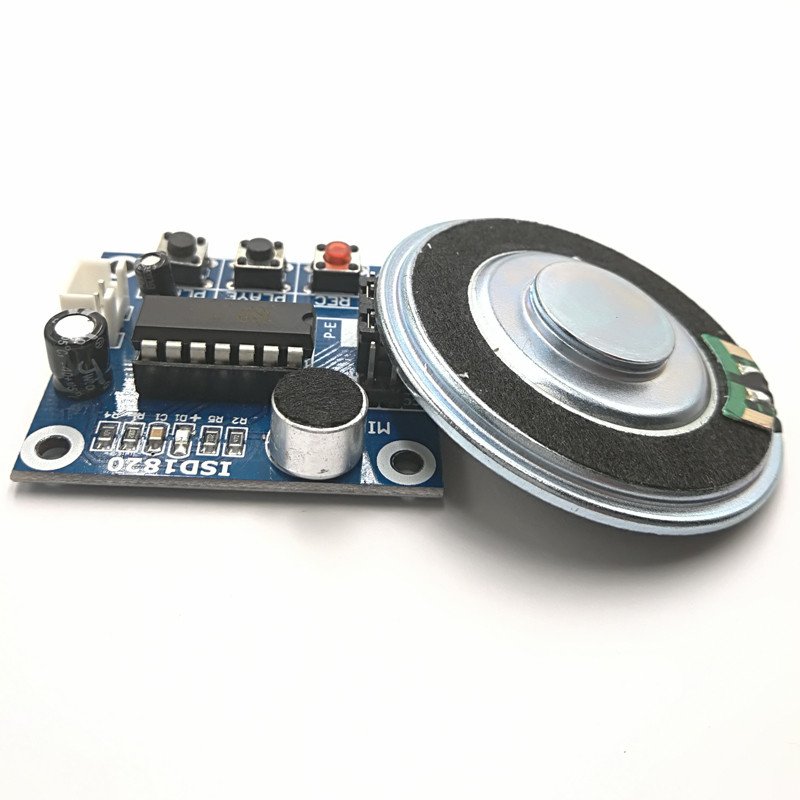
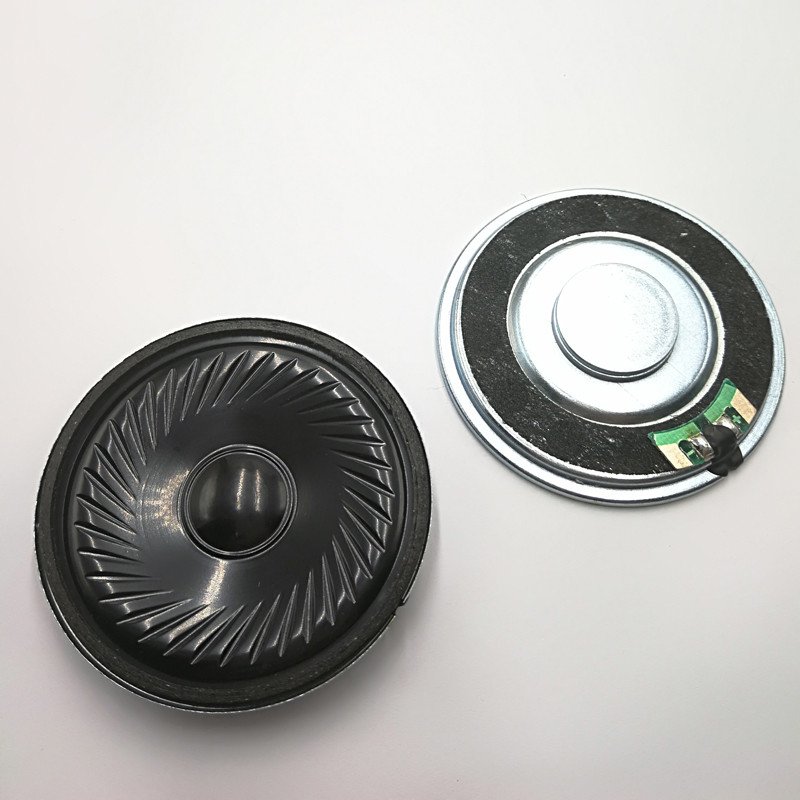
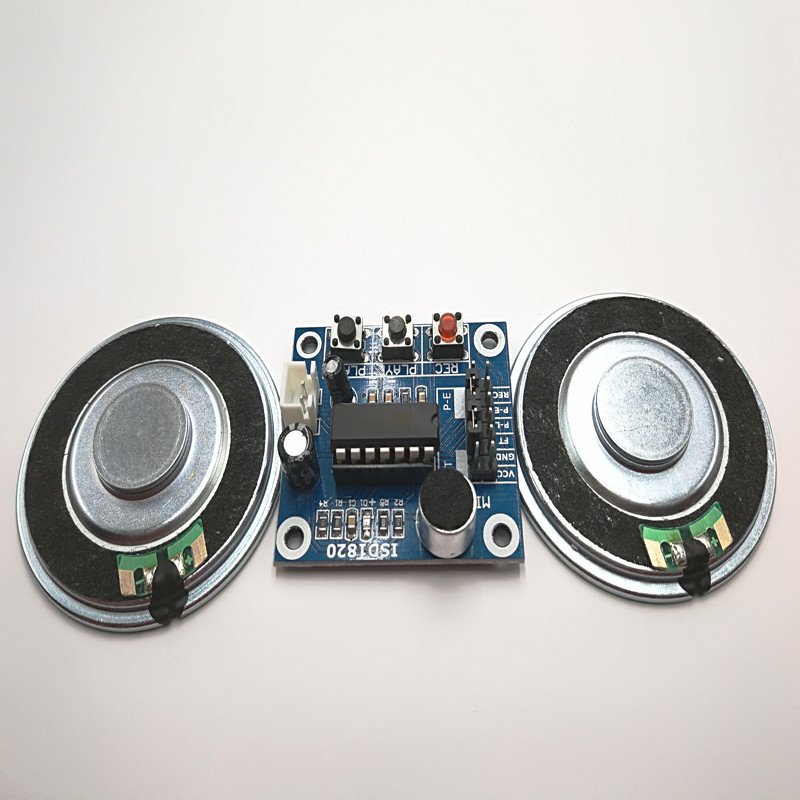
The round micro speaker (4, 6, 8, 16 or 32 Ω / 1–100 W) is part of the ZEH built-in micro speakers range, built to your drawing rather than to a catalogue default (ZEH-AU-50-02)).
Overview
For a compact driver, the useful bandwidth is roughly 300 Hz to 12 kHz and the acoustic output is omnidirectional below about 2 kHz, so placement in the housing matters less than the cavity seal. Sensitivity is measured at 0.1 W / 10 cm under IEC 60268-5, and a 3 dB spread between production lots is normal unless units are sensitivity-binned. Total harmonic distortion at rated power should stay under 5 % above 500 Hz; below that, distortion rises quickly because the suspension stiffens. When ZEH-AU-50-02) is used behind a grille, keep at least 1.5 mm clearance so that the grille does not load the diaphragm.
Specifications
| Model | ZEH-AU-50-02) |
|---|---|
| Product type | Micro Speaker (custom build) |
| Rated power | 1–100 W |
| Nominal impedance | 4 Ω / 6 Ω / 8 Ω / 16 Ω / 32 Ω |
| Termination | Solder pads, lead wires or connector — to drawing |
| Customisation | Termination, dimensions, housing and tuning to your drawing |
| Compliance | RoHS 2011/65/EU and REACH; declarations with each shipment |
Design notes for smart-home and voice products
Always-on voice products need a transducer that stays linear at conversation distance and does not colour speech. A built-in micro speaker in a smart speaker or a wall panel is mounted into a moulded cavity whose volume is fixed by the industrial design, so the tuning is done by the cavity and the gasket rather than by the driver alone. Far-field capture depends on signal-to-noise ratio at the port, and playback quality depends on how much the housing resonates — a 2 mm wall will buzz at 300–500 Hz long before the driver runs out of excursion.
Typical applications
- Smart speakers and displays
- Voice-assistant wall panels
- Doorbells and intercoms
- Robot vacuum voice prompts
Customisation and verification
Customisation covers the electrical and the mechanical side together: coil impedance, lead and connector, gasket height, mounting interface and finish. First article is measured against the drawing before mass production, and subsequent lots are compared with the approved sample by swept response and impedance. RoHS and REACH declarations are issued with each shipment.
FAQ
What is the difference between a micro speaker and a receiver?
A micro speaker is optimised for music and voice playback across a wide band, while a receiver (earpiece) is tuned for speech intelligibility in a narrow band at lower excursion. Both can share a compact footprint, but the receiver needs a smaller back volume and a higher resonance.
Can the lead wires and connector be changed?
Yes. Lead length, wire gauge, stripping length, tinned ends, Molex or JST connectors, and pad-only termination are all tooling-independent options on ZEH-AU-50-02); the acoustic design is unaffected as long as the added mass stays off the diaphragm.
How is the rear cavity volume specified?
Give us the internal volume available behind the mounting face and the target low-frequency cut-off. We then recommend a gasket height and, if needed, a felt or mesh damping layer so the assembly meets the curve in your enclosure rather than on an open baffle.
Related pages
built-in micro speakers · ZEH-TV-2040-02) · ZEH-AU-57-02) · Small Speaker Acoustic Design Principles