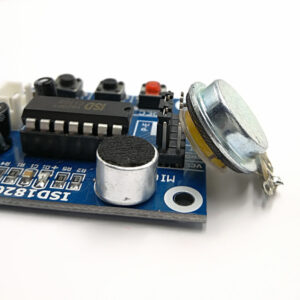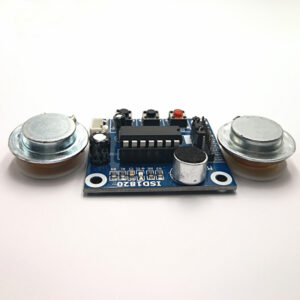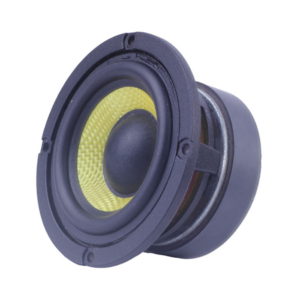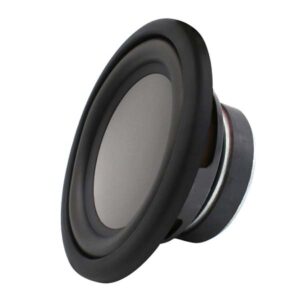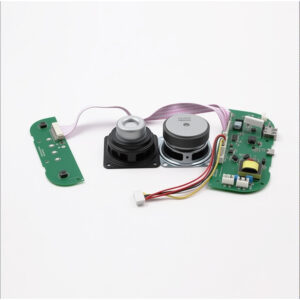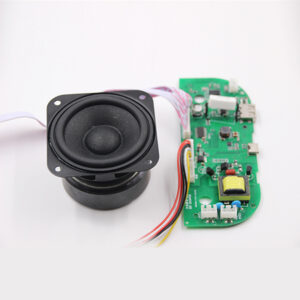
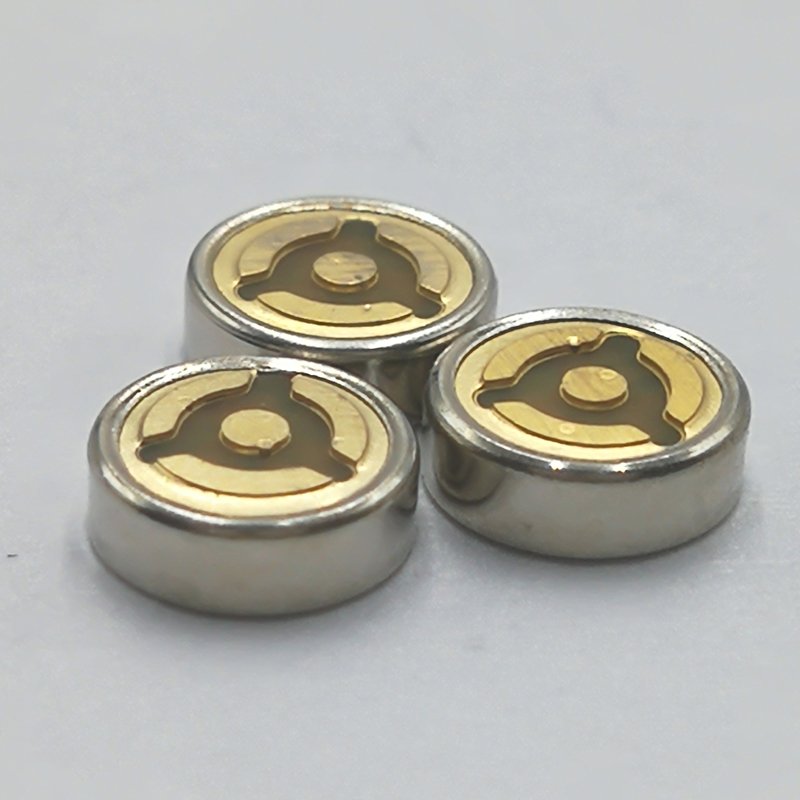
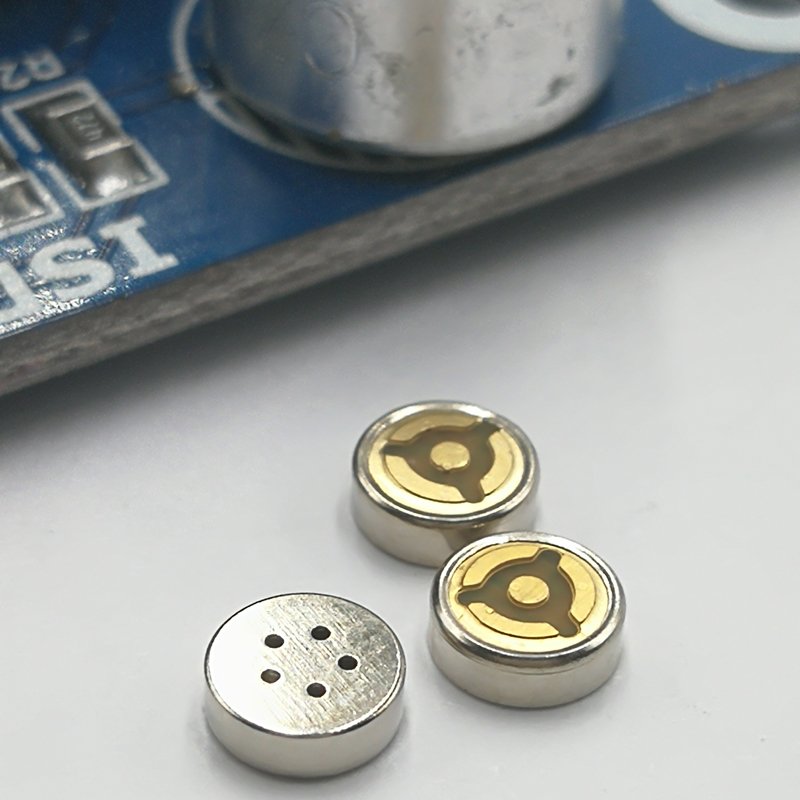
A 9.7 × 6.7 mm mems microphone for voice capture in smart-home and voice products, supplied with the port depth and gasket that match your housing (ZEH-MIC-3015001001).
Overview
For arrays, matching matters more than absolute sensitivity: two capsules with 1 dB sensitivity difference and 5° phase mismatch will steer the beam incorrectly, so parts are usually selected from a single sensitivity bin. ZEH-MIC-3015001001 is supplied in ±1 dB bins for that reason. Power consumption of 0.5–1 mA in active mode and a few microamps in sleep makes always-on voice trigger practical, but the wake-word engine’s false-accept rate depends on the SNR at the port, not on the datasheet figure measured in a free field.
Sensitivity is binned before packing; a 3 dB spread between capsules in a stereo pair is audible as an image shift, so arrays are supplied from a single bin.
Specifications
| Model | ZEH-MIC-3015001001 |
|---|---|
| Product type | MEMS Microphone |
| Capsule size | 9.7 × 6.7 mm |
| Directivity | Omnidirectional |
| Output | Digital PDM / I2S |
| Sensitivity | −26 to −38 dBFS, binned |
| Supply | 1.8–3.3 V |
| Termination | Solder pads or lead wires — to drawing |
| Customisation | Termination, dimensions, housing and tuning to your drawing |
| Compliance | RoHS 2011/65/EU and REACH; declarations with each shipment |
Design notes for smart-home and voice products
Always-on voice products need a transducer that stays linear at conversation distance and does not colour speech. A MEMS microphone in a smart speaker or a wall panel is mounted into a moulded cavity whose volume is fixed by the industrial design, so the tuning is done by the cavity and the gasket rather than by the driver alone. Far-field capture depends on signal-to-noise ratio at the port, and playback quality depends on how much the housing resonates — a 2 mm wall will buzz at 300–500 Hz long before the driver runs out of excursion.
Typical applications
- Smart speakers and displays
- Voice-assistant wall panels
- Doorbells and intercoms
- Robot vacuum voice prompts
Customisation and verification
Customisation covers the electrical and the mechanical side together: coil impedance, lead and connector, gasket height, mounting interface and finish. First article is measured against the drawing before mass production, and subsequent lots are compared with the approved sample by swept response and impedance. RoHS and REACH declarations are issued with each shipment.
FAQ
PDM or I2S for ZEH-MIC-3015001001?
PDM for compact arrays with a single clock pair; I2S when the DSP needs synchronous stereo without a decimation filter.
Is the part reflow compatible?
Yes, MSL3 and 260 °C reflow; the port must be protected from flux and conformal coating during assembly.
What SNR do I need for voice capture at 3 m?
62 dB is workable in a quiet room; 65–70 dB is needed for far-field capture with background noise above 50 dBA.
Related pages
MEMS microphones · ZEH-P1874 · ZEH-P1876 · Custom Microphone Supplier: From Design to Delivery for Consumer Elect