
An AI speaker is defined by its microphone path, not by its loudspeaker. The array has to hear a wake word at 5 m in a room with a television playing, which means 65-70 dB SNR capsules, an acoustic overload point above 120 dB SPL, and beamforming that rejects the loudspeaker's own output by 20-30 dB.
The notes below apply to AI speaker export markets, with the measurement conditions and production checks that decide whether a claimed figure survives a shipment.
Market Overview: The Global Shift Toward Emerging Economies
This divergence is fueled by several interconnected trends: rapidly improving 4G/5G connectivity , declining data costs, the proliferation of localized AI and voice assistant capabilities (supporting native languages and dialects), and strategic partnerships between global tech giants and local telecom and e-commerce players. For exporters, success in these markets will depend not merely on price competitiveness, but on a deep understanding of local consumer behavior, regulatory markets, and ecosystem integration —such as compatibility with popular local music streaming, food delivery, and ride-hailing services.
Southeast Asia: A Mobile-First Powerhouse
Southeast Asia, with its collective population of over 675 million and median age below 35, represents arguably the most dynamic emerging market for smart AI speakers. Countries like Indonesia, Vietnam, Thailand, and the Philippines are at the forefront. The region is characterized by a “leapfrog” effect , where consumers have largely skipped desktop computing in favor of mobile-centric digital lives. This makes the integration of smart speakers with mobile apps and services particularly effective.
Indonesia , the region’s largest economy, is a prime target. With a tech-savvy urban population and increasing smart home adoption, brands like Xiaomi and Alibaba’s Tmall Genie have made early inroads by offering budget-friendly models with Bahasa Indonesia support. Vietnam’s market is driven by a strong manufacturing base and one of the world’s fastest-growing e-commerce sectors. Key drivers include:
- Rising urbanization and middle-class expansion.
- Aggressive investments in digital infrastructure by governments and private entities.
- Localized content partnerships (e.g., with Spotify’s regional competitors like JOOX or local news aggregators).
Exporters should note the fragmented logistics and diverse regulatory environments across ASEAN nations. A partnership-first approach with local distributors and retailers is often more successful than direct-to-consumer models.
Microphone array and far-field performance
Array geometry sets the beam. Two microphones 40-60 mm apart give a usable cardioid above 500 Hz; four in a square or a line give a steerable beam and better rejection of the loudspeaker's output. The spacing must be matched to within 0.2 mm, because a phase error between capsules shifts the beam and reduces the rejection at the design angle.
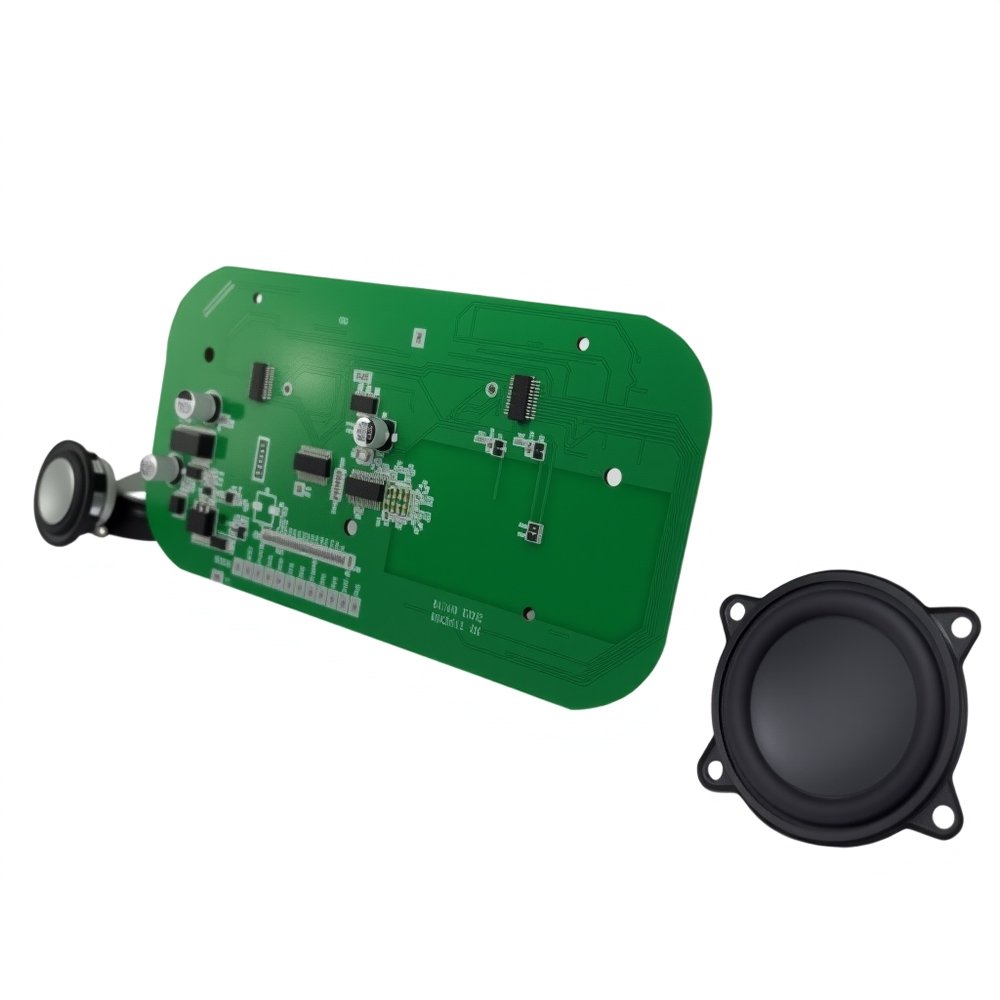
| Block | Typical part | Selection criterion |
|---|---|---|
| Application SoC | Quad-core ARM with NPU | Wake-word latency under 300 ms |
| Microphone array | 2–6 digital MEMS, 65–70 dB SNR | AOP above 120 dB SPL |
| Codec | I2S / PDM interface | Clock jitter below 50 ps |
| Amplifier | Class D, 10–30 W | Filter and EMI layout |
| Privacy | Hardware mute switch | Mic line physically cut |
Latin America: Brazil and Mexico Lead the Charge
Latin America is recovering with vigor from economic volatility, with Brazil and Mexico anchoring the region’s tech adoption. Growth is concentrated in major metropolitan areas like São Paulo and Rio de Janeiro, where broadband penetration is high. The success formula here combines aggressive pricing during local sales events (like Black Friday/Brazilian “Cyber Monday”), Portuguese-language AI optimization , and integration with local services such as iFood (delivery) and Globoplay (streaming).
Mexico serves as both a substantial domestic market and a strategic export manufacturing base due to the USMCA trade agreement. Its proximity to the United States reduces logistics complexity for North American brands. Mexican consumers show high brand loyalty but are also price-sensitive, creating opportunities for mid-tier and value-focused models . Key considerations for the region include:
- Navigating complex import tariffs and taxes (e.g., Brazil’s high import duties favor locally assembled products or those from Mercosur partners).
- Addressing economic inequality by offering tiered product lines.
- Building trust in data privacy and security , a growing concern among Latin American consumers.
South Asia and Middle East & Africa: The Next Frontier
India dominates the South Asian narrative. With over 700 million internet users and some of the world’s cheapest data plans, India’s potential is immense. However, the market is uniquely challenging. Extreme price sensitivity has led to the dominance of ultra-low-cost brands (like Boat and Wipro) and rampant discounting. Success for foreign exporters hinges on:
- Hyper-localization: Supporting a multitude of Indian languages and accents (Hindi, Tamil, Bengali, etc.) and integrating with Flipkart, JioSaavn, and Zomato .
- Strategic market positioning: Focusing on premium, feature-rich segments or forming OEM partnerships with local giants like Reliance Jio .
- Navigating the “Make in India” initiative , which incentivizes local production.
The Middle East and Africa present a mosaic of opportunities. The Gulf Cooperation Council (GCC) countries, particularly the UAE and Saudi Arabia , have high GDP per capita and government visions (like Saudi Vision 2030) actively promoting smart home and smart city development. Here, premium brands like Apple’s HomePod can thrive. In contrast, markets like South Africa, Nigeria, and Kenya are at an earlier adoption stage but show promise due to urbanization and growing tech hubs. Key in these regions is ensuring AI supports Arabic dialects and key African languages , and forming partnerships with regional telecom giants like MTN or Airtel for distribution and bundling.
Strategic Recommendations for Exporters and Brands
- Invest in Deep Localization: This goes beyond language support. It involves tailoring the AI’s personality, content partnerships, and skills to local habits, humor, and daily needs (e.g., cricket scores in India, prayer time reminders in MENA, samba music playlists in Brazil).
- Build Ecosystem Synergies: The smart speaker’s value is in its ecosystem. Integrate with the dominant local services for music, video, food, transportation, and banking. A speaker that can’t interface with Mercado Libre in Argentina or Grab in Southeast Asia is at a severe disadvantage.
- Adapt to Local Retail and Payment Norms: While e-commerce is growing, cash-on-delivery, offline retail partnerships, and bundling with mobile data plans remain critical in many emerging markets. Flexible payment options are non-negotiable.
- Partnering with an experienced in-country logistics and compliance partner can prevent costly delays.
- Adopt a Flexible Pricing Architecture: Develop product tiers that cater to both the premium early-adopter segment and the massive, price-conscious mainstream market that will drive volume.
The brands that will win in these emerging markets are those that view them not merely as export destinations, but as unique, collaborative communities requiring respect, investment, and long-term commitment.
Echo cancellation, noise suppression and privacy
Privacy is a hardware question. A mute switch that only tells the firmware to stop streaming is not a mute; the switch should cut the microphone's supply or its data line, and the indicator LED should be driven from the switch contact rather than from software. Buyers increasingly ask for this in the audit, and it is cheaper to design in than to retrofit.
FAQ
How many microphones does an AI speaker need?
Two are enough for a near-field product; four to six are typical for a 5 m far-field device that must reject its own output. The geometry and the port design matter more than the count.
What SNR should the microphones have?
65-70 dB for a far-field array, with an acoustic overload point above 120 dB SPL so that the capsule does not clip when the speaker is playing.
Can wake-word detection run on the main processor?
It can, but the standby power is 10-50 times higher. A dedicated low-power DSP that wakes the SoC keeps standby in the milliwatt range, which matters for battery products.
Related reading
- What Makes an AI Speaker Smart? Hardware Breakdown
- Top Trends in Custom Speaker Covers for Smart Home Devices
- Custom Speaker Manufacturer for Smart Home Devices: Acoustic Design and R&D
More on Bluetooth Audio.
