
The second defining block is the application processor. Wake-word detection usually runs on a low-power DSP that consumes a few milliwatts and wakes the main SoC only when the phrase is detected; running detection on the main processor costs 10-50 times the standby power and shortens battery life in a portable product.
This guide treats small speakers smart home as a specification problem: what to measure, what to write on the drawing, and what to verify before the first carton ships.
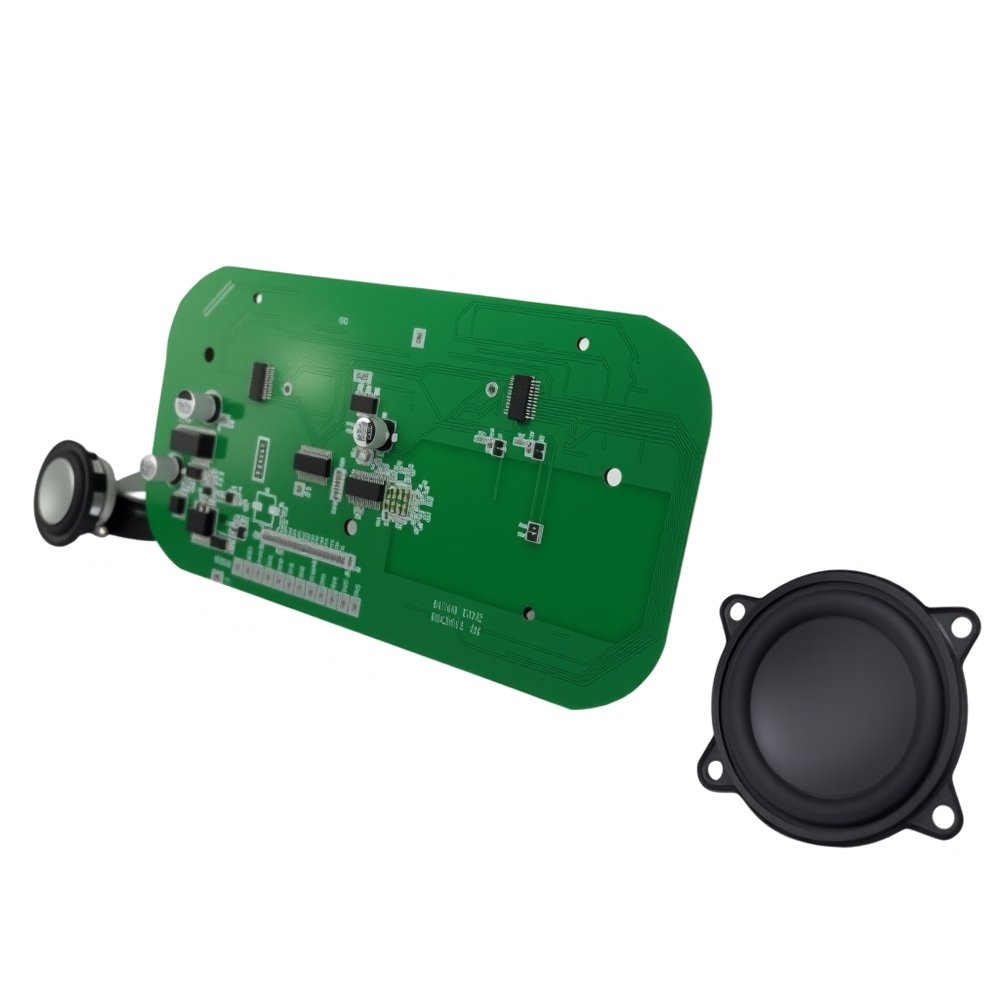
The Growing Demand for Compact Audio in Smart Homes
For manufacturers, integrating premium sound into compact form factors is no longer a luxury—it’s a competitive necessity.
This shift is fueled by consumer behavior: users want discreet, aesthetically pleasing devices that deliver clear voice responses, ambient sounds, and occasional music without dominating living spaces. For OEMs, this means balancing acoustic performance with miniaturization, power efficiency, and cost. The challenge lies in selecting speaker components that can deliver rich sound in constrained environments while meeting the rigorous demands of mass production and IoT connectivity standards.
Key Acoustic & Technical Specifications for Manufacturers
When sourcing or developing small speakers for smart home devices, several technical parameters dictate performance and user satisfaction. First, frequency response is critical; even for primarily voice-oriented devices, a range of 150 Hz – 20 kHz ensures clarity and natural tonality. For reference, the human voice typically occupies 85 Hz – 255 Hz (male) and 165 Hz – 255 Hz (female), but harmonics and alert sounds require extended range.
Sensitivity and Sound Pressure Level (SPL) determine loudness and efficiency. In compact designs, speakers with higher sensitivity (≥ 85 dB) require less power to achieve adequate volume, preserving battery life in wireless devices. Total Harmonic Distortion (THD) should remain below 1% at rated power to avoid audible distortion, especially at higher volumes.
Impedance (commonly 4–8 Ω) must match amplifier output for optimal power transfer. With the rise of AI-driven voice assistants, beamforming microphone arrays are often integrated alongside speakers, necessitating careful acoustic design to prevent audio interference.
| Speaker Type | Typical Size (mm) | Frequency Range | Key Advantages | Ideal Use Cases |
|---|---|---|---|---|
| Dynamic Micro Speakers | 10–40 | 150 Hz – 20 kHz | Cost-effective, durable, wide availability | Voice assistants, smart plugs, compact hubs |
| Piezoelectric Speakers | 15–30 | 200 Hz – 20 kHz | Slim profile, low power consumption, durable | Alerts, timers, wearable integrations |
| MEMS Speakers | < 10 | 100 Hz – 20 kHz | Ultra-miniature, EMI resistant, suitable for SIP | Smart earbuds, ultra-compact IoT sensors |
| Full-Range Drivers with Passive Radiators | 30–60 | 80 Hz – 20 kHz | Enhanced bass response, balanced output | Smart displays, premium smart speakers |
Microphone array and far-field performance
Array geometry sets the beam. Two microphones 40-60 mm apart give a usable cardioid above 500 Hz; four in a square or a line give a steerable beam and better rejection of the loudspeaker's output. The spacing must be matched to within 0.2 mm, because a phase error between capsules shifts the beam and reduces the rejection at the design angle.
Design Integration and Optimization Strategies
Successfully integrating small speakers into smart home products requires a system-level approach. Enclosure design dramatically influences sound quality; even the best speaker can underperform if poorly housed. Sealed enclosures prevent phase cancellation and improve low-end response, while vented designs can enhance efficiency. Acoustic meshes and waterproofing (IP ratings) add durability but must be tuned to avoid muffling high frequencies.
Placement and isolation are equally decisive. Speakers should be positioned to minimize obstruction and avoid coupling with internal vibrations from other components (e.g., fans, motors). Using isolation gaskets and strategic baffling can reduce unwanted resonance. Thermal management must also be considered, as speakers generate heat during operation, which can affect longevity in tightly packed devices.
From an electronic standpoint, Class-D amplifiers are the go-to for efficiency, often achieving >90% efficiency compared to Class-AB’s ~50%. Advanced features like automatic gain control (AGC) and dynamic equalization can adapt audio output based on content and ambient noise, improving intelligibility. Many manufacturers now use DSP (Digital Signal Processing) chips to implement these features, often integrated into the main SoC (System on Chip) for cost savings.
Wireless connectivity protocols also play a role. Bluetooth 5.3 and LE Audio (LC3 codec) enable higher quality streaming with lower latency and power, while Wi-Fi integration (via platforms like Alexa Connect Kit or Google’s Weave) allows for multi-room audio synchronization.
Market Trends and Future-Proofing Your Products
Voice assistant ubiquity means that even non-audio devices (e.g., thermostats, appliances) now include speakers for feedback. Manufacturers must decide between off-the-shelf voice solutions (Amazon Alexa Voice Service, Google Assistant SDK) or custom implementations, each with implications for component selection.
Sustainability is becoming a differentiator. Consumers and regulators are pushing for longer device lifespans, recyclable materials, and reduced power consumption. Speakers using neodymium magnets offer higher efficiency but raise supply chain and environmental concerns; alternatives like ferrite magnets are being revisited for certain applications.
AI-enhanced audio personalization is on the horizon. Future smart devices may use on-device machine learning to adapt equalization to room acoustics or user hearing profiles. For manufacturers, this means selecting speakers with consistent performance across lots and building in margin for firmware upgrades .
Diversifying supplier networks and considering modular designs that allow for last-minute speaker substitutions can mitigate risk.
Finally, regulatory compliance (FCC, CE, RoHS) and audio testing standards (ANSI/CTA-2034 for speaker measurement) should be factored into the development cycle early. Partnering with acoustic engineering firms or using simulation tools like COMSOL Multiphysics can accelerate prototyping and reduce costly redesigns.
Echo cancellation, noise suppression and privacy
Privacy is a hardware question. A mute switch that only tells the firmware to stop streaming is not a mute; the switch should cut the microphone's supply or its data line, and the indicator LED should be driven from the switch contact rather than from software. Buyers increasingly ask for this in the audit, and it is cheaper to design in than to retrofit.
FAQ
How many microphones does an AI speaker need?
Two are enough for a near-field product; four to six are typical for a 5 m far-field device that must reject its own output. The geometry and the port design matter more than the count.
What SNR should the microphones have?
65-70 dB for a far-field array, with an acoustic overload point above 120 dB SPL so that the capsule does not clip when the speaker is playing.
Can wake-word detection run on the main processor?
It can, but the standby power is 10-50 times higher. A dedicated low-power DSP that wakes the SoC keeps standby in the milliwatt range, which matters for battery products.
Related reading
- How to Source Small Speakers for Smart Wearables and Toys
- Top Trends in Custom Speaker Covers for Smart Home Devices
- Custom Speaker Manufacturer for Smart Home Devices: Acoustic Design and R&D
More on Bluetooth Audio.
