
A factory that subcontracts the driver, the mould and the assembly has three schedules to coordinate and three quality systems to audit. That is not automatically worse, but it changes the risk: the failure modes move to the interfaces, and the incoming inspection has to be specified by you rather than assumed.
With loudspeaker manufacturer China, the difference between a sample and a shipment is the test record, so each section below names the check that produces it.
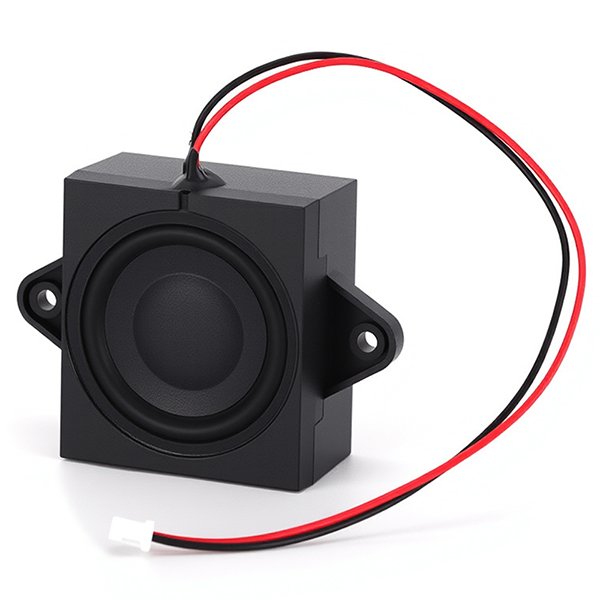
Let’s talk about what real OEM sound engineering looks like, what data matters, and how to choose a factory that can take your idea from a sketch to a production-ready speaker — without losing your mind.
Why China Remains the Global Hub for Loudspeaker Manufacturing
There are three reasons China stays on top: scale, supply chain density, and experience. High-end driver manufacturers, cabinet makers, and crossover specialists are often located within a few hours of each other in Guangdong and Zhejiang. That means shorter prototyping cycles and easier communication during development.
The latest industry numbers back this up. This isn’t a market that’s shrinking; it’s evolving.
What OEM Speaker Manufacturing Actually Includes
Too many brands think OEM means “send a drawing and wait for boxes.” Real OEM speaker manufacturing is much more hands-on. It involves driver selection, crossover design, cabinet damping, port tuning, compression driver matching, and final acoustic testing. The factory should treat your project like an engineering collaboration, not a piece order.
A serious partner will assign a project engineer, share measurement data, and propose value engineering changes that keep your product competitive. Some factories also offer ODM services, where you pick a proven platform and simply add your branding. Others focus on component-level OEM, meaning they’ll produce drivers or crossovers for your own assembly line.
| Service Type | What It Means |
|---|---|
| Full OEM | Your own design gets manufactured to exact mechanical and electrical specs. |
| ODM | Factory adapts a proven base design with your cabinet color, logo, and custom driver tuning. |
| Component Manufacturing | Factory ships drivers, crossovers, or complete speaker kits to your own facility. |
| Joint Development | Both sides share R&D cost and expertise under an exclusive product agreement. |
Screening before the RFQ
Then check the acoustic capability. A gated chamber or an anechoic room is expensive and cannot be faked for long; ask for a measurement of a sample you send, with the raw data, and compare it with the datasheet. A factory that can measure will show the curve; one that cannot will send a catalogue PDF.
Acoustic Expertise Is the Real Differentiator
This is where the “expertise” part comes in. Any factory can glue, screw, and solder. But acoustic expertise requires measurement equipment, listening tests, and iterative tuning. When you evaluate a loudspeaker manufacturer in China, ask about their anechoic chamber, Klippel distortion analyzer, and laser vibrometer. Those tools tell you whether the factory can prove a speaker performs to spec, or if they’re just guessing.
A well-equipped factory uses simulation software like LEAP, FEM, or BEM to predict frequency response and directivity before cutting wood. That saves weeks of physical trial-and-error. And when samples do need tweaks, they can adjust crossover values quickly and show you before/after test curves.
| Test | Why It Matters |
|---|---|
| On-axis frequency response | Shows tonal balance and overall voicing |
| Harmonic distortion (THD) | Reveals driver or port at limits |
| Impedance / phase plot | Verifies crossover and driver compatibility |
| Waterfall / spectral decay | Exposes cabinet resonances and ringing |
| Power compression test | Proves performance under continuous high power |
If you want to see how a China loudspeaker manufacturer with an in-house acoustic engineering team handles this, ask for production test reports. Most serious factories will share non-confidential data with qualified buyers.
Quality Control and Production Transparency
OEM speaker manufacturing isn’t just about how good the sample sounds. It’s about how well the factory controls every batch. A reliable loudspeaker manufacturer in China will give you a written quality control plan before production. It should cover incoming material inspection, mid-production checks, final frequency response testing, and burn-in time.
Also ask about traceability. If a voice coil supplier changes, will you know? If impedance fails on a production run, what’s their limit? The best factories will be honest about subcontracted parts and audit their suppliers the same way you audit them.
If you’re evaluating whether a factory is serious, check for ISO 9001 certification and product-level approvals like CE, RoHS, UL, and REACH. These aren’t just stickers — they show a system exists for consistent manufacturing.
How to Choose the Right Partner for OEM Speaker Manufacturing
Start with engineering depth, not price. Ask about the R&D team’s background, how many engineers hold audio-related degrees, and how many new OEM projects they do per year. Then check the lab. If they don’t have measurement equipment, it’s hard to call them an acoustic manufacturer.
Next, think about communication. A factory with English-speaking project managers can be the difference between a smooth 8-week project and a frustrating 6-month one. You also need a clear IP protection path. Sign an NDA before sending simulation files or crossover schematics, and make sure the contract states who owns the tooling and final designs.
At our factory in China , we publish our speaker OEM product lines openly because we’ve found that serious buyers appreciate transparency. Our acoustic engineering setup includes measurement labs and experienced engineers who speak both loudspeaker math and plain English. If you have a custom project in mind, you can get a free OEM consultation here .
Audit the line, not the showroom
Walk the line against the process flow and stop at every test station. Look for the fixture, the limit values and the record. A Rub & Buzz station with a fixed threshold and a log is worth more than a wall of certificates; a station that is switched off during the tour is a warning sign.
FAQ
How can I tell a factory from a trading company?
Ask for the process flow, the in-house step list and a first-article report with Cpk. A trader can supply documents but cannot show a winding line, a tool shop or a measurement chamber during an unannounced visit.
What should a factory audit cover?
Process flow against the line, test fixtures and records, traceability from carton to component lot, tooling maintenance, calibration certificates and the AQL plan. Certificates alone do not demonstrate control.
Should I own the tooling?
Yes for any product you intend to keep. Pay for the tool, record its number and cavity count, and define a buy-out price; otherwise a change of supplier means a new tool and a new sample approval.
Related reading
- How to Choose a Speaker Manufacturer in China
- OEM Electronics Manufacturer China: How to Source a One-Stop Manufacturing Partner
- Guide: From Concept to Mass Production with an OEM Speaker Manufacturer
More on OEM Manufacturing.
