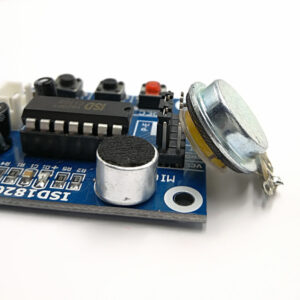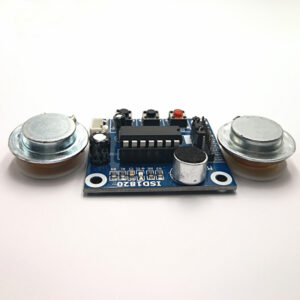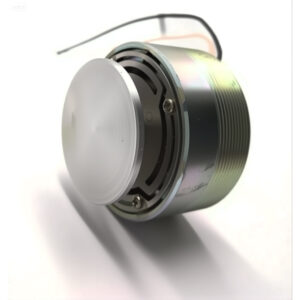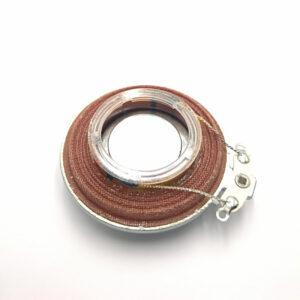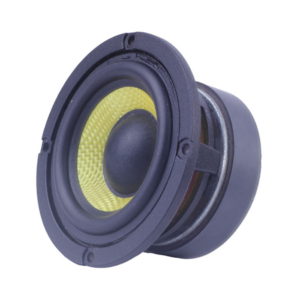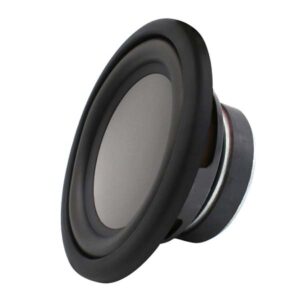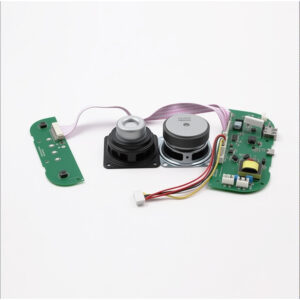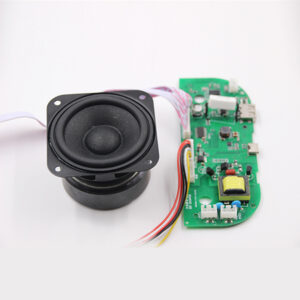
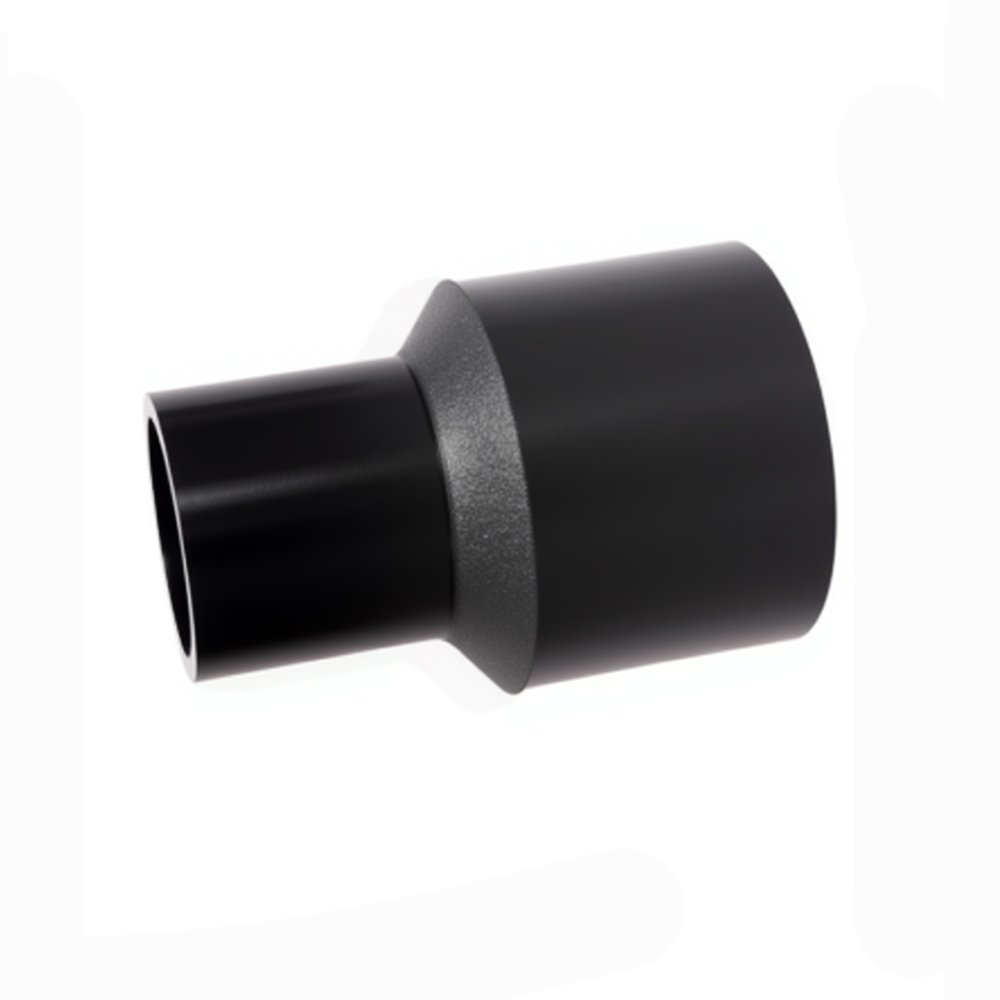
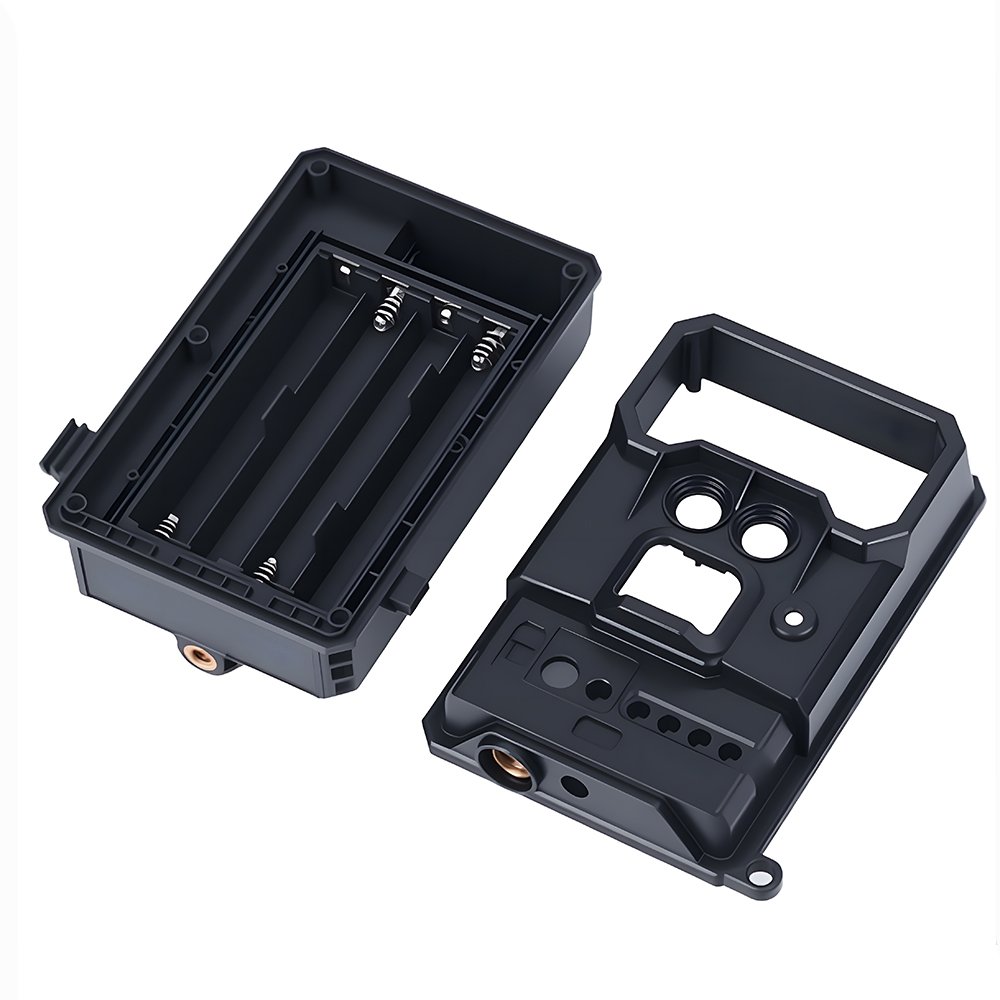
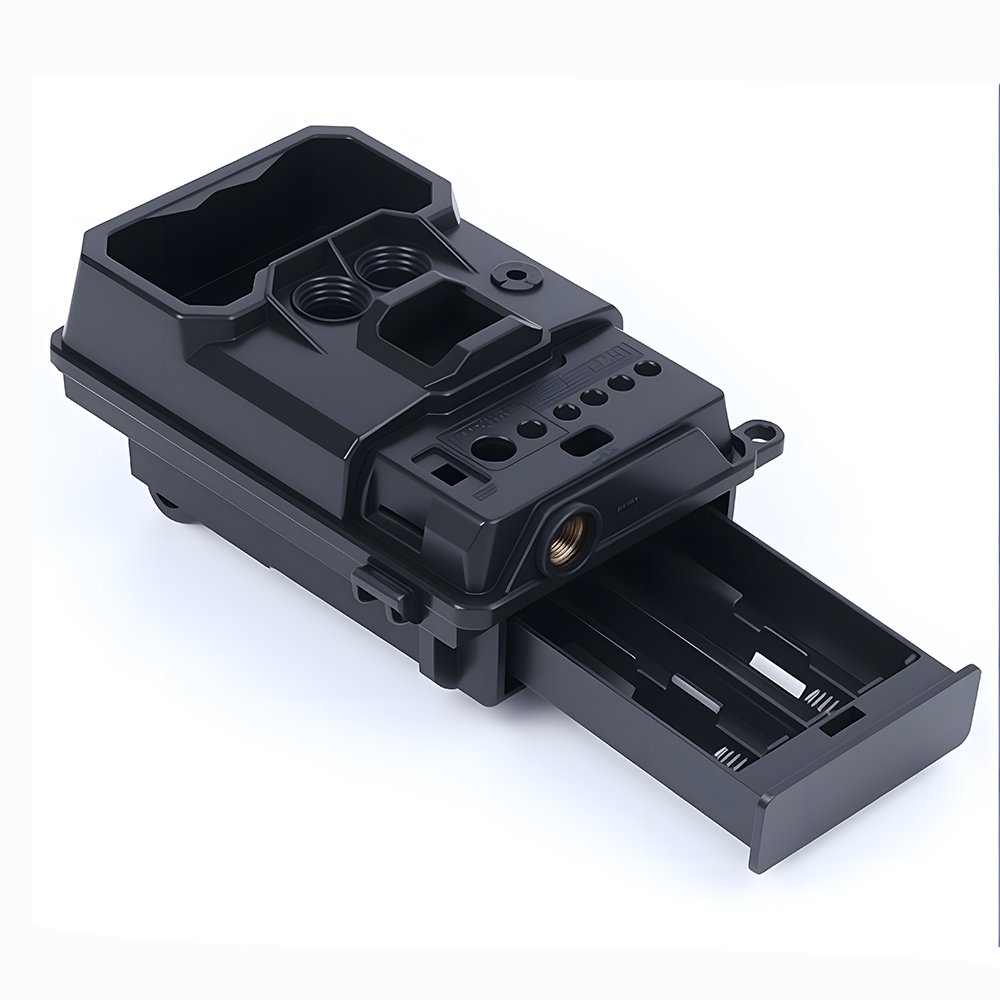
A moulded enclosure for industrial and robotic equipment, with the acoustic cavity, sealing land and mounting bosses designed together rather than as separate features (ZEH-6093).
Overview
Material choice follows the environment rather than the price. ABS is adequate indoors, PC-ABS adds impact strength and heat resistance to about 100 °C, PA66-GF adds stiffness and dimensional stability at the cost of moisture absorption, and TPU is used for over-moulded seals. For parts that must pass a drop test, the corner radii and the rib layout matter more than the wall thickness: a sharp internal corner concentrates stress and cracks at half the impact energy of a 1 mm radius.
The acoustic cavity is checked by filling the part with glass beads rather than by measuring wall thickness, because cavity volume — not wall section — sets the tuning.
Specifications
| Model | ZEH-6093 |
|---|---|
| Product type | Injection-moulded housing / plastic part |
| Material | ABS, PC-ABS, PA66-GF or TPU — to drawing |
| Tooling | P20 or S136 steel, single or multi-cavity |
| Finish | SPI mould finish, texture or paint |
| Validation | First article with Cpk ≥ 1.33 on critical dimensions |
| Customisation | Termination, dimensions, housing and tuning to your drawing |
| Compliance | RoHS 2011/65/EU and REACH; declarations with each shipment |
Design notes for industrial and robotic equipment
Industrial and robotic products need a transducer that survives dust, vibration and continuous duty rather than one that is tuned for music. A injection-moulded housing in this role is mounted behind a sealed grille and driven with alert tones and speech, so the design target is intelligibility at 1 m against 70 dBA of machinery, which is a signal-to-noise problem before it is a bandwidth problem. Cable retention and connector locking matter more than sensitivity: a harness that works loose in a moving axis is the most common failure in the field.
Typical applications
- Robot and AGV alerts
- Machine status annunciation
- Access control and intercoms
- Warehouse and logistics scanners
Customisation and verification
The build is defined by your drawing rather than by a stock list. Impedance, termination, magnet grade, diaphragm material and housing are fixed at sample approval, then held by a controlled BOM so that a later order does not drift acoustically. Units are 100 % swept, sensitivity-binned where the product needs it, and packed with the test data for the lot.
FAQ
What draft angle is needed?
1–3° per side on vertical walls; textured surfaces need 0.5–1° extra to avoid scuffing on ejection.
Which material for an outdoor housing?
PC-ABS or PA66-GF with UV stabiliser, plus a gasket land designed for 25–30 % compression.
Can you review my CAD before tooling?
Yes — a DFM review covering draft, wall thickness, gate position, sink and gasket compression is part of the quotation.
Related pages
injection-molded housings · ZEH-6087 · ZEH-6099 · Packaging Customization for Audio Products