
The battery is sized by the light, not by the music. Six RGB LEDs at 1 W each draw more than a 10 W amplifier at conversational level, and the runtime claim usually refers to audio only. State the test condition: volume, light mode and brightness, or the number is not comparable.
This guide treats customize LED light speakers promotional as a specification problem: what to measure, what to write on the drawing, and what to verify before the first carton ships.
The Strategic Advantage of Custom LED Light Speakers in Modern Marketing
Promotional events are fundamentally about creating a tangible connection between a brand and its audience. In an age where digital overload is common, physical experiences that engage multiple senses have surged in value. Custom LED light speakers serve as a powerful medium for this connection, offering dual utility: they provide necessary ambient or featured audio while functioning as a customizable visual display.
The psychological impact is clear. Light and sound are deeply tied to emotional response and memory formation. Whether it’s a product launch where the speaker’s color morphs to match the new product line, or a sponsored music segment where the lights dance to the beat, the technology creates a shareable “wow” moment.
From a practical branding perspective, these speakers offer extensive surface area for logo placement, brand colors, and messaging , both in their physical design and through their light patterns. They become a movable, reusable brand asset that works across various events, ensuring consistency and reinforcing identity.
Key Customization Options: From Hardware to Software Control
Customizing LED light speakers involves decisions across several layers, from physical aesthetics to intelligent software behavior. Understanding these options is key to aligning the technology with your event objectives and budget.
- Housing & Materials: Speakers can be housed in custom-shaped enclosures (e.g., your product silhouette, brand mascot) using materials like acrylic, aluminum, or sustainable woods. Size can vary from portable handheld units to larger tower-style systems for main stages.
- Branding Integration: This includes vinyl wraps, laser etching, or direct printing of logos and graphics onto the speaker grill or body. For premium impact, consider in-mold decoration where the graphic is fused into the casing material for durability.
- LED Type and Placement: Options include:
- RGB LED Strips: Flexible and ideal for outlining shapes or creating light bars.
- NeoPixel or Addressable LEDs: Each LED can be individually controlled, allowing for complex animations, text scrolling, and patterns.
- LED Matrices: A grid of LEDs capable of displaying simple animations or bitmapped logos.
- Placement can be behind speaker grills, along edges, or as a central panel display.
- Audio Quality & Power: Select driver size, amplifier power, and connectivity (Bluetooth 5.3, auxiliary input, USB-C, Wi-Fi) based on the event’s audio needs—from background ambiance to primary sound.
- Control Systems: Determine how the lights will be controlled.
- Pre-Set Modes: Built-in sound-reactive modes where lights automatically respond to audio input.
- Mobile App Control: A dedicated app allows staff to change colors, patterns, and brightness in real-time from a smartphone.
- DMX Control: For large-scale, professional stage integrations, DMX protocol allows lighting technicians to sync the speaker lights with the entire stage lighting rig via a console.
- Interactive Triggers: Lights can be programmed to react to specific triggers, like a product demo (via a button press) or social media hashtag usage (via API integration).
3. Software & Content Customization: This is where branding becomes dynamic. Work with your provider to program custom light shows that reflect your brand identity.
- Themed Animations: Create light sequences for different event moments—a pulsating “welcome” pattern, a dramatic product reveal sequence, or a celebratory “thank you” animation.
- Interactive Experiences: Develop modes where attendees can use a tablet kiosk to change the light patterns themselves, creating a personalized, participatory experience.
| Customization Tier | Ideal For | Key Features | Estimated Lead Time |
|---|---|---|---|
| Basic Branding | Small roadshows, giveaways | Vinyl logo wrap, standard sound-reactive LED mode, portable size. | 2-3 weeks |
| Enhanced Interactive | Product launches, pop-up shops | Custom color programming, app control, semi-custom housing, higher audio power. | 4-6 weeks |
| Full Integration | Large conferences, flagship events | Fully custom shape/DMX control, interactive triggers, high-resolution LED matrix, premium audio. | 8-12+ weeks |
Sync, control and the party feature set
Controls should work without the app. A physical button for power, volume and light mode is expected in this category; an app adds equalisation and scheduling but is not a substitute. The button's tactile force and its seal are the two failure points in a product that is used outdoors with wet hands.
Implementing Custom LED Speakers Across Different Event Types
The application of customized speakers varies significantly by event goal. Here’s how to deploy them strategically:
Product Launches: Use the speakers as the audio-visual centerpiece of the reveal. Program a unique light animation that triggers the moment the new product is unveiled, synchronizing light, sound, and emotion. The speakers can then continue to play curated music in brand colors throughout the venue.
Brand Activations & Pop-Ups: In these high-foot-traffic environments, the speakers must attract and engage. Interactive stations where passersby can connect their phones and instantly affect the speaker’s light show are highly effective. The speakers become both a draw and a tool for demonstrating brand personality.
Corporate Hospitality & VIP Events: Here, the goal is sophistication and ambient branding. Custom speakers with subtly etched logos and elegant, slowly shifting light patterns can enhance the atmosphere in lounges or during dinners. They provide a constant but gentle brand reminder without being intrusive.
Retail and In-Store Promotions: Integrate custom speakers into window displays or key product areas. For a sports brand, speakers could pulse with team colors during a game.
Post-Event & Long-Term Value: The investment extends beyond the event day. Custom speakers can be used in office spaces, showrooms, or as high-impact gifts for key partners , continuing to promote your brand long after the event concludes.
Measuring ROI and Best Practices for Success
Justifying the investment in custom technology requires a focus on tangible and intangible returns.
- Social Media Amplification: Track hashtags, shares, and posts featuring your branded speakers. The unique visual is highly “Instagrammable.”
- Lead Capture: Use the speaker attraction to drive sign-ups for contests or newsletters.
- Dwell Time: Measure how long attendees interact with or remain near the activation.
- Post-Event Surveys: Gauge recall by asking attendees to describe memorable elements.
- Press Coverage: Custom tech often attracts media and influencer attention.
- Content Generation: The speakers provide a backdrop for professional event photography and video.
- Start Early: Customization, especially for hardware, requires a significant lead time (see table above).
- Define Clear Objectives: Is it for ambiance, a main reveal, or attendee interaction? This guides all customization choices.
- Partner with a Specialist: Work with a manufacturer or AV integrator experienced in custom LED projects. They can advise on technical feasibility and cost-saving optimizations.
- Prioritize User Experience: Ensure the technology is reliable, intuitive for your staff to operate, and adds to—rather than complicates—the attendee programme.
- Plan for Logistics: Consider power requirements, transportation, and on-site technical support.
Conclusion: Lighting Up the Future of Experiential Marketing
Custom LED light speakers represent a potent convergence of sensory marketing and reusable brand technology. They break through the noise by making your brand not just seen or heard, but felt . The process—from conceptualizing the design to programming the interactive experience—allows for deep brand storytelling. While the initial investment is greater than off-the-shelf alternatives, the returns in engagement, memorability, and long-term asset utility make them a compelling choice for forward-thinking marketers. In the competitive arena of promotional events, a custom LED light speaker isn’t just a piece of equipment; it’s a brand protagonist, creating rhythmic, radiant memories that drive connection and conversation.
Light engine, diffuser and power
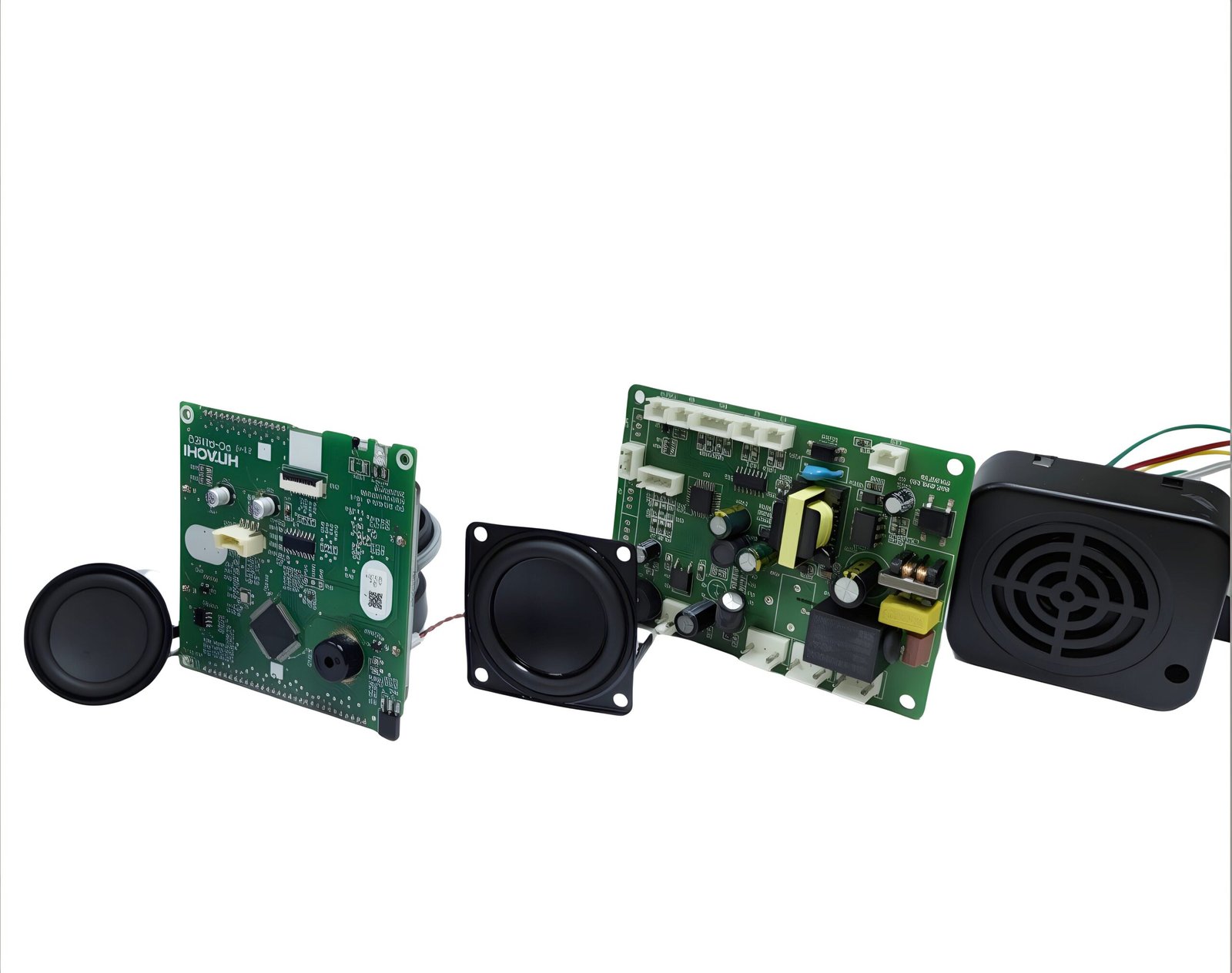
The LED supply is separate from the audio supply. A boost converter for a 6-12 V LED string and a 5 V rail for the amplifier share the cell but not the ground return; a star ground at the cell terminal keeps the switching current out of the audio path. A common ground with a long shared trace produces a buzz that follows the light pattern.
FAQ
How bright should an LED party speaker be?
Enough to light a 3-5 m area at 1-2 lux: about 100-300 lumens of useful output after the diffuser. More output costs battery and heat, and the effect saturates once the room is lit.
Can the LED driver interfere with the audio?
Yes, if the two share a ground return or run parallel traces. Use a star ground at the cell, keep the LED switching loop short and add a ferrite bead on the amplifier supply.
What IP rating does an outdoor LED speaker need?
IPX4 for splash resistance and IPX5 if it will be hosed down or used beside a pool. The diffuser gasket and the button boots are the parts that fail first.
Related reading
- Why Custom Speakers Are the Best Promotional Tool for Tech Companies
- MOQ Guide for Custom Speakers
- Top Recommended 8 Ohm Speakers for Hi-Fi Manufacturing
More on OEM Manufacturing.
