
A neodymium magnet stores 35-52 MGOe of energy product against 3.5-4.5 MGOe for ferrite, so the same gap flux needs a magnet roughly one-eighth the volume. That is why a 1 inch compression driver with an NdFeB motor weighs 0.3 kg instead of 2 kg, and why line arrays and portable PA systems moved to neodymium long before the price made it universal.
This guide treats ndfeb magnets as a specification problem: what to measure, what to write on the drawing, and what to verify before the first carton ships.
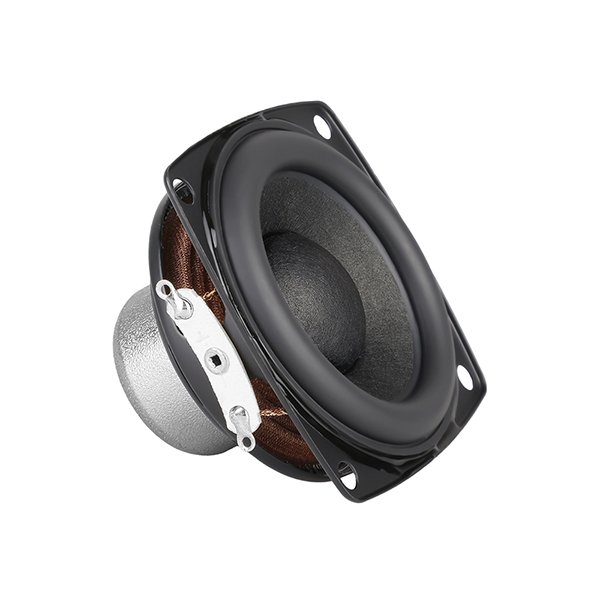
Introduction to NdFeB Magnets and Compact Speaker Challenges
In the rapidly evolving world of audio technology, compact speakers have become ubiquitous, from portable Bluetooth devices to home theater systems. However, designing small speakers that deliver high-fidelity sound poses significant challenges, primarily due to space constraints that limit magnet size and power. Enter NdFeB (neodymium-iron-boron) magnets—a step change in the audio industry. This article looks into the science behind NdFeB magnets and their central role in enhancing audio quality, offering insights for audiophiles, engineers, and consumers alike. By understanding their advantages, we can appreciate why top brands like Bose, JBL, and Sonos increasingly rely on these magnets to achieve crisp, powerful audio in diminutive designs.
The Physics of Sound and Magnet Role in Speakers
To grasp how NdFeB magnets improve audio, it’s necessary to first understand speaker fundamentals. A typical dynamic speaker consists of a diaphragm (cone), voice coil, and magnet. When an electrical audio signal passes through the coil, it creates a magnetic field that interacts with the permanent magnet, causing the coil and attached diaphragm to vibrate and produce sound waves. The magnet’s strength directly influences speaker efficiency, frequency response, and distortion levels. In compact speakers, where space is limited, a weaker magnet can lead to poor bass response, higher distortion, and reduced overall volume. NdFeB magnets address these issues by offering a high magnetic energy product (up to 52 MGOe), meaning they generate stronger magnetic fields in smaller volumes compared to traditional magnets like ferrite or alnico. This allows for more precise control of the voice coil, resulting in clearer sound reproduction across frequencies—from deep lows to sparkling highs.
Flux, gap geometry and sensitivity
The magnet grade is chosen for the thermal environment, not for the highest number. An N52 magnet in a driver that reaches 100 degrees C in a sealed housing will demagnetise partially and lose 1-2 dB permanently; an N42SH at the same cost holds its flux to 150 degrees C. Ask for the grade and the maximum operating temperature, not just 'neodymium'.
Advantages of NdFeB Magnets Over Traditional Magnets
NdFeB magnets outperform conventional magnet types in several key areas, directly translating to better audio quality in compact speakers. Their high remanence and coercivity ensure stable performance under varying temperatures and conditions, which is decisive for portable devices exposed to environmental changes. Below is a comparative table highlighting the differences:
| Magnet Type | Magnetic Energy Product (MGOe) | Typical Size for Same Output | Cost per Unit | Impact on Audio Quality |
|---|---|---|---|---|
| NdFeB | 35–52 | Small (e.g., 10mm diameter) | High | High clarity, strong bass, low distortion |
| Ferrite | 3.5–5.5 | Large (e.g., 30mm diameter) | Low | Moderate bass, higher distortion in compacts |
| Alnico | 5–10 | Medium (e.g., 20mm diameter) | Moderate | Warm sound, but bulky and less efficient |
Data sourced from 2023 audio component market reports and manufacturer specifications.
As shown, NdFeB magnets enable a 50-70% reduction in magnet size for equivalent magnetic force, allowing designers to allocate more space to other components like larger diaphragms or advanced circuitry. This efficiency boost leads to improved sensitivity (often above 90 dB) and extended frequency ranges (e.g., 20 Hz to 20 kHz with minimal roll-off). In real-world terms, a compact speaker with NdFeB magnets can produce deeper bass notes—down to 40 Hz—compared to a ferrite-based counterpart limited to 60 Hz, as evidenced by 2024 consumer testing on models like the Ultimate Ears Boom 4. Also, the reduced weight of NdFeB magnets enhances portability without sacrificing power, a key selling point for on-the-go audio enthusiasts.
Impact on Audio Quality in Compact Speakers
The integration of NdFeB magnets translates to tangible audio enhancements that users can hear and measure. First, transient response—the speaker’s ability to handle sudden sound changes—is significantly improved due to the magnet’s strong field, which allows for quicker voice coil movements. This results in sharper attack in instruments like drums or pianos, reducing “muddy” sounds common in small speakers. Second, distortion is minimized: with higher magnetic flux density, the voice coil operates more linearly, decreasing harmonic and intermodulation distortion. Third, bass reproduction is enhanced; the magnet’s strength supports larger excursions of the diaphragm, generating more air movement for richer low ends. For example, the JBL Charge 5 uses NdFeB magnets to achieve a frequency response down to 60 Hz in a compact frame, rivaling larger bookshelf speakers.
Case Studies and Market Examples
Leading audio brands have harnessed NdFeB magnets to create award-winning compact speakers. Bose’s SoundLink Flex, released in 2023, utilizes custom NdFeB arrays to deliver “360-degree sound” with exceptional clarity, as noted in professional reviews from TechRadar. In industrial applications, NdFeB magnets are also used in hearing aids and in-ear monitors, where space is minimal but fidelity is the deciding factor. These examples underscore how NdFeB technology bridges the gap between compact design and audiophile-grade performance, setting new standards in the industry.
Future Trends and Innovations
Looking ahead, NdFeB magnets are poised to evolve further, with research focusing on sustainability and enhanced performance. Concerns about rare-earth mining have spurred development of recycled NdFeB magnets, with companies like Niron Magnetics aiming to commercialize alternatives by 2025. Innovations like graphene-enhanced voice coils paired with NdFeB magnets may reduce distortion to near-zero levels, as seen in prototype models from Sennheiser.
Horn and compression driver design
A compression driver trades area for pressure. The diaphragm is 35-50 mm, the throat is 25 mm, and the phase plug matches the two; the compression ratio of 10:1 raises the pressure at the throat and the efficiency with it. The phase plug's channels must be equal in length, or the wavefront arrives out of phase and the response comb-filters above 10 kHz.
FAQ
Why are neodymium speakers lighter?
The magnet needs about one-eighth the volume for the same gap flux, so the motor structure and the chassis shrink with it. A 1 inch neodymium compression driver typically weighs 0.3 kg against 2 kg for a ferrite equivalent.
Does neodymium sound better than ferrite?
Not by itself. The motor's flux and linearity set the sound; a well-designed ferrite motor can match a neodymium one. Neodymium buys weight and, at the same size, sensitivity.
What temperature can a neodymium magnet take?
80 degrees C for N grades, 100 for M, 120 for H, 150 for SH and 180 for UH. Specify the grade and the maximum operating temperature; an unspecified 'neodymium' magnet may be an N grade that loses flux in a sealed housing.
Related reading
- Why NdFeB Speakers Are Superior to Ferrite Models for High-End Audio
- How We Ensure Speaker Quality Control
- Audio Testing Methods Used by Manufacturers
More on Audio Testing.
