
A neodymium magnet stores 35-52 MGOe of energy product against 3.5-4.5 MGOe for ferrite, so the same gap flux needs a magnet roughly one-eighth the volume. That is why a 1 inch compression driver with an NdFeB motor weighs 0.3 kg instead of 2 kg, and why line arrays and portable PA systems moved to neodymium long before the price made it universal.
The notes below apply to industrial audio horn specifications, with the measurement conditions and production checks that decide whether a claimed figure survives a shipment.
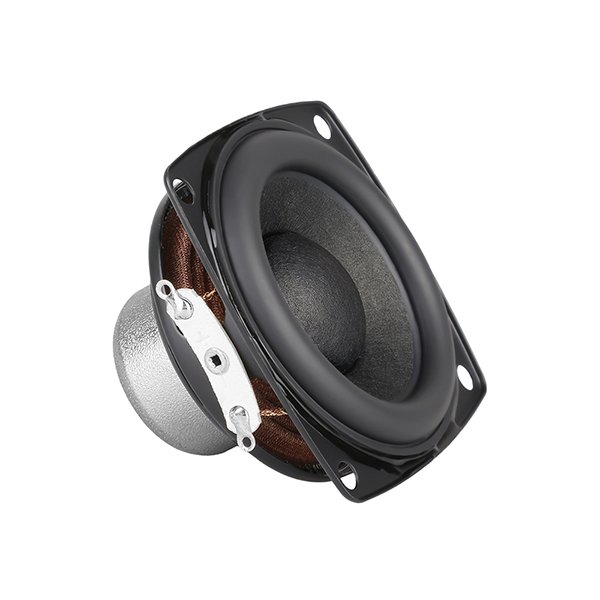
Core Acoustic Performance Specifications: The Voice of the Facility
The primary purpose of an industrial horn is to be heard. Its acoustic performance is quantifiably defined by several interrelated specifications that determine its effective range and clarity.
Sound Pressure Level (SPL): Measured in decibels (dB), SPL is the most critical specification. It defines the loudness or acoustic output power of the horn at a given distance. Industrial horns typically produce SPLs ranging from 100 dB to over 130 dB at 1 meter. For context, 120 dB is the threshold of pain and is common near jet engines. The required SPL depends on the ambient noise level. In a quiet warehouse, 105 dB might suffice, while a steel mill or press shop with ambient levels exceeding 95-100 dB may require horns rated at 120-130 dB to achieve a minimum 10-15 dB differential for the signal to be perceptible (as per OSHA and ISO 7731 standards). Recent advancements in transducer design and diaphragm materials have enabled more compact horns to achieve higher SPLs with greater efficiency.
Frequency Response and Tone: This specifies the range of audible frequencies (Hz) the horn can reproduce and where its output is most efficient. A pure-tone horn (e.g., a 800 Hz or 2.5 kHz tone) focuses energy into a narrow, piercing frequency band, maximizing perceived loudness and penetration through noise. Broadband or speech horns have a wider frequency response (e.g., 400 Hz – 5 kHz) to reproduce voice announcements intelligibly. The choice is application-dependent: evacuation alarms often use low-frequency tones (500-800 Hz) that travel farther and penetrate obstacles better , while alert signals might use higher, more attention-grabbing frequencies. Modern digital signal processing allows a single horn to output multiple pre-programmable tones and voice messages.
Directionality and Coverage Pattern: Unlike omni-directional sirens, horns are inherently directional. Their coverage pattern, often plotted in a polar chart, shows how sound propagates. A narrow coverage pattern (e.g., 60°-90°) projects sound like a beam over long distances, ideal for perimeter fencing or linear conveyor belts. A wider pattern (up to 120°) provides broader coverage for open work areas.
Electrical & Physical Durability Specifications: Built for the Long Haul
Industrial environments are brutal. Key electrical and construction specs ensure the horn not only works on day one but continues to function for years under duress.
Power Rating and Impedance: Electrical input power, measured in watts (W), is a key driver of acoustic output. Common ratings are 10W, 25W, 50W, and 100W . It’s necessary to match the horn’s impedance (e.g., 8Ω, 16Ω, 25V/70V line) with the amplifier or controller’s output. Underspecifying power leads to inadequate sound coverage; overspecifying can damage the horn. The trend is toward higher efficiency, producing more SPL per watt. Class-D amplification technology is now being integrated directly into “self-amplified” or “active” horns , simplifying installation and improving energy efficiency by up to 30% over traditional analog systems.
Ingress Protection (IP) Rating: The IP code (e.g., IP66, IP67, IP69K) defines protection against solids (first digit) and liquids (second digit). For industrial use, IP65 is a minimum , offering complete dust protection and resistance to low-pressure water jets. IP66/67 is standard for outdoor use , defending against powerful jets and temporary immersion. IP69K signifies protection against close-range high-pressure, high-temperature washdowns, necessary for food & beverage and pharmaceutical plants. The demand for IP69K-rated devices has grown significantly due to stringent hygiene protocols.
Material and Construction: Housing materials determine resilience. Cast aluminum or stainless steel (often 316-grade) housings are standard for corrosive, outdoor, or heavy-impact environments. Internal components like the diaphragm and voice coil must withstand constant vibration and temperature swings. High-temperature voice coil formers and butyl rubber surrounds are common in premium models.
Operating Temperature Range: A broad temperature specification (e.g., -30°C to +70°C ) ensures operation in unheated warehouses, cold storage, or foundries. Components must resist thermal cycling without performance degradation or physical failure.
Horn and compression driver design
The horn sets the coverage and the low cutoff. A 60 by 40 degree horn with a 250 mm mouth controls its pattern down to about 500 Hz; below that the sound wraps around the mouth and the pattern widens. The horn's material matters as well: a thin ABS horn resonates at 1-2 kHz, while a reinforced or die-cast horn pushes the resonance above the crossover.
Compliance, Connectivity, and Modern Integration
Today’s industrial horns are not isolated devices; they are nodes in a larger safety and communication ecosystem.
Certifications and Compliance: Depending on the region and industry, horns may require marks like UL Listed, cULus, ATEX/IECEx (for hazardous areas), IEC 60945 (marine), or DNV GL . These are not mere checkboxes; they verify the device has been tested to survive specific threats like explosions, salt spray, or electromagnetic interference. For instance, an ATEX Zone 2 horn is engineered to prevent ignition in areas with potentially explosive atmospheres.
Voltage Options and Connectivity: Beyond standard low-voltage AC/DC, horns are available for 24VDC, 48VDC, 110VAC, and 230VAC systems, often with broad voltage tolerances (±20%) to account for line fluctuations. The rise of PoE (Power over Ethernet) and PoE+ is a step change, allowing a single Ethernet cable to deliver power, audio, and control data. This simplifies installation and integration with IP-based Public Address and Voice Alarm (PA/VA) systems, a core part of modern building safety protocols like EN 54.
Intelligent Features: The era of “dumb” horns is ending. Addressable horns, which can be individually controlled and monitored via a data bus (e.g., RS-485, CAN bus), are becoming standard. They allow for zoned messaging, automatic supervision of the transducer for faults, and remote diagnostics . Integration with IoT platforms enables predictive maintenance—monitoring parameters like coil temperature to alert technicians before failure.
| Standard / Mark | Scope and Application |
|---|---|
| UL 464 | Standard for Audible Signal Appliances in the U.S. |
| ATEX Directive 2014/34/EU | Equipment for use in Potentially Explosive Atmospheres (Europe) |
| IECEx | International certification for explosive atmospheres. |
| IEC 60945 | Maritime navigation and radiocommunication equipment. |
| EN 54-3 | Fire detection and alarm systems – Audible alarm devices. |
| IP Code (IEC 60529) | International standard for ingress protection ratings. |
Selecting the Right Horn: A Specification-Driven Checklist
Choosing a horn requires cross-referencing specs with your environmental and performance needs.
- Assess the Noise: Measure or estimate the ambient dB(A) level at the target location.
- Determine Required SPL: Add 10-15 dB to the ambient level for the target horn SPL at the listener’s distance (accounting for distance attenuation, roughly 6 dB loss per doubling of distance).
- Define the Signal: Choose tone-only (specify frequency) or voice-capable (check frequency response).
- Audit the Environment: Specify the required IP rating (indoor/outdoor, washdown?) and material (corrosive chemicals present?).
- Check Temperature Extremes: Ensure the operating range covers your facility’s highs and lows.
- Verify Power System: Match voltage, wattage, and impedance to your existing amplifier or power source.
- Confirm Compliance: List mandatory certifications for your industry and region.
- Plan for Integration: Consider future needs—will this be part of an addressable, networked PA/VA system? Opt for forward-compatible models.
Cost, supply and the ferrite alternative
The price is set by the dysprosium and terbium content needed for the high-temperature grades, so an N42SH costs more than an N52 without the heavy-rare-earth addition. Design changes that lower the operating temperature can allow a cheaper grade.
FAQ
Why are neodymium speakers lighter?
The magnet needs about one-eighth the volume for the same gap flux, so the motor structure and the chassis shrink with it. A 1 inch neodymium compression driver typically weighs 0.3 kg against 2 kg for a ferrite equivalent.
Does neodymium sound better than ferrite?
Not by itself. The motor's flux and linearity set the sound; a well-designed ferrite motor can match a neodymium one. Neodymium buys weight and, at the same size, sensitivity.
What temperature can a neodymium magnet take?
80 degrees C for N grades, 100 for M, 120 for H, 150 for SH and 180 for UH. Specify the grade and the maximum operating temperature; an unspecified 'neodymium' magnet may be an N grade that loses flux in a sealed housing.
Related reading
- Top 5 Horn Designs for Long-Throw Audio Applications
- What Makes a Neodymium Horn Driver More Efficient?
- How to Choose the Right Audio Horn for Public Address Systems
More on Speaker Design.
