
The trade is thermal and financial. NdFeB loses strength above its grade-dependent operating temperature, from 80 degrees C for N grades to 150 degrees C for SH grades, and it corrodes without a nickel or epoxy coating. Ferrite tolerates 250 degrees C and costs a fraction per kilogram, so a woofer with space for a large magnet often uses ferrite by design.
The notes below apply to audio horn public, with the measurement conditions and production checks that decide whether a claimed figure survives a shipment.
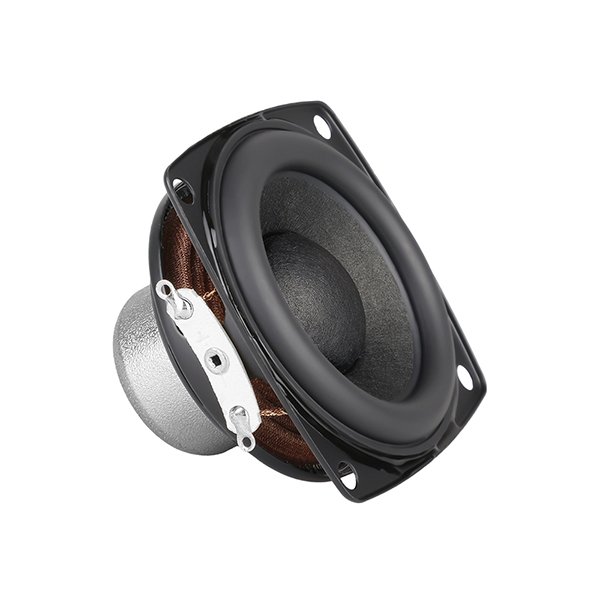
Understanding the Core Function and Types of Audio Horns
At its heart, a public address horn is a transducer designed to convert electrical audio signals from an amplifier into acoustic energy, projecting sound over long distances and often in challenging environments. Unlike standard loudspeakers for music, horns are optimized for voice intelligibility and sound projection .
- Constant-Impedance Horns: Traditionally connected in parallel to a 70V or 100V amplifier output. They are simple, reliable, and allow multiple horns to be run on a single amplifier channel due to their transformer-based design. They are the workhorse of wide-area coverage.
- Low-Impedance Horns (8-ohm): Function like traditional loudspeakers, requiring direct connection to an amplifier channel. They are often used for higher-fidelity applications or where fewer units are needed, offering potentially better sound quality but less flexibility in large, distributed systems.
- Paging Horns vs. Sound Projectors: Paging horns are typically smaller, with a narrower dispersion pattern for directional sound. Sound projectors are larger, more powerful units designed for extreme distances and high ambient noise areas, such as oil rigs or shipping yards.
The choice between these types forms the foundation of your system design. For 2024, the industry trend continues to favor networked audio over IP (AoIP) systems, where even traditional horns are powered by intelligent, addressable amplifiers that allow for zone-by-zone control and monitoring, blending classic hardware with modern digital management.
Key Technical Parameters for Informed Selection
- Sensitivity (dB SPL, 1W/1m): This measures how loud the horn is with just one watt of input power at a one-meter distance. A higher sensitivity rating (e.g., 110 dB) means the horn is more efficient, producing more sound with less amplifier power.
- Power Handling (Continuous/Peak): Expressed in watts, this indicates how much power the horn can handle continuously without damage. Match this with your amplifier’s output. For constant-voltage systems, ensure the horn’s transformer has a wattage tap (e.g., 5W, 10W, 20W) that suits the required SPL for its location.
- Maximum Sound Pressure Level (Max SPL): The absolute loudest output the horn can produce. This is the figure that determines if the horn can overcome ambient noise. For outdoor industrial areas, you may need horns with a max SPL of 120-130 dB or higher.
- Dispersion Pattern (Coverage Angle): Stated in degrees (e.g., 90°H x 40°V), this defines the shape of the sound field. A wide horizontal pattern covers broad areas like a concourse, while a narrow pattern projects sound in a tight beam over long distances, like along a runway.
- Frequency Response: For voice intelligibility, the critical range is 500 Hz to 4,000 Hz . A horn with a tailored response in this range will produce clearer speech than one with a wide but uneven response. Music reproduction requires a wider range (e.g., 100 Hz – 15,000 Hz).
- Ingress Protection (IP) Rating: This certifies environmental durability. An IP65 rating signifies dust-tight and protected against low-pressure water jets, suitable for most outdoor applications. IP66/67 offers protection against stronger jets or temporary immersion, necessary for harsh industrial or marine settings.
- Indoor Commercial (Offices, Retail, Atria): Here, aesthetics and even coverage matter. Lower-power, wider-dispersion horns (often in white) are common. Intelligibility is key, but max SPL requirements are lower (90-100 dB). Architectural speakers or small horns are often used.
- Transportation Hubs (Airports, Train Stations): These spaces combine large, noisy indoor areas with outdoor platforms. A mix is required: high-SPL, weather-resistant projectors for platforms and open garages, and distributed horns with excellent intelligibility for concourses. Systems must integrate with mass notification protocols.
- Industrial & Manufacturing: The supreme challenge. High ambient noise (85-110 dB+) from machinery requires horns with very high max SPL (125 dB+). They must also be extremely rugged (high IP rating, often corrosion-resistant) and capable of cutting through low-frequency rumble. Explosion-proof horns (with ATEX/IECEx certifications) are mandatory in hazardous areas like petrochemical plants.
- Outdoor Public Spaces (Stadiums, Parks, Campuses): Weather resistance (IP65+) is standard. Coverage is the main challenge, often requiring a strategic array of horns with carefully selected dispersion patterns to blanket the area without creating excessive noise pollution beyond the perimeter.
Horn and compression driver design
The horn sets the coverage and the low cutoff. A 60 by 40 degree horn with a 250 mm mouth controls its pattern down to about 500 Hz; below that the sound wraps around the mouth and the pattern widens. The horn's material matters as well: a thin ABS horn resonates at 1-2 kHz, while a reinforced or die-cast horn pushes the resonance above the crossover.
The Installation & System Integration Checklist
- Amplifier Matching: Ensure the amplifier’s wattage output per channel aligns with the total wattage tap sum of all horns on that line in a constant-voltage system. For low-impedance horns, match the impedance. Provide 20-30% extra amplifier headroom to prevent clipping.
- Zoning and Wiring: Design logical audio zones (e.g., by floor, hazard area, or function). Use appropriate gauge speaker wire; for long runs in 70V/100V systems, calculate voltage drop to ensure performance. Modern systems use Category cable for AoIP, carrying data, power, and audio to endpoints.
- Mounting and Aiming: Position horns to cover the target area effectively, considering the dispersion pattern. Aim them toward the listener zone, not at walls or obstacles.
- Compliance and Standards: Verify the system meets relevant local and international standards for emergency sound systems (e.g., NFPA 72 in the U.S., EN 54 in Europe), which mandate minimum sound pressure levels and intelligibility criteria in public buildings.
Comparative Analysis of Horn Types for Common Scenarios
| Application Scenario | Recommended Horn Type | Key Parameters to Prioritize | Typical Power & SPL Needs | Notes |
|---|---|---|---|---|
| Warehouse Indoor | 70V Compact Paging Horn | Sensitivity, 90°-120° Dispersion, IP54 (dust/drip) | 10-30W taps, 105-115 dB Max SPL | Mount high, angled down onto aisles. Prioritize voice mid-range. |
| Factory Floor (Noisy) | 70V/100V High-Power Sound Projector | Max SPL (>125 dB), Durability (IP66), Frequency Response (cutting through low-end noise) | 30-60W taps, 125-135 dB Max SPL | Often made of aluminum or polycarbonate. May require horns with specific frequency "shouts." |
| School Campus Outdoor | 70V Weather-Resistant Horn | Weatherproofing (IP65), Wide Dispersion, Aesthetics | 15-30W taps, 110-120 dB Max SPL | Use multiple units for even coverage. Consider vandal resistance. |
| Airport Baggage Claim | 70V Wide-Dispersion Horn | Intelligibility, Wide/Even Coverage (e.g., 90°x90°), Aesthetic Design | 5-15W taps, 100-110 dB Max SPL | Part of a dense, distributed system. Often integrated into ceiling. |
| Hazardous Area (Zone 1) | Certified Explosion-Proof Horn | ATEX/IECEx Certification, Max SPL, Stainless Steel or Brass Construction | As per site classification, very high SPL | Must be sourced from specialist manufacturers. Wiring enters via certified conduit seals. |
Cost, supply and the ferrite alternative
Ferrite is not obsolete. A 12 inch woofer with a 1.2 kg ferrite magnet costs less than the equivalent neodymium motor and tolerates a hot voice coil; the penalty is weight, which matters in portable systems and barely matters in a fixed installation. The choice is a system decision: weight, efficiency, cost and thermal environment together.
FAQ
Why are neodymium speakers lighter?
The magnet needs about one-eighth the volume for the same gap flux, so the motor structure and the chassis shrink with it. A 1 inch neodymium compression driver typically weighs 0.3 kg against 2 kg for a ferrite equivalent.
Does neodymium sound better than ferrite?
Not by itself. The motor's flux and linearity set the sound; a well-designed ferrite motor can match a neodymium one. Neodymium buys weight and, at the same size, sensitivity.
What temperature can a neodymium magnet take?
80 degrees C for N grades, 100 for M, 120 for H, 150 for SH and 180 for UH. Specify the grade and the maximum operating temperature; an unspecified 'neodymium' magnet may be an N grade that loses flux in a sealed housing.
Related reading
- Box Speakers for Commercial Audio Systems
- Why 4 Ohm Speakers Are Dominant in Car Audio Systems
- What Are the Key Specifications of an Industrial Audio Horn?
More on Speaker Design.
