
Supplier selection is a capability check, not a price comparison. The questions that separate a factory from a trading company are concrete: does it wind its own voice coils, does it cut its own tooling, does it own a gated measurement chamber, and can it show a first-article report with Cpk on the dimensions that matter?
The notes below apply to assess quality loudspeaker chinese factory, with the measurement conditions and production checks that decide whether a claimed figure survives a shipment.
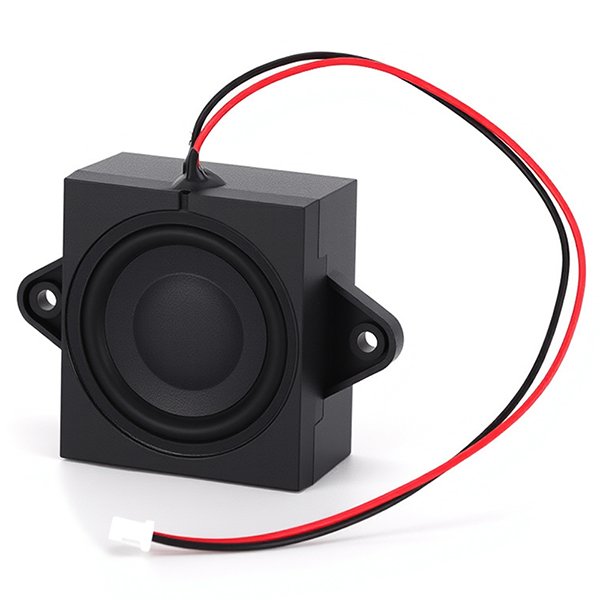
This guide provides a step-by-step framework, blending technical benchmarks, process audits, and strategic insight, to help you accurately assess loudspeaker quality from any Chinese manufacturer.
Core Performance Metrics: The Quantitative Foundation of Quality
Before visiting a factory or even requesting samples, define your quantitative benchmarks. A quality loudspeaker’s performance is rooted in measurable engineering parameters. Here are the non-negotiable metrics to request and verify.
Frequency Response & Smoothness: This graph is the speaker’s “fingerprint.” Request a 1/24-octave smoothed anechoic chamber measurement. Look for a wide, usable bandwidth (e.g., 45Hz-20kHz ±3dB for a bookshelf) but, critically, assess smoothness. Sharp peaks or dips (>5dB) within the midrange (300Hz-3kHz) indicate resonance or poor driver integration and lead to listener fatigue.
Distortion (THD & IMD): Total Harmonic Distortion (THD) and Intermodulation Distortion (IMD) reveal the speaker’s linearity and clarity under load. Demand distortion plots across frequency and at multiple power levels (e.g., 1W, 10W). Quality drivers maintain THD below 1% in the critical midband, even at higher outputs. Rising distortion below the port tuning or at high frequencies flags component limitations.
Sensitivity and Maximum SPL: Sensitivity (dB @ 1W/1m) indicates efficiency. A higher sensitivity (e.g., 90dB+) requires less amplifier power. However, correlate this with Maximum Sound Pressure Level (SPL) . A quality factory will provide calculated and/or measured max SPL data, showing how loud the speaker can play before compression or distortion becomes excessive (e.g., 105 dB SPL continuous).
Impedance Curve & Minimum Impedance: The impedance curve tells you about the speaker’s electrical behavior and complexity for the amplifier. A benign, well-managed curve (minimum impedance staying above, say, 3.5-4 ohms for a “4-ohm” speaker) is a sign of competent crossover design. A dip to very low impedance (e.g., below 2.5 ohms) can stress amplifiers.
The Factory Audit: Assessing Capability, Process, and "The Gut Feel"
1. Engineering & R&D Capability: Don’t just meet sales staff. Insist on a meeting with the lead acoustic engineer. Discuss their design philosophy, simulation tools (e.g., Klippel, COMSOL, Finite Element Analysis), and testing protocols. A strong R&D team proactively solves problems rather than just copying reference designs.
- ESD Protection: Are workers grounded when handling drivers and crossovers?
- Crossover Assembly: Is it hand-soldered on a jig or a messy, non-standard process? Are high-quality, temperature-stable components (e.g., film capacitors, air-core inductors) available as options?
- Adhesives & Sealing: Is a consistent, measured amount of adhesive used for driver gasketing and cabinet bracing?
- In-Line Testing: Are there automated or semi-automated test stations (e.g., listening to a sine wave sweep, checking impedance) for every unit before boxing? This is a major differentiator.
- Finished Goods Audit (FGA): What percentage of units undergo a final random audit, and to what standard?
3. The Listening Room & Measurement Lab: The presence of a properly treated, dedicated listening room (not the CEO’s office) shows a commitment to subjective validation. If they rely solely on “in-room” measurements, their data is not trustworthy for fundamental assessment.
4. Supply Chain Transparency: Inquire about key component sourcing. Do they wind their own voice coils? Source membranes from specialized suppliers? Control the magnet assembly? Transparency here indicates supply chain stability and quality control over core IP.
Commercial terms, IP and tooling ownership
IP protection needs more than an NDA. Register the design where the product will sell, keep the acoustic tuning file and the crossover schematic off shared drives, and define which party owns the modifications made during development. Exclusivity should be time-bound and tied to volume, otherwise it costs the factory nothing to ignore.
| Stage | Evidence to request | Red flag |
|---|---|---|
| Capability | Process flow, in-house tooling list | All processes subcontracted |
| Acoustics | Own anechoic or gated chamber | Datasheet values only |
| Quality | Cpk on critical dimensions, AQL plan | No first-article report |
| Traceability | Lot code to magnet and voice coil batch | No batch records |
| Commercial | Tooling ownership and NDA terms | Tooling held by a broker |
The Evolving Market: AI, Sustainability, and Post-Pandemic Realities
The assessment criteria are not static. Leading Chinese factories are at the forefront of several key trends that now inform quality.
Some use AI algorithms to analyze thousands of measurement datasets to predict failure points and fine-tune designs. Inquire if they use such technologies.
Material Innovation & Sustainability: Quality is increasingly linked to advanced, often sustainable, materials. Look for the use of:
- Bio-based composites: Membranes made from bamboo pulp, flax, or recycled cellulose.
- Low-CO2 Processes: Factories with ISO 14001 certification and clear policies on reducing volatile organic compounds (VOCs) in adhesives and finishes.
- Packaging: A shift from foam plastics to molded pulp from recycled paper.
Post-Pandemic Logistics & Testing: The 2021-2023 supply chain crisis separated the resilient from the fragile. Assess their inventory strategy for long-lead items (like amplifiers for active speakers). Do they have contingency plans? This became a standard practice and demonstrates adaptability and a commitment to transparent validation for remote clients.
Strategic Partnership vs. Transaction: The highest quality often emerges from a partnership, not a one-off purchase. Assess their willingness to engage in Joint Development (JD) projects, offer exclusive模具 (molds/tooling) options for your design, and provide transparent Open-Book Costing for complex projects. This collaborative approach is a hallmark of a top-tier factory.
Screening before the RFQ
Then check the acoustic capability. A gated chamber or an anechoic room is expensive and cannot be faked for long; ask for a measurement of a sample you send, with the raw data, and compare it with the datasheet. A factory that can measure will show the curve; one that cannot will send a catalogue PDF.
FAQ
How can I tell a factory from a trading company?
Ask for the process flow, the in-house step list and a first-article report with Cpk. A trader can supply documents but cannot show a winding line, a tool shop or a measurement chamber during an unannounced visit.
What should a factory audit cover?
Process flow against the line, test fixtures and records, traceability from carton to component lot, tooling maintenance, calibration certificates and the AQL plan. Certificates alone do not demonstrate control.
Should I own the tooling?
Yes for any product you intend to keep. Pay for the tool, record its number and cavity count, and define a buy-out price; otherwise a change of supplier means a new tool and a new sample approval.
Related reading
- Top Global Standards for Certifying Loudspeaker Safety and Quality
- How We Ensure Speaker Quality Control
- How Speaker Impedance Affects Sound Quality
More on Audio Testing.
