
A neodymium magnet stores 35-52 MGOe of energy product against 3.5-4.5 MGOe for ferrite, so the same gap flux needs a magnet roughly one-eighth the volume. That is why a 1 inch compression driver with an NdFeB motor weighs 0.3 kg instead of 2 kg, and why line arrays and portable PA systems moved to neodymium long before the price made it universal.
The notes below apply to neodymium horn driver more, with the measurement conditions and production checks that decide whether a claimed figure survives a shipment.
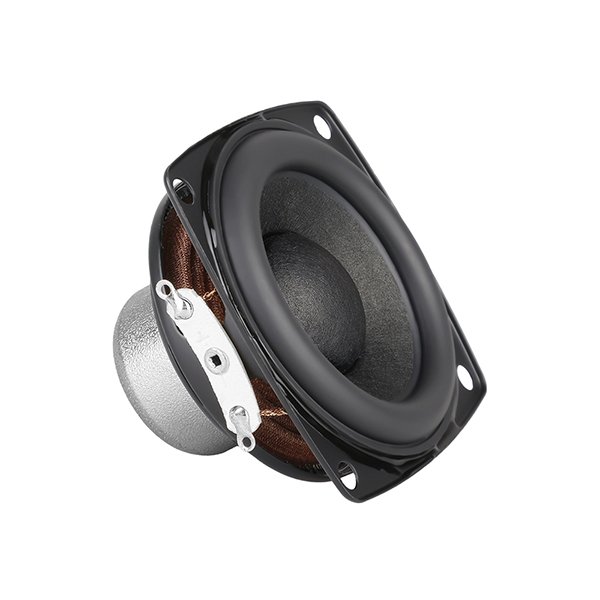
The Core Advantage: Understanding Neodymium's Magnetic Superiority
The fundamental efficiency gain of a neodymium horn driver begins at the atomic level. Neodymium magnets, specifically those in the NdFeB (Neodymium-Iron-Boron) family, are the strongest type of permanent magnet commercially available today. Their exceptional magnetic energy product (BHmax) is the key metric.
To understand this, consider the role of the magnet in a driver’s motor structure. It creates a steady magnetic field in the gap where the voice coil sits. The strength and density of this field directly determine the motor’s force factor (Bl) , which describes how effectively electrical energy from the amplifier is converted into mechanical motion of the diaphragm. A stronger magnetic field in the gap means a higher Bl product, leading to greater transducer sensitivity—more sound pressure level (SPL) output for a given input of electrical power.
The following table compares typical magnetic properties of neodymium with traditional ferrite (ceramic) and another alternative, Alnico:
| Magnet Material | Maximum Energy Product (BHmax) – MGOe* | Coercivity (Resistance to Demagnetization) | Relative Strength (vs. Ferrite) | Key Driver Application Impact |
|---|---|---|---|---|
| Neodymium (NdFeB) | 35-52 | Very High | 6-12x stronger | Enables vastly smaller, lighter magnets with equal or greater gap flux density. Dramatically increases motor efficiency (Bl). |
| Alnico | 5.5 | Low to Medium | ~2x stronger | Warm, classic sound but prone to demagnetization. Less efficient for high-power modern designs. |
| Ferrite (Ceramic) | 3.5-4.5 | High | 1x (Baseline) | Cost-effective and stable, but bulky and heavy. Limits miniaturization and requires large magnetic structures. |
This raw magnetic power allows engineers to use a much smaller neodymium magnet to achieve the same magnetic flux density as a large, heavy ferrite magnet. This reduction in magnet size and weight is the first step toward a more efficient system overall.
Engineering Efficiency: From Magnetic Power to Acoustic Output
A stronger magnet alone doesn’t guarantee a better driver. The true efficiency leap comes from how this powerful magnetic force is harnessed through precision engineering.
1. Reduced Mass and Increased Responsiveness: The compact size of the neodymium magnet allows for a radically different motor structure design. The entire magnetic assembly—front plate, pole piece, and magnet—can be made smaller and lighter. This often leads to a lighter moving assembly (voice coil and diaphragm). This results in superior transient response , lower distortion, and higher efficiency, as less energy is wasted moving mass.
2. Optimized Magnetic Circuit and Thermal Management: The high flux density from a neodymium magnet enables a more focused and efficient magnetic circuit. Designers can create a shorter, more symmetrical magnetic gap with extremely high flux density. This precision improves linearity and control over the voice coil. Heat is the enemy of speaker drivers; it increases voice coil resistance (power compression) and can demagnetize weaker magnets. The smaller, denser neodymium assembly can often be more effectively coupled to cooling structures like aluminum heat sinks or phase plugs, allowing the driver to handle more continuous power without losing efficiency.
3. Higher Sensitivity and Power Handling: The combined effect of a high Bl product and a lightweight, well-controlled moving system is a driver with exceptionally high sensitivity , often 3-6 dB greater than a comparable ferrite driver. This means a neodymium driver can produce the same loudness with half the amplifier power. For large-scale sound reinforcement, this translates to lower power amplifier requirements, reduced electrical draw, and less heat generation in amplifier racks—a cascade of system-wide efficiencies.
Cost, supply and the ferrite alternative
Ferrite is not obsolete. A 12 inch woofer with a 1.2 kg ferrite magnet costs less than the equivalent neodymium motor and tolerates a hot voice coil; the penalty is weight, which matters in portable systems and barely matters in a fixed installation. The choice is a system decision: weight, efficiency, cost and thermal environment together.
Performance in the Real World: Data, Applications, and Trends
The theoretical advantages of neodymium horn drivers are borne out in measurable performance and market adoption. In live sound, the shift is nearly complete. Major manufacturers like JBL, B&C Speakers, 18Sound, and RCF now offer neodymium-based compression drivers as the premium standard in their line arrays and high-output point-source cabinets.
Consider a practical comparison from recent product lines (2023-2024 data). A typical 1.75″ voice coil ferrite compression driver might have a sensitivity of 111 dB (1W/1m) . A comparable neodymium counterpart with advanced engineering often reaches 115 dB or higher . This 4 dB difference means the neodymium driver produces over 2.5 times the acoustic power from the same electrical input. For a system designer, this could mean using fewer speaker enclosures to achieve the target SPL, simplifying rigging, reducing truck space, and cutting overall weight.
The weight savings are staggering. A large-format ferrite driver can weigh 15-20 lbs (7-9 kg). Its neodymium equivalent with equal or greater output often weighs under 10 lbs (4.5 kg). In array applications where dozens of drivers are flown overhead, this weight reduction is not just an convenience—it is a critical safety and logistical advantage, allowing for larger arrays within structural weight limits and easier handling.
The primary trade-off has historically been cost and temperature sensitivity. Neodymium magnets are more expensive and can begin to lose magnetism if heated beyond their maximum operating temperature (Curie temperature), which is lower than that of ferrite. However, modern engineering has largely mitigated the latter through sophisticated cooling and the use of more stable neodymium grades (e.g., N48AH with higher Hcj ratings). The cost premium remains but is increasingly justified by the total system benefits: savings on amplifiers, shipping, rigging, and improved performance.
The Future of Driver Technology and System Design
The efficiency of neodymium horn drivers is enabling new trends in professional audio. The push for miniaturization and increased output continues, with drivers becoming both more powerful and physically smaller. This allows for more compact, visually discreet installations in modern architectural spaces without sacrificing sound pressure or fidelity.
In practice, the high efficiency and excellent transient response of neodymium drivers make them ideal partners for modern Class-D amplification and advanced DSP . System processors can apply precise tuning and protection without having to compensate for a sluggish, inefficient motor system. This synergy creates cleaner, more dynamic, and more reliable sound systems.
Research continues into magnet technology and motor design. While neodymium represents the current peak, work on sintered and bonded magnet structures , as well as alternative rare-earth compositions, promises potential future gains. The core lesson from the neodymium change, however, is clear: by starting with a supremely efficient magnetic engine, audio engineers can release cascading benefits across every other aspect of transducer and system design, leading to louder, clearer, lighter, and more sustainable sound reinforcement solutions.
Flux, gap geometry and sensitivity
Sensitivity follows the flux in the gap and the length of wire in it. Doubling the gap flux raises the force factor by 2 and the sensitivity by 6 dB, which is why a neodymium motor can reach 100 dB at 1 W where a ferrite motor of the same size reaches 94 dB. The gap must be narrow, typically 0.8-1.2 mm, and the voice coil must stay centred through the excursion.
FAQ
Why are neodymium speakers lighter?
The magnet needs about one-eighth the volume for the same gap flux, so the motor structure and the chassis shrink with it. A 1 inch neodymium compression driver typically weighs 0.3 kg against 2 kg for a ferrite equivalent.
Does neodymium sound better than ferrite?
Not by itself. The motor's flux and linearity set the sound; a well-designed ferrite motor can match a neodymium one. Neodymium buys weight and, at the same size, sensitivity.
What temperature can a neodymium magnet take?
80 degrees C for N grades, 100 for M, 120 for H, 150 for SH and 180 for UH. Specify the grade and the maximum operating temperature; an unspecified 'neodymium' magnet may be an N grade that loses flux in a sealed housing.
Related reading
- What Are the Key Specifications of an Industrial Audio Horn?
- What Determines the Power Handling Capacity of a Driver?
- Compression Driver Horn vs. Standard Tweeters: A Technical Comparison
More on Speaker Design.
