
A neodymium magnet stores 35-52 MGOe of energy product against 3.5-4.5 MGOe for ferrite, so the same gap flux needs a magnet roughly one-eighth the volume. That is why a 1 inch compression driver with an NdFeB motor weighs 0.3 kg instead of 2 kg, and why line arrays and portable PA systems moved to neodymium long before the price made it universal.
This guide treats neodymium horns preferred as a specification problem: what to measure, what to write on the drawing, and what to verify before the first carton ships.
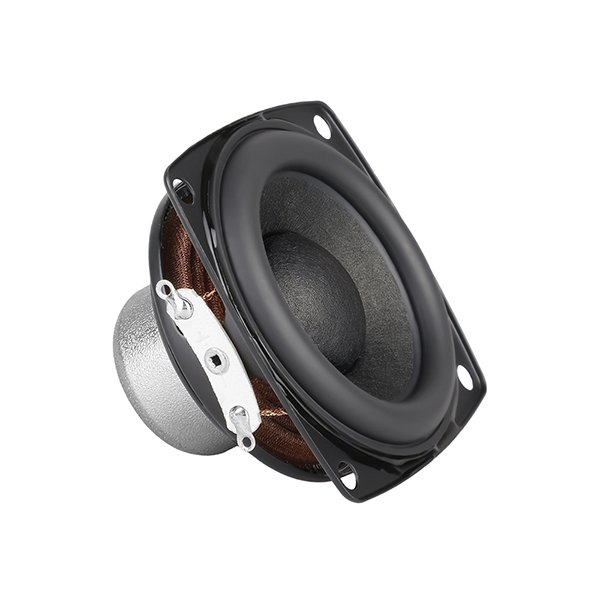
The Magnetic Advantage: Unpacking the Physics of Neodymium
Neodymium magnets, part of the Rare-Earth magnet family, are the strongest permanent magnets commercially available. They possess an exceptional maximum energy product (BHmax) , a key measure of magnetic strength. This allows them to generate a magnetic flux density far superior to traditional ferrite or alnico magnets of the same size.
For a horn or speaker, this translates directly into performance. The horn’s driver—the component that converts electrical signals into sound—relies on a magnet and a voice coil. A stronger magnetic field in the driver’s gap means more force is exerted on the voice coil for a given electrical input (governed by Lorentz’s Law ). This results in:
- Higher Efficiency: More sound output (dB) per watt of power consumed.
- Better Transient Response: The driver can start and stop moving more precisely, improving clarity, especially for critical sounds like voice alerts or emergency signals.
- Miniaturization: The primary reason for its use in touring gear. A small neodymium magnet can do the job of a much larger and heavier ferrite magnet.
This fundamental physical superiority is the bedrock upon which all other advantages are built.
Engineering for the Ounce-Conscious Traveler: The Lightweight Promise
The equation for a touring enthusiast is simple: weight equals effort. Neodymium technology directly optimizes this equation for audio components.
1. Direct Weight Reduction: A neodymium magnet can be up to 90% smaller and lighter than a ferrite magnet of equivalent magnetic strength. This saving is compounded when considering the entire product ecosystem—smaller magnets allow for smaller voice coils, lighter frames, and less supportive structure. For example, a compact emergency horn that once weighed 300 grams can now be produced under 100 grams with no loss of acoustic output.
2. System-Level Efficiency Gains: The high efficiency of a neodymium driver has a ripple effect. Because it requires less amplifier power to achieve the same volume, manufacturers can use smaller, lighter batteries and power circuits. This extends battery life dramatically, a critical factor when you’re days from the nearest power outlet. A Bluetooth speaker designed for touring can now offer 20+ hours of playtime from a battery pack a fraction of the size of its predecessors.
3. Horns can be integrated into the strap of a backpack, the frame of a bicycle, or the collar of a jacket without becoming a bulky nuisance.
| Feature | Neodymium (NdFeB) | Ferrite (Ceramic) | Alnico |
|---|---|---|---|
| Magnetic Strength | Extremely High (BHmax up to 60 MGOe) | Low to Moderate (3-5 MGOe) | Moderate (5-10 MGOe) |
| Weight for Given Output | Very Low | Very High | High |
| Cost | Higher (subject to rare-earth market flux) | Very Low | High |
| Corrosion Resistance | Poor (requires plating) | Excellent | Good |
| Temperature Stability | Good (curie point ~310°C) | Excellent (high curie point) | Excellent |
| Primary Use in Touring Gear | Lightweight comms, speakers, safety horns | Low-cost, non-critical items | Vintage-style gear (less common) |
Flux, gap geometry and sensitivity
Sensitivity follows the flux in the gap and the length of wire in it. Doubling the gap flux raises the force factor by 2 and the sensitivity by 6 dB, which is why a neodymium motor can reach 100 dB at 1 W where a ferrite motor of the same size reaches 94 dB. The gap must be narrow, typically 0.8-1.2 mm, and the voice coil must stay centred through the excursion.
Performance in the Field: Clarity, Durability, and Reliability
Lightweight is useless if it compromises function. Neodymium horns excel where it matters most: in challenging outdoor conditions.
Acoustic Performance: For safety gear like air horns or avalanche transceiver speakers, sound projection is non-negotiable. The high efficiency of neodymium drivers ensures a piercing, directional sound that can cut through wind noise and background chaos. In personal speakers, it translates to a cleaner frequency response with less distortion at high volumes, meaning your music or podcast remains intelligible over the sound of a rushing river or wind.
Ruggedness: Modern neodymium magnets for touring gear are triple or quad-plated (nickel-copper-nickel) to prevent corrosion from moisture and salt—a major concern for early NdFeB magnets. When properly housed, they are highly resistant to shock and vibration, which is rigorously tested in gear designed for mountain biking, kayaking, or backpacking.
Thermal Stability: While neodymium magnets have a lower Curie temperature than ferrites, the operating range of consumer electronics (-20°C to +80°C) is well within their stable performance window. High-quality drivers are engineered with thermal management to prevent demagnetization under extreme, sustained use.
Market Adoption and Real-World Applications
- Personal Locator Beacons (PLBs) & Satellite Messengers: Brands like Garmin (inReach) and Zoleo utilize neodymium speakers in their devices to ensure emergency alerts and message notifications are heard clearly in all conditions, while minimizing device size and maximizing battery life, which can be critical for multi-week expeditions.
- Adventure Bluetooth Speakers: Market leaders JBL (Clip/Flip series), Ultimate Ears (Boom), and Tribit rely on neodymium drivers. The JBL Clip 4 , for instance, uses a custom neodymium driver to deliver powerful sound from a 240-gram, fully waterproof package.
- Cycling & Safety Equipment: High-decibel helmet-mounted safety horns and compact bicycle alarms use neodymium drivers to produce attention-grabbing sound from a unit that fits in the palm of your hand.
- Portable PA Systems: Lightweight touring bands and guides use compact, battery-powered PA systems with neodymium horns that can fill a small campground or group gathering with sound, replacing systems that once required a car for transport.
The trajectory is clear: as the outdoor industry pushes the boundaries of lightweight, high-performance gear, neodymium-based audio solutions have become the standard, not the exception.
Horn and compression driver design
A compression driver trades area for pressure. The diaphragm is 35-50 mm, the throat is 25 mm, and the phase plug matches the two; the compression ratio of 10:1 raises the pressure at the throat and the efficiency with it. The phase plug's channels must be equal in length, or the wavefront arrives out of phase and the response comb-filters above 10 kHz.
FAQ
Why are neodymium speakers lighter?
The magnet needs about one-eighth the volume for the same gap flux, so the motor structure and the chassis shrink with it. A 1 inch neodymium compression driver typically weighs 0.3 kg against 2 kg for a ferrite equivalent.
Does neodymium sound better than ferrite?
Not by itself. The motor's flux and linearity set the sound; a well-designed ferrite motor can match a neodymium one. Neodymium buys weight and, at the same size, sensitivity.
What temperature can a neodymium magnet take?
80 degrees C for N grades, 100 for M, 120 for H, 150 for SH and 180 for UH. Specify the grade and the maximum operating temperature; an unspecified 'neodymium' magnet may be an N grade that loses flux in a sealed housing.
Related reading
- Neodymium Horn vs. Ferrite Horn: Weight and Magnetic Flux Analysis
- Installation Guide: integrating High-Power Horns into Safety Systems
- How Neodymium Horns Revolutionize Portable PA System Design
More on Audio Industry.
