
The trade is thermal and financial. NdFeB loses strength above its grade-dependent operating temperature, from 80 degrees C for N grades to 150 degrees C for SH grades, and it corrodes without a nickel or epoxy coating. Ferrite tolerates 250 degrees C and costs a fraction per kilogram, so a woofer with space for a large magnet often uses ferrite by design.
This guide treats neodymium horns as a specification problem: what to measure, what to write on the drawing, and what to verify before the first carton ships.
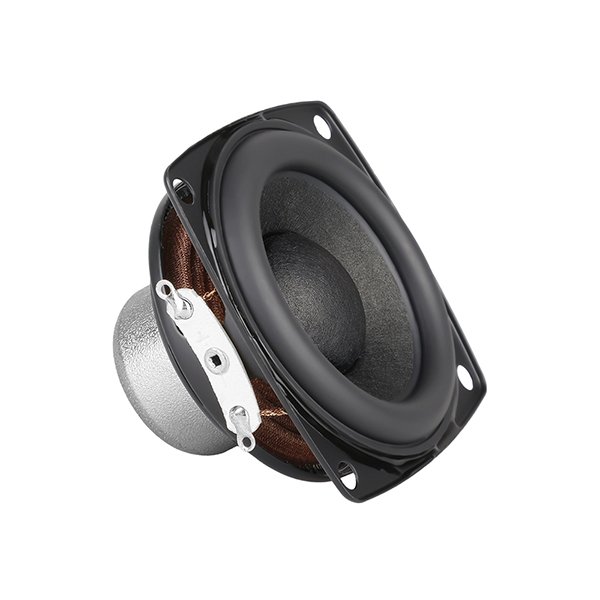
Introduction: The Sound Reinforcement Breakthrough
Portable Public Address (PA) systems have undergone a quiet change over the past decade, fundamentally changing from bulky, weight-compromised setups to remarkably powerful and compact audio solutions. These compact, powerful magnets have dismantled the traditional trade-off between power output, sound quality, and portability that long constrained sound engineers, mobile performers, educators, and event planners. This article explores the multifaceted change neodymium horns have ignited in portable PA design, examining the underlying technology, its practical impacts, and the new possibilities it releases for audio professionals and enthusiasts worldwide.
The Neodymium Advantage: Material Science Meets Acoustics
Neodymium (NdFeB) is a rare-earth magnet material that possesses the highest magnetic field strength of any commercially available permanent magnet. This strength is quantified as its maximum energy product (BHmax), which for neodymium alloys can be over 10 times greater than traditional ferrite (ceramic) magnets used in older PA drivers.
This immense magnetic strength in a small package is the key. In a compression driver—the component that drives sound through a horn—a voice coil sits within a magnetic gap. The stronger and more focused the magnetic field in this gap, the more efficiently electrical signal is converted into precise diaphragm movement, and thus, sound. Neodymium allows designers to create an extremely powerful magnetic circuit that is a fraction of the size and weight of a ferrite equivalent.
| Parameter | Neodymium (NdFeB) Magnet | Traditional Ferrite Magnet | Impact on Portable PA Design |
|---|---|---|---|
| Magnetic Strength (BHmax) | 35-52 MGOe | 3-5 MGOe | Enables vastly higher sensitivity and power in a tiny package. |
| Weight for Equivalent Flux | ~1 kg | ~5-10 kg | Direct weight reduction of 70-90% for the motor structure. |
| Size for Equivalent Output | Can be 1/5th the volume | Large and bulky | Allows for radically smaller horn driver assemblies. |
| Corrosion Resistance | Poor (requires plating) | Excellent | Adds minor manufacturing step but no performance penalty. |
| Temperature Stability | Moderate (curie point ~310°C) | High (curie point ~450°C) | Requires thoughtful thermal management in high-power designs. |
| Cost (Raw Material) | High, volatile | Very Low, stable | Increases unit cost, but value per performance/kg is superior. |
This table underscores the core trade-off designers now enjoy: unprecedented magnetic energy in a miniature form factor. The result is a compression driver that can be both incredibly sensitive (producing more sound from less amplifier power) and capable of handling high power, all while being small and light.
Horn and compression driver design
The horn sets the coverage and the low cutoff. A 60 by 40 degree horn with a 250 mm mouth controls its pattern down to about 500 Hz; below that the sound wraps around the mouth and the pattern widens. The horn's material matters as well: a thin ABS horn resonates at 1-2 kHz, while a reinforced or die-cast horn pushes the resonance above the crossover.
Redefining Portability: Weight, Size, and System Integration
Pre-neodymium portable PA systems were often “portable” in name only, requiring multiple trips to the vehicle or wheeled carts. A single 15″ or 12″ ferrite-magnet woofer could weigh 15-25 lbs, and a large-format compression driver/horn assembly added another 10-15 lbs. A typical two-way passive speaker could easily surpass 50 lbs.
Neodymium technology slashes these numbers. A neodymium-equipped compression driver and horn for a high-performance portable PA can weigh as little as 2-4 lbs, yet outperform its heavier predecessor. When applied to woofers as well, the cumulative weight saving is staggering. Modern portable column arrays or compact active speakers like the Bose L1 Pro , JBL EON ONE Compact , or LD Systems Maui series often weigh between 20-40 lbs for a complete, integrated system with astounding output.
- Column/Pillar Arrays: Multiple small neodymium drivers can be stacked vertically in a thin column, providing wide horizontal and controlled vertical dispersion. The entire column is light enough to be carried in one hand.
- Ultra-Compact Active Boxes: Powered speakers like the QSC K.2 or Yamaha DBR series pack enormous output into boxes a single person can easily lift and mount on a stand with one hand.
- All-in-One Systems: Complete systems with mixer, amplifier, and speakers in a single portable unit have become feasible and high-performance, epitomized by products like the EVOLVE 50M or RCF J8 .
The logistical and ergonomic benefits are immense, reducing setup fatigue, minimizing stage footprint, and expanding the venues where high-quality sound can be easily deployed.
Performance Unleashed: Clarity, Sensitivity, and Power Handling
- A driver with 3 dB higher sensitivity produces the same sound pressure level (SPL) with half the amplifier power. Neodymium drivers routinely offer sensitivities of 108-112 dB, compared to 100-105 dB for many ferrite designs. This means louder, cleaner sound from smaller, more efficient Class-D amplifiers, extending battery life in portable systems.
- Improved Transient Response and Clarity: The strong magnetic field offers better control over the voice coil, allowing it to start and stop moving more precisely. This results in tighter transient response—the “snap” of a snare drum or the precise attack of a piano note is rendered with greater clarity and definition, reducing muddiness at high volumes.
- Reduced Distortion: A powerful, linear magnetic field in the gap minimizes harmonic and intermodulation distortion, especially at high frequencies and during complex musical passages. This translates to a cleaner, more detailed sound, even when the system is pushed.
- Extended High-Frequency Response: The efficiency allows designers to push the upper-frequency limit, often yielding smoother, more extended high ends without the need for excessive equalization or additional super-tweeters.
In essence, the sound is not just louder; it’s more articulate, less fatiguing, and more faithful to the source material across the entire listening area.
Thermal Management and Durability: Engineering the Hotspots
Neodymium magnets have a lower Curie temperature than ferrite. Prolonged high-power use can cause voice coil temperatures to rise, potentially demagnetizing the neodymium if not managed. This has spurred parallel innovations in thermal design:
- Advanced Voice Coils: Use of aluminum voice coils (lighter, cooler running) and copper-clad aluminum wire (CCAW).
- Efficient Cooling Systems: Sophisticated rear chambers, phase plugs, and heatsink designs that pull heat away from the critical motor structure. Many high-end neodymium drivers feature ferrofluid cooling in the magnetic gap.
- Intelligent Amplification: Modern DSP-driven amplifiers in active speakers provide dynamic, real-time limiting that protects the driver from thermal overload without audible clipping.
These solutions have made neodymium drivers exceptionally reliable. When properly implemented, they are no less durable than traditional designs, and their lighter moving masses can actually improve longevity by reducing mechanical stress.
The Market and Future Trajectory
The impact is quantifiable in the market. Neodymium technology is a primary enabler of this growth. The premium segment of powered portable speakers, almost entirely reliant on neodymium, is the fastest-growing category.
- Further Miniaturization: As magnetic and thermal engineering advance, even smaller drivers will deliver today’s benchmark performance.
- Smarter Systems: DSP will become more deeply integrated with driver protection and optimization, tailoring performance in real-time to content and environment.
- Sustainable Focus: The environmental and supply-chain issues around rare-earth mining will drive R&D into next-generation magnet materials and highly efficient recycling for neodymium at product end-of-life.
Conclusion: A New Era of Sonic Portability
The adoption of neodymium magnet technology in compression horns represents a paradigm shift, not merely an incremental improvement. It has fundamentally redefined the equation of portable sound, dissolving the old compromise between output and portability. Today’s musicians, presenters, and audio engineers have access to systems that are lighter, smarter, and sonically superior to the heavy, cumbersome rigs of the past.
Cost, supply and the ferrite alternative
Ferrite is not obsolete. A 12 inch woofer with a 1.2 kg ferrite magnet costs less than the equivalent neodymium motor and tolerates a hot voice coil; the penalty is weight, which matters in portable systems and barely matters in a fixed installation. The choice is a system decision: weight, efficiency, cost and thermal environment together.
FAQ
Why are neodymium speakers lighter?
The magnet needs about one-eighth the volume for the same gap flux, so the motor structure and the chassis shrink with it. A 1 inch neodymium compression driver typically weighs 0.3 kg against 2 kg for a ferrite equivalent.
Does neodymium sound better than ferrite?
Not by itself. The motor's flux and linearity set the sound; a well-designed ferrite motor can match a neodymium one. Neodymium buys weight and, at the same size, sensitivity.
What temperature can a neodymium magnet take?
80 degrees C for N grades, 100 for M, 120 for H, 150 for SH and 180 for UH. Specify the grade and the maximum operating temperature; an unspecified 'neodymium' magnet may be an N grade that loses flux in a sealed housing.
Related reading
- Portable Speaker Design Trends
- Small Speaker Acoustic Design Principles
- Top 5 Speaker Design Trends for Minimalist Interiors
More on Speaker Design.
