
A neodymium magnet stores 35-52 MGOe of energy product against 3.5-4.5 MGOe for ferrite, so the same gap flux needs a magnet roughly one-eighth the volume. That is why a 1 inch compression driver with an NdFeB motor weighs 0.3 kg instead of 2 kg, and why line arrays and portable PA systems moved to neodymium long before the price made it universal.
This guide treats neodymium horn as a specification problem: what to measure, what to write on the drawing, and what to verify before the first carton ships.
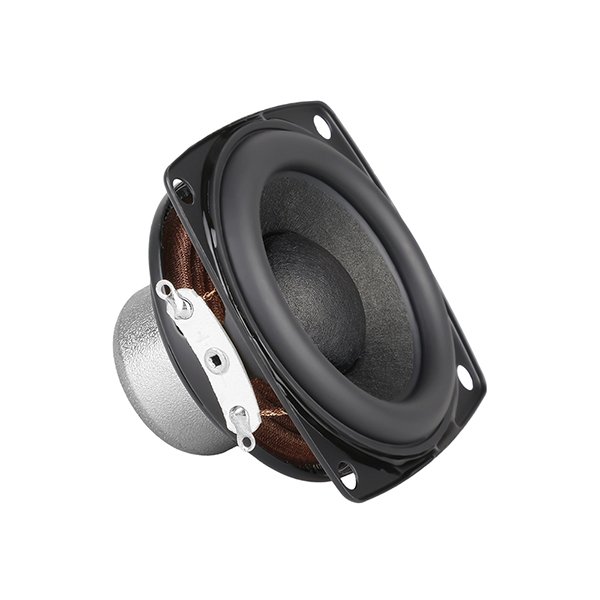
Introduction to Horn Driver Magnets
In the world of professional audio, horn drivers play a critical role in shaping sound reproduction for live sound, public address, and high-fidelity systems. At the heart of every compression driver lies its magnetic motor structure, which directly influences efficiency, power handling, and sonic character. For decades, ferrite (ceramic) magnets were the industry standard, prized for their reliability and cost-effectiveness. However, the advent of neodymium (NdFeB) magnets has sparked a significant shift in design philosophy, offering a compelling alternative with distinct advantages and trade-offs.
We’ll move beyond marketing claims to explore the underlying physics, practical performance implications, and the real-world data that should guide your selection for any professional application.
The Fundamental Physics: Ferrite and Neodymium Compared
To understand the performance differences, we must first examine the material science behind these magnets.
Ferrite Magnets (Strontium or Barium Ferrite): These are ceramic compounds made from iron oxide and strontium carbonate. They are electrically non-conductive and highly resistant to demagnetization from external fields or temperature. Their key characteristics include:
- Moderate Energy Product: Typically ranging from 3.5 to 4.5 MGOe (Mega-Gauss Oersteds). This measures the magnetic energy stored per unit volume.
- High Intrinsic Coercivity: They are very difficult to demagnetize.
- Negative Temperature Coefficient: Their magnetic strength decreases as temperature rises, by about -0.2% per °C.
- Low Cost and Abundant Materials: The primary reason for their longstanding dominance.
Neodymium Magnets (NdFeB): Part of the Rare-Earth magnet family, they are alloys of neodymium, iron, and boron. They are the strongest permanent magnets commercially available.
- Very High Energy Product: Ranging from 35 to 52 MGOe for common grades—over ten times that of ferrite.
- Excellent Flux Density: They can generate a much stronger magnetic field in a given volume.
- Positive Temperature Coefficient: Their magnetic strength decreases with decreasing temperature, and they are more susceptible to thermal demagnetization at high temperatures (above 80-150°C, depending on grade).
- Corrosion Prone: Require plating (nickel, zinc, epoxy) for protection.
- Higher Cost: Subject to market volatility in rare-earth elements.
This fundamental disparity in energy product is the root cause of the dramatic differences in weight and flux between otherwise similar drivers.
Flux, gap geometry and sensitivity
The magnet grade is chosen for the thermal environment, not for the highest number. An N52 magnet in a driver that reaches 100 degrees C in a sealed housing will demagnetise partially and lose 1-2 dB permanently; an N42SH at the same cost holds its flux to 150 degrees C. Ask for the grade and the maximum operating temperature, not just 'neodymium'.
Weight Analysis: The Clear and Present Advantage
The most immediately noticeable difference is physical mass. A neodymium magnet can produce the same, or often greater, magnetic flux as a much larger and heavier ferrite magnet.
Quantifying the Difference: Consider a horn driver designed for a specific flux density in its magnetic gap (e.g., 1.8 Tesla). To achieve this with ferrite requires a large, heavy magnet structure. The same gap flux can be achieved with a neodymium magnet assembly a fraction of the size and weight.
- Installation and Rigging: Drastically reduces the point load on flown array cabinets, simplifying rigging calculations and hardware requirements. It makes overhead installation safer and easier.
- Portability: A major benefit for touring sound companies. Lighter cabinets reduce truck space, fuel costs, and crew fatigue.
- Enclosure Design: Allows for more compact horn designs or the use of lighter-weight cabinet materials without sacrificing acoustic output.
- High-Frequency Array Performance: In line arrays, reducing the weight at the top of the hang (where high-frequency drivers are often placed) improves stability and reduces the moment force on the array frame.
Magnetic Flux Analysis: Strength, Stability, and Sonic Impact
While weight is a straightforward metric, magnetic flux analysis is more nuanced, involving not just peak strength but also stability and control.
Flux Density in the Air Gap: This is the key parameter determining the driver’s sensitivity (efficiency) and its ability to control the voice coil. The higher the flux density (B), the greater the electromagnetic force (BL) acting on the voice coil for a given input current.
- Neodymium Advantage: Its high energy product allows designers to achieve a higher BL product in a smaller package. This often translates to slightly higher sensitivity (efficiency), meaning more acoustic output per watt of input.
- Ferrite Consideration: Achieving a very high BL with ferrite requires a very large magnetic structure, which becomes impractical. However, well-designed ferrite drivers still offer excellent and highly consistent performance.
Flux Stability Under Load: This is a critical differentiator. During operation, the voice coil heats up, sometimes exceeding 200°C. This heat conducts into the magnet structure and the pole pieces.
- Ferrite Stability: Ferrite has a high Curie temperature (~450°C) and excellent thermal stability. Its magnetic properties are largely unaffected by the heat from a driven voice coil. The flux in the gap remains constant, ensuring consistent performance and power handling during sustained use.
- Neodymium Sensitivity: Standard N-grade neodymium magnets have a lower Curie temperature (~310°C) and can begin to suffer irreversible losses if the internal driver temperature exceeds 80-120°C. High-temperature grades (e.g., SH, UH, EH) are now standard in pro-audio, raising this threshold significantly (up to 200°C for EH grade). Proper thermal management via design (heat sinks, venting, voice coil materials) is decisive for neodymium drivers to realize their full, stable potential.
Sonic Character: While subtle and subject to overall design, some engineers report perceptible differences. Ferrite designs, often with larger magnetic structures and different magnetic circuit geometries, are sometimes described as having a “warmer” or “softer” top-end. Neodymium drivers, with their extremely focused, powerful magnetic fields, are frequently cited for their “articulate,” “fast,” and “detailed” high-frequency response. The reduced mass of the moving assembly (due to a potentially smaller voice coil and former) can also contribute to transient response.
Comparative Data Table: Neodymium vs. Ferrite Horn Drivers
The following table summarizes the key quantitative and qualitative differences based on current (2024) industry standards and typical product specifications.
| Parameter | Neodymium Horn Driver | Ferrite Horn Driver | Implication for Use |
|---|---|---|---|
| Magnet Material | NdFeB (Rare-Earth) | SrFeO (Ceramic) | Material cost & supply chain. |
| Typical Energy Product | 40 – 52 MGOe | 3.5 – 4.5 MGOe | Core reason for size/weight difference. |
| Driver Weight (2" exit example) | 2.0 – 3.5 kg (4.4 – 7.7 lbs) | 5.0 – 7.5 kg (11 – 16.5 lbs) | Portability, rigging, array design. |
| Flux Density (Gap B) | High to Very High (1.8T+) | Moderate to High (1.1T – 1.6T) | Influences sensitivity & damping. |
| Thermal Stability | Good to Excellent (with HT grades) | Excellent (inherently stable) | Critical for long-term power handling. |
| Demagnetization Risk | Low (with proper HT grade & design) | Very Low | Reliability under extreme conditions. |
| Corrosion Resistance | Requires protective plating | Inherently resistant | Durability in humid environments. |
| Cost Driver | High (Rare-earth elements) | Low (Abundant materials) | Final product price point. |
| Primary Application Trend | Line Arrays, Touring, Installations requiring light weight. | Fixed Install, Budget-Conscious Designs, High-Reliability PA. | Design philosophy and target market. |
Application Considerations and Future Outlook
Choosing between neodymium and ferrite is an exercise in matching technology to the application’s priorities.
- Weight is a primary constraint: Touring, flown arrays, portable systems.
- High efficiency/sensitivity is needed in a compact package.
- Budget allows for the premium technology.
- Budget is a major factor.
- The application is weight-insensitive.
- Operation in highly corrosive environments is a concern.
The market trend is clearly toward neodymium, especially in the mid-to-high professional tier. Advances in high-temperature grades and thermal engineering have largely mitigated early concerns about reliability. However, ferrite remains a deeply respected, utterly reliable, and cost-effective solution, ensuring its place in the market for years to come. The future may see further material science innovations, but the current neodymium vs. ferrite dichotomy provides audio professionals with a clear and valuable choice based on tangible engineering trade-offs.
Horn and compression driver design
The horn sets the coverage and the low cutoff. A 60 by 40 degree horn with a 250 mm mouth controls its pattern down to about 500 Hz; below that the sound wraps around the mouth and the pattern widens. The horn's material matters as well: a thin ABS horn resonates at 1-2 kHz, while a reinforced or die-cast horn pushes the resonance above the crossover.
FAQ
Why are neodymium speakers lighter?
The magnet needs about one-eighth the volume for the same gap flux, so the motor structure and the chassis shrink with it. A 1 inch neodymium compression driver typically weighs 0.3 kg against 2 kg for a ferrite equivalent.
Does neodymium sound better than ferrite?
Not by itself. The motor's flux and linearity set the sound; a well-designed ferrite motor can match a neodymium one. Neodymium buys weight and, at the same size, sensitivity.
What temperature can a neodymium magnet take?
80 degrees C for N grades, 100 for M, 120 for H, 150 for SH and 180 for UH. Specify the grade and the maximum operating temperature; an unspecified 'neodymium' magnet may be an N grade that loses flux in a sealed housing.
Related reading
- Why Neodymium Horns Are Preferred for Lightweight Touring Gear
- Top 10 Neodymium Horn Manufacturers for Professional Audio
- What Makes a Neodymium Horn Driver More Efficient?
More on Audio Industry.
