
An enclosure does three jobs: it separates the front and rear radiation, it sets the low-frequency alignment, and it controls resonance. Wall material, thickness and bracing decide how much of the driver's energy leaves as sound and how much leaves as cabinet vibration; the two are measured together, because a rigid box with a ringing panel is worse than a slightly flexible box with good damping.
The notes below apply to custom speaker covers prototyping, with the measurement conditions and production checks that decide whether a claimed figure survives a shipment.
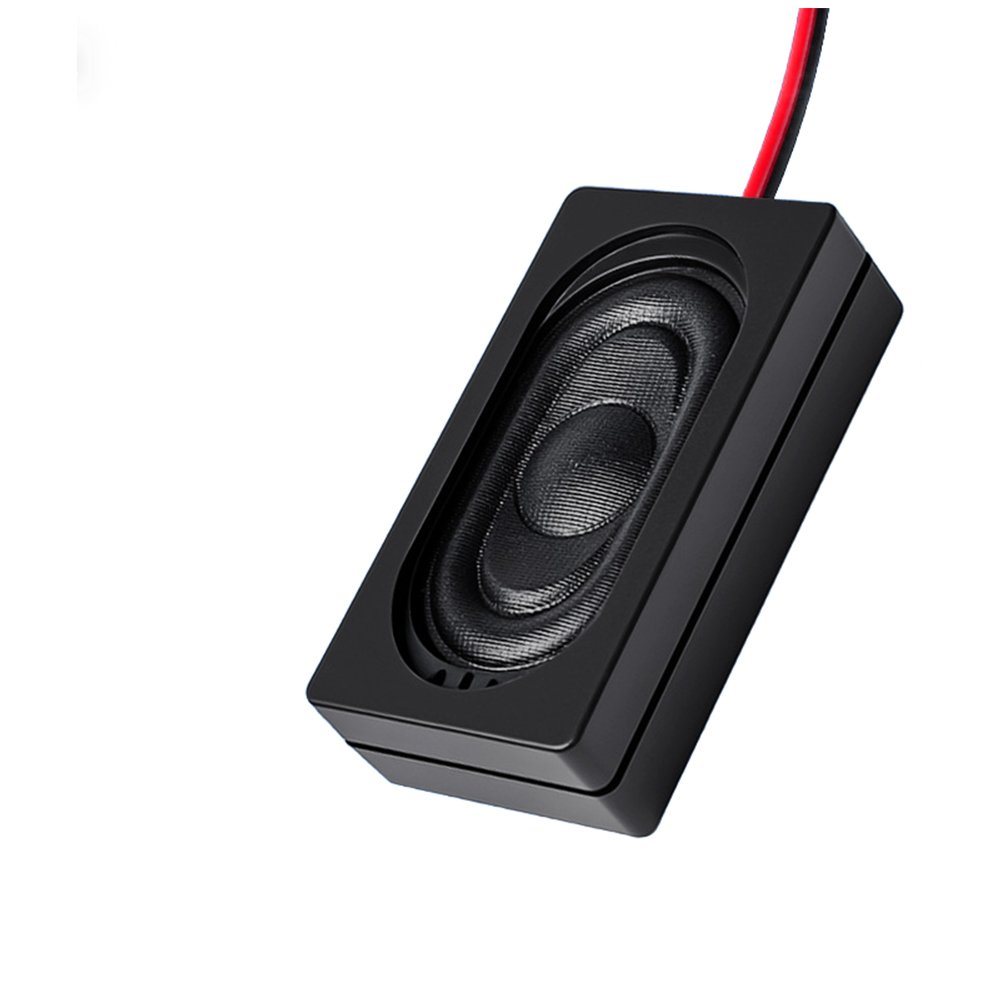
Why Prototyping is the Critical Bridge Between Design and Mass Production
Jumping straight from a CAD model to mass production for a custom speaker cover is a high-risk gamble. Prototyping serves as the indispensable validation stage, de-risking the entire project. For OEMs, the primary objectives of a prototyping phase are multifaceted.
First, it is a functional and acoustic proving ground . A cover must provide adequate protection without detrimental acoustic interference. Prototypes allow engineers to test for acoustic transparency—how much the grille attenuates or distorts sound. Even a beautifully designed metal mesh can cause high-frequency diffraction or unwanted resonances that only become apparent with physical testing. A prototyping phase enables iterative adjustments to variables like open area percentage, weave pattern, and material thickness to find the optimal balance between protection and sonic fidelity.
Second, prototyping validates manufacturability and assembly . A design might look perfect in software but be impossible to demold, excessively expensive to tool, or misaligned with the speaker basket. Creating prototypes using near-production methods (like CNC machining an aluminum mold insert for a short run of injection-molded grilles) reveals these issues early. It answers critical questions: Do the snap-fits engage properly? Does the textile stretch correctly over the frame? Is the adhesive bonding effective? Solving these problems during prototyping prevents costly tooling modifications and production line halts.
Finally, it is the ultimate stage for aesthetic and tactile evaluation . Color matching, texture, perceived quality, and visual appeal must be assessed under real lighting conditions and in the context of the final product. A prototype allows stakeholders to see, touch, and interact with the cover, ensuring it meets brand standards and user expectations. This phase often involves creating multiple design variations (A/B testing) to select the most market-responsive option.
The Prototyping Workflow: A Step-by-Step Process for OEMs
- Requirements Gathering & DFM Analysis: Before any model is built, cross-functional teams (design, acoustics, engineering, procurement) must align on specifications. Concurrently, a Design for Manufacturability (DFM) analysis should begin to steer the initial design toward producible geometries.
- Design & 3D Modeling: Industrial designers and CAD engineers translate concepts into precise 3D models. This stage defines critical features: the precise geometry of the perforation pattern, the draft angles for molding, the tolerances for interfacing parts, and the structure for any underlying mesh or fabric backing.
- Prototype Method Selection & Creation: Based on the design’s maturity and test goals, the appropriate prototyping technology is chosen. For early-stage form and fit checks, inexpensive 3D printed prototypes (using SLA, FDM, or SLS) are ideal. For functional acoustic and durability testing, CNC-machined prototypes from production-intent materials (like aluminum or polycarbonate) offer high fidelity.
- Iterative Testing and Refinement: This is the core iterative loop. Prototypes undergo rigorous testing:
- Acoustic Testing: Measured in an anechoic chamber for frequency response changes.
- Environmental Testing: Exposure to temperature cycles, humidity, and UV light.
- Fit & Assembly Testing: Verification within the full product assembly. Feedback from each test round informs design modifications, leading to new prototype iterations until all criteria are met.
Pre-Production Validation: Once the design is frozen, a final set of prototypes—often made from soft tooling (low-volume injection molds) or the intended high-volume manufacturing process—is produced. These units are used for final sign-off, certification testing, and marketing samples.
Sealed, ported or passive radiator
The port is a resonant element with its own compromises. Its diameter sets the air velocity, and above roughly 20 m/s at the tuning frequency the port chuffs; its length sets Fb, and a long port in a shallow box needs an elbow that changes the effective length. Measure the impedance curve to confirm Fb, because a 10 % error in port area moves the tuning by about 5 %.
Material and Process Selection: Balancing Aesthetics, Acoustics, and Cost
The choice of material and manufacturing process is interdependent and central to the prototype’s purpose. The table below outlines common options and their prototyping implications.
| Material | Typical Production Process | Prototyping Method | OEM Considerations |
|---|---|---|---|
| Injection-Molded Plastic (ABS, PC, PP) | High-volume injection molding | Early Stage: 3D Printing (SLA/FDM). Late Stage: CNC Machined aluminum mold inserts for short runs. | Dominant for complex shapes. Prototyping validates gate locations, sink marks, and warpage. Critical for testing snap-fit designs. |
| Metal (Aluminum, Steel, Fabricated Mesh) | Stamping, perforation, etching, weaving | CNC machining, laser cutting, hand fabrication of woven mesh samples. | Tests anodizing/coating adhesion, acoustic properties of perforation patterns, and structural rigidity. |
| Acoustic Fabrics & Cloths (Polyester, Polypropylene, Knits) | Stretching over frames, lamination | Die-cutting or laser-cutting fabric, hand-stretching over 3D-printed frames. | Evaluates acoustic transparency, stretch uniformity, color fastness, and "touch feel." |
| Composite Materials (Woven Carbon Fiber) | Compression molding, vacuum bagging | Lay-up using prototype tooling. | Validates weave alignment, resin consistency, and final surface finish quality. |
OEMs are increasingly requesting prototype samples made from post-consumer recycled (PCR) plastics and bio-based polymers . This allows for more radical, consolidated part geometries that are tested directly in final materials.
Testing and Validation: Ensuring Performance Beyond the Spec Sheet
A prototype that looks right is only half the battle. A rigorous, standardized testing protocol is non-negotiable. This phase moves beyond theory into empirical validation.
Acoustic Performance Testing: The primary functional test. Using calibrated microphones in a controlled environment, engineers measure the speaker’s frequency response with and without the grille prototype. Key metrics include insertion loss (typically aiming for <1dB attenuation in critical bands) and the prevention of distortion or rattles at high SPLs. Different prototype iterations directly correlate to measurable acoustic outcomes.
Environmental and Durability Testing: Speaker covers face harsh realities. Prototypes undergo tests simulating years of use:
- UV Exposure: For automotive and outdoor speakers, prolonged UV testing ensures colors don’t fade and polymers don’t become brittle.
- Temperature/Humidity Cycling: Expansive and contractive forces can warp covers or break adhesives.
- Chemical Resistance: Resistance to household cleaners, sweat, sunscreen, and automotive fluids.
- Abrasion and Scratch Resistance: Measured using standardized tests like Taber Abrasion to ensure the surface finish endures.
Regulatory and Safety Compliance: Prototypes are used to gain necessary certifications. This may include flame retardancy testing (UL94, IEC 60695) for indoor electronics, Ingress Protection (IP) testing for water and dust resistance, and material safety certifications (REACH, RoHS).
Does the cover feel cheap or premium? Is the visual design appealing? Does it collect dust easily? Human-in-the-loop testing with prototype units provides invaluable feedback that pure engineering data cannot.
From Prototype to Production: Navigating the Transition
- The Approved Physical Prototype(s): The gold-standard samples signed off by all departments.
- Finalized CAD Data & Drawings: Updated with all changes from the prototyping phase, including GD&T (Geometric Dimensioning and Tolerancing).
- Complete Material Specs: Exact material grades, colors (with Pantone/RAL codes), coating specifications, and supplier information.
- Testing Report Summary: Documenting all validation tests and results.
- Assembly Instructions: Detailed guidance for the production line.
This package is used to source and qualify Production Tooling . For injection molding, this means cutting the hardened steel molds. The prototypes serve as the benchmark for the First Article Inspection (FAI) , where the first parts off the production tool are compared against the approved prototype to ensure conformity.
Expert Tip: Maintain a strong feedback loop even after production begins. Initial production batches should be monitored as an extension of the prototyping process, catching any subtle discrepancies that only appear at full speed and scale.
Wall behaviour, bracing and damping
An 18 mm MDF panel on a 300 mm span has a first bending mode in the 150-250 Hz region; a brace across the middle raises it above the crossover and reduces the panel's contribution by 6-10 dB in that band. The brace should connect two opposite panels and be glued, not screwed, because a dry joint rattles at high level and is invisible on a sine sweep.
FAQ
Does MDF sound better than plastic for a small speaker?
MDF is better damped per millimetre, plastic allows thinner walls with ribs. Below 100 mm drivers the difference is small; above 100 mm MDF wins on panel resonance unless the plastic housing is heavily ribbed and filled.
How do I choose between a sealed and a ported box?
Use EBP: above 100 favours ported, below 50 favours sealed. Also check the space: a port needs 2-3 times the driver's displacement volume and a clear path at both ends.
What open area should a speaker grille have?
At least 40 % for metal mesh and 50-60 % for fabric, measured over the diaphragm area; below that the high-frequency loss becomes audible and cannot be corrected without changing the crossover.
Related reading
- Guide to the Custom Speaker Prototyping Process
- The Complete Guide to the Custom Speaker Prototyping Process
- What Are the Printing Options for Branded Custom Speaker Covers?
More on OEM Manufacturing.
