
The material choice follows the product, not a preference. MDF is dense and well damped but heavy and sensitive to moisture; ABS allows ribs, bosses and a sealed housing in one moulding but needs wall sections of 1.5-3 mm and a draft of 1-2 degrees; PC-ABS and PA66-GF30 add heat and impact resistance where the housing also carries the electronics.
This guide treats speaker driver unit materials as a specification problem: what to measure, what to write on the drawing, and what to verify before the first carton ships.
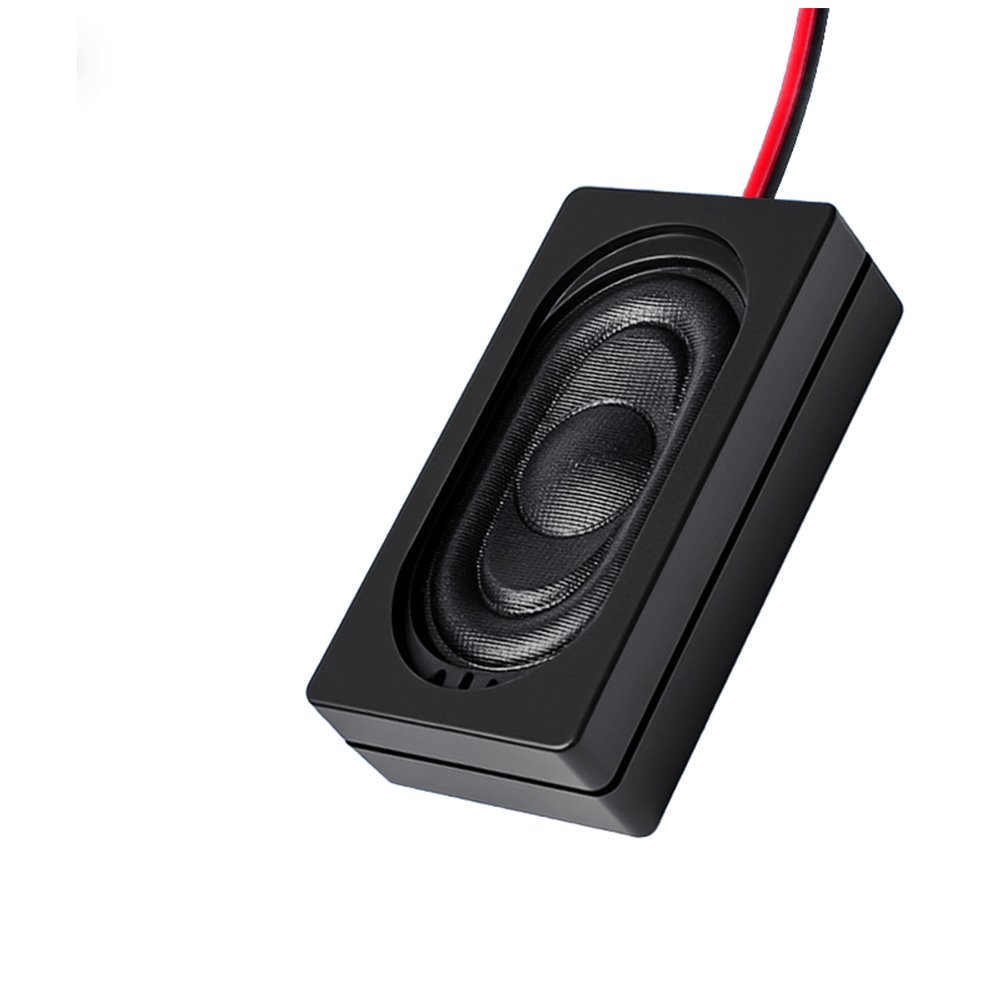
The Shift from Conventional to Engineered Materials
For decades, speaker cone (diaphragm) materials followed a fairly standard playbook: paper pulp for its natural sonic character, polypropylene for its consistency and dampening, aluminum and titanium for stiffness in tweeters, and woven fabrics like silk for soft-dome tweeters. The surround (the flexible rim connecting the cone to the basket) was typically butyl rubber or foam.
The limitation of these materials lies in inherent trade-offs. Stiff, low-mass materials (like metals) resist deformation for accurate reproduction but can exhibit sharp “breakup” resonances at high frequencies. Softer, more damped materials (like traditional paper) control resonance better but can lack detail and speed. The modern goal is to break these trade-offs by creating materials that are simultaneously lightweight, incredibly stiff, well-damped, and environmentally stable.
- Composite Materials: Layering different substances to combine their best properties.
- Nanomaterials: Incorporating particles at the molecular level to enhance structural integrity.
- Bio-based and Sustainable Materials: Responding to environmental concerns without sacrificing performance.
- Advanced Polymers and Synthetics: Engineered plastics with precise mechanical properties.
Suppliers are now less commodity material sellers and more like acoustic engineering partners, offering tailored material solutions for specific driver applications—from studio monitors to in-car audio, home theater, and portable devices.
Current Diaphragm & Cone Materials
The diaphragm is the most critical component, and its material evolution is the most dramatic.
1. Graphene and Carbon-Based Nanocomposites: Graphene, a single layer of carbon atoms arranged in a hexagonal lattice, is a wonder material for audio. It is phenomenally strong and stiff yet extremely light. Suppliers are not using pure graphene sheets but integrating graphene oxide or flakes into composite matrices (often with polypropylene or other resins). This creates cones that are incredibly rigid, preventing unwanted flex and coloration, resulting in breathtakingly fast transient response and detailed high-frequency extension. Brands like ZYLUM and some OEM suppliers for high-end brands have pioneered its use in tweeters and midrange cones.
2. Beryllium: While not “new,” its adoption at more accessible price points and in refined forms is latest. Beryllium has an ideal combination of low density and high stiffness, with a speed of sound through the material nearly three times that of aluminum. This allows for wider, more controlled dispersion and exceptionally clean high frequencies. Due to its toxicity during machining, suppliers now use advanced vapor deposition techniques to create pure, thin diaphragms safely. It remains a premium choice for tweeter domes in high-end speakers from companies like Focal, and its use is trickling down.
3. Bio-Cellulose (also known as Microbial Cellulose or “Zylon” derivatives): This is a fascinating sustainable material. Grown in a lab through bacterial fermentation, bio-cellulose forms a dense, naturally damped, and incredibly strong mesh. When resin-impregnated, it creates a diaphragm that is both stiff and self-damping, eliminating the need for additional coatings. It offers a smooth, natural sound signature with very low distortion. TAGO STUDIO uses a proprietary “Bio-Cellulose” driver in its flagship monitors, and several Japanese suppliers are leaders in this biotech-acoustic fusion.
4. Advanced Ceramic and Ceramic-Coated Composites: Aluminum-magnesium alloys were a step forward, but pure ceramic or ceramic-coated aluminum diaphragms push further. Ceramic is extremely hard and stable. A thin ceramic layer applied via plasma deposition on an aluminum core creates a sandwich structure that is inert and free from the “ringing” sometimes associated with pure metal diaphragms. This technology, used by brands like ELAC in their JET tweeters and other OEM suppliers, yields precise, low-distortion high frequencies.
5. Aramid Fiber (and other Weaves): Known from bulletproof vests, aramid fibers (e.g., Kevlar) are woven into a fabric and set with resin. The resulting cone is exceptionally strong and well-damped. The latest innovations involve hybrid weaves, combining aramid with carbon fiber or other filaments to fine-tune the stiffness-to-damping ratio. This material is prized for midrange drivers where clarity and dynamic expression are key.
| Material | Key Properties | Typical Application | Sonic Character | Supplier Example/Note |
|---|---|---|---|---|
| Graphene Composite | Extreme stiffness-to-weight, fast | Tweeters, Midrange | Highly detailed, fast transients, extended highs | ZYLUM, OEM for boutique brands |
| Beryllium | High stiffness, low density, high speed | Tweeter Domes | Exceptionally clean, airy highs, wide dispersion | Focal, TAD, Techstream (OEM) |
| Bio-Cellulose | Naturally damped, strong, sustainable | Full-range, Midrange | Smooth, natural, low distortion, warm yet detailed | TAGO STUDIO, Support (OEM) |
| Ceramic-Coated | Very hard, inert, stable | Tweeters, Midrange | Precise, analytical, low coloration | ELAC (JET), Certain Chinese OEMs |
| Aramid Fiber Weave | High tensile strength, good damping | Midrange, Woofers | Dynamic, punchy, controlled, neutral | Scan-Speak, SEAS, Peerless |
Covers, mesh and acoustic transparency
Cosmetic covers also have to survive handling. Fabric is tested for pilling and colour fastness, mesh for salt spray and adhesion, and both for pull-off force at the frame. A cover that lifts at 40 degrees C in a car interior is a warranty return; a 72-hour 85/85 humidity test before approval catches most of them.
Innovations in Surround, Basket, and Motor System Materials
Surrounds: The classic butyl rubber is being enhanced. Thermoplastic Elastomers (TPEs) are now common, offering more consistent performance across temperature ranges. More notably, corrugated cloth surrounds treated with advanced silicone coatings are making a comeback in high-end designs. This material, like that used in Audio Technology drivers , offers extremely linear compliance with minimal hysteresis, reducing distortion in the critical low-frequency excursion.
Baskets (Frames): The shift is towards die-cast aluminum alloy baskets even in mid-range drivers. They are far more rigid than stamped steel, preventing energy transfer and resonance back into the driver assembly. Some ultra-high-end suppliers use milled solid aluminum or composite baskets for absolute inertness.
- Magnets: Beyond standard ferrite and neodymium, there’s a push for optimized magnetic circuits . Suppliers are using finite element analysis (FEA) to design motors with copper caps (Faraday rings) and shorting rings made of specialized alloys to reduce inductance and intermodulation distortion, improving clarity, especially at high power.
- Voice Coils: While copper and aluminum are standard, the form factor is key. Hexagonal or rectangular wire allows for tighter winding and a higher copper fill in the magnetic gap, increasing sensitivity and power handling. Coated wire is also used for added durability under extreme heat.
- Suspension (Spider): Advanced treated linen or Nomex materials are used for spiders that maintain linearity over long excursions. The impregnation resin formula is often a closely guarded supplier secret.
The Role of Sustainability and Smart Materials
- Recyclable Plastics: High-performance polypropylene and PET-based composites designed for easy recycling.
- Natural Fiber Composites: Cones made from flax, hemp, or bamboo fibers mixed with resins. These offer a pleasing aesthetic and a sonic character often described as “organic” or “warmly detailed.” Brands like Vivid Audio and Vincent have utilized such materials.
- Water-based Adhesives and Coatings: Replacing solvent-based systems in assembly.
Looking forward, “smart” or adaptive materials are on the horizon. Imagine a diaphragm material or surround whose damping properties could be minutely adjusted via an applied electrical field, allowing a single driver to optimally perform in different frequency ranges or acoustic environments. While still in R&D, this represents the ultimate fusion of material science and active electronics.
Conclusion: Performance Driven by Molecules
The latest materials from speaker driver unit suppliers are not mere spec-sheet fodder. They are the result of deep interdisciplinary research aimed at solving fundamental physical problems. From the atomic perfection of graphene to the biological growth of cellulose, and the precision engineering of ceramic coatings, these materials allow designers to create speakers that are more accurate, efficient, and emotionally engaging than ever before. The modern high-fidelity loudspeaker is, at its core, a showcase of advanced material science, where every molecule is orchestrated to disappear, leaving only the music.
Sealed, ported or passive radiator
A sealed box rolls off at 12 dB per octave below Fc and tolerates a small box with a gentle electrical boost. A ported box adds roughly 3 dB around Fb but rolls off at 24 dB per octave below it, and the driver unloads below tuning, so a high-pass filter at Fb protects excursion. The EBP ratio, Fs divided by Qes, points the way: above 100 the driver suits a port, below 50 it suits a sealed box.
FAQ
Does MDF sound better than plastic for a small speaker?
MDF is better damped per millimetre, plastic allows thinner walls with ribs. Below 100 mm drivers the difference is small; above 100 mm MDF wins on panel resonance unless the plastic housing is heavily ribbed and filled.
How do I choose between a sealed and a ported box?
Use EBP: above 100 favours ported, below 50 favours sealed. Also check the space: a port needs 2-3 times the driver's displacement volume and a clear path at both ends.
What open area should a speaker grille have?
At least 40 % for metal mesh and 50-60 % for fabric, measured over the diaphragm area; below that the high-frequency loss becomes audible and cannot be corrected without changing the crossover.
Related reading
- Top Speaker Driver Unit Suppliers for Automotive Audio Applications
- Why Consistency is the Main Challenge for Speaker Driver Unit Suppliers
- Sourcing Guide: Finding Speaker Driver Unit Suppliers for Hi-Fi Systems
More on Audio Testing.
