
The arithmetic behind the label is simple. At 2.83 V RMS an 8 ohm load draws 0.35 A and dissipates 1 W, while a 4 ohm load draws 0.71 A and dissipates 2 W. That doubling of current, not the number printed on the terminal, is why a 4 ohm design needs a different supply, a different protection threshold and often a different output device.
This guide treats match 4 ohm speakers as a specification problem: what to measure, what to write on the drawing, and what to verify before the first carton ships.
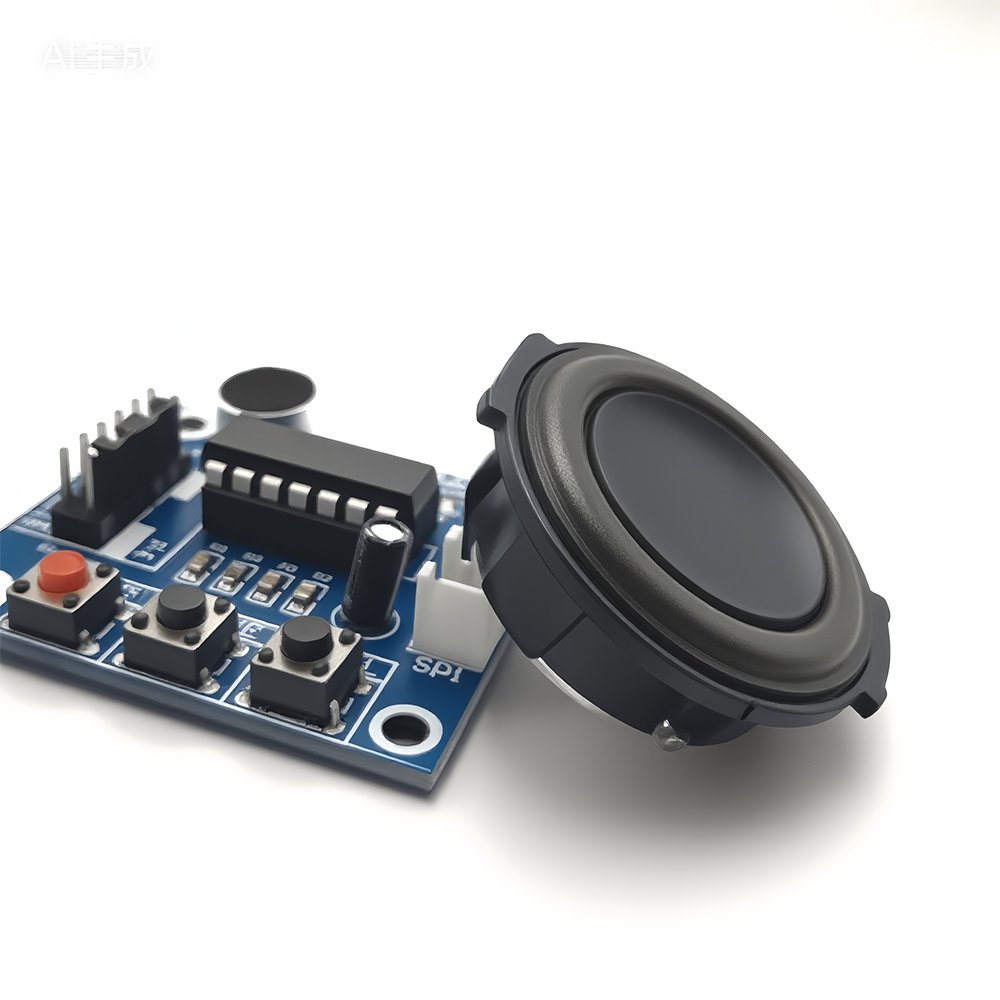
Understanding Impedance: The Core of the Match
Think of it as the electrical resistance to the alternating current (AC) signal supplied by your amplifier. However, unlike simple DC resistance, impedance varies with the frequency of the audio signal—a speaker might be rated at “4 ohms nominal,” but its actual impedance can dip significantly at certain frequencies.
A 4-ohm speaker has lower impedance than an 8-ohm speaker. This means a 4-ohm speaker will draw roughly twice the current from the same amplifier channel as an 8-ohm speaker.
Why does this matter for your amplifier? The amplifier must be capable of supplying this higher current cleanly and continuously without overheating or triggering its protection circuits. An underpowered or mismatched amplifier driven hard into low impedance can lead to:
- Clipping: Distortion that damages speaker tweeters.
- Overheating: Excessive heat build-up, damaging amplifier components.
- Failure: Premature shutdown or permanent failure of the amplifier.
In short, the amplifier’s power supply and output stages must be durably designed to handle the higher current demands of 4-ohm loads.
Deciphering Amplifier Specifications for 4-Ohm Performance
Not all amplifiers are created equal for driving low-impedance loads. The key is to look beyond the prominent “watts per channel” rating, which is almost always given for an 8-ohm load.
- Dual Power Ratings: A capable amplifier for 4-ohm speakers will explicitly state its output power for both 8-ohm and 4-ohm loads. A well-designed amplifier will nearly double its power as impedance is halved, indicating a strong power supply.
- Example: “100W/ch @ 8Ω, 150W/ch @ 4Ω” is less durable than “100W/ch @ 8Ω, 180W/ch @ 4Ω,” which is less ideal than “100W/ch @ 8Ω, 200W/ch @ 4Ω .”
Look for marketing terms like “High Current,” “Massive Power Supply,” or “4-Ohm Stable” in the specifications.
Dynamic Power & Headroom: Music is dynamic, with brief peaks much louder than the average level. An amplifier needs headroom —extra power capacity—to handle these peaks without strain, especially with current-hungry 4-ohm speakers.
The table below illustrates typical power rating differences and what to look for:
| Amplifier Type | Power @ 8Ω (per ch.) | Power @ 4Ω (per ch.) | Doubling? | Suitability for 4Ω Speakers |
|---|---|---|---|---|
| Entry-Level AVR | 80W | 100W | No (~25% increase) | Marginal. May run hot, risk shutdown with demanding content or multiple speakers. |
| Quality Integrated Amp | 100W | 180W | Near-Doubling | Good. Designed to handle lower impedance with stable performance. |
| High-Current Power Amp | 150W | 300W | Yes (100% increase) | Excellent. Ideal for driving 4-ohm speakers to their full potential with high headroom. |
| Pro/High-Performance Amp | 200W | 400W+ | Yes (100%+ increase) | Optimal. Built with over-sized components specifically for low-impedance, demanding loads. |
Wiring, damping and protection
Two 8 ohm drivers in parallel present 4 ohm, and four in a series-parallel array return to 8 ohm; both are legitimate, but the array's impedance minimum is set by the worst driver, not by the average. Keep runs under 5 m and use 0.75-1.5 mm2 cable for 4 ohm loads, because a long thin run adds resistance that the amplifier's feedback cannot correct and the damping factor falls accordingly.
Practical Steps for a Safe and Optimal Match
Once you understand the specs, follow these steps to ensure a safe and great-sounding match:
- Identify Your Speaker’s True Needs: Find your speaker’s specifications. Look for:
- Nominal Impedance: Should state “4Ω.”
- Sensitivity: Measured in dB (2.83V/1m). A lower sensitivity (e.g., 85 dB) speaker requires more amplifier power than a high-sensitivity (e.g., 92 dB) one.
- Recommended Amplifier Power: A range like “50-200W.” Use the upper end of this range as a guide for a 4-ohm capable amplifier’s rating.
Choose an Amplifier with 4-Ohm Capability: Select an amplifier whose 4-ohm power rating meets or exceeds your speaker’s needs and whose specs show a durable increase in power from 8 to 4 ohms.
Consider Bi-Wiring/Bi-Amping: Some 4-ohm speakers have dual binding posts. Using bi-wiring (single amp) can slightly improve performance. Bi-amping (using separate amp channels for highs and lows) significantly reduces the load on any single amp channel and can offer dramatic improvements in control and clarity.
Impedance & Multi-Speaker Setups (AVRs): This is critical for home theater. Most AVRs power 5-9 speakers. Connecting multiple 4-ohm speakers in parallel to an AVR not rated for it is the most common cause of failure.
- Check the AVR manual for its specified minimum impedance in a multi-channel setup (often 6Ω minimum).
- Use an external, high-current power amplifier for the front left/right 4-ohm speakers, letting the AVR handle the less-demanding channels.
Ensure Proper Ventilation: Amplifiers driving 4-ohm loads work harder and generate more heat. Provide ample space (several inches above and around vents) for airflow to prevent thermal shutdown and extend component life.
Common Pitfalls and Misconceptions to Avoid
- “More Watts Are Always Better”: It’s about compatible, clean watts. 50 clean watts from a high-current amp can sound better and be safer than 100 strained watts from an under-designed one.
- “Any ‘4-Ohm Stable’ Amp Will Do”: This term isn’t strictly regulated. Some amps are only “stable” at 4 ohms with limited channels driven.
- Ignoring Speaker Sensitivity: A 4-ohm speaker with high sensitivity (90+ dB) may be easier to drive than an 8-ohm speaker with very low sensitivity (83 dB). Consider both numbers.
- Overlooking Wire Gauge: For 4-ohm runs, especially over longer distances (>15 feet), use a lower gauge (thicker) speaker wire (12 or 14 AWG) to minimize power loss and resistance.
- Mixing Impedances: Avoid wiring 4-ohm and 8-ohm speakers together in the same system from the same amplifier channels, as it creates an uneven and difficult load.
What the nominal figure hides
Voice-coil inductance lifts impedance with frequency, so the same 4 ohm driver may read 12 ohm at 10 kHz. That rise is normal and does not reduce the low-frequency current demand. It does affect the crossover, because a network calculated from the nominal value drifts when the real load is three times higher in the tweeter's passband. Measure the curve, then design the filter around it.
FAQ
Is a 4 ohm speaker louder than an 8 ohm speaker?
At the same drive voltage it produces about 3 dB more acoustic output, because it draws twice the power. At the same input power the two are equal; sensitivity, not impedance, sets the level.
Can I connect a 4 ohm speaker to an 8 ohm rated amplifier?
Only if the amplifier's datasheet also states a 4 ohm rating. An 8 ohm-only design may overheat or trip its protection at high level; check the minimum-load specification and the thermal test condition, not the marketing wattage.
Does a higher impedance mean better sound quality?
No. Impedance changes the current the amplifier must deliver; sound quality depends on the motor, diaphragm, crossover and the enclosure. A well-designed 4 ohm system and a well-designed 8 ohm system can measure identically.
Related reading
- 4 Ohm vs 8 Ohm Speakers Full Engineering Guide
- Box Speakers for Commercial Audio Systems
- Mini Speakers for Wearable Devices
More on Speaker Design.
