
The arithmetic behind the label is simple. At 2.83 V RMS an 8 ohm load draws 0.35 A and dissipates 1 W, while a 4 ohm load draws 0.71 A and dissipates 2 W. That doubling of current, not the number printed on the terminal, is why a 4 ohm design needs a different supply, a different protection threshold and often a different output device.
With happens if connect 4 ohm, the difference between a sample and a shipment is the test record, so each section below names the check that produces it.
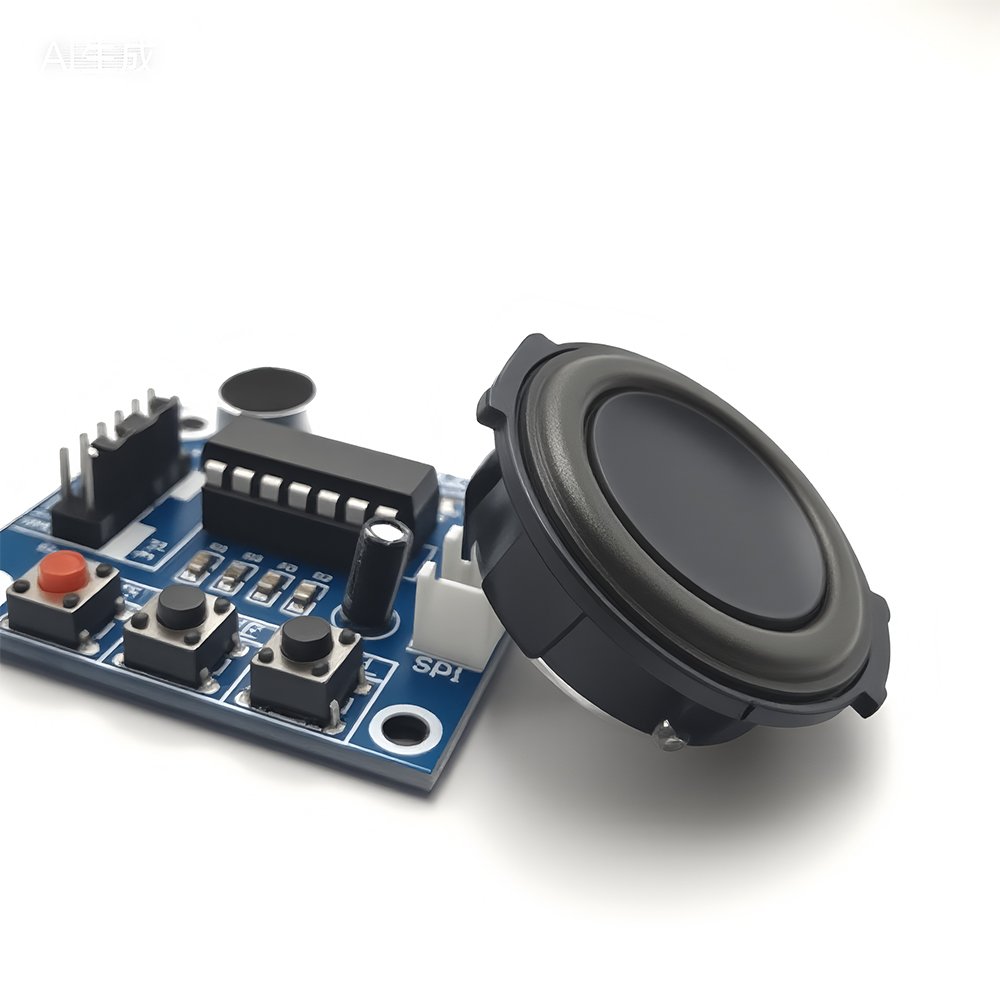
This step-by-step guide will demystify speaker and amplifier impedance, explain the precise electrical and thermal consequences of this specific mismatch, and provide practical, actionable solutions to work through this common audio dilemma.
The Fundamentals: Understanding Ohm's Law and Amplifier Design
At its core, this issue is a practical application of Ohm’s Law , which states that Current (I) = Voltage (V) / Resistance (R). In audio terms, resistance is called impedance , measured in ohms (Ω), and it represents the speaker’s opposition to the alternating current (AC) signal from the amplifier.
An amplifier is designed to deliver power at a specific load impedance, with 8 ohms being the most common standard for home audio receivers and integrated amplifiers. This rating is a nominal value, as a speaker’s actual impedance varies with frequency (a typical “8 ohm” speaker might dip to 5-6 ohms at certain bass frequencies).
When an amplifier’s manual specifies an 8-ohm minimum, it is engineered with a specific output stage topology, power supply capacity, and heat dissipation (heatsink) to operate safely and efficiently under that expected load. Connecting a lower impedance speaker, like a 4 ohm model, fundamentally changes the circuit’s dynamics.
Key Electrical Shift: For a given volume setting (output voltage), halving the speaker impedance from 8Ω to 4Ω doubles the current draw from the amplifier’s output transistors. This is where the primary risk originates.
The Direct Consequences: Power, Heat, and Distortion
Connecting a 4 ohm speaker to an amplifier only rated for 8 ohms initiates several immediate and potential long-term effects:
- Increased Power Output & Current Demand: The amplifier will attempt to deliver more power. While some durable amplifiers can handle this transiently, a 4 ohm load can theoretically draw twice the power from an amp compared to an 8 ohm load at the same voltage. This forces the amplifier’s output section and power supply to work much harder.
- Excessive Heat Generation (The Primary Killer): The increased current flow causes output transistors and other components to generate significantly more heat. Most consumer-grade 8-ohm amplifiers lack the large heatsinks and high-current power supplies needed to dissipate this extra thermal load continuously. This leads to overheating , which is the most common cause of amplifier failure in this scenario.
- Triggering of Protection Circuits: Modern amplifiers often have safety protection circuits. When faced with a low-impedance load and high current, these may activate, causing the amp to:
- Go into “Protect” Mode: The unit shuts down temporarily, often blinking a red light.
- Experience Thermal Shutdown: It turns off until it cools down.
- Introduce Current Limiting: It artificially limits output to save itself, resulting in clipping (severe distortion) at lower volumes than expected.
Increased Damping Factor Variation: The amplifier’s damping factor (its ability to control speaker cone movement) is affected by the total circuit impedance. A mismatch can lead to less taut, “boomy,” or less controlled bass response.
Risk of Catastrophic Failure: In severe or prolonged cases, especially with older or budget amplifiers not equipped with protection circuits, components like output transistors or power supply sections can fail permanently , requiring expensive repair or rendering the unit dead.
The following table summarizes the core differences in amplifier operation under the two loads:
| Parameter | 8 Ohm Load (Designed) | 4 Ohm Load (Mismatch) | Consequence of Mismatch |
|---|---|---|---|
| Current Draw | Normal, within design specs. | Can be up to double for same voltage. | Output transistors overstress. |
| Power Output (Potential) | Rated power (e.g., 50W/ch). | Can be higher (e.g., ~75-100W/ch)*. | Amp pushed beyond its intended capacity. |
| Heat Generation | Managed by standard heatsinking. | Significantly increased. | Risk of overheating and thermal shutdown. |
| Amplifier Stress | Minimal, within safe operating area. | High, often outside safe operating area. | Shortened lifespan or failure. |
| Sound at Low Volume | Normal, clean. | Possibly normal. | Often fine until volume is increased. |
| Sound at High Volume | Clean up to its limit. | Early clipping, distortion, protection triggering. | Compromised fidelity and dynamic range. |
*Note: This increased power is only possible if the amplifier’s power supply and output stage can deliver the required current, which most 8-ohm-only amps cannot.
What the nominal figure hides
Voice-coil inductance lifts impedance with frequency, so the same 4 ohm driver may read 12 ohm at 10 kHz. That rise is normal and does not reduce the low-frequency current demand. It does affect the crossover, because a network calculated from the nominal value drifts when the real load is three times higher in the tweeter's passband. Measure the curve, then design the filter around it.
Practical Solutions and Safe Workarounds
If you find yourself with 4 ohm speakers and an 8 ohm-rated amplifier, don’t despair. You have several options, ranging from simple to more advanced:
1. Check Your Amplifier’s Specifications Thoroughly. Many modern AV receivers and stereo amplifiers are more durable than their “8 ohm” rating suggests. Look for a spec in the manual like:
- ” Suitable for 4 to 16 ohm speakers “
- ” Power output at 4 ohms: XXX watts ” If such a rating is given, the amp has likely been designed with sufficient cooling and current capacity to handle the lower impedance, at least for moderate volumes.
2. Use the Amplifier’s “Impedance Switch” (If It Has One). Some amplifiers feature a physical switch on the back labeled “Impedance” or “Speaker Impedance.” Setting this switch to “4 OHMS” often engages a current-limiting circuit or alters the gain structure to protect the amplifier. It may reduce maximum power output but ensures safe operation. Always set this switch correctly before connecting your speakers.
3. Wire Two 8 Ohm Speakers in Parallel to Create a 4 Ohm Load (Intentionally). This is an advanced method that confirms your amp’s capability. If your amplifier can officially handle a 4 ohm load, you can safely connect two identical 8 ohm speakers in parallel to each channel. This presents a 4 ohm load but shares the power between the two speakers, often staying within the amp’s thermal limits. Do not attempt this if the amp is not rated for 4 ohms.
4. Consider an External Power Amplifier. For high-performance 4 ohm speakers, the best solution is often a dedicated, high-current external power amplifier explicitly designed for low-impedance loads. You can use your existing 8-ohm-rated receiver as a pre-amplifier/processor, connecting its pre-outs to the dedicated power amp. Modern class-D amplifiers, in particular, are highly efficient and excel at driving difficult loads.
5. The Simplest Advice: Avoid the Mismatch Altogether. When building a system from scratch, the safest path is to match amplifier and speaker impedance ratings. If you own an 8-ohm-only amplifier, prioritize shopping for 8-ohm speakers. This guarantees the system will operate as designed by the engineers, ensuring reliability, sound quality, and longevity.
Sizing the amplifier and the supply
Power into a 4 ohm load is roughly double that into 8 ohm for the same rail voltage, but only if the supply can deliver the current. A 12 V rail driving a bridge-tied load gives about 18 W into 4 ohm and 9 W into 8 ohm before losses; the 4 ohm case pulls twice the current and doubles the resistive loss in the inductor and the connector. Size the inductor for the current, not for the average power.
FAQ
Is a 4 ohm speaker louder than an 8 ohm speaker?
At the same drive voltage it produces about 3 dB more acoustic output, because it draws twice the power. At the same input power the two are equal; sensitivity, not impedance, sets the level.
Can I connect a 4 ohm speaker to an 8 ohm rated amplifier?
Only if the amplifier's datasheet also states a 4 ohm rating. An 8 ohm-only design may overheat or trip its protection at high level; check the minimum-load specification and the thermal test condition, not the marketing wattage.
Does a higher impedance mean better sound quality?
No. Impedance changes the current the amplifier must deliver; sound quality depends on the motor, diaphragm, crossover and the enclosure. A well-designed 4 ohm system and a well-designed 8 ohm system can measure identically.
Related reading
- What Are the Frequency Limits of a Standard Small Speaker?
- What Software is Used for Professional Speaker Design and Simulation?
- What Technologies Enable High Volume in Loud Speaker Small Units?
More on Speaker Design.
