
Impedance is a frequency-dependent number, not a single value. A driver sold as 8 ohm usually falls to 6-7 ohm around its resonance and climbs past 20 ohm at the top of its band, while a 4 ohm part can dip to 3.2 ohm in the same region. The nominal figure is a rounded label agreed for matching; the minimum impedance is what the amplifier has to survive on a real programme signal.
This guide treats high-power 4 ohm speaker as a specification problem: what to measure, what to write on the drawing, and what to verify before the first carton ships.
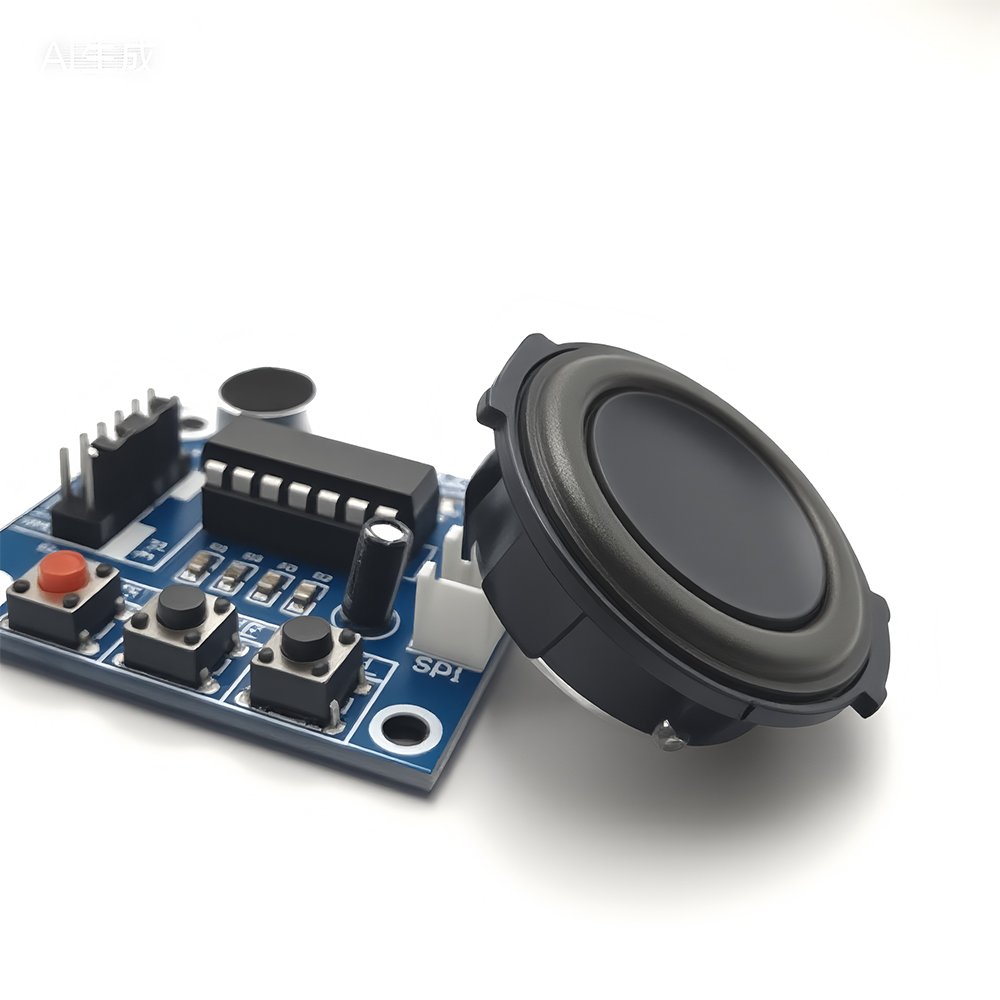
This guide explores the leading high-power 4-ohm subwoofer drivers on the market, dissecting the technologies that make them exceptional and providing the data you need to make an informed decision for your next bass project.
The 4-Ohm Advantage: Why Impedance Matters in High-Power Designs
In speaker design, impedance, measured in ohms (Ω), is a measure of electrical resistance to the current supplied by the amplifier. While you’ll find common ratings of 2, 4, and 8 ohms, the 4-ohm standard has become a dominant sweet spot for high-performance subwoofers. The reason is rooted in practical amplifier compatibility and power efficiency.
Most modern multi-channel and monoblock amplifiers are engineered to deliver their maximum power output into a 4-ohm load . A 4-ohm driver presents less resistance than an 8-ohm driver, allowing the amplifier to deliver more current and, consequently, more power (Watts) to the speaker. This relationship is defined by Ohm’s Law (Power = Voltage² / Resistance). Compared to a lower 2-ohm load, a 4-ohm driver is generally easier on the amplifier’s power supply, runs cooler, and often results in lower distortion. It strikes an optimal balance: it extracts strong power from the amplifier without pushing the amp’s electrical components to their absolute thermal limits, promoting long-term reliability for both the amp and the driver.
The voice coil must be wound to precise specifications to hit that 4-ohm nominal impedance while being large enough (often using high-temperature materials like aluminum, copper, or Kapton formers) to dissipate the substantial heat generated by hundreds or thousands of watts of power. The motor structure (magnet and top plate) must be massive and efficient to provide strong magnetic flux for precise control over the cone’s movement. In essence, a high-power 4-ohm driver is built from the ground up to be an efficient, durable transducer of immense energy.
Critical Specifications: Decoding What Makes a Driver High-Performance
Not all 4-ohm drivers are created equal. To identify truly high-power models, you must look beyond the basic impedance rating and examine the key parameters that define performance and durability. Here are the non-negotiable specs:
- Continuous Power Handling (RMS): This is the definitive measure of a driver’s high-power capability. It indicates the average amount of power, in watts, the driver can handle continuously without thermal or mechanical failure. For a “high-power” designation in the current market, look for RMS ratings starting at 500 watts and extending beyond 2000 watts . Peak power ratings are marketing figures; RMS is the trustworthy benchmark.
- Voice Coil Size and Material: A larger-diameter voice coil (2.5″, 3″, 4″) has more surface area to shed heat. Dual voice coil (DVC) designs offer wiring flexibility (able to present 2 or 8 ohms from a pair of 4-ohm coils) but are also common in high-power models for increased power handling. Materials like copper-clad aluminum wire (CCAW) or flat-wound copper are used for efficiency and thermal resilience.
- Motor Strength (BL Product): The product of magnetic field strength (B) and voice coil length (L). A higher BL value indicates a stronger, more efficient motor that provides better control over the cone, resulting in tighter, more accurate bass and reduced distortion at high excursions.
- Suspension Compliance (Vas) and Resonance (Fs): These Theile/Small parameters help determine the ideal enclosure type. A driver with a low Fs (free-air resonance) and high Vas (compliance) is generally suited for large sealed or ported enclosures for deep extension, while a higher Fs and lower Vas may favor smaller, punchier sealed boxes.
- Xmax: The maximum linear cone excursion (peak-to-peak), usually measured in millimeters. High Xmax (often 20mm+) is necessary for high-output subwoofers , as it allows the driver to move a greater volume of air without distorting, which is the key to generating loud, clean, very low-frequency sound.
The following table compares some of today’s top-tier high-power 4-ohm subwoofer drivers across these critical dimensions:
| Brand & Model | Impedance | RMS Power (W) | Voice Coil | Xmax (mm, p-p) | Fs (Hz) | Key Feature Highlight |
|---|---|---|---|---|---|---|
| JL Audio 12W6v3 | 4 Ω (DVC) | 600 | 3.0" CCAW | 28.0 | 26.3 | Elevated Frame Cooling, DMA Optimization |
| Kicker CompRT 43TCWRT102 | 4 Ω (DVC) | 500 | 2.0" | 18.6 | 34.5 | Shallow Mount Design, High-Temp Voice Coil |
| Rockford Fosgate P3D4-12 | 4 Ω (DVC) | 600 | 2.5" | 17.8 | 37.6 | VAST Surround, Anodized Aluminum Cone |
| Sundown Audio SA-12 v2 | 4 Ω (DVC) | 750 | 3.0" | 28.0 | 33.8 | Fiber Composite Cone, Ultra-Sturdy Basket |
| Dayton Audio RSS315HO-4 | 4 Ω | 500 | 2.5" | 15.3 | 25.0 | High-Output Design, Perfect for Home Theater |
| Stereo Integrity SQL-12 | 4 Ω | 1000 | 4.0" Copper | 30.0+ | 26.5 | Massive Motor, Extreme Linear Excursion |
Data sourced from manufacturer specifications as of Q4 2023. Always verify with the manufacturer for the latest specs.
Wiring, damping and protection
Protection has to act before the output stage latches. DC offset detection, over-current limiting and a thermal fold-back that reduces gain rather than cutting the output are the three functions that matter in a powered speaker. A limiter threshold set 3 dB above the rated power protects the driver without audible pumping on music, which has a crest factor of 10-14 dB above its average level.
Leading Contenders: A Breakdown of Top High-Power 4-Ohm Drivers
Let’s look at what makes some of the models in the table above, and other notable contenders, stand out in the crowded field.
For the Car Audio Purist: JL Audio 12W6v3 The W6 series is legendary for its musicality and output. The v3’s 4-ohm DVC design, combined with JL’s proprietary DMA (Dynamic Motor Analysis) optimization , creates a motor structure of exceptional linearity and control. This driver is engineered for those who demand both seismic output and nuanced, accurate bass reproduction in a relatively compact enclosure.
The Output King: Sundown Audio SA-12 v2 Sundown Audio has a cult following in the competitive SPL (Sound Pressure Level) world. The SA-12 v2 embodies this philosophy with a straightforward mission: handle immense power and move a lot of air. Its 3-inch high-temperature voice coil and massive motor structure are built to take abuse. The high Xmax and rigid fiber composite cone allow it to play loudly and deeply in a properly tuned ported enclosure, making it a favorite for those chasing maximum decibels on a budget.
The Shallow-Mount Specialist: Kicker CompRT Not every installation has room for a massive basket. Kicker’s CompRT series solves this with a super-shallow mounting depth (under 4 inches for the 10″ model) without sacrificing the core tenets of a high-power driver. It proves that you can get serious, powerful bass from behind a seat or in a tight truck enclosure.
The Home Theater Benchmark: Dayton Audio RSS315HO-4 High-power 4-ohm drivers aren’t exclusive to cars. The Dayton Audio RSS315HO (High Output) is a staple in the DIY home theater community. Its 4-ohm impedance matches perfectly with many pro-style and plate amplifiers . With a long-throw design, a rigid aluminum cone, and a ventilated pole piece for cooling, it’s engineered to deliver reference-level, room-shaking bass for movies and music in a home setting, often outperforming commercial subwoofers costing twice as much.
Selecting and Implementing Your Driver: From Specs to Sound
Choosing the right driver is only half the battle; implementation is everything. Your amplifier must be capable of delivering clean power at 4 ohms. Always match or exceed the driver’s RMS rating with your amplifier’s 4-ohm RMS output to avoid clipping, which is the primary cause of speaker failure.
The driver’s T/S parameters are a blueprint. Use software like WinISD or BassBox Pro to model the driver’s response in different enclosure types (sealed, ported, bandpass).
- Sealed Enclosures: Generally smaller, offer tighter, more accurate bass with a gradual roll-off. They are forgiving of minor design errors.
- Ported/Vented Enclosures: Tuned to a specific frequency (often near the driver’s Fs), they provide significantly higher output (+3 to +6 dB) around the tuning frequency, ideal for dramatic home theater or SPL car audio. They require more precise design and volume.
What the nominal figure hides
A published impedance curve is the only reliable document for matching. Read the minimum between 150 and 400 Hz first, because that is where a vented box unloads the driver and where the amplifier sees its worst case; then read the rise at resonance to see how much of the band is above nominal. A 4 ohm driver with a 3.2 ohm minimum is normal, but the amplifier rating must be quoted at 4 ohm, not at 8 ohm with a note.
FAQ
Is a 4 ohm speaker louder than an 8 ohm speaker?
At the same drive voltage it produces about 3 dB more acoustic output, because it draws twice the power. At the same input power the two are equal; sensitivity, not impedance, sets the level.
Can I connect a 4 ohm speaker to an 8 ohm rated amplifier?
Only if the amplifier's datasheet also states a 4 ohm rating. An 8 ohm-only design may overheat or trip its protection at high level; check the minimum-load specification and the thermal test condition, not the marketing wattage.
Does a higher impedance mean better sound quality?
No. Impedance changes the current the amplifier must deliver; sound quality depends on the motor, diaphragm, crossover and the enclosure. A well-designed 4 ohm system and a well-designed 8 ohm system can measure identically.
Related reading
- 4 Ohm Speaker vs. 8 Ohm Speaker: Efficiency and Power Consumption
- High Audio Frequency Speaker Design Guide
- High Sensitivity vs. High Loudspeaker Power: Which Matters More?
More on Speaker Design.
