
In a micro speaker the rear cavity, not the driver, sets the low-frequency limit. A 20 mm unit is typically tuned so that the sealed back volume behind the diaphragm lifts output between 400 and 900 Hz; enlarging that cavity by 0.3 cm3 flattens the hump but costs 2-3 dB of sensitivity above 1 kHz. The housing drawing is therefore part of the acoustic design, not a packaging detail.
With small speakers for wearables, the difference between a sample and a shipment is the test record, so each section below names the check that produces it.
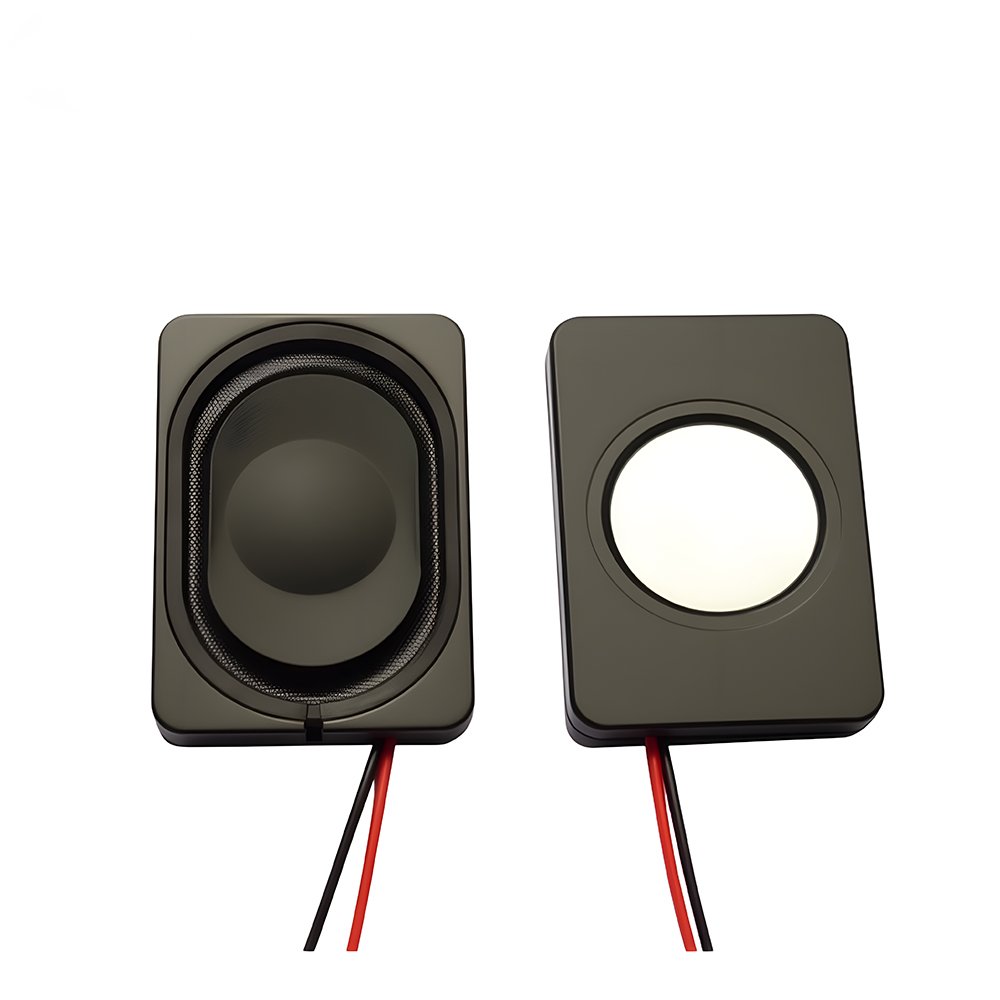
The Rise of Wearable Audio: Why Small Loud Speakers Matter
The wearable audio market has expanded beyond headphones and earbuds to include portable speakers designed for personal, wearable use. These speakers are engineered for scenarios where headphones are impractical—such as group outdoor activities, cycling, or hands-free communication—while prioritizing safety and situational awareness. Key innovations include rugged, water-resistant designs, enhanced bass through passive radiators, and AI-driven sound optimization, making them versatile for everything from hiking to podcast listening during chores.
Top 5 Small Loud Speakers for Wearable Audio
1. Bose SoundLink Micro: Unmatched Clarity in a Miniature Package
The Bose SoundLink Micro continues to dominate with its exceptional sound quality and rugged design. Weighing just 0.64 pounds, this speaker delivers surprising bass and clear highs, thanks to Bose’s proprietary transducer technology. It features a tear-resistant silicone strap, allowing secure attachment to backpacks, bikes, or wrists, and is IP67-rated for waterproof and dustproof performance. With up to 6 hours of battery life and tight Bluetooth 5.3 connectivity, it’s ideal for adventurers. Real-world tests show it maintains consistent audio quality even at max volume, making it a top choice for outdoor enthusiasts.
2. JBL Clip 5: Ultimate Portability with Bold Sound
JBL’s Clip 5 raises portable audio with a redesigned carabiner and improved acoustics. Its 40mm driver produces rich, loud sound optimized for vocal clarity and mid-range balance, perfect for podcasts and calls. The IP67 rating ensures durability, while Bluetooth 5.3 offers stable connections up to 10 meters. Battery life extends to 8 hours, and fast charging provides 1 hour of playtime from a 5-minute charge.
3. Sony SRS-XB100: Extra Bass for Dynamic Listening
Sony’s SRS-XB100 packs “Extra Bass” technology into a palm-sized speaker, enhancing low frequencies without distortion. Weighing 0.6 pounds, it features a compact cylindrical design with an IP67 rating and a convenient strap. Its 5-hour battery supports all-day use, and Bluetooth 5.2 enables multi-device pairing. Recent updates include Sony’s Sound Diffusion Processor, which widens the soundstage—a boon for wearable applications where spatial audio matters. Industry tests note its superior performance in noisy environments, thanks to its 47dB maximum output.
4. Ultimate Ears WONDERBOOM 3: 360-Depth Sound for Shared Experiences
The UE WONDERBOOM 3 stands out with 360-degree sound and an Outdoor Boost mode, amplifying clarity in open spaces. Its floating design is buoyant and shockproof, with an IP67 rating for all-weather use. The speaker offers 10 hours of battery and a range of 40 meters via Bluetooth 5.2. For wearable use, its lightweight build (0.9 pounds) and loop handle allow easy attachment.
5. Tribit StormBox Micro 2: Affordable Powerhouse
Tribit’s StormBox Micro 2 delivers high value with loud, crisp audio from a 52mm driver. It includes a customizable strap, IP67 protection, and up to 8 hours of playtime. Bluetooth 5.3 ensures low-latency streaming, while XBass tuning enhances depth.
Cavity, gasket and the low end
The gasket is part of the acoustic seal. A 0.5 mm silicone or TPU gasket compressed 30-50 % seals a 20 mm frame at 0.2 mm deflection; over-compression buckles it and under-compression leaks, and a leak at the frame behaves as a lossy port that cancels the lowest octave. Compression force is set by the boss height, so the drawing must control it.
| Design point | Typical value | Why it matters |
|---|---|---|
| Back cavity | 0.3–2.0 cm³ | Sets the low-frequency limit |
| Rated power | 0.5–3 W | Coil heating, not excursion |
| Diaphragm travel | 0.2–0.5 mm | Sealing and clearance |
| Front cavity depth | 1–3 mm | 2–5 kHz interference |
| Gasket compression | 30–50 % | Leak-free at the housing land |
Comparative Analysis: Key Features at a Glance
The table below summarizes the critical specifications of these top speakers, based on manufacturer data and third-party testing as of mid-2024.
Integrating Small Speakers into Your Wearable Ecosystem
Choosing the right speaker depends on your specific needs. For solo adventurers prioritizing sound quality, Bose or Sony are excellent. For social settings, UE’s 360-degree audio shines. JBL and Tribit offer balanced options for everyday wearability. Consider pairing these speakers with wearable devices like smartwatches or fitness trackers for enhanced functionality—for example, using voice assistants via Bluetooth. Emerging trends include integration with health apps, where speakers provide audio feedback during workouts, and eco-friendly materials, with brands like JBL introducing recycled components in 2024 models.
Conclusion: Raise Your Audio Experience On the Go
Small loud speakers for wearable audio devices represent the perfect fusion of innovation and practicality. As technology advances, expect even smaller form factors with longer battery life and smarter features. By selecting a speaker that aligns with your activities—whether hiking, commuting, or socializing—you can enjoy high-quality audio wherever you go.
Power, excursion and thermal limits
Rated power is a thermal statement. A 20 mm coil with 0.05 mm wire has limited surface area, and the heat path runs through the former into the magnet assembly; a 2 W continuous input can raise the coil to 120 degrees C in a sealed plastic housing with no airflow. That is why the same driver is rated 3 W in free air and 1.5 W in a closed module.
FAQ
Why does a micro speaker sound thin in a plastic housing?
The back cavity is usually smaller than the free-air condition the datasheet assumes, and the housing leaks at the frame or the port. Measure the assembled response, then adjust cavity volume and gasket compression rather than the driver.
How much power can a 20 mm speaker take?
Typically 0.5-1 W continuous and 2-3 W short-term in a sealed module; the limit is coil temperature, which depends on the housing's thermal path, not only on the driver.
Is a passive radiator worth it in a wearable?
Only if the enclosure has room for the radiator's compliance and the extra height. It extends output one octave lower than a sealed back cavity but adds a second moving part that can rattle if the clearance is under 0.3 mm.
Related reading
- Mini Speakers for Wearable Devices
- Design Guide: Thermal Management in Small Loud Speakers
- Box Speakers for Commercial Audio Systems
More on Speaker Design.
