
Ingress protection is a test result, not a material property. IPX7 means immersion at 1 m for 30 minutes; IPX5 means a 6.3 mm jet at 12.5 L/min for 3 minutes; IP68 is defined by the depth and duration the manufacturer declares, so an IP68 logo without those two numbers says nothing. The test report, including the acoustic sweep before and after, is the only useful evidence.
This guide treats water-resistant small speakers as a specification problem: what to measure, what to write on the drawing, and what to verify before the first carton ships.
Understanding the Surge in Demand for Water-Resistant Audio
In an era where our electronics are extensions of our lifestyles, the demand for durable, high-quality audio has moved beyond the living room. Consumers now expect their audio gear to keep pace with their dynamic lives, transitioning effortlessly from a kitchen counter to a beach blanket without a second thought.
A significant portion of this growth is attributed to the rugged and waterproof segment. This isn’t just about surviving a splash; it’s about enabling a frictionless, soundtracked life.
Key Features to Decipher When Choosing Your Speaker
Navigating the specifications of small water-resistant speakers requires understanding a few critical technologies and ratings. Here’s what truly matters:
1. IP Ratings: The Code to Water and Dust Defense The Ingress Protection (IP) code is your most objective guide. It’s a two-digit standard (e.g., IP67). The first digit (0-6) rates solid particle/dust protection. The second digit (0-9K) rates liquid protection. For most users:
- IPX7: Can be immersed in up to 1 meter of fresh water for 30 minutes. Ideal for poolside, shower, or kayaking.
- IP67: Fully dust-tight and can handle the same immersion as IPX7. Perfect for beach trips and dusty trails.
- IP68: Dust-tight and can withstand continuous immersion beyond 1 meter (conditions specified by the manufacturer). The gold standard for serious outdoor use.
- IPX4 or IP54: Resists splashes from any direction. Good for kitchen use or workouts, but not for submersion.
2. Beyond Water: Build Quality & Ruggedness Look for mentions of military-grade standards like MIL-STD-810H , which indicates testing for drops, shocks, vibration, and extreme temperatures.
3. Sound Performance in a Small Package Size constraints challenge engineers, but innovations abound. Key terms include:
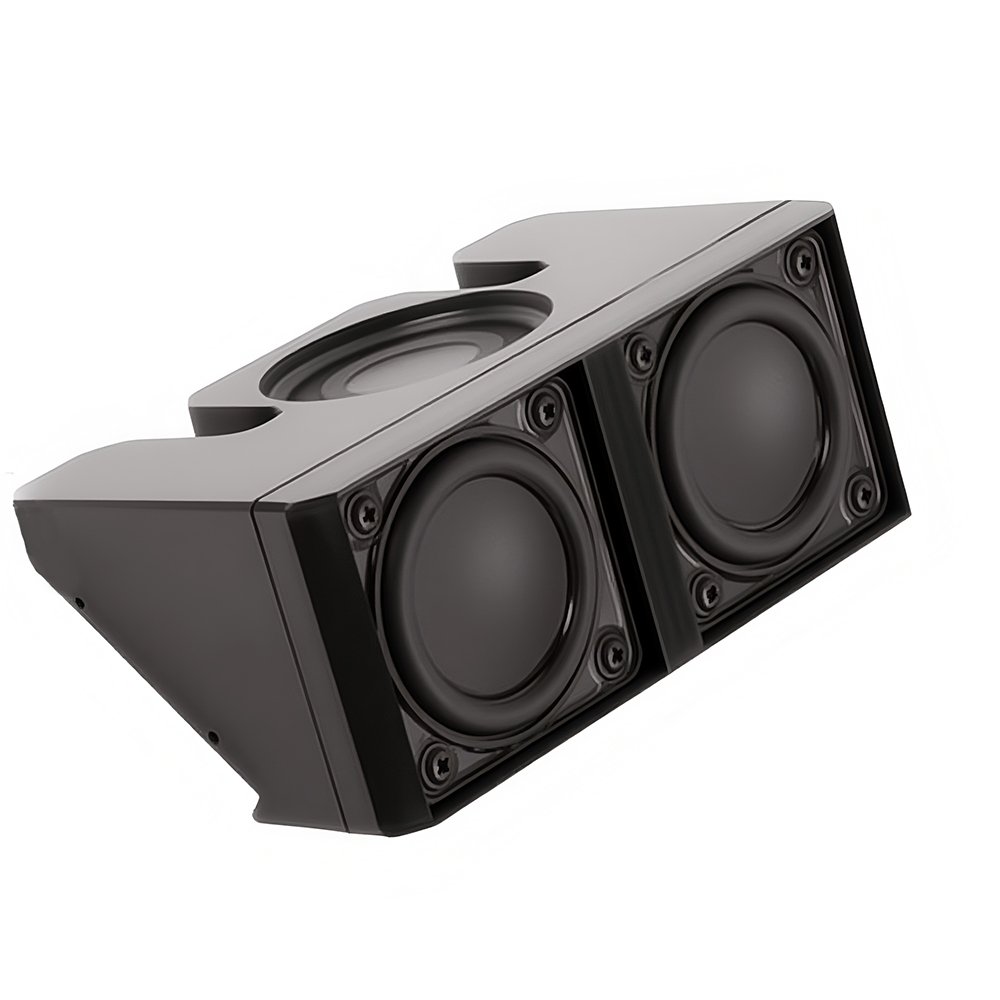
- Passive Radiators: These unpowered diaphragms vibrate to enhance bass response without requiring a large enclosure.
- 360-Degree Sound: Drivers positioned to disperse audio uniformly, ideal for group settings.
- Stereo Pairing: The ability to wirelessly link two identical speakers for a true left-right stereo soundstage.
4. Battery Life & Connectivity Advertised battery life (e.g., “12 hours”) is often measured at 50% volume. Real-world use may differ. USB-C charging is now the expected standard , with some models offering wireless Qi charging pads on their surface. Bluetooth 5.3 or higher provides better range, stability, and lower power consumption. Multipoint connectivity, allowing the speaker to switch between two devices (like a phone and a laptop), is a highly convenient premium feature.
Ageing: UV, salt and thermal cycling
Thermal cycling between -20 and 60 degrees C moves the seal by the difference in expansion between the plastic and the metal insert. A 100-cycle test with an immersion check every 20 cycles finds the designs that rely on compression rather than adhesion; the latter fail at the first cold cycle.
Top Contenders: A Market Comparison
Based on current performance, innovation, and market reception in early 2024, here is a comparative look at leading water-resistant small speakers. Prices are approximate MSRP.
| Speaker Model | Key Selling Point | IP Rating | Est. Battery Life | Special Features | Best For |
|---|---|---|---|---|---|
| Ultimate Ears Boom 4 | Legendary durable build & punchy 360° sound | IP67 | 15 hours | "Magic Button" for music control, PartyUp for 150+ speaker pairing | Pool parties, festivals, durable everyday use |
| JBL Charge 6 | Powerful sound with a built-in power bank | IP67 | 20 hours | USB-A port to charge your devices, JBL PartyBoost for stereo pairing | Camping trips, long days out where you need to charge your phone |
| Sonos Roam | Tight smart integration & automatic switching | IP67 | 10 hours | Wi-Fi & Bluetooth, Auto Trueplay tuning, works with Sonos ecosystem & voice assistants | Tech-centric users invested in multi-room audio, home and away |
| Bose SoundLink Flex | Exceptional clarity and deep bass for its size | IP67 | 12 hours | Bose PositionIQ (optimizes sound for orientation), rugged metal grille | Audiophiles seeking premium sound in a compact, portable form |
| Tribit StormBox Micro 2 | Outstanding value and surprisingly big sound | IP68 | 12 hours | Integrated strap, XBass tuning button, compact and lightweight | Budget-conscious buyers, attaching to a bike or backpack |
Maximizing Your Investment: Usage Tips and Lifespan Extension
Owning a rugged speaker is about freedom, but proper care ensures it lasts for years.
- Post-Water Exposure: After submersion or exposure to saltwater/chlorinated water, rinse the speaker with fresh water and dry it thoroughly with a soft cloth before charging. Pay special attention to ports.
- Charging Best Practices: Use the provided cable or a certified high-quality alternative. Avoid leaving the speaker plugged in continuously for weeks. For long-term storage, maintain a charge around 50%.
- Firmware Updates: Regularly update your speaker’s firmware via its companion app. Manufacturers often release updates that improve sound profiles, connectivity, and battery management.
- Cleaning: Use a soft, slightly damp cloth. Never use harsh chemicals, solvents, or high-pressure water jets, even on a highly-rated speaker, as this can damage seals over time.
The Future of Portable Audio: What’s Next?
The trajectory for small water-resistant speakers points toward greater intelligence and integration. We are already seeing the rise of integrated voice assistants (Google Assistant, Alexa, Siri) without needing a constant phone link. Matter protocol support may soon allow these portable speakers to act as smart home nodes. In practice, advances in spatial audio and head-tracking technologies, currently in headphones, could trickle down to portable speakers for a more immersive personal listening zone. Sustainability is also becoming a core design principle, with brands like Bang & Olufsen and Sonos using recycled materials and offering longer warranties and repair programs.
The sealing stack, layer by layer
The first barrier is the driver's own diaphragm and surround, which are not hermetic. A PET or TPU membrane bonded to the frame provides the seal; its mass and stiffness set the high-frequency loss, and its compliance must not restrict excursion at low frequencies. A 25 micron PET film is a common compromise, but it must be tensioned evenly or it buzzes at 200-400 Hz.
FAQ
What is the difference between IPX7 and IP67?
IPX7 covers water only: immersion at 1 m for 30 minutes. IP67 adds dust tightness (the 6) to the same immersion test. Neither covers jets, which is IPX5, so outdoor products often need both.
Can a waterproof speaker keep its bass?
Yes, but a sealed housing loses the port gain and a membrane costs high-frequency output. The usual solution is a passive radiator, which moves the tuning without an opening, plus a membrane only over the driver.
How should an IP rating be verified?
Test the complete product, not a bare driver, and repeat the acoustic sweep after immersion. A unit that passes the water test but shifts 3 dB at 1 kHz has a leak into the cavity that will fail in the field.
Related reading
- Design Guide: Thermal Management in Small Loud Speakers
- 4 Ohm vs 8 Ohm Speakers Full Engineering Guide
- Mounting Guide: Securing Box Speakers in Retail Environments
More on Speaker Design.
