
A frequency response curve is a measurement, not a promise. It is only comparable when the distance, drive level, gating and smoothing are stated: 1 m on axis, 2.83 V, 1/24 octave smoothing and a gated window that removes the room. Without those four numbers, two curves cannot be compared, which is why catalogue graphs so often disagree.
This guide treats aesthetics acoustics must balance as a specification problem: what to measure, what to write on the drawing, and what to verify before the first carton ships.
The Historical Divide: When Form Followed Function (or Was Ignored Altogether)
For decades, the paradigm of high-fidelity speaker design was dominated by a singular mantra: performance above all . The result was often a bland, rectangular box—frequently clad in black vinyl or wood veneer—optimized internally for sound wave propagation but externally indifferent to its surroundings. These “monkey coffins,” as some critics dubbed them, were engineered in acoustically isolated labs with little consideration for the living rooms they would inhabit. The assumption was that true audiophiles would forgive any visual offense for the sake of sonic purity.
This functionalist approach had acoustic logic. A rigid, non-resonant cabinet minimized unwanted vibrations (coloration). Specific driver arrangements and cabinet dimensions were calculated to control sound dispersion and bass response. However, it created a cultural divide. High-end audio became associated with a certain utilitarian, even masculine, aesthetic that could feel imposing and out of place in modern, design-conscious homes.
Meanwhile, the rise of consumer brands introduced smaller, more stylized speakers, but these often sacrificed mid-range clarity and bass depth. The market was split: serious sound in one corner, pretty furniture in the other. This historical divide set the stage for the current challenge: unifying these two worlds without compromise.
The Modern Listener’s Environment: The Integration Imperative
Today’s living space is fundamentally different. Open-plan layouts, minimalist decor, and multi-functional rooms are the norm. Consumers, especially younger demographics, view technology not as separate equipment but as integrated lifestyle elements . A speaker is judged not just by its frequency response chart, but by how it looks on the bookshelf, how it complements the mid-century modern sofa, or how it disappears into the architecture.
This is not merely superficiality. Our environments significantly impact our well-being. A visually disruptive object can cause subconscious stress, subtly detracting from the relaxation and enjoyment that music is meant to provide. Therefore, acoustic performance begins with visual acceptance; a speaker must earn its place in the room before it is ever switched on.
This “integration imperative” forces designers to rethink shapes, materials, and footprints. The classic rectangular box is being deconstructed into cylinders, organic curves, and planar forms. Brands like Sonus Faber treat cabinets like musical instruments, using fine woods and leather, while KEF with its signature Uni-Q driver and sleek aluminum cabinets turns speakers into modernist sculptures. The goal is visual harmony , which becomes the first layer of the listening experience.
Crossover design and driver integration
The load seen by the filter is not the nominal impedance. A conjugate network that flattens the tweeter's impedance peak keeps the transfer function predictable, and a notch on the woofer's breakup mode at 4-6 kHz removes the harshness that equalisation cannot fix. Both add components, so the decision is made on measured curves rather than on a textbook calculator.
The Science of the Surface: How Materials and Shape Influence Sound
This is where the real engineering challenge—and magic—happens. Every aesthetic choice has an acoustic consequence. The pursuit of balance is a deeply technical endeavor.
Materials Matter: Moving from traditional MDF to advanced composites, machined aluminum, or molded ceramics isn’t just a stylistic decision. These materials offer vastly different resonant properties. A solid aluminum enclosure, for instance, provides exceptional rigidity and damping, reducing cabinet “talk” and allowing for cleaner bass. However, it requires precise engineering to manage internal standing waves. Fabric grilles, chosen for their color and texture, must be acoustically transparent. Companies like Bang & Olufsen and Devialet spend countless R&D hours developing proprietary materials that serve both visual and acoustic masters.
Form Follows Frequency: The shape of a cabinet directly affects sound diffusion and diffraction. Sharp edges can cause high-frequency beaming and phase issues. Rounded edges or contoured baffles, like those on Magico or Focal speakers, help create a more coherent wavefront and wider “sweet spot.” The sculptural form of the Bowers & Wilkins Nautilus , inspired by natural shells, is a direct result of managing rear-wave energy to eliminate internal reflections—a perfect marriage of biomimetic art and acoustic science.
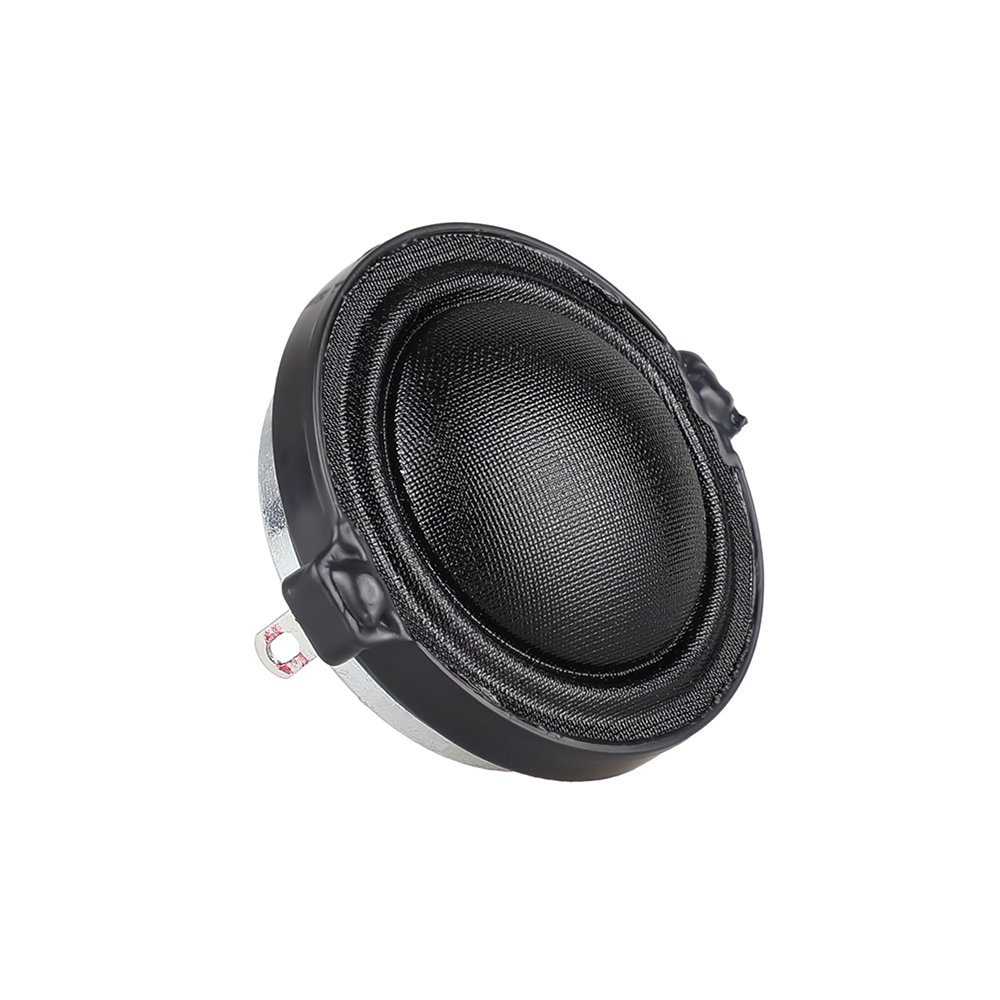
Driver Design as a Focal Point: The drivers themselves are becoming design elements. Copper相位 plugs, gleaming aluminum domes, or distinctive colored woofers (like KEF’s iconic Copper) are presented as visual features. This transparency celebrates the technology rather than hiding it, building trust through exposed engineering beauty.
| Material | Aesthetic Appeal | Acoustic Primary Benefit | Design Challenge |
|---|---|---|---|
| Machined Aluminum | Modern, premium, industrial-chic; allows for precise, sculpted forms. | Extreme rigidity for low resonance and distortion; excellent heat dissipation. | Can be expensive; requires damping treatment to manage internal reflections. |
| Solid Wood (e.g., Walnut, Oak) | Warm, natural, organic; connects to furniture and craft traditions. | Natural damping properties; can provide a warm sonic character. | Prone to environmental changes (humidity/temp); consistency in density is key. |
| Advanced Composites (e.g., Carbon Fiber) | Technical, high-performance, lightweight look. | High stiffness-to-weight ratio; minimal resonance and coloration. | Complex and costly manufacturing processes. |
| Molded Polymer/ Ceramics | Allows for tight, curvaceous, and unique organic shapes. | Can be tuned for specific damping characteristics; very consistent. | Tooling costs are high; can ring at certain frequencies if not properly formulated. |
| Acoustically Transparent Fabric | Softens appearance; offers vast color/texture customization. | Protects drivers while minimally impeding sound waves. | Must maintain consistent weave density; can collect dust and affect sound over time. |
The Market Reality: Data-Driven Design Decisions
A speaker is now a permanent, always-on fixture in the home. Its design, therefore, carries permanent weight. The success of models like the Apple HomePod or Sonus Faber Omnia underscores this: they are conceived as ambient objects that deliver exceptional, room-aware sound.
Engineering the Future: Computational Audio and Adaptive Design
The ultimate synthesis of aesthetics and acoustics is being realized through computational audio and advanced manufacturing . This represents the final frontier in the balance.
Digital Signal Processing (DSP) is the great enabler. It allows engineers to compensate for acoustic compromises that might arise from a chosen design. If a beautiful, slender enclosure limits bass extension, DSP can intelligently manage driver excursion and apply equalization to synthesize a durable low-end response. Brands like Trinnov and Lyngdorf build entire philosophies around room correction that frees the physical design from some traditional acoustic constraints.
Additive manufacturing (3D Printing) allows for the creation of complex, internally braced structures that are impossible with traditional woodworking. These can be optimized for both stiffness and minimal material use, leading to striking, lightweight forms with superb acoustic properties. Imagine a speaker lattice that looks like organic coral—each strut placed by an algorithm to cancel a specific resonance.
The future speaker is adaptive and context-aware . It will use camera and microphone arrays to see the room, identify surfaces and furniture, and then tailor its sound dispersion pattern to the specific acoustic and visual environment. The physical design will be a neutral, beautiful canvas upon which the optimal soundstage is painted digitally for each unique space.
Conclusion: The Harmony is the Product
The debate is over. The most successful and meaningful speakers of our time are those that refuse to choose between art and science. They embody the principle that true luxury is the absence of compromise . That pleasure is then deepened and fulfilled by immersive, detailed, and moving sound.
For engineers and designers, the task is more complex and rewarding than ever. It requires cross-disciplinary collaboration where acoustic engineers work hand-in-hand with industrial designers and material scientists from day one. The result is products that resonate on a deeper level—products that are not just heard, but felt and loved as part of our daily lives.
Horns, waveguides and directivity
A horn trades efficiency for directivity. A compression driver with a 1 inch throat on a 60 by 40 degree horn can produce 110 dB at 1 m with a few watts, but its throat distortion rises with level and its coverage narrows with frequency. For a long-throw installation the 60 by 40 pattern is chosen so that the rear seats still receive direct sound at 20 m.
FAQ
What smoothing should a published response curve use?
State it explicitly: 1/24 octave is close to what the ear resolves in a room, while 1/3 octave hides narrow peaks. A curve without distance, level and smoothing is not comparable with any other curve.
Why cross a tweeter no lower than one octave above resonance?
Below that point the diaphragm travel and distortion rise quickly, and a 2 kHz crossover on a 900 Hz tweeter leaves margin for high-level transients without exceeding Xmax.
Does a flat on-axis curve guarantee good sound?
No. Directivity, the crossover's phase behaviour and low-frequency room interaction matter as much; a flat curve measured at 1 m can still sound uneven at the listening position.
Related reading
- Portable Speaker Design Trends
- Small Speaker Acoustic Design Principles
- Top 5 Speaker Design Trends for Minimalist Interiors
More on Speaker Design.
