
Impedance is a frequency-dependent number, not a single value. A driver sold as 8 ohm usually falls to 6-7 ohm around its resonance and climbs past 20 ohm at the top of its band, while a 4 ohm part can dip to 3.2 ohm in the same region. The nominal figure is a rounded label agreed for matching; the minimum impedance is what the amplifier has to survive on a real programme signal.
This guide treats high sensitivity as a specification problem: what to measure, what to write on the drawing, and what to verify before the first carton ships.
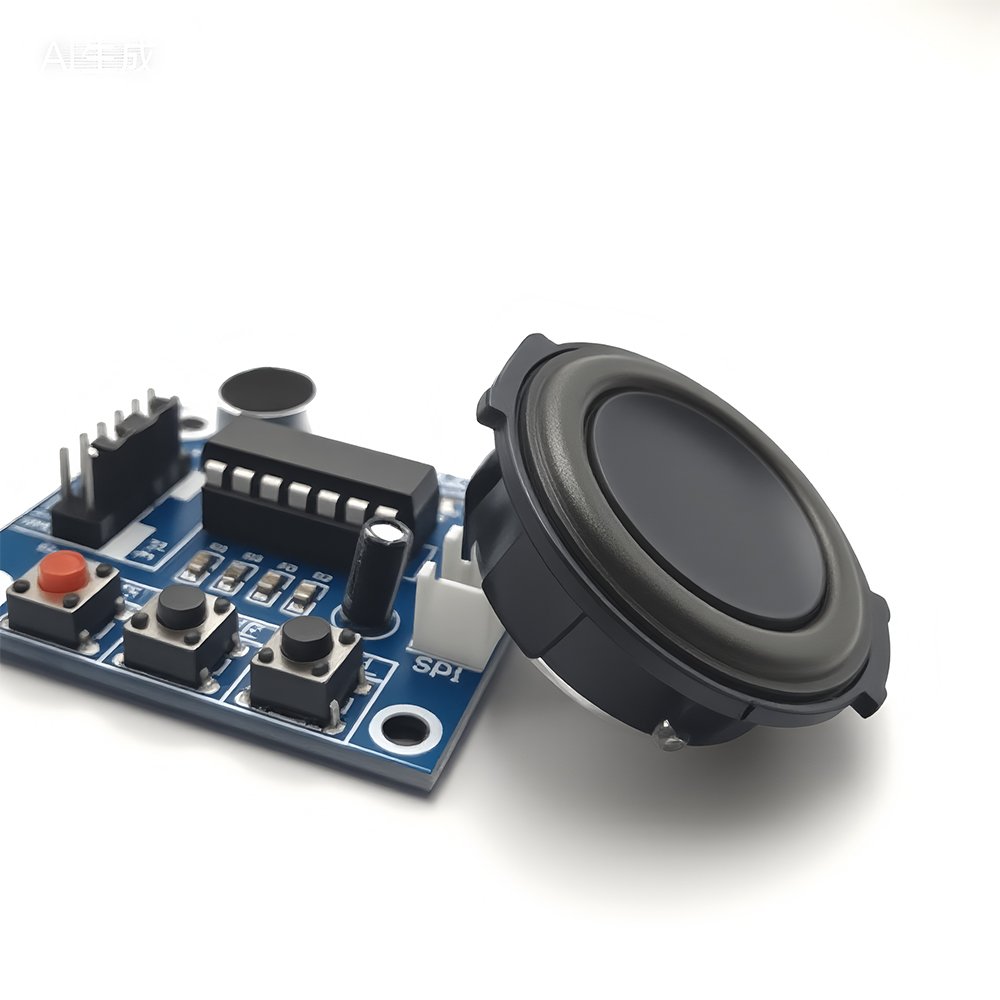
Understanding Speaker Sensitivity: The Measure of Efficiency
Speaker sensitivity, measured in decibels (dB), indicates how effectively a speaker converts electrical power into acoustic output. Specifically, it represents the sound pressure level (SPL) a speaker produces at a distance of one meter when driven by one watt of power. For example, a sensitivity rating of 90 dB means the speaker will produce 90 dB of sound with one watt of input.
Sensitivity is primarily determined by the speaker’s design and components. Factors include the magnet strength, voice coil design, cone material, and enclosure type. High-sensitivity speakers (typically 90 dB and above) require less amplifier power to achieve high volume levels. They are often favored in applications where amplifier power is limited or energy efficiency is desired—such as in passive sound reinforcement or tube amplifier setups.
From an engineering perspective, sensitivity reflects a trade-off between efficiency and precision. Recent advancements in neodymium magnets and composite materials have enabled manufacturers to push sensitivity ratings while maintaining sound quality, with some modern high-end models reaching 97-100 dB sensitivity.
The Role of Amplifier Power: More Than Just Volume
Amplifier power, measured in watts, defines the amount of electrical energy an amplifier can deliver to a speaker. However, power alone doesn’t guarantee superior performance. It must be considered in conjunction with voltage, current, and the speaker’s impedance curve.
- RMS Power: Continuous power handling, indicating sustainable performance.
- Peak Power: Maximum short-term power tolerance.
- Recommended Amplifier Power: The manufacturer’s suggested power range for optimal operation.
High-power amplifiers (e.g., 200W RMS per channel and above) provide headroom—the ability to handle dynamic peaks in music or film soundtracks without clipping. However, pairing a high-power amplifier with a low-sensitivity speaker may still result in inadequate volume if the speaker is inefficient.
Wiring, damping and protection
Two 8 ohm drivers in parallel present 4 ohm, and four in a series-parallel array return to 8 ohm; both are legitimate, but the array's impedance minimum is set by the worst driver, not by the average. Keep runs under 5 m and use 0.75-1.5 mm2 cable for 4 ohm loads, because a long thin run adds resistance that the amplifier's feedback cannot correct and the damping factor falls accordingly.
The Synergy and Trade-offs Between Sensitivity and Power
Sensitivity and power exist in a proportional relationship described by the power sensitivity equation : every 3 dB increase in output requires a doubling of amplifier power. Conversely, a speaker with 3 dB higher sensitivity will achieve the same volume with half the amplifier power.
| Scenario | Speaker Sensitivity | Amplifier Power | Resulting SPL (approx.) | Best Use Case |
|---|---|---|---|---|
| Home Theater with High Dynamic Range | 87 dB | 150W per channel | 105-110 dB peaks | Large rooms, action movies |
| Efficient Music Listening System | 92 dB | 50W per channel | 95-100 dB continuous | Mid-sized rooms, jazz/classical |
| Portable/Outdoor Sound | 85 dB | 30W per channel | 90-95 dB max | Small gatherings, background music |
| Professional PA System | 100 dB | 400W per channel | 120+ dB sustained | Live concerts, large venues |
As the table illustrates, high-sensitivity speakers excel in conserving amplifier power, while high-power amplifiers release potential in lower-sensitivity designs. The choice depends on your listening environment, content type, and performance expectations.
Application-Based Recommendations: Matching Specifications to Use Cases
Home Audio and Stereo Music Systems: For most living rooms and dedicated listening spaces, speakers with 88-92 dB sensitivity paired with amplifiers delivering 50-150W per channel offer an ideal balance. This combination ensures sufficient headroom for musical peaks without demanding excessively powerful—and potentially costly—amplification.
Home Theater and Immersive Audio: Dolby Atmos and DTS:X soundtracks demand significant dynamic range. Here, power handling often takes precedence. Look for speakers capable of handling 100-200W continuous, with sensitivity ratings of 90 dB or higher to reproduce explosive effects without strain.
Professional and Live Sound: In sound reinforcement, sensitivity is king. High-sensitivity horn-loaded designs (100+ dB) allow powerful sound projection with manageable amplifier racks, reducing setup weight and power consumption—a critical factor for touring and installed sound.
Portable and Compact Systems: For Bluetooth speakers and compact setups, designers often prioritize power efficiency due to battery constraints. Recent advancements in transducer materials have enabled portable speakers to achieve 85-90 dB sensitivity with minimal amplifier demands, extending battery life while maintaining output.
Future Trends and Technological Innovations
Emerging technologies like advanced magnetic circuit designs , graphene and beryllium diaphragms , and waveguide-loaded tweeters are pushing sensitivity boundaries without compromising fidelity.
This trend reflects an increasing awareness that synergy, rather than maximizing one specification, yields the best real-world performance.
Conclusion: A Balanced Approach Wins
High sensitivity excels in maximizing output from limited amplification, while high power ensures dynamic headroom and control. For most users, the optimal solution lies in selecting speakers with good sensitivity (89 dB and above) and pairing them with an amplifier that provides substantial clean power (at least 1.5-2 times the speaker’s continuous power rating) .
Invest in quality rather than chasing extreme numbers. Listen to combinations in your space, and prioritize system synergy.
What the nominal figure hides
A published impedance curve is the only reliable document for matching. Read the minimum between 150 and 400 Hz first, because that is where a vented box unloads the driver and where the amplifier sees its worst case; then read the rise at resonance to see how much of the band is above nominal. A 4 ohm driver with a 3.2 ohm minimum is normal, but the amplifier rating must be quoted at 4 ohm, not at 8 ohm with a note.
FAQ
Is a 4 ohm speaker louder than an 8 ohm speaker?
At the same drive voltage it produces about 3 dB more acoustic output, because it draws twice the power. At the same input power the two are equal; sensitivity, not impedance, sets the level.
Can I connect a 4 ohm speaker to an 8 ohm rated amplifier?
Only if the amplifier's datasheet also states a 4 ohm rating. An 8 ohm-only design may overheat or trip its protection at high level; check the minimum-load specification and the thermal test condition, not the marketing wattage.
Does a higher impedance mean better sound quality?
No. Impedance changes the current the amplifier must deliver; sound quality depends on the motor, diaphragm, crossover and the enclosure. A well-designed 4 ohm system and a well-designed 8 ohm system can measure identically.
Related reading
- Loudspeaker Power Calculation Explained
- How to Measure RMS vs. Peak Loudspeaker Power Accurately
- Why Loudspeaker Power Ratings Can Be Misleading in Marketing
More on Speaker Design.
