
The material choice follows the product, not a preference. MDF is dense and well damped but heavy and sensitive to moisture; ABS allows ribs, bosses and a sealed housing in one moulding but needs wall sections of 1.5-3 mm and a draft of 1-2 degrees; PC-ABS and PA66-GF30 add heat and impact resistance where the housing also carries the electronics.
The notes below apply to box speakers remain popular, with the measurement conditions and production checks that decide whether a claimed figure survives a shipment.
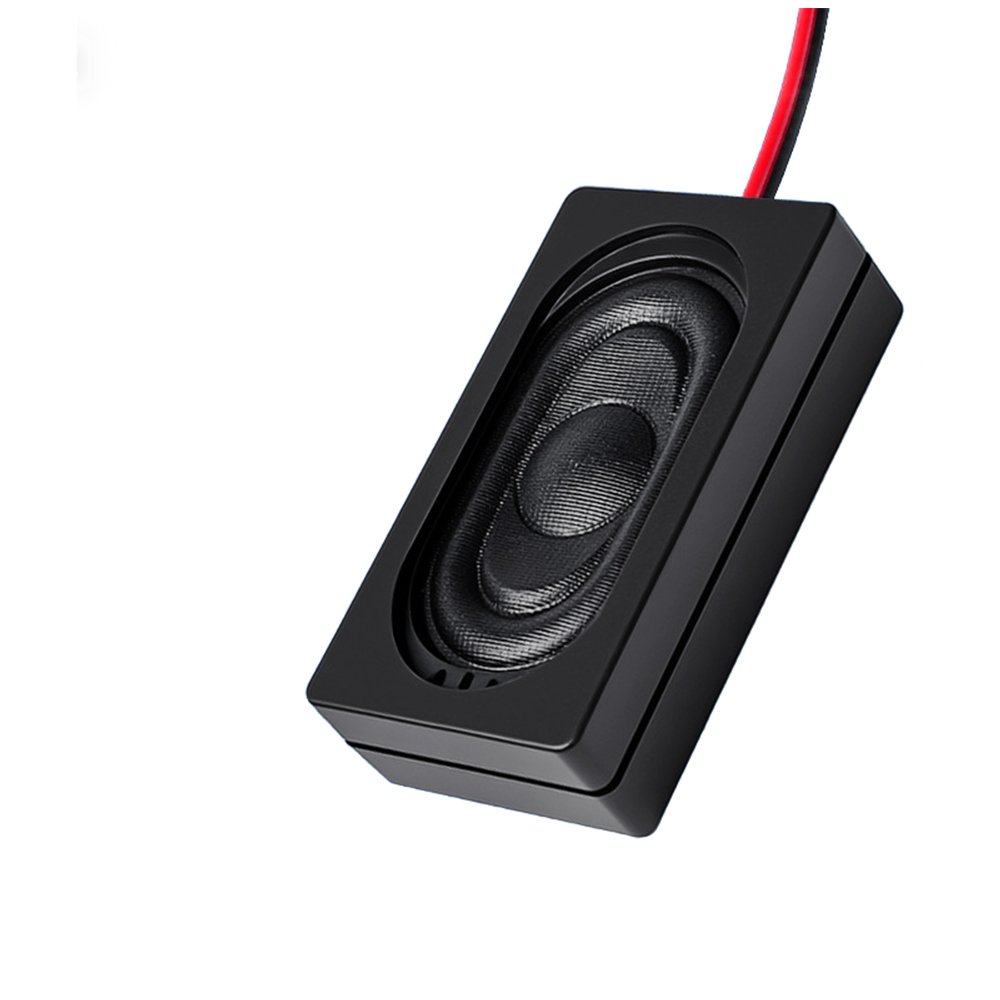
Unmatched Durability and Reliability in Demanding Environments
Box speakers, often referred to as loudspeaker enclosures, continue to be the bedrock of professional audio in commercial settings for one fundamental reason: they are built to last. Unlike consumer audio equipment or many contemporary, sleekly designed alternatives, traditional box speakers are engineered with industrial-grade components and ruggedized cabinets that withstand the rigors of 24/7 operation. In environments like airports, convention centers, hotels, and retail stores, audio systems must perform flawlessly for years, often in less-than-ideal conditions involving temperature fluctuations, dust, and constant use.
Components such as high-temperature voice coils, weather-resistant cones (often treated or made from materials like polypropylene), and sturdy grilles protect the internal workings from physical damage and environmental factors. This durability translates directly to a lower total cost of ownership (TCO). While the initial investment might be comparable to some alternatives, the extended lifespan and reduced failure rates of box speakers mean fewer replacements and maintenance interventions, a critical factor for facility managers and system integrators.
Table: Key Durability Features of Commercial Box Speakers vs. Common Alternatives
| Feature | Commercial Box Speaker | Thin-Profile/Wall-Mounted Speaker | Consumer Bluetooth Speaker |
|---|---|---|---|
| Primary Cabinet Material | 15-18mm Plywood/MDF with Internal Bracing | Plastic or Thin Composite | Plastic or Lightweight Metal |
| Grille Protection | Heavy-duty steel or powder-coated metal | Perforated fabric or thin plastic | Fabric or minimal metal mesh |
| Driver Durability | High-temp voice coils, treated cones | Standard voice coils, lighter cones | Consumer-grade, not for sustained high output |
| Typical IP Rating | Often IP44 or higher for indoor/outdoor models | Rarely rated (indoor only) | Varies, rarely suited for commercial use |
| Expected Service Life | 10+ years with proper installation | 5-7 years | 2-4 years under commercial load |
Superior Acoustic Performance and Predictable Coverage
The physics of sound reinforcement favors enclosed, properly tuned cabinets. Box speakers allow for precise engineering of acoustic parameters, which is the deciding factor in commercial installations where consistent, intelligible sound coverage is non-negotiable. The enclosure design—whether bass-reflex (ported), sealed, or horn-loaded—allows audio engineers to control low-frequency response, maximize efficiency, and direct sound accurately over designated zones.
When a system integrator designs an audio system for a large hotel lobby or a corporate auditorium, they rely on the manufacturer’s published polar plots (showing sound dispersion) and sensitivity ratings (measuring output per watt) to model the soundfield using software like EASE or AFMG. The standardized shapes and well-documented performance data of box speakers make these calculations reliable. Modern box speakers incorporate advanced technologies such as precision waveguides for controlled high-frequency dispersion and composite driver designs for clearer vocal reproduction, ensuring announcements and background music are delivered with clarity even in acoustically challenging, reverberant spaces.
Wall behaviour, bracing and damping
An 18 mm MDF panel on a 300 mm span has a first bending mode in the 150-250 Hz region; a brace across the middle raises it above the crossover and reduces the panel's contribution by 6-10 dB in that band. The brace should connect two opposite panels and be glued, not screwed, because a dry joint rattles at high level and is invisible on a sine sweep.
Installation Flexibility and System Integration
The very form factor of the box speaker, which some may perceive as a limitation, is its greatest asset in terms of flexibility. These speakers are designed for permanent, secure installation via integrated brackets or rigging points, allowing them to be mounted high on walls or ceilings, flown from trusses, or placed on stages. This versatility ensures they can be positioned optimally for acoustic performance and out of the way of public traffic.
In practice, box speakers are the most compatible components in a larger, integrated AV ecosystem. They feature standardized input terminals (like screw terminals or NL4 connectors) that interface tight with commercial amplifiers, DSPs (Digital Signal Processors), and centralized control systems from manufacturers like Q-SYS (QSC) , Biamp , or Dante . This ecosystem approach is standard in commercial installations, where audio is just one part of a network that may include lighting, video, and environmental controls. Their passive design (in most cases) separates the amplifier from the speaker, allowing for easy upgrades, centralized amplifier rack management, and the use of durable 70V/100V line systems for distributing audio over long cable runs with multiple speakers—a technology that is almost synonymous with commercial sound and intrinsically linked to box-style form factors.
Cost-Effectiveness and Proven Technology
In the commercial world, “proven” is a powerful term. Box speaker technology is mature, thoroughly understood by installers and engineers worldwide, and represents a lower-risk specification. This familiarity reduces design time, installation complexity, and training costs. The market for these speakers is highly competitive, with established brands like Bose Professional , JBL Professional , and Yamaha offering extensive product lines at various price points, ensuring a solution for almost every budget and performance requirement.
The cost-effectiveness extends beyond the unit price. The simplicity of their design often makes field repairs, such as driver replacement, straightforward and economical compared to replacing an entire proprietary, sealed-unit speaker. For large-scale projects—such as chain restaurants, school districts, or nationwide retail stores—this serviceability and the ability to source reliable, interchangeable components from multiple suppliers are significant logistical and financial advantages. While aesthetically minimalist speakers have their place in executive boardrooms or high-design boutiques, the vast majority of commercial spaces prioritize performance, longevity, and operational cost over making the speaker itself a design statement.
The Evolution Amidst Stability: Embracing Modern Demands
It is a misconception that box speakers are technologically stagnant. Leading manufacturers continuously innovate within this trusted form factor. Today’s commercial box speakers increasingly feature:
- Integrated Amplification & DSP: “Powered” or “active” box speakers with built-in, finely tuned amplifiers and sophisticated DSP for room correction, limiting, and filtering are becoming more common, simplifying installation and optimizing performance.
- Networked Audio Ready: Many are designed as perfect partners for networked audio protocols, easily connecting to digital audio networks via attached amplifiers or onboard electronics.
- Advanced Materials: Developments in driver diaphragm materials (like carbon fiber or coaxial designs) and enclosure composites continue to improve sound quality, efficiency, and weight.
This evolution ensures that the box speaker adapts to modern technical standards while retaining its core strengths. It remains the reliable, high-performance workhorse, now capable of tight joining the digital, networked AV market that defines contemporary commercial installations.
Covers, mesh and acoustic transparency
Cosmetic covers also have to survive handling. Fabric is tested for pilling and colour fastness, mesh for salt spray and adhesion, and both for pull-off force at the frame. A cover that lifts at 40 degrees C in a car interior is a warranty return; a 72-hour 85/85 humidity test before approval catches most of them.
FAQ
Does MDF sound better than plastic for a small speaker?
MDF is better damped per millimetre, plastic allows thinner walls with ribs. Below 100 mm drivers the difference is small; above 100 mm MDF wins on panel resonance unless the plastic housing is heavily ribbed and filled.
How do I choose between a sealed and a ported box?
Use EBP: above 100 favours ported, below 50 favours sealed. Also check the space: a port needs 2-3 times the driver's displacement volume and a clear path at both ends.
What open area should a speaker grille have?
At least 40 % for metal mesh and 50-60 % for fabric, measured over the diaphragm area; below that the high-frequency loss becomes audible and cannot be corrected without changing the crossover.
Related reading
- Box Speakers for Commercial Audio Systems
- How to Wire Multiple 8 Ohm Speakers for Commercial Audio
- 4 Ohm vs 8 Ohm Speakers Full Engineering Guide
More on Speaker Design.
