
Sealing a speaker costs acoustic output. A membrane over the driver attenuates 1-3 dB above 2 kHz depending on its grade, and a sealed housing removes the rear leakage that a port would use. The design therefore starts with the rating, then chooses the membrane, the gasket stack and the port treatment around the acoustic target.
With box speakers indoor, the difference between a sample and a shipment is the test record, so each section below names the check that produces it.
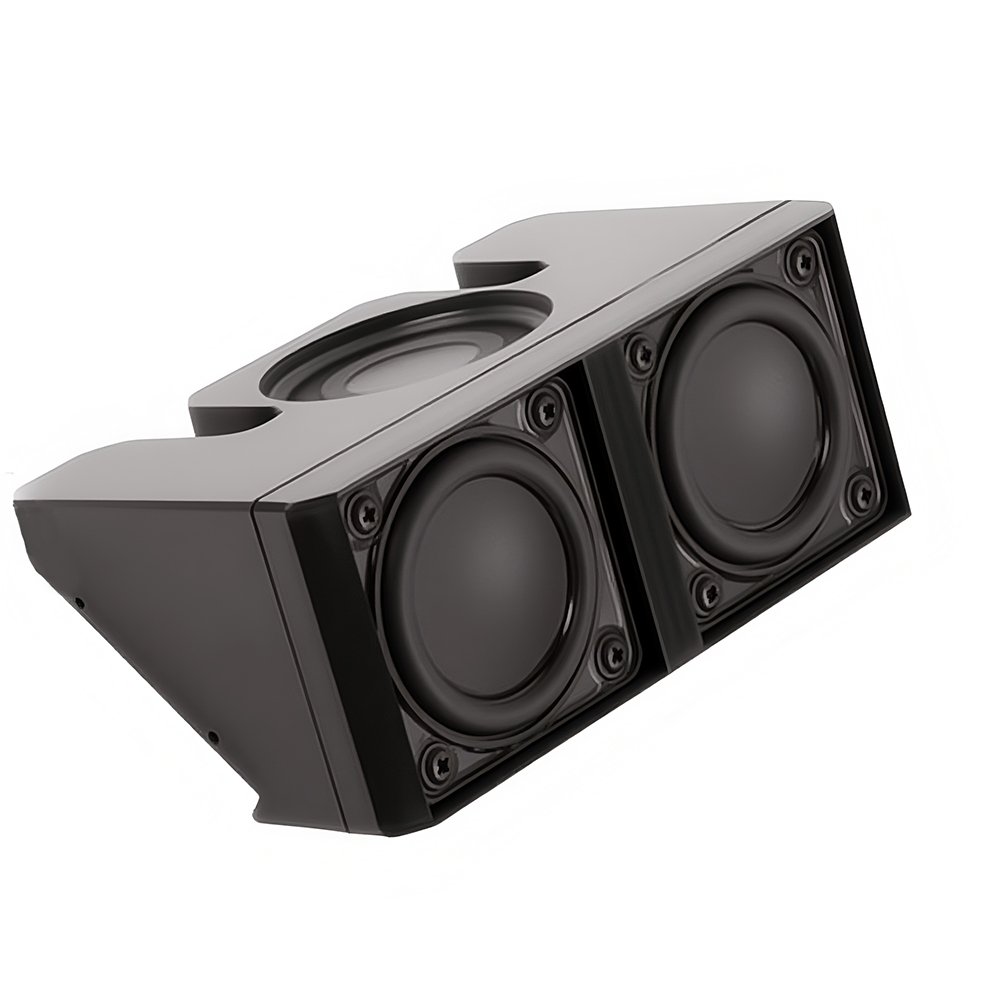
Unlike their in-wall or in-ceiling cousins, top box speakers (also known as surface-mount, enclosure, or weather-resistant speakers) offer unparalleled flexibility and performance for creating a cohesive audio environment that bridges indoor and outdoor spaces. Whether you’re an audiophile crafting a whole-home system or a homeowner seeking reliable, great-sounding music for entertaining, choosing the right speakers is the deciding factor. This step-by-step guide looks into the critical features, top models, and expert insights you need to build an impeccable background music system in 2024.
Why Top Box Speakers Reign Supreme for Integrated Audio
Top box speakers are self-contained units designed to be mounted on walls, ceilings, eaves, or poles. Their primary advantage lies in their versatility. For outdoor use, they are engineered with rugged materials and coatings to resist rain, UV radiation, salt, and extreme temperatures (often rated IP55, IP66, or IP67). Indoors, they provide a non-invasive audio solution where cutting into walls is impractical or forbidden, such as in rented spaces or homes with concrete construction.
The modern trend in whole-home audio leans heavily on distributed systems powered by multi-zone amplifiers or networked audio players (like Sonos Amp, HEOS, or Bluesound). Top box speakers are the ideal endpoint for these systems. They offer easier installation and future upgrades compared to built-in options. More importantly, for consistent background music, their design prioritizes wide dispersion and durability over the pinpoint sound staging of hi-fi bookshelf speakers. This means smooth, even coverage across a larger area, eliminating “hot spots” and “dead zones” of sound.
Critical Technical Specifications: What to Look For
Navigating spec sheets can be daunting. Here’s a breakdown of the non-negotiable features for top-tier indoor/outdoor box speakers.
- Weatherproofing & Build Quality: Look for an IP (Ingress Protection) rating . For fully exposed outdoor installations, IP66 or higher is recommended (dust-tight and protected against powerful water jets). The housing should be of UV-resistant polypropylene or aluminum to prevent fading and cracking.
- Power Handling & Sensitivity: This dictates how loud and clear your speakers will sound. Power handling (RMS) should be matched to your amplifier’s output per channel. Sensitivity is decisive; a rating of 90 dB or higher means the speaker converts amplifier power to sound more efficiently, producing more volume with less power—a key factor for energy-efficient systems and cleaner sound at lower volumes.
- Driver Composition & Design: A two-way design (woofer + tweeter) is standard for full-range sound. For bass response in open spaces, look for larger woofers (6.5″ or 8″). Tweeters with swivel or pivoting mounts allow you to direct high frequencies for optimal sound staging. Advanced materials like polypropylene cones and soft-dome tweeters offer resilience and smooth sound.
- Connectivity & Compatibility: While most box speakers use standard passive wire connections , ensure they have high-quality, corrosion-resistant binding posts. For integration with modern systems, verify compatibility with popular streaming platforms (via your amplifier) and consider models with built-in Bluetooth for convenient direct streaming, though a dedicated network-based system will offer superior range and stability.
| Model/Brand | Driver Size | Power Handling (RMS) | Sensitivity | IP Rating | Key Feature for Background Music |
|---|---|---|---|---|---|
| Sonos Architectural by Sonance | 6.5" Woofer, 1" Tweeter | 80W | 89 dB | IP66 (Outdoor) | Trueplay Tuning, optimized for Sonos Amp integration. |
| B&W AM-1 | 4" Woofer, 1" Tweeter | 50W | 84 dB | IP55 | Legendary B&W sound quality in a compact, design-forward enclosure. |
| Polk Audio Atrium 8 | 8" Woofer, 1" Tweeter | 100W | 89 dB | IP66 | Dynamic Balance technology for wide dispersion; high power output. |
| Monitor Audio Climate 80G4 | 8" Woofer, C-CAM Dome Tweeter | 120W | 90 dB | IP66 | Rigid ceramic-coated aluminum drivers for exceptional clarity. |
| JBL Control 25-1 | 5.25" Woofer, 0.75" Tweeter | 75W | 91 dB | IP56 | Professional-grade, industry standard for durability and sound projection. |
The sealing stack, layer by layer
The first barrier is the driver's own diaphragm and surround, which are not hermetic. A PET or TPU membrane bonded to the frame provides the seal; its mass and stiffness set the high-frequency loss, and its compliance must not restrict excursion at low frequencies. A 25 micron PET film is a common compromise, but it must be tensioned evenly or it buzzes at 200-400 Hz.
Top Contenders: Recommended Box Speakers
Based on performance, durability, and market reception, here are standout models across different tiers.
The speakers are paintable, feature marine-grade components, and their performance is software-tuned via Sonos’s Trueplay. Similarly, Monitor Audio’s Climate G4 Series offers breathtaking detail and bass response, housed in a gorgeous, rigid aluminum enclosure built to last decades.
Best Value: The Balanced Workhorse The Polk Audio Atrium Series (especially the Atrium 8) consistently wins awards for delivering exceptional performance per dollar. Its 8-inch driver provides surprising bass for outdoor settings, and its speed-lock mounting system simplifies installation. For a more compact solution, the Yamaha NS-AW592 offers remarkable clarity and weather resistance at an entry-level price, making it ideal for garages, covered patios, or multi-speaker setups on a budget.
Professional/Commercial Grade: Unmatched Durability In environments demanding maximum ruggedness—like restaurants, public pools, or coastal homes—the JBL Control Series and Bose Free Space 51 speakers are legends. The JBL Control 25-1, with its high sensitivity and composite construction, can project clear audio over significant distances and background noise. Their utilitarian design is built purely for reliable, long-term performance.
Installation & Acoustic Optimization Tips
Placement is as important as the speaker itself. For general background music coverage, follow the “rule of thirds.” Position speakers at roughly one-third the length of the space, aiming them across the area, not straight down. Mount them at a height of 8-10 feet to optimize dispersion and minimize obstruction.
Wiring is critical. For runs over 50 feet, use 14-gauge or thicker oxygen-free copper wire to prevent power loss. Always use direct-burial rated cable for underground runs to the backyard or garden. When connecting to an amplifier, ensure impedance matching—connecting multiple 8-ohm speakers in parallel can dangerously lower the total impedance, potentially damaging your amp.
For the best acoustic result, aim tweeters toward the primary listening area (e.g., the seating zone). Avoid pointing speakers directly at hard, reflective surfaces like glass or stucco to minimize harsh reflections. In an integrated indoor/outdoor system, use your amplifier’s zone controls or a DSP (Digital Signal Processor) to slightly lower the bass output for outdoor speakers, as open spaces lack the natural bass reinforcement of a room.
Ports, buttons and charging contacts
Every opening is a leak path. A port can be sealed with a hydrophobic mesh that passes air but not water; the mesh's acoustic resistance adds damping at the tuning frequency, so the port length is adjusted after the mesh is fitted. Button boots are the most common field failure: a 0.2 mm interference fit on the plunger and a 0.5 mm skirt are the minimum that survives a 1 m drop.
FAQ
What is the difference between IPX7 and IP67?
IPX7 covers water only: immersion at 1 m for 30 minutes. IP67 adds dust tightness (the 6) to the same immersion test. Neither covers jets, which is IPX5, so outdoor products often need both.
Can a waterproof speaker keep its bass?
Yes, but a sealed housing loses the port gain and a membrane costs high-frequency output. The usual solution is a passive radiator, which moves the tuning without an opening, plus a membrane only over the driver.
How should an IP rating be verified?
Test the complete product, not a bare driver, and repeat the acoustic sweep after immersion. A unit that passes the water test but shifts 3 dB at 1 kHz has a leak into the cavity that will fail in the field.
Related reading
- Custom Waterproof Speakers for Outdoor Equipment Brands
- Top Waterproof Speakers Manufacturers for Outdoor Gear Brands
- Why LED Light Speakers Are Essential for Outdoor Party Product Lines
More on Waterproof Audio.
