
Wireless charging adds a coil, a controller and a thermal problem to a speaker. A Qi 15 W link runs at 70-80 % end-to-end efficiency, so 3-4 W becomes heat inside a sealed housing that is already warmed by the amplifier; the design limit is usually the cell temperature, not the coil current.
With qi-certified wireless charging speaker, the difference between a sample and a shipment is the test record, so each section below names the check that produces it.
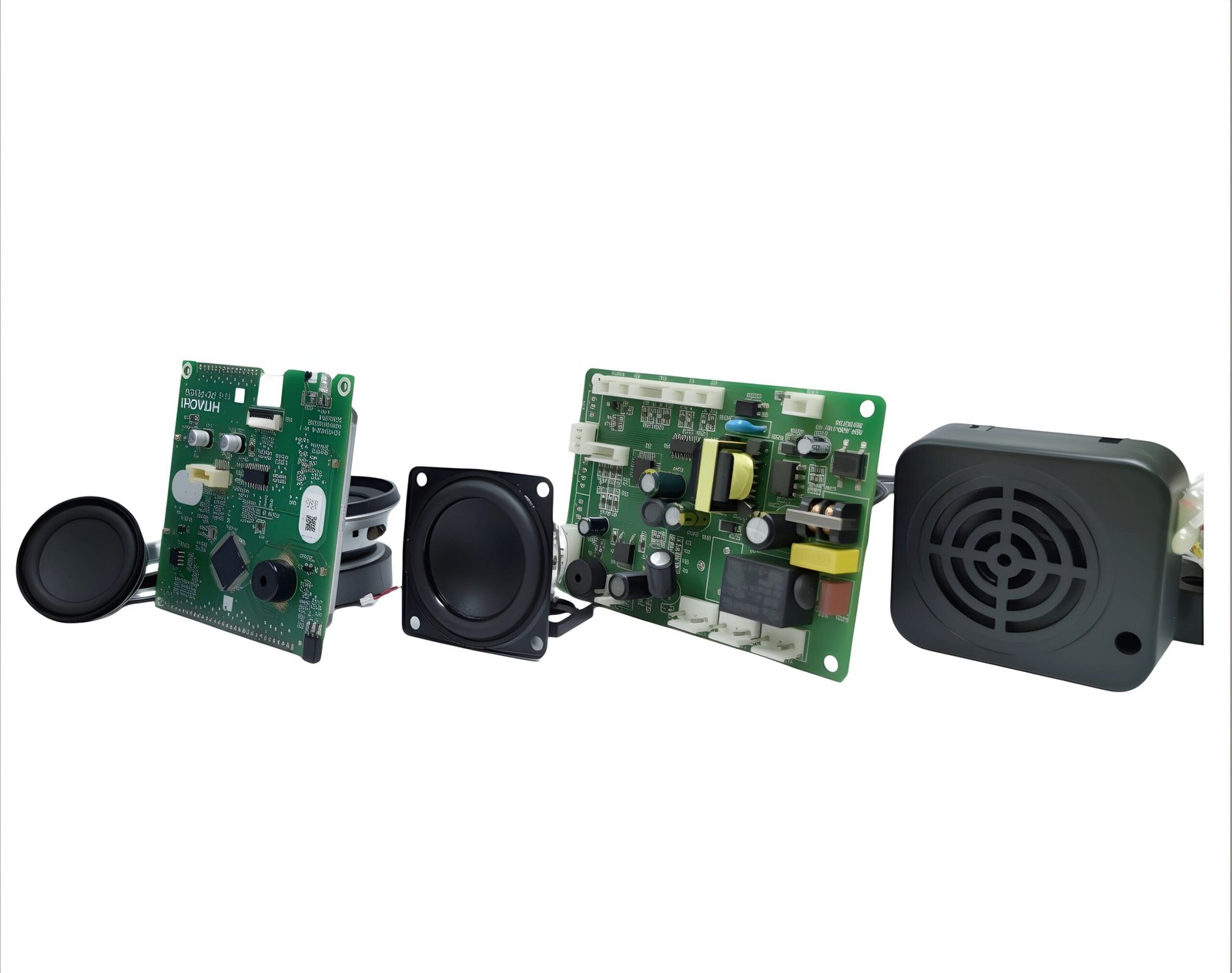
1. Understanding the Imperative of Authentic Qi Certification
Before vetting factories, understanding why Qi certification is non-negotiable is necessary. The Qi standard , developed by the Wireless Power Consortium (WPC) , ensures interoperability, safety, and energy efficiency. An uncertified product risks damaging devices, posing safety hazards, and delivering a poor user experience.
- WPC Membership: The factory (or its immediate client) must be a WPC member in good standing.
- Product-Level Certification: Every distinct speaker model must pass rigorous testing at an Authorized Test Laboratory (ATL) . You cannot “inherit” certification from a similar product.
- Licensing Agreement: The factory must have a legal licensing agreement with the WPC to use the Qi logo.
- Database Verification: All certified products are listed in the public WPC Qi Certified Products Database . This is your primary verification tool.
For a speaker factory, this certification is doubly complex, as it requires expertise in both acoustic engineering and precise power electronics .
2. The Vetting Process: From Sourcing to Due Diligence
- Platforms: Utilize B2B platforms like Alibaba, Made-in-China, and Global Sources. Use keywords: ” Qi certified wireless charging speaker factory ,” ” WPC member speaker manufacturer .”
- Trade Shows: Attend electronics and sourcing shows (CES, IFA, Canton Fair). Direct conversation reveals capability quickly.
- Industry Referrals: Network within consumer electronics circles for trusted referrals.
- Request Certification Documents: Ask for the Qi Certificate of Conformity (CoC) for a product similar to your intended design. The CoC shows the certified model name, ID, and the ATL used.
- Cross-Check the WPC Database: Use the model name/ID from the CoC to verify its status on the official WPC database. Confirm the listed company name matches your supplier.
- Request WPC Membership ID: A legitimate factory will provide their WPC membership number.
- In-House vs. Outsourced Engineering: Does the factory design the wireless charging PCB and coils in-house, or do they purchase a pre-certified module? In-house design offers more customization but requires greater vetting.
- Audit Reports: Request recent factory audit reports (e.g., ISO 9001 for quality management, BSCI/Sedex for social compliance). An RBA (Responsible Business Alliance) audit is a strong positive indicator.
- Sample Evaluation: Order a functional sample of a current certified product. Test it thoroughly with multiple Qi-enabled phones at different alignments, monitoring for excessive heat and charge speed.
Thermal path and derating
The cell is the part that limits the design. Lithium cells should stay below 45 degrees C during charge; a phone charging at 15 W on top of a speaker playing at 80 % volume can push the internal air to 50 degrees C. Test the worst case: 35 degrees ambient, charging and playback together, for two hours.
3. Evaluating Production Capability and Quality Control
A factory may have certification for one model but lack the systemic quality control for consistent mass production.
- SMT (Surface-Mount Technology) Lines: For assembling the precise PCBs for wireless charging circuits.
- Acoustic Testing Labs: Look for anechoic chambers and audio analyzer systems (like from Audio Precision or NTi) for frequency response, THD, and sensitivity measurements.
- Qi-Specific QC Stations: Ask how they test wireless charging function on the production line. Do they use Qi testers (like from Charging Technologies Inc. or LSI) to validate output power, efficiency, and Foreign Object Detection (FOD)? This is a key differentiator.
- “What is your AQL (Acceptable Quality Level) standard for audio and charging functions?”
- “How do you handle component sourcing for key parts like charging coils, capacitors, and amplifier ICs?”
- “Can you provide a Failure Mode and Effects Analysis (FMEA) for the wireless charging subsystem?”
4. Supply Chain Transparency and Compliance
A reliable factory manages its supply chain transparently, ensuring component quality and ethical production.
- Component Traceability: Especially for cobalt (in batteries) and other conflict minerals. REACH, RoHS, and WEEE compliance is standard for exporting to the US and EU.
- Battery Safety: If the speaker includes an internal battery for portability, certification like UL 2054 or IEC 62133 is mandatory. The factory should have a Battery Management System (BMS) expertise.
- Logistics & IP Protection: Assess their experience with your target markets (FCC, CE marking) and their willingness to sign durable NDAs and IP agreements .
| Compliance Area | Certification/Standard | Purpose & Importance |
|---|---|---|
| Wireless Charging | Qi Certification (WPC) | Safety, interoperability, and legality to use Qi logo. |
| Quality Management | ISO 9001:2015 | Framework for consistent quality production processes. |
| Environmental | RoHS, REACH | Restricts hazardous substances in electrical equipment. |
| Social Responsibility | BSCI, Sedex, RBA | Ensures ethical labor practices and working conditions. |
| Battery Safety | UL 2054 / IEC 62133 | Critical for fire and explosion prevention. |
| Electromagnetic | FCC (US), CE-RED (EU) | Legal requirement for market access in respective regions. |
5. Making the Decision: Cost, MOQ, and Partnership
The cheapest factory is rarely the best. Evaluate the Total Cost of Ownership , which includes unit price, tooling costs, sample costs, and the risk premium associated with an unproven partner.
- MOQ (Minimum Order Quantity): Factories with advanced capabilities often have higher MOQs (e.g., 1,000-5,000 units for a custom design). Be wary of very low MOQs on complex products, as they may indicate a trading company or a lack of in-house control.
- Communication & Project Management: Your point of contact should be technically fluent. A responsive, professional project manager who understands timelines and specifications is invaluable.
- Visit the Factory: If the order size justifies it, a physical audit is irreplaceable. You can verify machinery, QC processes, and working conditions firsthand.
Final Step: Pilot Order Before committing to full mass production, start with a pilot run (e.g., 20-50% of your MOQ). This tests the factory’s ability to execute your specific design, their packaging, and their logistics. Conduct rigorous third-party lab testing on units from this pilot run to finalize your confidence.
Coexistence with the audio path
The charger switches at 100-300 kHz and the Class D amplifier at 300-500 kHz, so the two can beat. Keep the coils and the amplifier inductor on opposite sides of the board, route the speaker leads away from the coil, and add a ferrite bead at the amplifier's supply. The audible result of a bad layout is a whistle at the difference frequency, which is easy to miss on a bench and obvious in a quiet bedroom.
FAQ
Why does my wireless charger only deliver 5 W?
Coil misalignment, a thick phone case, or thermal derating. Check the coil gap first, then the pad temperature after 20 minutes; a controller that folds back to 5 W is protecting the surface, not failing.
Is Qi2 different from Qi?
Qi2 adds a magnetic alignment ring and raises the practical power to 15 W with better positional tolerance. A Qi2 receiver also works on a Qi pad, but without the magnetic hold the alignment is not guaranteed.
How do I stop the charging coil from adding audio noise?
Separate the coil and the amplifier inductor, keep the speaker leads short and away from the coil, and add a ferrite bead on the amplifier supply. Test with a quiet track at low volume, where the beat tone is most audible.
Related reading
- Wireless Charging Speaker OEM Development
- Multifunctional Station vs. Standalone Wireless Charging Speaker
- Top 5 Wireless Charging Speaker Models for Office Suppliers
More on Bluetooth Audio.
