
The platform choice is usually made first. Bluetooth 5.3 with LE Audio and LC3 gives lower power at equal quality and supports multi-stream, but the test matrix is larger and the module must be qualified; a Bluetooth 5.0 design with SBC and AAC is cheaper to certify and still adequate for a promotional product.
The notes below apply to custom speakers, with the measurement conditions and production checks that decide whether a claimed figure survives a shipment.
The Psychology of Effective Promotional Products
Promotional items succeed when they are kept, used, and appreciated. Unlike disposable trinkets, a well-made speaker enters the personal space of the user—their home, office, or commute. Tech companies inherently represent innovation and functionality; giving a product that embodies these values reinforces brand perception.
Every time a recipient uses the speaker, they are subtly reminded of your company. For tech firms, this association is decisive: it ties your brand to current audio technology , tight connectivity, and modern lifestyle—attributes you want to emphasize.
Providing a tool that improves virtual meetings or entertainment directly addresses contemporary needs, making your brand a facilitator of better experiences.
Market Data: The Growing Demand for Audio & Branded Merchandise
The convergence of several trends makes now an ideal time to invest in custom speakers as promotional tools.
These figures highlight a clear opportunity: custom speakers meet existing demand while placing your brand in a daily-use context.
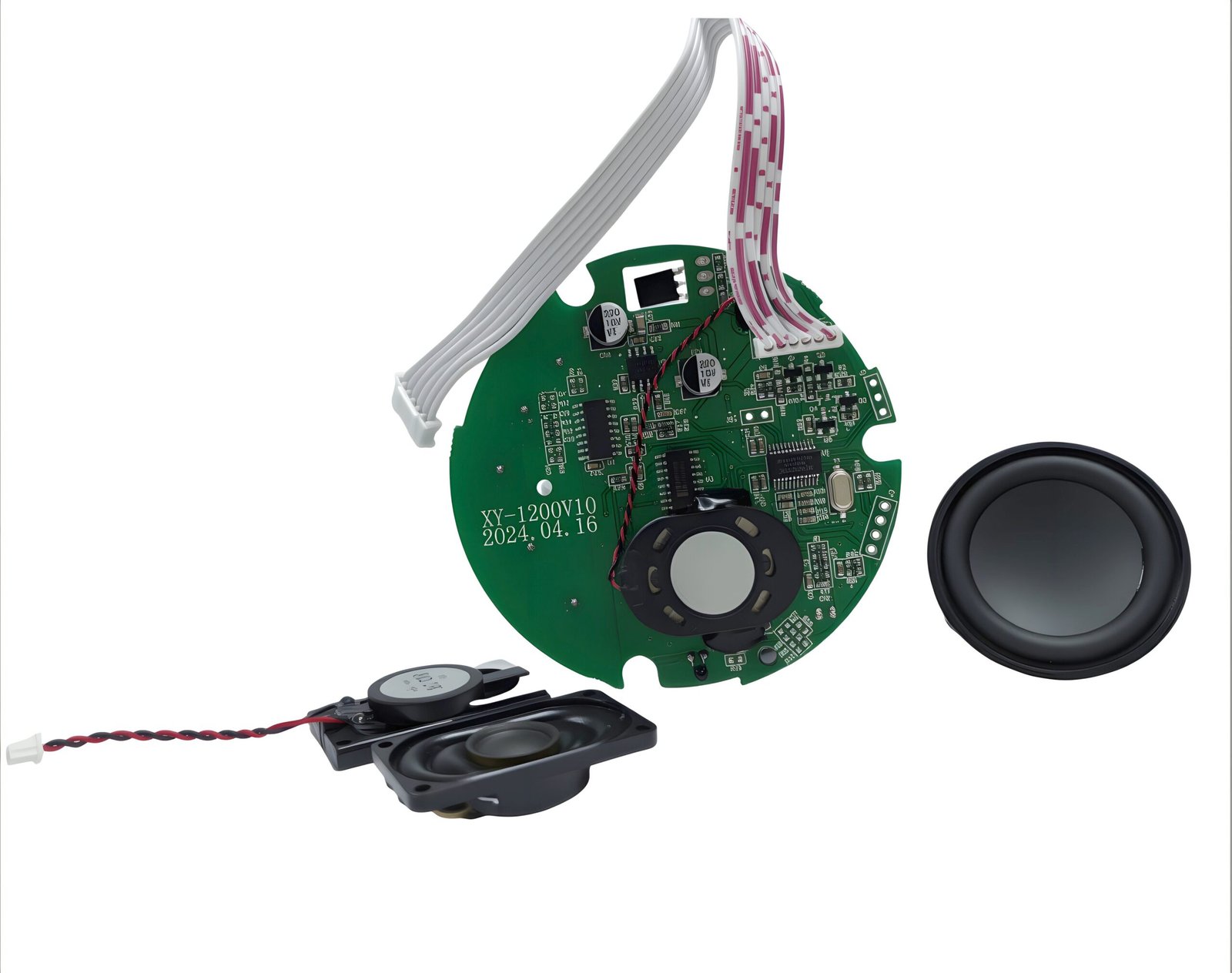
Radio, codec and antenna
Codec support should be listed per model. SBC is mandatory, AAC is licensed per device, and LC3 requires LE Audio support on both ends. A product that claims 'hi-res' over SBC is a marketing statement; the measurable difference appears with LDAC or aptX Adaptive and a matching source.
| Layer | Option | Design consequence |
|---|---|---|
| Radio | Bluetooth 5.3 / 5.4 | LE Audio support, lower power |
| Codec | SBC, AAC, LC3 | LC3 cuts bitrate at equal quality |
| Battery | 18650 or Li-polymer pouch | UN38.3 test before shipping |
| Charging | USB-C, PD 3.0 | Thermal path beside the amplifier |
| Certification | Bluetooth SIG, RED, FCC Part 15C | Test house lead time 3–5 weeks |
Aligning Brand Identity with Product Quality
For a tech company, every touchpoint must reflect your commitment to innovation and reliability. A cheap, generic speaker can harm your reputation more than no gift at all.
- Customization Depth : Beyond logo imprint, offer color matching, custom packaging, and even pre-loaded audio (e.g., a welcome message or branded playlist). Tech companies can integrate QR codes linking to product pages or apps.
- Feature Selection : Choose speakers with modern features like USB-C charging, voice assistant compatibility, waterproofing, or multi-device pairing. These features mirror the tech-savviness of your brand.
- Sustainability : Eco-friendly materials and packaging resonate with modern consumers and reflect a forward-thinking, responsible brand—a priority for many tech firms.
A high-quality custom speaker tells your audience: “We care about details and performance, just like in our core products.”
Cost-Effectiveness and Long-Term ROI
While upfront costs for premium custom speakers are higher than for pens or keychains, the long-term value is significantly greater.
In office settings or co-working spaces, they attract attention and organic word-of-mouth. For B2B tech companies, this can lead to referrals and networking opportunities that far outweigh the initial investment.
Consider layering promotions: offer custom speakers at product launches, trade shows, or as rewards for customer referrals. They enhance event experiences and create tangible memories linked to your brand.
Real-World Success Stories
- A SaaS company provided compact Bluetooth speakers to new enterprise clients as part of onboarding kits. Usage tracking showed high engagement, and client feedback highlighted appreciation for a practical, high-quality gift.
- At CES 2023 , a smart home brand distributed mini waterproof speakers to attendees. The product was not only used at the event (poolside demonstrations) but also featured in social media posts, extending reach.
- A cybersecurity firm used custom speakers as a premium giveaway for webinar participants who completed a survey.
These cases illustrate versatility: custom speakers work for client gifts, event swag, employee rewards, and lead generation incentives.
Implementation Guide: How to Choose and Distribute
- Audience Profile : For corporate clients, choose sleek, desk-friendly models. For developers or creatives, consider rugged, portable options.
- Budget Tiers : Offer good, better, best options—from pocket-sized micro speakers to premium 360-degree sound units for top-tier clients.
- Supplier Partnership : Work with a promotional product specialist who understands tech branding and can provide samples for quality testing.
- Distribution Timing : Pair giveaways with key moments—product updates, conference booths, holiday seasons—to maximize emotional impact.
Remember to track results through follow-up surveys, unique promo codes, or social media tags to measure engagement and ROI.
Battery, charging and thermal path
Runtime is quoted at 50 % volume for a reason. A 3.7 V 2,000 mAh cell holds about 7.4 Wh, and a Class D amplifier delivering 5 W average draws 1.5 A, so the cell lasts about 2 hours at full output and 8-10 hours at conversational level. The number on the box is only comparable when the test condition is stated.
FAQ
Which Bluetooth version should a new speaker use?
5.3 or later if LE Audio and multi-stream matter; 5.0 with SBC and AAC is sufficient for a low-cost promotional product. The version matters less than the antenna and the codec support.
Why is my speaker's battery life shorter than advertised?
Runtime is usually measured at 50 % volume. At full output a Class D amplifier draws several times more current, and the cell's internal resistance adds loss; ask for the test condition before comparing products.
Does a Bluetooth module approval cover my product?
No. The module approval covers the transmitter, but the antenna, enclosure and host electronics change the radiated performance, so the finished product still needs its own test.
Related reading
- MOQ Guide for Custom Speakers
- How Audio Brands Develop Custom Speakers
- How to Customize LED Light Speakers for Promotional Events
More on OEM Manufacturing.
