
Alignment decides the efficiency. A coil pair offset by 5 mm loses 10-20 % of the coupling, and a phone case adds 2-3 mm to the gap, which is why Qi2's magnetic ring was introduced: it holds the coil within 1-2 mm of the design position and keeps the link in its efficient region.
The notes below apply to multifunctional charging station, with the measurement conditions and production checks that decide whether a claimed figure survives a shipment.
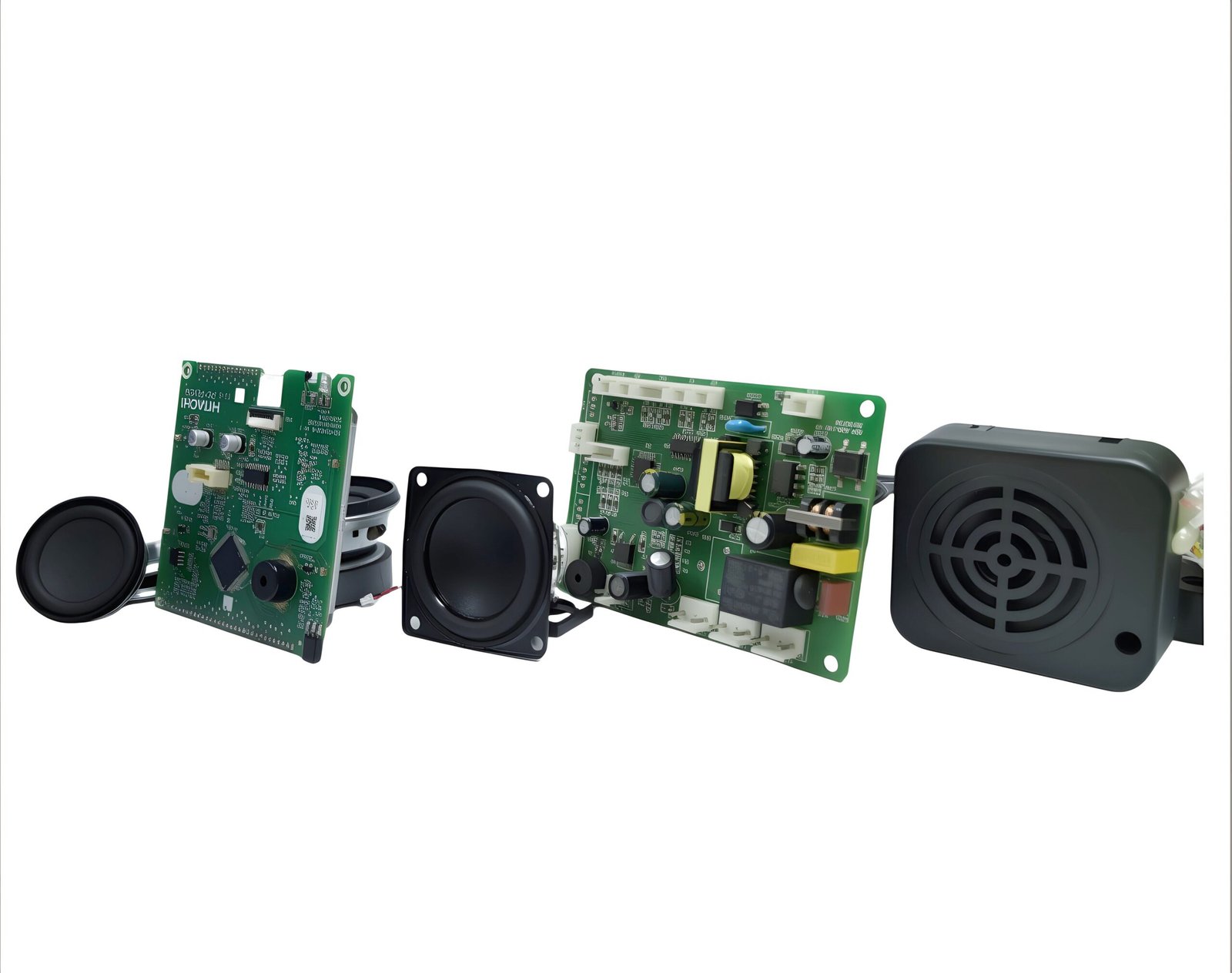
The Rise of the All-in-One Hub: Dissecting the Multifunctional Station
The modern multifunctional station is an exercise in convergence. Born from the need to charge multiple devices simultaneously and reduce cable chaos, these hubs have evolved into central command units for the digital professional and power user.
At its heart, a premium station like the Anker 747 Charging Station (GaNPrime 150W) or the Satechi 165W USB-C 4-Port PD Charger uses Gallium Nitride (GaN) technology . This allows for significantly higher power efficiency and reduced heat generation in a smaller form factor compared to traditional silicon chargers. The latest models support the Qi2 standard with MagSafe , enabling perfect alignment and faster charging (up to 15W) for compatible iPhones, while simultaneously delivering up to 100W via USB-C to a laptop.
But it’s the added features that define the category. Many stations now integrate:
- HDMI pass-through for connecting laptops to monitors.
- SD/microSD card readers for photographers.
- 3.5mm audio jacks .
- Desk-friendly LED lighting .
- Physical cable management .
The demand for multi-device charging solutions is a primary driver of this growth.
Pros: Unmatched organizational utility; reduces “wall wart” clutter; single-cable solution for laptops; often features faster, more stable charging protocols. Cons: Can be expensive; often requires its own large power adapter; audio features, if present, are usually an afterthought.
The Focused Performer: The Standalone Wireless Charging Speaker
In contrast, the standalone wireless charging speaker is a product of audio-first design philosophy . Brands like Sonos , Marshall , and JBL have entered this niche, focusing on delivering premium sound quality while adding the convenience of a charging pad, typically limited to one device.
The primary engineering challenge here is isolating audio components from electromagnetic interference (EMI) generated by the wireless charging coil. High-quality models use sophisticated internal shielding and component placement to prevent the characteristic buzzing or signal degradation that plagued early attempts at this hybrid. The charging capability is usually a secondary feature, offering standard Qi charging at 5W to 10W, with some models like the Belkin SoundForm Elite offering MagSafe-compatible 15W charging.
- Dedicated tweeters and woofers for clear stereo separation.
- Support for high-quality codecs like AAC and aptX .
- Advanced features like room-filling 360-degree sound or voice assistant integration.
- Superior acoustic tuning and brand-specific sound signatures.
Pros: Superior, dedicated audio quality; aesthetic and design cohesion; ideal for bedside tables or kitchen counters; simpler user experience. Cons: Limited to charging a single device; rarely charges at full speed for newer phones; can be a compromise for desk use where multiple devices need power.
Coil geometry, alignment and foreign-object detection
The coil diameter and the number of turns set the inductance and the coupling. A 43 mm coil is the common choice for a 15 W pad; the shield ferrite behind it is 0.5-1 mm thick and must cover the coil, or the field couples into the battery and the metal chassis instead of the receiver. The gap between the coils should be 3-5 mm, and every millimetre costs efficiency.
Head-to-Head: Performance Metrics and Real-World Application
Technical Specifications & Market Data
| Feature | Premium Multifunctional Station (e.g., Anker, Satechi) | Premium Wireless Charging Speaker (e.g., Sonos, Marshall) |
|---|---|---|
| Primary Charging Output | Up to 150W+ total, with dynamic power distribution. | Typically 5W-15W, single device focus. |
| Port Diversity | 4-6 ports (USB-C PD, USB-A, DC). | Usually 1-2 ports (USB-C for power in, USB-A for service). |
| Audio Quality | Basic speaker, if present; functional only. | Hi-Fi grade, brand-specific tuning (e.g., Marshall’s rock emphasis). |
| Core Technology | GaN II, Qi2, Multi-protocol ICs. | Shielded audio drivers, passive radiators, dedicated DACs. |
| Ideal User | Tech professional, multi-device household, home office warrior. | Audiophile, minimalist, bedside or living room user. |
| Market Growth Driver | Proliferation of USB-C devices & remote work. | Smart home integration & premium audio lifestyle. |
Scenario Analysis
- The Home Office Desk: A multifunctional station is the undisputed champion. It can power a laptop, phone, earbuds, and smartwatch from one outlet, decluttering the workspace entirely—a key factor for productivity and mental clarity.
- The Bedside Table: A charging speaker like the Sonos Era 100 with wireless charging base excels. It provides soothing morning news or music and ensures your phone is charged overnight without the need for a separate cable or block.
- The Living Room Side Table: This is a toss-up. If you frequently charge tablets and phones while streaming music, a station near the couch may work. For pure ambiance and occasional phone top-ups, a stylish charging speaker fits the décor better.
The Verdict: Convergence vs. Specialization
The choice isn’t about which product is objectively better, but which solves your specific problem .
Choose a Multifunctional Station if your priority is eliminating cable chaos and powering an ecosystem of devices efficiently . It is a utilitarian investment that optimizes workflow and space. The integration of Qi2 and GaN technology makes today’s stations future-proof and remarkably powerful.
Choose a Standalone Wireless Charging Speaker if your priority is enhancing daily rituals with high-fidelity sound , and charging is a convenient bonus.
The market trend suggests these paths may continue to diverge. Multifunctional stations will pursue even faster charging and broader connectivity (perhaps integrating hubs for monitors or networks). Charging speakers will follow audio innovation, with deeper smart home integration and spatial audio features.
Thermal path and derating
The cell is the part that limits the design. Lithium cells should stay below 45 degrees C during charge; a phone charging at 15 W on top of a speaker playing at 80 % volume can push the internal air to 50 degrees C. Test the worst case: 35 degrees ambient, charging and playback together, for two hours.
FAQ
Why does my wireless charger only deliver 5 W?
Coil misalignment, a thick phone case, or thermal derating. Check the coil gap first, then the pad temperature after 20 minutes; a controller that folds back to 5 W is protecting the surface, not failing.
Is Qi2 different from Qi?
Qi2 adds a magnetic alignment ring and raises the practical power to 15 W with better positional tolerance. A Qi2 receiver also works on a Qi pad, but without the magnetic hold the alignment is not guaranteed.
How do I stop the charging coil from adding audio noise?
Separate the coil and the amplifier inductor, keep the speaker leads short and away from the coil, and add a ferrite bead on the amplifier supply. Test with a quiet track at low volume, where the beat tone is most audible.
Related reading
- Wireless Charging Speaker OEM Development
- Top 5 Wireless Charging Speaker Models for Office Suppliers
- Buyers Guide: Identifying Qi-Certified Wireless Charging Speaker Factories
More on Bluetooth Audio.
