
The platform choice is usually made first. Bluetooth 5.3 with LE Audio and LC3 gives lower power at equal quality and supports multi-stream, but the test matrix is larger and the module must be qualified; a Bluetooth 5.0 design with SBC and AAC is cheaper to certify and still adequate for a promotional product.
This guide treats aromatherapy Bluetooth speaker as a specification problem: what to measure, what to write on the drawing, and what to verify before the first carton ships.
The Convergence of Wellness and Technology: Market Opportunity
The intersection of these trends creates a unique opportunity for manufacturers: the aromatherapy Bluetooth speaker.
The aromatherapy Bluetooth speaker meets this demand by merging ambient scent diffusion with high-quality audio in a single, aesthetically pleasing device.
Technical Integration: Engineering the Perfect Fusion
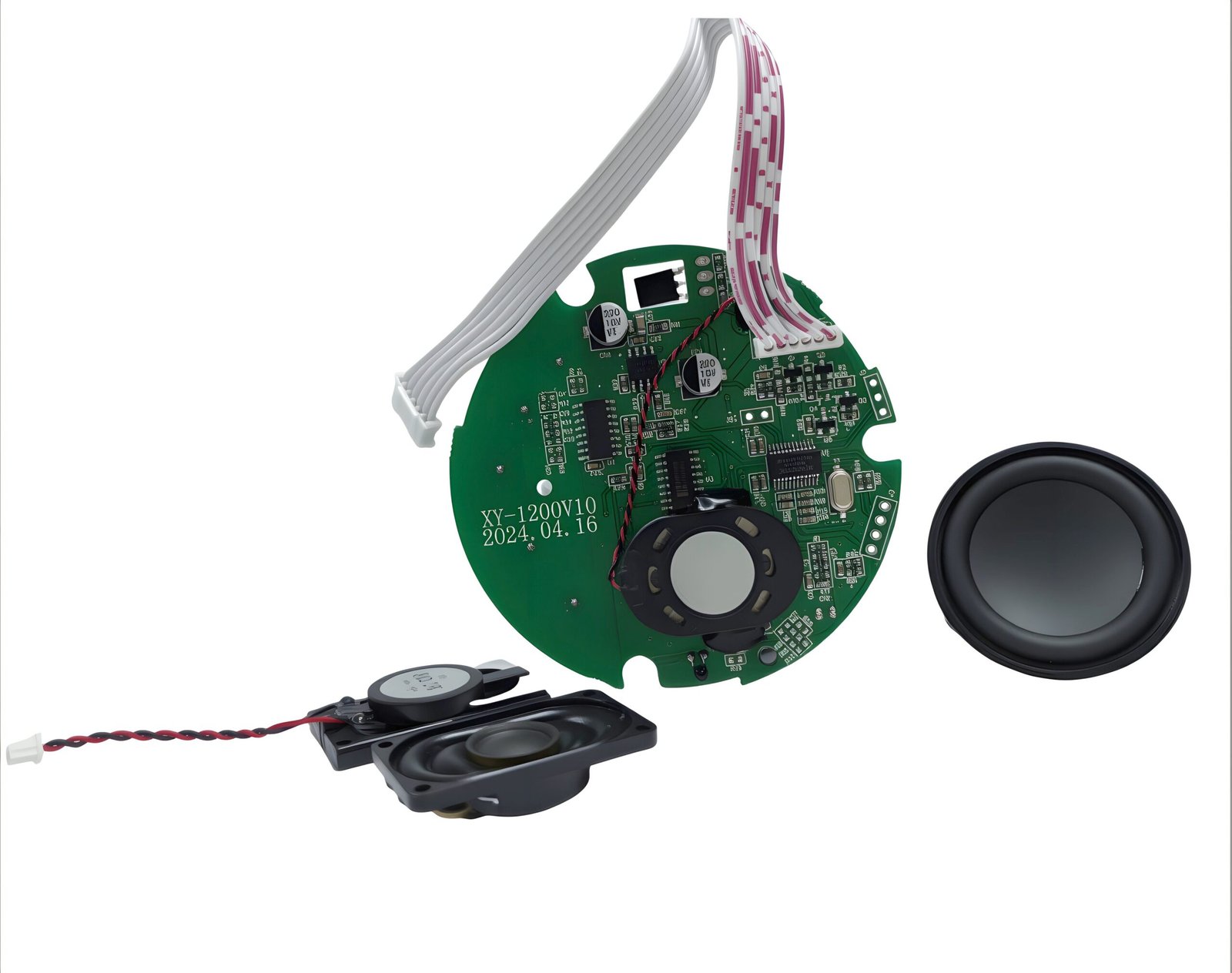
Manufacturing a successful aromatherapy Bluetooth speaker requires sophisticated integration of multiple systems. The core challenge lies in creating separate, non-interfering compartments for the electronic components and the aromatherapy diffusion system while maintaining a cohesive, compact design.
The audio component utilizes Class-D amplifiers and neodymium drivers optimized for the frequency ranges most associated with relaxation and focus (typically 60-120Hz and 8,000-14,000Hz). Meanwhile, the aromatherapy system incorporates piezoelectric ultrasonic diffusion technology that operates at frequencies above 2MHz, ensuring complete separation from audio frequencies.
Power management represents another engineering triumph, with current models offering 18-24 hours of continuous operation using high-density lithium-polymer batteries (typically 4000-6000mAh). The most sophisticated manufacturing solutions implement dual-battery systems with separate power pathways for audio and diffusion functions, allowing users to operate one system while charging the other—a feature particularly valued in commercial settings.
Battery, charging and thermal path
Charging heat and audio heat share the same enclosure. USB-C PD at 15 W raises the cell to 40-45 degrees C, and the amplifier adds 5-10 degrees C beside it; a thermal test at 35 degrees ambient with music at 80 % volume is the condition that exposes a design with no heat spreader. The charger IC should fold back before the cell reaches 45 degrees C.
| Layer | Option | Design consequence |
|---|---|---|
| Radio | Bluetooth 5.3 / 5.4 | LE Audio support, lower power |
| Codec | SBC, AAC, LC3 | LC3 cuts bitrate at equal quality |
| Battery | 18650 or Li-polymer pouch | UN38.3 test before shipping |
| Charging | USB-C, PD 3.0 | Thermal path beside the amplifier |
| Certification | Bluetooth SIG, RED, FCC Part 15C | Test house lead time 3–5 weeks |
Manufacturing Process: From Prototype to Mass Production
This stage typically involves 5-7 iterations to perfect the airflow dynamics for both scent diffusion and speaker acoustics. Current production uses injection molding with sound-absorbing polymers that minimize vibration transfer between systems while providing structural integrity.
- PCB Assembly : Surface-mount technology places Bluetooth 5.3+ modules, audio codecs (typically Qualcomm QCC or Realtek variants), and sensor arrays
- Acoustic Chamber Assembly : Precision placement of drivers, passive radiators, and acoustic damping materials
- Diffusion Module Integration : Installation of piezoelectric plates, oil reservoirs with capacitive level sensors, and anti-leak mechanisms
- Final Assembly : Joining of modules with specialized gaskets, followed by firmware installation and calibration
Quality control incorporates both audio testing (frequency response, THD measurements) and diffusion efficiency validation using particle sensors that verify mist output consistency. The most advanced facilities now employ AI-assisted testing that analyzes 147 separate parameters in 3.2 seconds per unit, compared to the 45 seconds required for manual testing in 2022.
Material Innovation and Sustainability Considerations
Material selection has evolved dramatically in response to consumer demand for sustainability.
The necessary oil delivery systems have seen particularly notable advancements. Many manufacturers now incorporate refillable, recyclable aluminum capsules instead of plastic pods, reducing single-use plastic waste by 94% per unit. The latest innovation involves biodegradable nanocomposite reservoirs that slowly release oils while preventing degradation of delicate aromatic compounds—a technology adapted from pharmaceutical delivery systems.
Quality Standards and Certification Pathways
Aromatherapy Bluetooth speakers must meet electrical safety standards (UL, CE, FCC), wireless communication certifications (Bluetooth SIG qualification), and material safety requirements (particularly for components contacting necessary oils). The most efficient manufacturers pursue modular certification , testing subsystems independently before final product certification, reducing time-to-market by 30-45 days.
Current industry best practice involves voluntary compliance with ISO 9235 (aromatic natural raw materials) and seeking FDA establishment registration even when not strictly required in all markets. This proactive approach has proven valuable, as regulatory frameworks are rapidly evolving across North America, Europe, and Asia-Pacific regions.
Manufacturers targeting global distribution should implement region-specific firmware that adapts to local wireless regulations and language requirements.
Future Developments and Industry Outlook
The next generation of aromatherapy speakers is already in development, with prototypes featuring AI-driven scent and audio synchronization that analyzes user biometric data (via wearable integration) to create personalized wellness experiences. Early testing shows 41% improvement in stated relaxation outcomes compared to preset programs when using adaptive systems.
Manufacturing processes are also evolving, with additive manufacturing beginning to replace injection molding for small-batch premium products. This allows for unprecedented customization—consumers can now order speakers with personalized diffusion patterns optimized for their preferred oil blends.
Certification, packaging and launch
Packaging is part of the product. Drop test to ISTA 3A, a 24-hour humidity soak, and a transit test with the retail carton inside a shipping carton catch the failures that appear as cosmetic damage in the channel. Battery products also need the UN38.3 summary and the lithium handling label before the forwarder will accept the pallet.
FAQ
Which Bluetooth version should a new speaker use?
5.3 or later if LE Audio and multi-stream matter; 5.0 with SBC and AAC is sufficient for a low-cost promotional product. The version matters less than the antenna and the codec support.
Why is my speaker's battery life shorter than advertised?
Runtime is usually measured at 50 % volume. At full output a Class D amplifier draws several times more current, and the cell's internal resistance adds loss; ask for the test condition before comparing products.
Does a Bluetooth module approval cover my product?
No. The module approval covers the transmitter, but the antenna, enclosure and host electronics change the radiated performance, so the finished product still needs its own test.
Related reading
- Premium Bluetooth Speaker Manufacturing Standards
- AI Bluetooth Speaker Solutions for IoT Companies
- How to Start Your Own Bluetooth Speaker Brand
More on Bluetooth Audio.
