
In a micro speaker the rear cavity, not the driver, sets the low-frequency limit. A 20 mm unit is typically tuned so that the sealed back volume behind the diaphragm lifts output between 400 and 900 Hz; enlarging that cavity by 0.3 cm3 flattens the hump but costs 2-3 dB of sensitivity above 1 kHz. The housing drawing is therefore part of the acoustic design, not a packaging detail.
With automotive small speaker, the difference between a sample and a shipment is the test record, so each section below names the check that produces it.
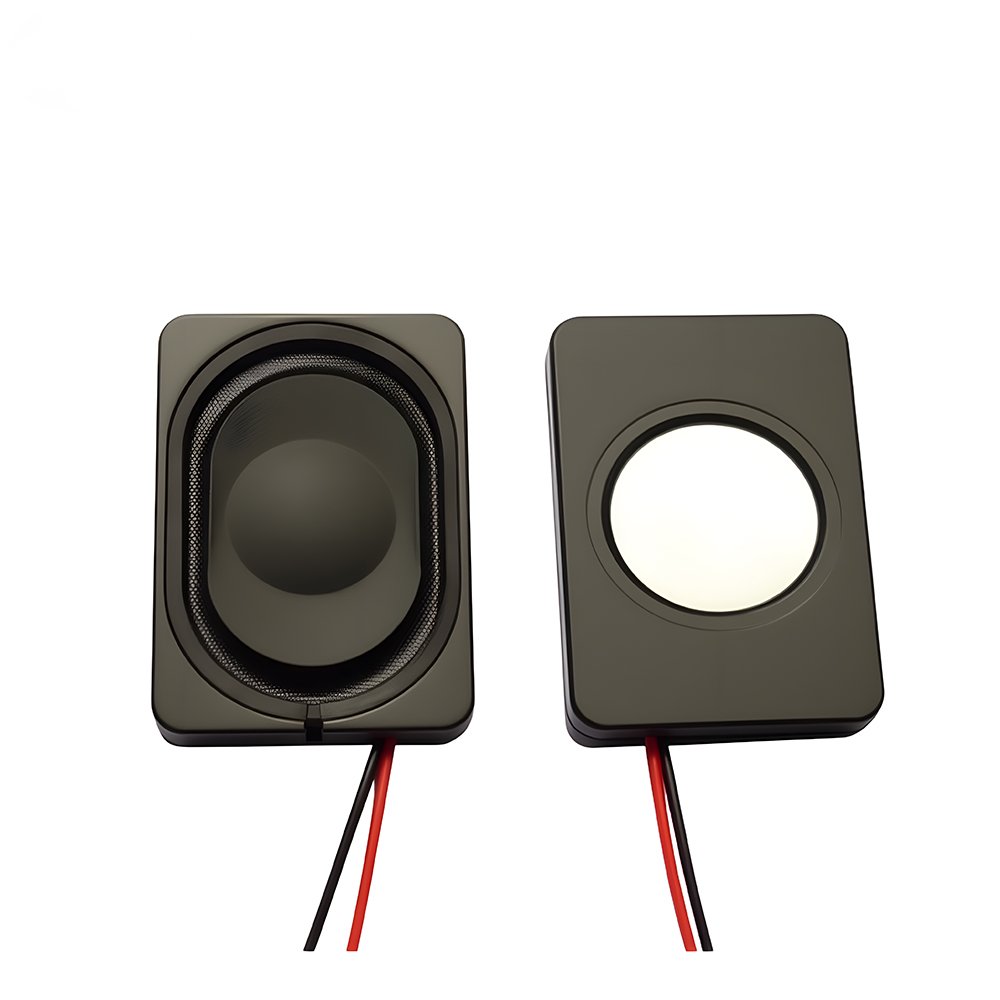
The Unseen Challenge: Designing for Space, Power, and Durability
Automotive small speaker manufacturing is a discipline where physics, material science, and consumer acoustics collide within some of the harshest and most space-constrained environments imaginable. Unlike home audio, where cabinet design can optimize sound, vehicle audio engineers must work around steel pillars, irregular door cavities, and dashboard geometries that were primarily designed for crash safety and ergonomics, not acoustic performance. The core challenge is achieving clear, powerful, and reliable sound from a transducer that must be incredibly compact, lightweight, and capable of performing in an environment with extreme temperature fluctuations, constant vibration, and exposure to humidity.
With the rise of electric vehicles (EVs), cabin noise profiles have shifted from dominant engine roar to lower-frequency road and wind noise. This requires speakers, particularly small-form tweeters and mid-range drivers, to reproduce nuanced details without being masked. A premium automotive sound system today isn’t just for entertainment; it’s an integrated component of the vehicle’s comfort and branding technology.
| Constraint | Impact on Manufacturing & Design | Typical Engineering Response |
|---|---|---|
| Limited Space (Depth & Baffle Area) | Restricts magnet size, voice coil travel, and cone diameter, limiting bass response and maximum output. | Use of high-energy neodymium magnets, optimization of magnetic circuit efficiency, and new shallow-depth basket designs. |
| Harsh Environment (-40°C to 85°C+) | Adhesives can fail, materials can warp, and magnetic strength can vary (flux stability). | Selection of high-temp resins, butyl rubber surrounds, and stable adhesives. Use of temperature-compensated circuits in crossovers. |
| Constant Vibration & Shock | Components can fatigue, leads can fracture, and resonant distortions can be introduced. | Rigorous mechanical FEA simulation, over-engineered mounting points, and tinsel leads or flexible printed circuit (FPC) connections. |
| Acoustically Poor Enclosures | Door panels and pillars act as leaky, resonant cavities, causing sound cancellation and uneven frequency response. | Careful Thiele-Small parameter tuning for infinite baffle applications, extensive on-axis/off-axis measurement, and targeted DSP correction. |
| Cost & Weight Targets | Premium materials and complex designs must be justified within strict automotive budgeting and lightweighting initiatives. | Value engineering, part consolidation (e.g., basket integrated with motor structure), and strategic use of high-performance plastics like LCP. |
From Raw Materials to Precision Component: The Manufacturing Anatomy
The performance of a small automotive speaker is fundamentally dictated by the quality and properties of its core components.
The diaphragm (or cone) , often made from coated paper, polypropylene, or sophisticated composites like woven carbon fiber or glass fiber, must be both rigid and lightweight. For small speakers—especially tweeters and mid-ranges—textile domes (silk, synthetic blends) or hard domes (aluminum, ceramic, beryllium) are common. The choice directly impacts the high-frequency breakup characteristics and sonic signature. The surround , which allows the diaphragm to move, is typically made from durable, humidity-resistant materials like butyl rubber or treated foam, formulated to remain compliant across the entire temperature range.
The voice coil is the engine of the speaker. For small speakers, winding tolerances are microscopic. Aluminum voice coils are popular for their low weight, aiding high-frequency responsiveness, while copper-clad aluminum (CCAW) offers a balance of weight and conductivity. The coil is wound on a former , often made from polyimide (Kapton) or aluminum, chosen for its ability to withstand high temperatures without deforming. The magnet assembly is the powerhouse. The widespread adoption of neodymium (NdFeB) magnets has been new. They offer magnetic strength 5-10 times greater than traditional ferrite magnets for the same size, allowing for powerful motors in incredibly compact packages. This is non-negotiable for pillar-mounted tweeters or shallow-door-mount mid-ranges.
The basket (or frame) holds everything in precise alignment. Stamped steel is cost-effective for some applications, but die-cast aluminum or injection-molded polymer baskets are increasingly used. Polymer baskets, especially those made from Liquid Crystal Polymer (LCP), can be molded into complex shapes that integrate mounting features, waveguide geometries for controlled dispersion, and even partial enclosures, all while damping unwanted resonance.
Power, excursion and thermal limits
Excursion limits the low end before power does. At 300 Hz a 20 mm driver with 0.3 mm Xmax reaches its travel at about 95 dB at 10 cm; below that frequency output falls at 12 dB per octave in a sealed back cavity. A passive radiator or a larger frame buys low end, at the cost of height and cost.
The Precision Assembly Process: Where Consistency is King
Automotive manufacturing is synonymous with precision and repeatability, and speaker assembly is no exception. The process is a blend of automated robotics and skilled manual inspection, ensuring every unit meets exacting OEM specifications.
The assembly line typically begins with the basket sub-assembly . The magnet structure (including the T-yoke and top plate) is centrally bonded and magnetized. This process is critical, as any misalignment here causes voice coil rub and immediate failure. Next, the suspension sub-assembly —comprising the spider and the surround—is attached to the basket. The diaphragm/voice coil assembly is then meticulously centered within the magnetic gap and bonded to the suspension. This centering process, often done with laser-guided systems, is arguably the most critical step in the entire build. A deviation of even a few hundredths of a millimeter can degrade performance.
Following this, lead wires are soldered or welded to the voice coil terminals and the basket’s terminal pins. The entire assembly then undergoes a “burn-in” or “aging” process. Here, the speaker is driven with a pink noise or programmed signal for a period of time. This stress test stabilizes the mechanical suspensions, exposes any infant mortality failures, and ensures performance parameters are settled before delivery.
Every single speaker destined for an automotive OEM undergoes 100% final testing . This isn’t just a simple “beep” test. Automated test stations, often in anechoic or semi-anechoic chambers, measure a suite of parameters against the golden sample: frequency response, impedance curve, sensitivity, harmonic distortion (THD), and rub & buzz. Data is logged for each unit, providing full traceability. Reject rates are typically in the low single-digit percentages, reflecting the intense precision of the process.
Innovation Driving the Future: From Materials to Smart Systems
The frontier of automotive small speaker manufacturing is being pushed by several converging trends.
We are seeing the rise of “speaker-in-cavity” and “exciters” (inertial actuators). Instead of a traditional cone speaker, exciters vibrate existing interior panels (headliners, trim sections) to produce sound. This saves immense space and weight, turning large surfaces into distributed sound sources, ideal for immersive audio formats like Dolby Atmos. For traditional speakers, the integration of waveguides directly into the basket or grille is becoming standard to control directivity and improve staging, a key factor in premium audio branding.
Most significantly, the speaker is becoming a “smart” acoustic device . With the integration of MEMS (Micro-Electro-Mechanical Systems) sensors and ICs, speakers could soon self-monitor their health, detect changes in the cabin environment, and even adjust their parameters in real-time to compensate for aging or temperature effects. This aligns with the automotive industry’s shift towards zonal architectures and software-defined vehicles, where speakers are nodes in a larger networked audio system managed by powerful domain controllers.
Market Trajectory and Strategic Considerations for OEMs
The premium audio segment, where small speaker performance is most critical, is growing at an even faster rate.
For OEMs and Tier-1 integrators, the strategic partnership with a speaker manufacturer has never been more critical. The decision is no longer just about cost-per-unit but about acoustic tuning resources, software/DSP co-development capability, and global supply chain resilience . A manufacturer with deep in-house R&D in materials, mechanical simulation (FEA), and acoustic modeling can significantly reduce development cycles and solve integration issues proactively.
In practice, as sustainability mandates grow, manufacturers are being evaluated on their use of recycled materials (e.g., magnets using recycled neodymium, diaphragms from bio-sourced polymers), reduction of hazardous substances (REACH, RoHS compliance), and end-of-life recyclability of their products. The leading manufacturers are already publishing lifecycle assessments and developing closed-loop processes for rare-earth magnets.
Mounting and sealing inside a moulding
Mounting bosses transfer vibration into the housing. A soft gasket under the frame decouples the driver above 200 Hz, and a rigid boss pattern keeps the frame flat within 0.1 mm. Both are checked on the first article with a feeler gauge and a sweep in the final housing, not on a bare driver in free air.
FAQ
Why does a micro speaker sound thin in a plastic housing?
The back cavity is usually smaller than the free-air condition the datasheet assumes, and the housing leaks at the frame or the port. Measure the assembled response, then adjust cavity volume and gasket compression rather than the driver.
How much power can a 20 mm speaker take?
Typically 0.5-1 W continuous and 2-3 W short-term in a sealed module; the limit is coil temperature, which depends on the housing's thermal path, not only on the driver.
Is a passive radiator worth it in a wearable?
Only if the enclosure has room for the radiator's compliance and the extra height. It extends output one octave lower than a sealed back cavity but adds a second moving part that can rattle if the clearance is under 0.3 mm.
Related reading
- Mylar Cone vs. Paper Cone in Small Speaker Manufacturing
- OEM vs ODM Speaker Manufacturing Explained
- Low MOQ Speaker Manufacturing for Startups
More on OEM Manufacturing.
