
The material choice follows the product, not a preference. MDF is dense and well damped but heavy and sensitive to moisture; ABS allows ribs, bosses and a sealed housing in one moulding but needs wall sections of 1.5-3 mm and a draft of 1-2 degrees; PC-ABS and PA66-GF30 add heat and impact resistance where the housing also carries the electronics.
The notes below apply to box speakers, with the measurement conditions and production checks that decide whether a claimed figure survives a shipment.
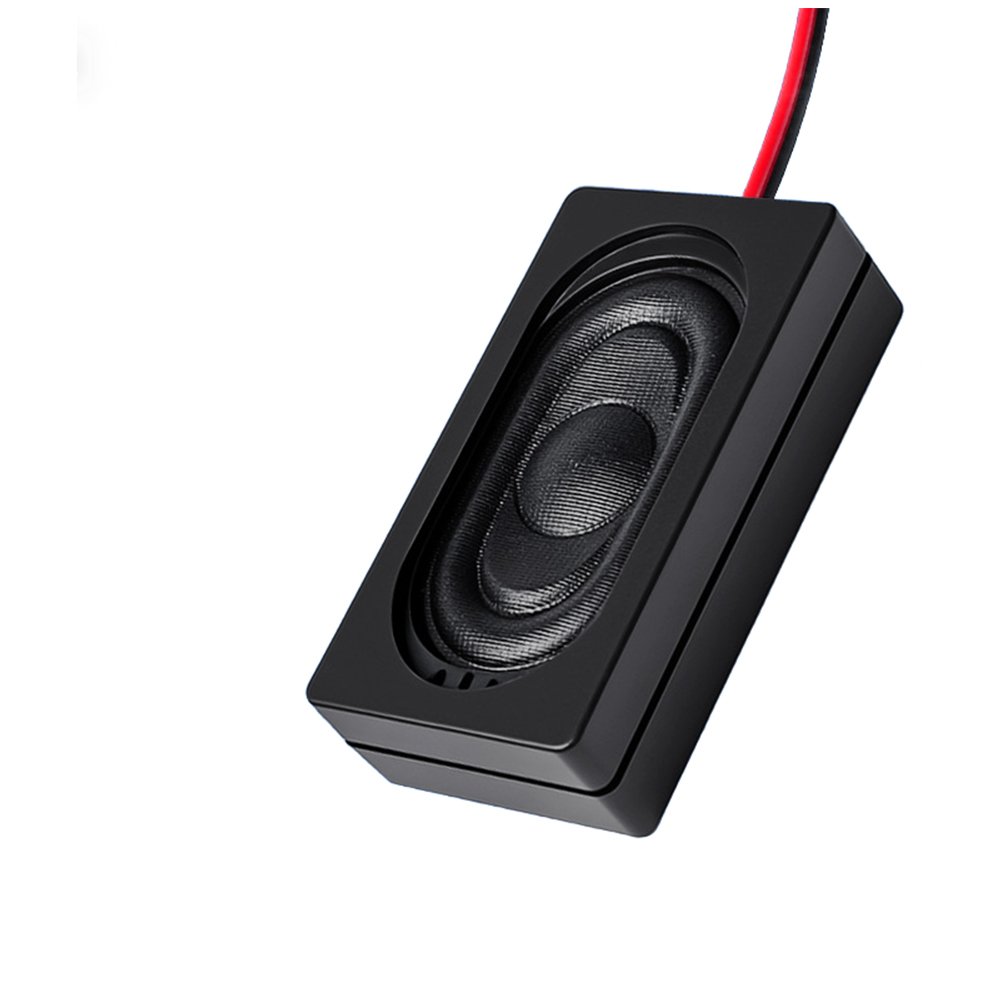
Understanding Box Speakers: Core Technology & Design Principles
Unlike their consumer counterparts, commercial box speakers are built for endurance and performance under demanding conditions. Their fundamental design is deceptively simple: one or more drivers (woofers for low frequencies, tweeters for highs) mounted into a rigid, acoustically optimized enclosure. This cabinet is the key; it prevents the sound waves from the rear of the driver from canceling out the waves from the front, thereby ensuring efficient, powerful, and accurate sound projection.
- The Enclosure: Materials matter. High-density wood (like Baltic birch), rugged ABS composites, or aluminum are standard. The internal volume and bracing are precisely calculated to control driver resonance. Modern designs often feature rotatable horns and multiple mounting points (U-brackets, yoke brackets) for flexible installation.
- Woofers with large, vented magnets and polypropylene or coated paper cones handle power cleanly. High-frequency drivers utilize titanium or aluminum diaphragms in compression drivers attached to waveguides (horns) for precise dispersion control—critical for covering defined zones without spilling sound where it’s not wanted.
- Dispersion Patterns: A speaker’s coverage is defined by its dispersion (e.g., 90° x 60°). This specification dictates the shape of the sound field, allowing designers to “paint” areas with audio, avoiding excessive reflections and ensuring even coverage.
- Power Handling & Sensitivity: Measured in watts (RMS), power handling indicates durability. Sensitivity (dB SPL @ 1W/1m) is arguably more important; a speaker with 99dB sensitivity produces more sound with the same amplifier power than one at 93dB, improving system efficiency.
| Speaker Type | Typical Driver Configuration | Dispersion | Ideal Commercial Applications |
|---|---|---|---|
| Full-Range Point Source | 1-3 way (Woofer + Tweeter/Horn) | Wide (e.g., 90°x90°) | Background music, paging in restaurants, retail stores, offices. |
| High-Power Point Source | Durable 2- or 3-way | Controlled (e.g., 90°x60°) | Primary sound reinforcement in gyms, houses of worship, large conference rooms. |
| Column Speakers | Array of multiple drivers | Very Narrow Vertical | Speech intelligibility in reverberant spaces like airports, train stations, cathedrals. |
| Weather-Resistant | Sealed, UV-resistant design | Varied | Patios, pool areas, transportation hubs, covered parking. |
Strategic Applications Across Commercial Verticals
The “one-size-fits-all” approach fails in commercial audio. The correct box speaker is chosen based on the acoustic profile and functional requirements of the space.
- Hospitality (Hotels, Restaurants, Resorts): Here, audio crafts ambiance. Zones require separate control: serene, wide-dispersion speakers in lobbies and corridors; more dynamic, aesthetically subtle models in dining areas; and high-output, weatherproof models for pools and terraces. Intelligibility for announcements must coexist with non-intrusive music.
- Retail & Shopping Malls: Audio drives customer behavior. In flagship stores, full-range speakers provide immersive brand soundtracks. In malls, column speakers or highly directional models deliver crystal-clear paging along concourses without muddying individual storefront audio.
- Corporate & Education: The priority is clarity of communication. Boardrooms and classrooms need wide-coverage speakers for even voice reproduction during video conferences and lectures. Atriums and cafeterias benefit from a blend of paging and ambient music. Modern systems integrate with VoIP for emergency and routine announcements.
- Transportation Hubs (Airports, Train Stations): This is the pinnacle of challenging environments—high noise floors, vast reflective surfaces, and critical safety messaging. Dante-enabled network speakers are now standard, allowing for digital audio over IP, centralized control, and zoning.
- Fitness Centers & Gymnasiums: These spaces demand high SPL (Sound Pressure Level) and extreme durability against temperature swings and humidity. Speakers need high power handling to energize classes and withstand peak transients from workout music, all while being securely mounted out of harm’s way.
- Environmental Rating: Is an IP (Ingress Protection) rating needed for dust or moisture (e.g., IP44 for splash resistance)? For indoor areas, a simple grille may suffice.
- Coverage Angle & Mounting Flexibility: Map the space. Use the speaker’s dispersion pattern to ensure overlap at listening height, avoiding dead spots and hot spots. Can the horn be rotated to position the coverage pattern correctly?
- Amplification & Signal Type: Is the speaker passive (requiring a separate amplifier and speaker cable) or self-powered/active (with built-in amp)? The rise of 70V/100V distributed systems is significant for commercial applications, allowing multiple speakers to be wired in parallel on a single cable run over long distances with minimal power loss.
- Integration Capability: Does the speaker need to interface with a existing DSP (Digital Signal Processor) ? Are there onboard taps for 70V operation? Is a Dante AVIO adapter or native AES67 input required for network-based systems?
- Durability & Compliance: Check for certifications like UL 1480 for speaker safety or specific ratings for plenum air spaces. Build quality directly correlates with longevity and total cost of ownership.
- Positioning: Aim for a height of 8-12 feet for optimal coverage, angling the speaker towards the primary listening zone. Avoid direct mounting into resonant hollow structures.
- Wiring: For passive systems, use appropriately gauged oxygen-free copper cable. In 70V systems, correctly calculate the tap settings on each speaker to match the amplifier’s total wattage budget.
- System Tuning: This is non-negotiable. Use a DSP to set appropriate crossovers, apply EQ to compensate for room modes, and set limiters to protect the speakers. Real-time analysis tools are used to measure and adjust for flat response and intelligibility.
- Future-Proofing: Consider installing Category cable (CAT6/6A) alongside speaker wire to future-proof for networked audio, which is becoming the backbone of modern commercial installations.
Wall behaviour, bracing and damping
Damping fill absorbs the standing waves inside the box. Polyester or glass wool at 0.5-1.0 lb per cubic foot is the usual starting point; too little leaves a mid-bass colouration, too much reduces the effective volume and raises Fc. The fill is stapled or bonded so that it cannot block the port or touch the driver's rear vent.
Covers, mesh and acoustic transparency
Cosmetic covers also have to survive handling. Fabric is tested for pilling and colour fastness, mesh for salt spray and adhesion, and both for pull-off force at the frame. A cover that lifts at 40 degrees C in a car interior is a warranty return; a 72-hour 85/85 humidity test before approval catches most of them.
FAQ
Does MDF sound better than plastic for a small speaker?
MDF is better damped per millimetre, plastic allows thinner walls with ribs. Below 100 mm drivers the difference is small; above 100 mm MDF wins on panel resonance unless the plastic housing is heavily ribbed and filled.
How do I choose between a sealed and a ported box?
Use EBP: above 100 favours ported, below 50 favours sealed. Also check the space: a port needs 2-3 times the driver's displacement volume and a clear path at both ends.
What open area should a speaker grille have?
At least 40 % for metal mesh and 50-60 % for fabric, measured over the diaphragm area; below that the high-frequency loss becomes audible and cannot be corrected without changing the crossover.
Related reading
- Why 4 Ohm Speakers Are Dominant in Car Audio Systems
- How to Wire Multiple 8 Ohm Speakers for Commercial Audio
- 8 Ohm Speakers vs. 70V Systems: Choosing for Venues
More on Speaker Design.
