
The commercial numbers follow the same structure. Tooling is a one-off, materials scale with volume, and test time is nearly fixed per unit. That is why the price curve is steep below 3,000 pieces and almost flat above 20,000, and why MOQ is really a statement about tooling amortisation.
With custom speaker OEM service, the difference between a sample and a shipment is the test record, so each section below names the check that produces it.
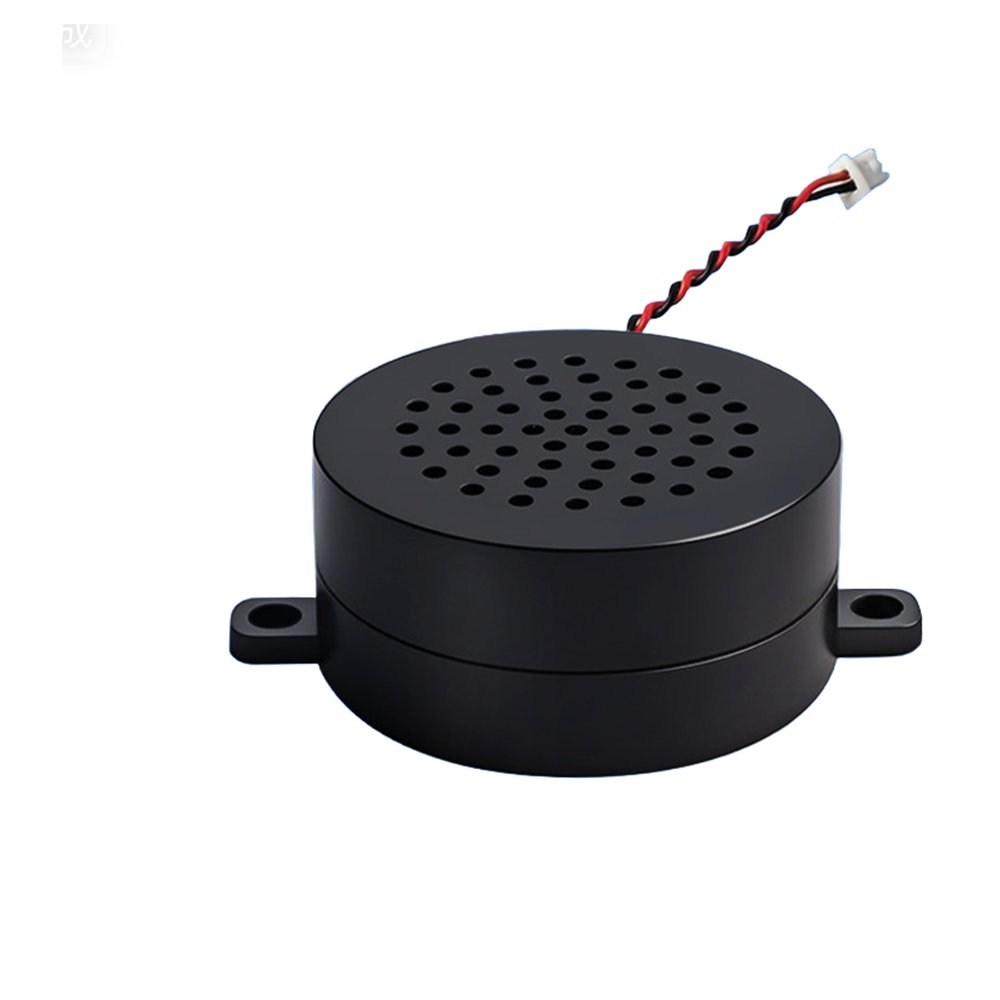
The Conceptualization and Design Phase: Laying the Foundation for Acoustic Excellence
This stage transcends simple aesthetics; it’s about defining the speaker’s soul—its target audience, core performance parameters, and market positioning. A proficient Custom Speaker OEM partner doesn’t just take orders; they engage in a deep technical dialogue. This involves clarifying the intended application—be it high-fidelity home audio, portable Bluetooth devices, professional studio monitoring, automotive sound systems, or embedded IoT solutions.
During this phase, key decisions are crystallized. What is the target frequency response and sensitivity? What are the power handling requirements and impedance characteristics? What size and form factor constraints exist? Material selection for cones, surrounds, magnets, and frames is debated, balancing performance with cost. Advanced OEMs employ tools like Finite Element Analysis (FEA) and acoustic simulation software to model speaker behavior virtually before any prototype is built. This digital prototyping saves significant time and resources, allowing engineers to predict how different materials, voice coil designs, and magnet structures will interact. The outcome is a detailed Product Requirements Document (PRD) and initial acoustic & mechanical design schematics, serving as the blueprint for all subsequent stages.
| Consideration Category | Key Questions & Parameters |
|---|---|
| Acoustic Performance | Target Frequency Range, Sensitivity (dB/W/m), Total Harmonic Distortion (THD), Impedance (Ω), Power Handling (RMS/Peak) |
| Mechanical & Physical | Enclosure Size/Volume, Driver Dimensions (Mounting Depth/Cutout Diameter), Weight Constraints, Material Finishes (Grille, Frame) |
| Application & Environment | Primary Use Case (Indoor/Outdoor, Portable/Fixed), Environmental Repeatability (Humidity, Temperature, Dust/Water Resistance per IP ratings) |
| Compliance & Certification | Target Market Regulations (FCC, CE, RoHS, REACH), Specific Industry Standards (e.g., for Automotive or Marine) |
| Commercial Targets | Target Bill of Materials (BOM) Cost, Minimum Order Quantity (MOQ), Projected Annual Volumes |
Engineering Development and Prototyping: Bringing the Design to Life
With a solid design foundation, the project moves into the hands-on engineering and prototyping phase. This is where theoretical models meet physical reality. The OEM’s engineering team develops detailed specifications for every component: the precise composition of the paper, polypropylene, or composite cone; the geometry and winding of the voice coil (round wire, flat wire, or CCAW); the grade and configuration of the ferrite or neodymium magnet assembly; and the compliance of the spider and surround.
The first engineering prototypes are then manufactured. These are functional, but often built with a degree of manual assembly and using components that may not yet be optimized for mass production. The purpose is to validate the core acoustic design. These prototypes undergo rigorous bench testing in anechoic chambers and with advanced audio analyzers (like systems from Klippel or Audio Precision) to measure their actual frequency response, impedance curve, distortion characteristics, and power handling against the initial PRD.
Iteration is the heart of this phase. Perhaps the bass response is lacking, requiring a tweak to the magnet motor strength or suspension compliance. Maybe a resonance peak is detected, necessitating a change in cone material or damping. Several prototype revisions ( Proto 1, Proto 2, etc. ) may be created, each incorporating lessons learned, until the performance targets are consistently met. Concurrently, Design for Manufacturability (DFM) and Design for Assembly (DFA) reviews ensure that the elegant prototype design can be efficiently and reliably produced at scale without compromising quality.
Cost structure, MOQ and price negotiation
The bill of materials for a small speaker is dominated by the magnet, the diaphragm and the voice coil, in that order. Ask for the cost breakdown by line and compare the magnet grade and the diaphragm lot, not only the unit price.
Pre-Production Validation and Tooling Commitment
Here, the focus shifts from “can we make one that works?” to “can we make ten thousand that work identically and reliably?” Pre-production samples are manufactured using pilot production processes and, critically, with soft tools or the first articles from the hard production tooling (e.g., injection molds for plastic baskets and cones, stamping tools for metal parts).
- Performance Consistency: A batch of PP samples is tested to ensure unit-to-unit variation is within strict tolerances.
- Reliability & Lifespan Testing: Samples undergo accelerated life testing (e.g., extended high-power operation, temperature cycling, humidity exposure) to simulate years of use and identify potential failure modes.
- Regulatory Compliance Testing: Formal testing is conducted at certified labs to secure necessary approvals like CE, FCC, or RoHS .
- Assembly Line Trial Run: A mock assembly line is set up to verify the production workflow, assembly times, and worker training requirements.
Approval of the Pre-Production Samples is a major milestone. It signifies that the design is frozen and that the substantial investment in hard tooling —which can represent a significant portion of the NRE (Non-Recurring Engineering) costs—is finalized. The client’s sign-off on these samples is the green light for mass production.
Mass Production and Quality Assurance: Scaling with Precision
With validated processes and tools in place, the operation scales to mass production . A reputable OEM partner manages a tight transition from the pilot line to full-scale manufacturing. This involves Supply Chain Management to ensure a steady, high-quality flow of all raw materials and components—from magnets and voice coils to adhesives and packaging. Modern OEMs often employ Enterprise Resource Planning (ERP) and Manufacturing Execution Systems (MES) to track materials, schedule production, and monitor efficiency in real-time.
Quality Assurance (QA) is not a single checkpoint but an integrated system woven throughout production:
- Incoming Quality Control (IQC): All incoming materials are inspected against specifications.
- In-Process Quality Control (IPQC): Automated optical inspection, glue dispensing checks, and electrical performance spot-testing occur at critical points on the assembly line.
- Final Audio Testing: Every single speaker unit may pass through an automated test station that plays a frequency sweep and verifies key parameters (like F0, impedance, and Rub & Buzz) against digital pass/fail limits in milliseconds.
- Outgoing Quality Control (OQC): A final statistical sampling of finished goods from each batch undergoes more detailed acoustic and visual inspection.
For very high-volume orders, production lines can be automated with robotics for pick-and-place, coil winding, and assembly tasks, ensuring unmatched consistency and throughput. The OEM’s role is to deliver not just boxes of speakers, but boxes of speakers that are acoustically identical, reliable, and ready for integration into the client’s final product.
Supply Chain Integration and Logistics: Ensuring a Tight Flow
An experienced OEM manages this complexity on behalf of their client. They use long-term relationships with tier-1 suppliers of key components like NdFeB magnets, copper-clad aluminum wire (CCAW), and specialty polymers , often securing better pricing and guaranteeing supply continuity in a volatile global market. As of late 2023, strategic inventory buffering for critical components remains a common practice to mitigate geopolitical and logistical disruptions.
The OEM coordinates the packaging design to ensure speakers are protected during transit—whether they are being shipped as loose drivers or as part of finished audio systems. This end-to-end management turns the OEM into a true extension of the client’s operations.
Continuous Support and Future-Proofing
The partnership with a Custom Speaker OEM does not end with the first delivery. Post-launch support is critical. The OEM also monitors production yield and field failure rates, ready to implement Engineering Change Orders (ECOs) if a component supplier changes or a minor design improvement is identified.
They advise on component obsolescence management , suggesting alternative materials or designs to counter price fluctuations or supply shortages. They can also collaborate on cost-down engineering for subsequent product generations, exploring value-engineering opportunities without sacrificing performance. This ongoing relationship ensures the speaker product remains competitive and viable throughout its entire life cycle in the market.
Lead time, ramp and shipment
Samples from existing tooling take 7-10 days; a new tool adds 25-35 days for T1 and the first shots, plus 10-15 days for the pilot run. Production is 15-25 days depending on the driver and the housing, and the critical path is usually the driver rather than the assembly line.
FAQ
What MOQ should I expect for a custom speaker?
500-1,000 pieces with existing tooling and 3,000 or more with a new housing tool; the difference is tooling amortisation, not material cost.
How long does a custom speaker programme take?
About 6-9 weeks with existing tooling and 12-16 weeks with a new tool, including sample approval and the pilot run. Certification adds 3-5 weeks if radio or safety testing is required.
How do I compare quotes from two factories?
Compare the magnet grade, diaphragm material, voice-coil wire, test coverage and tooling ownership line by line. A lower unit price with a lower magnet grade is a different product, not a better price.
Related reading
- From Design to Production: Speaker ODM Service
- Guide: From Concept to Mass Production with an OEM Speaker Manufacturer
- Lead Time in Speaker OEM Production
More on OEM Manufacturing.
