
The platform choice is usually made first. Bluetooth 5.3 with LE Audio and LC3 gives lower power at equal quality and supports multi-stream, but the test matrix is larger and the module must be qualified; a Bluetooth 5.0 design with SBC and AAC is cheaper to certify and still adequate for a promotional product.
This guide treats innovation wireless audio products as a specification problem: what to measure, what to write on the drawing, and what to verify before the first carton ships.
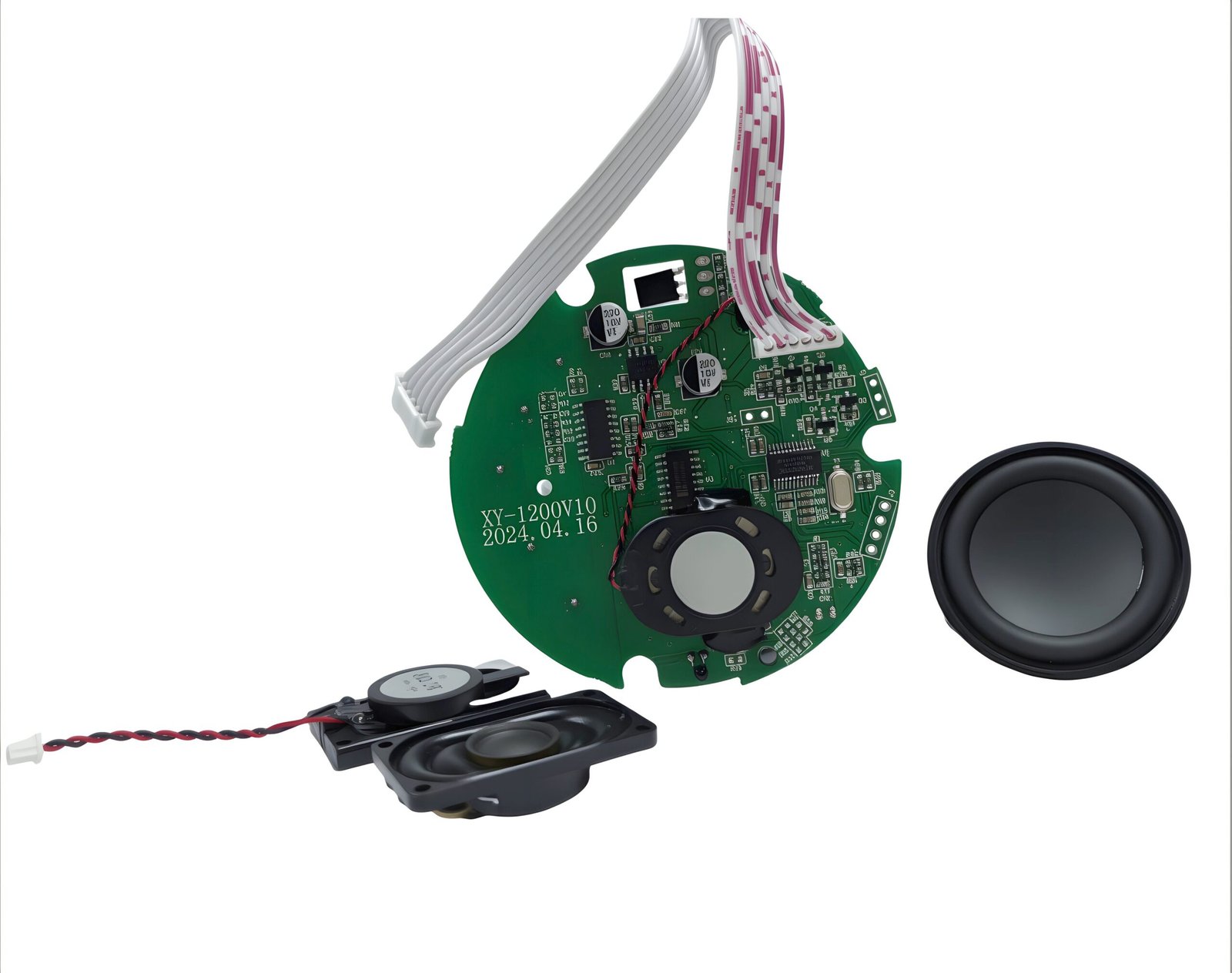
Introduction: The Unplugged Shift
The world of audio has undergone a seismic shift. The once-ubiquitous sight of tangled headphone cords snaking from pockets to ears has largely vanished, replaced by the elegant, silent freedom of wireless audio. This transition from wired to wireless is more than a mere convenience; it represents a fundamental reimagining of our relationship with sound. Driven by relentless innovation in connectivity, acoustics, materials science, and software, today’s wireless audio products are sophisticated computing platforms worn on our ears. They are not just for listening anymore—they are for immersive experiencing, communicating, monitoring health, and interacting with our digital ecosystems.
The Evolution and Current Market Outlook
The turning point came with the advent of true wireless stereo (TWS) earbuds, pioneered by brands like Apple with its AirPods in 2016. This unleashed a new wave of design and functionality.
- Mid-Range & Audiophile Segment (e.g., Sennheiser, Master & Dynamic, Bowers & Wilkins): Prioritize high-resolution codec support, acoustic tuning, and premium materials.
- Value & Feature-Focused Segment (e.g., brands from Anker, Xiaomi, Samsung): Drive democratization with strong battery life, good enough ANC, and smart features at accessible prices.
| Codec | Max Bitrate | Key Technology | Latency | Primary Benefit | Common in |
|---|---|---|---|---|---|
| SBC | 328 kbps | Basic Bluetooth | High | Universally compatible | All Bluetooth devices |
| AAC | 250 kbps | Advanced Audio Coding | Medium | Good quality for Apple ecosystem | Apple, many others |
| aptX | 352 kbps | ADPCM | Medium-Low | Improved quality over SBC | Many Android devices |
| aptX HD | 576 kbps | 24-bit/48kHz | Low | High-definition audio | Premium Android devices |
| LDAC | 990 kbps | 32-bit/96kHz | Variable | Highest quality (Sony open-sourced) | Sony, Android 8.0+ |
| LHDC | 900 kbps | 24-bit/96kHz | Very Low | Hi-Res, low latency (HWA standard) | Huawei, Xiaomi, some Android |
| LC3 | Variable | Low Complexity Communication | Very Low | LE Audio core; efficient & high quality | Next-gen Bluetooth LE devices |
Battery, charging and thermal path
Runtime is quoted at 50 % volume for a reason. A 3.7 V 2,000 mAh cell holds about 7.4 Wh, and a Class D amplifier delivering 5 W average draws 1.5 A, so the cell lasts about 2 hours at full output and 8-10 hours at conversational level. The number on the box is only comparable when the test condition is stated.
Core Areas of Breakthrough Innovation
1. The Connectivity Backbone: LE Audio and Bluetooth 5.3+
The recently launched Bluetooth LE Audio with its LC3 codec is arguably the most significant infrastructural innovation. It’s not just an incremental update but a complete overhaul designed for efficiency and new use cases.
- Auracast™ Broadcast Audio: A public broadcast profile that can turn personal audio into a shared experience. Imagine listening to airport gate announcements directly to your earbuds, or sharing your podcast with a friend wirelessly in a quiet cafe—all without pairing.
- Superior Efficiency: LC3 provides better audio quality at half the bitrate of SBC, meaning significantly improved battery life or the ability to use smaller batteries for more compact designs.
2. Intelligent Audio Processing: Adaptive ANC & Transparency
Noise cancellation has moved from a static toggle to a dynamic, intelligent experience.
- Adaptive ANC: Using outward-facing microphones and onboard processors, earbuds now scan environmental noise in real-time (e.g., subway rumble vs. office chatter) and automatically adjust the cancellation profile to optimal levels, saving battery when full power isn’t needed.
- Enhanced Transparency Mode: Advanced algorithms now allow for selective amplification. You can choose to hear voices clearly while still blocking out wind noise or construction clamor. Some products even offer adaptive transparency that instantly dampens sudden, loud sounds (like a siren) to protect hearing.
3. The Pursuit of Immersion: Spatial Audio & Personalized Sound
This is where audio meets augmented reality (AR). Spatial Audio with dynamic head tracking (using built-in gyroscopes and accelerometers) creates a “3D soundstage” where instruments and vocals seem fixed in space around you, even as you move your head. The innovation is now moving towards personalized spatial audio . Using a smartphone’s camera to map the unique geometry of your ears (the pinna), algorithms tailor the sound field specifically for your anatomy, creating a more accurate and immersive experience that is uniquely yours.
4. Beyond Listening: The Rise of Integrated Health & Biometric Sensors
The ear is an ideal location for biometric monitoring. Leading innovators are embedding PPG sensors for heart rate monitoring , skin temperature sensors, and even electrodermal activity sensors to measure stress levels. While not yet medical grade, this data provides valuable insights for wellness, fitness recovery, and mindfulness applications, positioning audio wearables as holistic health companions.
5. Sustainability and Design Materials
Innovation is also ethical and environmental. Companies are increasingly using recycled plastics, ocean-bound plastics, and bio-acetates for housings. Modular designs for easier repair, longer software support cycles to extend hardware life, and chemical-free recyclable packaging are becoming key differentiators for environmentally conscious consumers.
The Future Soundscape: What's Next?
Looking ahead, the convergence of technologies will deepen. AI will be central , moving from simple voice assistants to on-device, context-aware sound management—automatically adjusting EQ and ANC based on activity (running, working, meditating). Ultra-low power processors will enable continuous health sensing without crippling battery life.
Features like conversation amplification and AI-driven sound scene classification (e.g., “focus on the person in front of me”) will become mainstream, making advanced hearing assistance accessible to all.
Finally, true integration with the metaverse and spatial computing is on the horizon. Wireless audio devices will serve as the primary, low-latency audio interface for mixed-reality headsets, delivering precise, object-based audio that is perfectly synced with visual content, completing the immersion loop.
Certification, packaging and launch
Packaging is part of the product. Drop test to ISTA 3A, a 24-hour humidity soak, and a transit test with the retail carton inside a shipping carton catch the failures that appear as cosmetic damage in the channel. Battery products also need the UN38.3 summary and the lithium handling label before the forwarder will accept the pallet.
FAQ
Which Bluetooth version should a new speaker use?
5.3 or later if LE Audio and multi-stream matter; 5.0 with SBC and AAC is sufficient for a low-cost promotional product. The version matters less than the antenna and the codec support.
Why is my speaker's battery life shorter than advertised?
Runtime is usually measured at 50 % volume. At full output a Class D amplifier draws several times more current, and the cell's internal resistance adds loss; ask for the test condition before comparing products.
Does a Bluetooth module approval cover my product?
No. The module approval covers the transmitter, but the antenna, enclosure and host electronics change the radiated performance, so the finished product still needs its own test.
Related reading
- Packaging Customization for Audio Products
- Future of Smart Audio Devices
- Wireless Charging Speaker OEM Development
More on Bluetooth Audio.
