
Supplier selection is a capability check, not a price comparison. The questions that separate a factory from a trading company are concrete: does it wind its own voice coils, does it cut its own tooling, does it own a gated measurement chamber, and can it show a first-article report with Cpk on the dimensions that matter?
This guide treats OEM speaker manufacturers as a specification problem: what to measure, what to write on the drawing, and what to verify before the first carton ships.
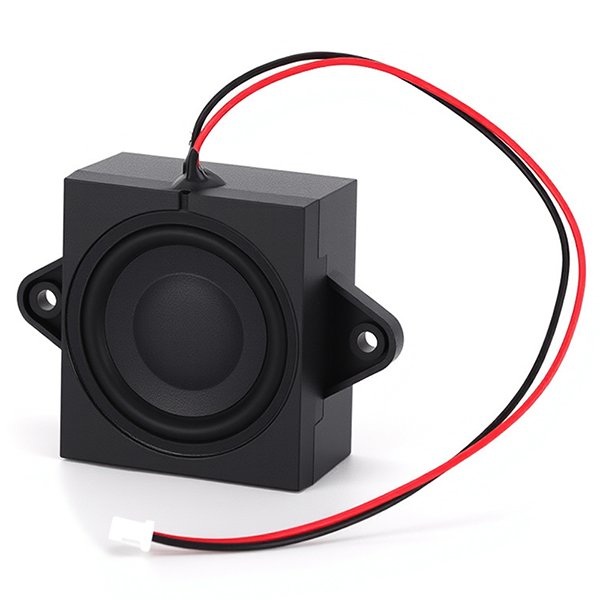
1. The Core Driver: Capital Efficiency and Accelerated Time-to-Market
Establishing a proprietary speaker manufacturing facility requires monumental upfront investment—millions in R&D labs, acoustic testing chambers (anechoic and reverberation), precision tooling for drivers and cabinets, and assembly lines. This capital is permanently locked into fixed assets.
OEM partnerships change these fixed costs into variable costs. Brands pay for units produced, freeing capital for core competencies: marketing, brand building, distribution networks, and customer experience.
Imagine a brand identifying a trend for ultra-compact, high-output outdoor speakers. An established OEM with existing platforms can adapt a design, prototype, and scale production within months. The brand bypasses the 12-18 month cycle of facility setup and process engineering, seizing the market window decisively.
| Aspect | In-House Manufacturing | OEM Partnership |
|---|---|---|
| Time-to-Market | 12-24 months | 6-12 months |
| Expertise & IP Access | Built internally over time | Immediate, from shared industry knowledge |
| Supply Chain Risk | Borne entirely by the brand | Shared/Mitigated by OEM’s network |
| Scalability Flexibility | Costly & slow to scale up/down | High; responsive to order volume |
2. Access to Deep-Tech Expertise and Shared Intellectual Property
Acoustic engineering is a profound science intersecting materials research, digital signal processing (DSP), mechanical design, and electrical engineering. Leading OEMs are centers of cumulative innovation. They’ve solved thousands of real-world problems across countless product iterations and client projects.
- Advanced Transducer Design: Knowledge of magnetic circuits, diaphragm materials (from woven composites to rare-earth doped polymers), and voice coil cooling techniques.
- DSP & Tuning: Sophisticated software for active crossover design, room correction, driver linearization, and bespoke sound signatures.
- Acoustic Simulation & Modeling: Using Finite Element Analysis (FEA) and Boundary Element Method (BEM) to predict performance before a single prototype is built.
- Materials Science: Partnerships with chemical suppliers for unique cone, surround, and damping materials.
A brand, especially a non-audio-focused one expanding into smart home devices, gains immediate access to this deep tech. They aren’t just buying a speaker; they are buying years of concentrated R&D and failure-based learning , de-risking their own product development significantly.
3. Supply Chain Resilience and Component Sourcing Power
The post-pandemic era highlighted the fragility of global supply chains. OEM speaker manufacturers act as supply chain shock absorbers. Their core business depends on securing stable flows of critical components: magnets (often neodymium), copper wire, semiconductors for amplifiers, and specialty plastics.
Due to their massive aggregate purchasing volume across multiple clients, top-tier OEMs wield significant negotiating power with component suppliers. They secure better pricing, guaranteed allocation during shortages (like the recent chip crises), and earlier access to next-generation components. They also maintain strategic inventories of long-lead items, insulating their clients from market volatility.
In practice, their established logistics networks and experience with international trade compliance (CE, FCC, REACH, RoHS) streamline the programme from factory floor to global markets. For a brand, this means fewer headaches and a more reliable, predictable product launch pipeline.
4. Unmatched Scalability and Production Flexibility
Market demand is rarely linear. A viral marketing campaign, a holiday season surge, or an unexpected trend can create spikes. Conversely, economic downturns require leaner inventory.
OEMs are built for this variability. Their entire operation is designed to scale production up or down rapidly based on purchase orders. A brand can start with a modest initial run to validate the market and then ramp to hundreds of thousands of units without investing in more factory space or hiring waves of technicians.
This flexibility extends to product portfolios. Brands can cost-effectively manage a broader range of SKUs—from entry-level to premium—by using different lines or facilities within the same OEM partner’s ecosystem. It enables portfolio agility , allowing brands to test new segments with lower financial risk.
5. Quality Assurance and Regulatory Compliance Mastery
Quality is non-negotiable in audio. A consistent, reliable product is the foundation of brand equity. Reputable OEMs operate with military-grade precision in quality control. Their processes are certified (ISO 9001, IATF 16949 are common), and their QC pipelines are exhaustive, including:
- Incoming component inspection.
- In-line testing during assembly (THD, frequency response, impedance).
- 100% final audio testing in anechoic conditions.
- Aging tests and stress testing under environmental chambers (temperature, humidity).
They also serve as the first line of defense for global regulatory compliance. They manage the entire testing process with accredited labs for safety (UL, ETL), radio emissions (FCC, IC), and environmental standards (CE, UKCA). This saves brands from navigating a complex, costly, and time-consuming compliance maze on their own.
6. The Strategic Shift: From Supplier to Innovation Partner
The most forward-looking brands have moved beyond viewing OEMs as mere “box builders.” The relationship is now a strategic co-creation partnership. OEMs are involved in the ideation phase, contributing to the product roadmap with insights on manufacturable innovations, cost/performance trade-offs, and emerging technologies (e.g., voice assistant integration, spatial audio algorithms, sustainable materials).
This collaborative model allows brands to focus on user experience and market positioning while resting assured that the physical product’s engineering and production are in expert hands. It’s a synergy where brand vision meets manufacturing excellence , creating products that truly stand out in a crowded marketplace.
Conclusion: The Calculated Path to Market Leadership
The choice to partner with an OEM speaker manufacturer is a calculated strategic decision that underpins the success of countless global audio brands. It is a force multiplier that combines capital efficiency, deep technical expertise, resilient supply chains, and operational scalability. By using the specialized prowess of these manufacturing partners, brands can concentrate on their ultimate mission: building powerful connections with their audience through superior sound and unshakable brand trust.
Commercial terms, IP and tooling ownership
IP protection needs more than an NDA. Register the design where the product will sell, keep the acoustic tuning file and the crossover schematic off shared drives, and define which party owns the modifications made during development. Exclusivity should be time-bound and tied to volume, otherwise it costs the factory nothing to ignore.
Screening before the RFQ
Start with the process flow. A speaker factory should show winding, magnetisation, diaphragm forming, assembly, and a test station that measures every unit. Ask which steps are in-house and which are subcontracted, and ask for the sub-tier list; a supplier that names its magnet and diaphragm sources is easier to audit than one that does not.
FAQ
How can I tell a factory from a trading company?
Ask for the process flow, the in-house step list and a first-article report with Cpk. A trader can supply documents but cannot show a winding line, a tool shop or a measurement chamber during an unannounced visit.
What should a factory audit cover?
Process flow against the line, test fixtures and records, traceability from carton to component lot, tooling maintenance, calibration certificates and the AQL plan. Certificates alone do not demonstrate control.
Should I own the tooling?
Yes for any product you intend to keep. Pay for the tool, record its number and cavity count, and define a buy-out price; otherwise a change of supplier means a new tool and a new sample approval.
Related reading
- A Step-by-Step Guide to Partnering with Speaker Manufacturers for New Brands
- How to Choose a Speaker Manufacturer in China
- Global Speaker Supply Chain Explained
More on OEM Manufacturing.
