
A custom speaker programme has five gates: drawing and DFM, tooling, sample approval, pilot run and mass production. Each gate produces a document, and the programme is only as fast as the slowest document. Compressing the gates is possible; skipping them moves the cost to the first shipment.
The notes below apply to audio brands develop custom speakers, with the measurement conditions and production checks that decide whether a claimed figure survives a shipment.
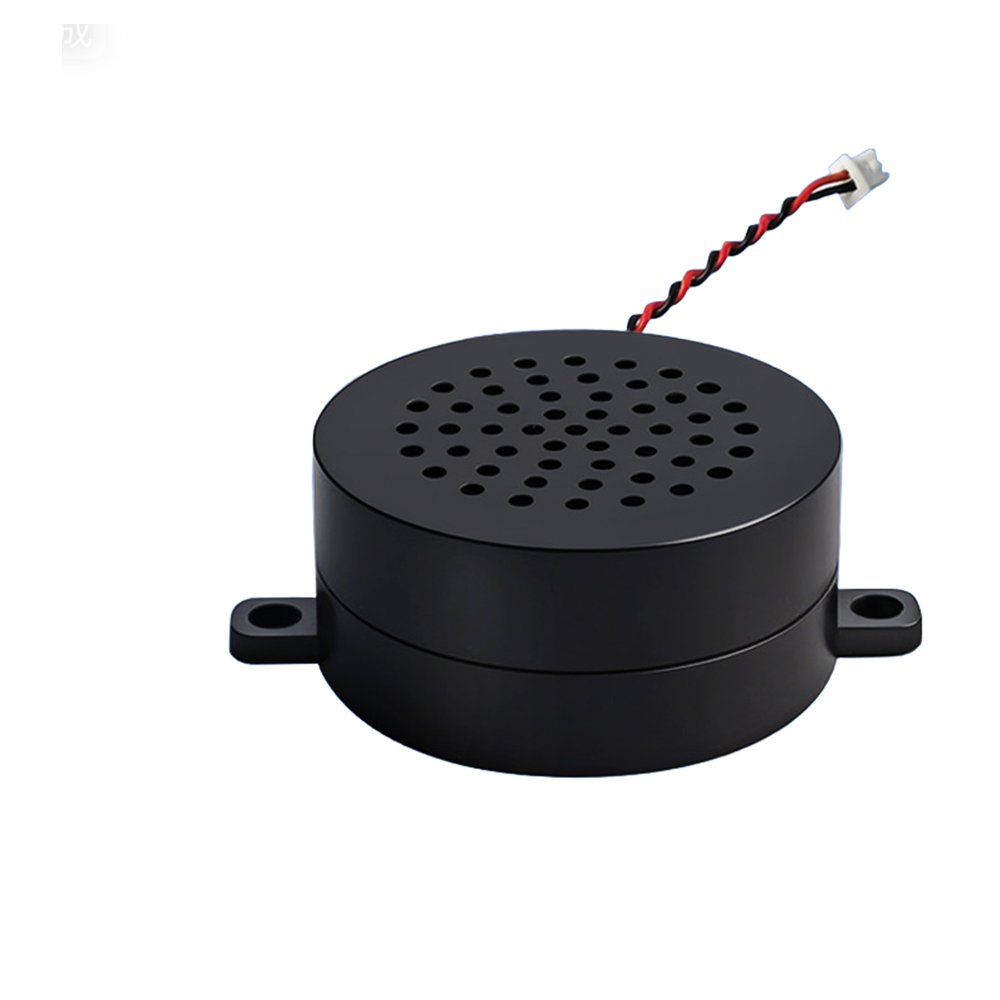
The Rising Demand for Personalized Audio Experiences
Brands like Bang & Olufsen, Sonos, and KEF are now offering configurable options that go beyond mere color variations, allowing customers to participate in the acoustic tuning process itself. This trend reflects a deeper cultural shift where audio equipment is no longer just a functional appliance but an expression of personal identity and architectural integration.
The process typically begins with advanced digital configurators—interactive tools that let users visualize options in real-time. For instance, Bowers & Wilkins’ “Build Your Own” platform enables customers to select woods like walnut or oak for cabinets, choose between metallic or fabric grilles, and even adjust performance profiles for music genres. Behind these interfaces lies sophisticated parametric design systems that ensure every combination remains acoustically viable. This digital front-end is directly linked to flexible manufacturing pipelines, often utilizing CNC machining and 3D printing for small-batch components.
Acoustic Engineering Meets Artisanal Craftsmanship
At the core of custom speaker development lies a delicate balance between repeatable acoustic science and artisanal adaptability. Every speaker design starts with fundamental physics: the relationship between driver materials, enclosure volume, and resonance control. However, customization introduces variables that require meticulous recalibration. When a customer requests a taller enclosure for visual impact or selects a specific hardwood, engineers must adjust internal bracing, damping materials, and port tuning accordingly. Genelec’s flagship custom division , for example, uses proprietary modeling software that simulates how each material and dimension change will affect frequency response before any physical prototype is built.
Driver customization presents particular challenges. While standard speakers use mass-produced drivers, bespoke systems often incorporate hand-assembled units with selected components. Scan-Speak , a leading Danish driver manufacturer, supplies customizers with “platform modules” where elements like voice coils, magnets, and diaphragms can be specified separately. For instance, a copper-clad aluminum voice coil might be chosen for warmer midrange, while a diamond-coated diaphragm could be selected for ultra-extended highs. Each combination undergoes laser interferometry testing to ensure microscopic compliance with target performance. The table below illustrates how material choices correlate with acoustic characteristics:
| Component | Customization Option | Acoustic Impact | Common Use Case |
|---|---|---|---|
| Cone Material | Paper, Polypropylene, Carbon Fiber | Damping properties, breakup modes | Paper for vintage warmth, Carbon for analytical clarity |
| Magnet Type | Ferrite, Neodymium, Alnico | Sensitivity, transient speed | Alnico for harmonic richness in jazz/blues systems |
| Enclosure Wood | MDF, Baltic Birch, Solid Walnut | Resonance profile, tonal color | Solid hardwood for reduced cabinet coloration |
| Internal Damping | Wool, Acoustic Foam, Fiberglass | Standing wave control, decay time | Multi-layer systems for large architectural speakers |
The human element remains irreplaceable in final tuning. Master technicians at companies like McIntosh Laboratory still perform “golden ear” assessments in anechoic chambers, making subtle adjustments to crossover networks that automated systems might miss. This hybrid approach—combining predictive AI modeling with expert human refinement—ensures that custom speakers deliver both technical precision and emotional resonance.
Lead time, ramp and shipment
Ramp is where quality drifts. Agree a pre-production meeting, a golden sample kept by both sides, and a first-article report for the first carton. Shipment inspection uses the AQL plan agreed in the contract, and the test record for the lot travels with the packing list so that a later claim can be compared with the data.
The Role of Digital Signal Processing in Personalized Sound
Modern custom speakers are increasingly “smart” platforms where hardware customization is enhanced by software personalization. Digital Signal Processing (DSP) has changed bespoke audio by allowing speakers to adapt to room acoustics, listening preferences, and even real-time content analysis. Brands like Devialet embed powerful DSP chips in their Phantom Custom line that automatically calibrate output based on room size measurements submitted by customers during ordering. Using Phantom’s “Room Adaptation” algorithm , the speakers analyze room dimensions and surface materials to apply precise correction filters, effectively “tuning” the hardware to its intended environment before shipment.
This software-hardware integration extends to user-controlled customization through dedicated apps. Sonos’s Trueplay 2.0 technology represents a significant advancement, enabling customers to use their smartphone’s microphone to map room acoustics after installation. The system then generates a unique DSP profile that compensates for placement limitations—a decisive feature for architectural speakers built into non-ideal locations. For truly bespoke implementations, brands like Linn Products offer “expert mode” apps that allow trained integrators to adjust parameters like crossover slopes, time alignment, and parametric EQ bands to match the customer’s specific auditory sensitivity patterns.
The future lies in adaptive DSP that learns over time. Harman International’s HALO prototype system utilizes machine learning to analyze listening habits and content types, gradually refining its output profile. If it detects frequent classical music listening, it might enhance spatial algorithms; for podcast-heavy usage, it could optimize vocal clarity. The convergence of customizable hardware with intelligent software essentially creates “forever speakers” that can adapt to changing tastes, spaces, and technologies through updates rather than replacement.
From Concept to Living Room: The Custom Manufacturing Pipeline
The logistics of producing custom speakers require a radical rethinking of traditional audio manufacturing. Where mass-produced speakers benefit from economies of scale, bespoke models thrive on flexible “craft scale” production. Leading manufacturers have developed modular assembly lines where standardized core components (amplifier modules, driver platforms) intersect with customizable elements (cabinets, finishes, grilles). KEF’s “Reference Custom” program in Maidstone, UK, operates what they term a “hybrid cell” system: automated robotic arms handle precise driver assembly while master craftsmen in adjacent stations hand-fit veneers that vary with each order. This setup reduces lead times for custom orders from historical 12-week averages to just 18-22 days while maintaining artisanal quality.
Material sourcing presents unique challenges and opportunities. For instance, Focal’s Utopia Custom line offers wood from sustainably managed French forests, with each speaker including a certificate detailing the tree’s origin and curing process.
Quality control in custom manufacturing is inherently more complex. Each unique configuration requires its own test protocol rather than batch sampling. Meridian Audio has pioneered “digital twin” quality assurance, where each custom order generates a virtual model that undergoes simulated stress tests before production begins. Physical prototypes then undergo 72-hour burn-in periods with continuous measurement against the digital twin’s performance benchmarks. Discrepancies trigger adjustments either in the individual unit or in the digital model for future similar orders, creating a self-improving system.
The Future of Custom Audio: Technologies Shaping Tomorrow's Bespoke Sound
Generative AI design tools are beginning to assist in creating acoustically optimal yet visually distinctive enclosures. Companies like Vivid Audio are experimenting with AI that generates thousands of form factor variations that meet specific acoustic parameters, which designers then refine. This symbiotic human-AI process could reduce development time for new custom platforms by 40-60% while increasing acoustic performance consistency.
3D printing at industrial scale is eliminating traditional constraints in speaker geometry. The Kreisel Music K3D series already features fully 3D-printed enclosures with internal waveguide structures that would be impossible with conventional woodworking. As metal and composite printing advances, we’ll see complete driver assemblies printed as single units with graduated materials—stiff diaphragms transitioning to flexible surrounds in one continuous process. This allows for “mass customization” where each speaker is technically unique yet economically viable.
With Apple Music, Amazon, and Tidal pushing object-based audio formats, future custom speakers will likely include head-related transfer function (HRTF) mapping during the ordering process. Customers might complete brief listening tests that map their personal spatial hearing perception, with speakers arriving pre-configured for their unique biology.
The sustainability imperative is also driving innovation. Circular design principles are being incorporated into custom audio, with brands like Regen Audio offering upgradable core components and biodegradable cabinet options. Their “Speaker as Service” model provides trade-in credits toward next-generation customizations, addressing the historical criticism of high-end audio as disposable luxury.
From drawing to approved sample
The T1 shots are measured against the drawing and assembled with the production driver. First article inspection records every critical dimension, and the acoustic sweep is compared with the sample approved at the drawing stage. A sample that sounds right but measures outside the drawing is a process problem that will return at volume.
FAQ
What MOQ should I expect for a custom speaker?
500-1,000 pieces with existing tooling and 3,000 or more with a new housing tool; the difference is tooling amortisation, not material cost.
How long does a custom speaker programme take?
About 6-9 weeks with existing tooling and 12-16 weeks with a new tool, including sample approval and the pilot run. Certification adds 3-5 weeks if radio or safety testing is required.
How do I compare quotes from two factories?
Compare the magnet grade, diaphragm material, voice-coil wire, test coverage and tooling ownership line by line. A lower unit price with a lower magnet grade is a different product, not a better price.
Related reading
- MOQ Guide for Custom Speakers
- Custom Promotional Bluetooth Speakers for Brands
- Custom Speaker vs. Off-the-Shelf: ROI Calculation for Brands
More on OEM Manufacturing.
