
A custom speaker programme has five gates: drawing and DFM, tooling, sample approval, pilot run and mass production. Each gate produces a document, and the programme is only as fast as the slowest document. Compressing the gates is possible; skipping them moves the cost to the first shipment.
This guide treats custom speaker MOQ as a specification problem: what to measure, what to write on the drawing, and what to verify before the first carton ships.
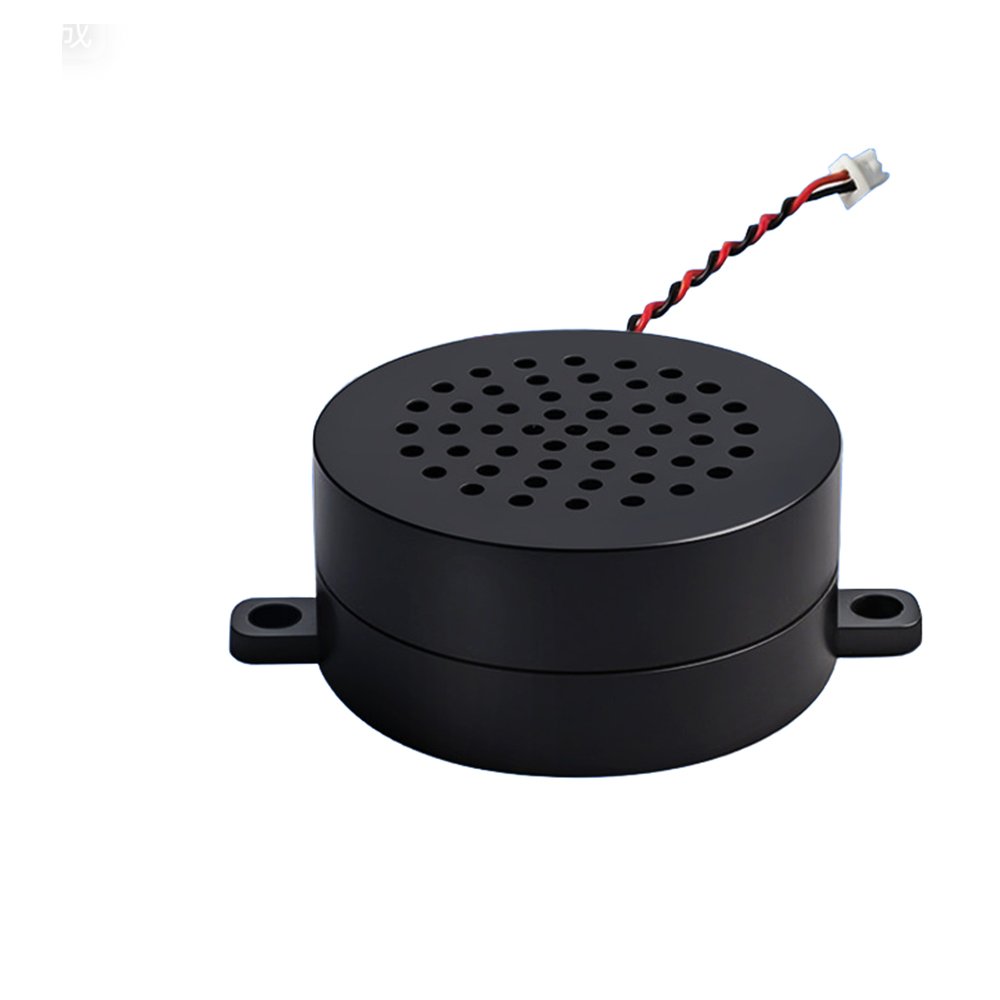
Understanding MOQ: The Foundation of Custom Manufacturing
At its core, the Minimum Order Quantity (MOQ) is the smallest number of units a factory is willing to produce for a single custom order. It’s not an arbitrary hurdle but a financial necessity for manufacturers. Setting up a production line for a custom speaker involves substantial fixed costs: engineering time for acoustic design and crossover networks, programming and calibrating machinery, creating custom molds for cabinets and drivers, and sourcing specialized components. These costs are amortized across the number of units produced. A low volume simply cannot absorb this upfront investment, making the unit price prohibitively high.
- Component-Level MOQ: Applied to custom parts like stamped or cast frames, specific cone materials, voice coils, and branded grilles.
- Assembly-Level MOQ: The final assembly, testing, and boxing of the complete speaker unit.
- Overall Project MOQ: Typically dictated by the highest MOQ among the custom components, often the cabinet mold or the driver assembly.
You might find a factory with a low final assembly MOQ, but if your design requires a uniquely sized driver with a high component MOQ, that becomes your project’s governing figure.
Key Factors Influencing MOQ for Custom Speakers
The MOQ for your speaker project isn’t a fixed number; it’s a variable influenced by your specific choices and the manufacturer’s capabilities. Key determinants include:
- Degree of Customization: A speaker using entirely off-the-shelf drivers in a custom-veneered box will have a far lower MOQ than one requiring a newly tooled driver with a proprietary composite cone and a die-cast aluminum frame. The more elements that require new tooling (molds, jigs, stamps), the higher the MOQ.
- Driver Complexity: The heart of the speaker. Standard sizes (e.g., 6.5″ woofer) and materials have lower MOQs. Custom sizes, neodymium magnets, specific Thiele/Small parameters, and exotic materials (like beryllium diaphragms) increase MOQs significantly.
- Cabinet Design & Materials: A simple rectangular MDF cabinet has lower tooling costs. Curved cabinets, injection-molded plastic enclosures, or cabinets using non-standard materials like Baltic birch ply or aluminum require expensive molds, raising the MOQ.
- Manufacturer Size and Focus: A large, automated factory serving global brands may have an MOQ in the thousands. A smaller, “hands-on” workshop specializing in boutique audio might accommodate MOQs as low as 50-100 pairs, albeit at a higher per-unit cost.
- Quality and Testing Protocols: Manufacturers adhering to rigorous testing standards (e.g., full anechoic chamber frequency response, distortion analysis, long-term durability testing) bundle these quality assurance costs into their MOQ threshold.
Industry MOQ Benchmarks
The following table illustrates how MOQs can vary based on project scope and manufacturer type.
| Project Tier | Typical Customization Level | Estimated MOQ Range (Units) | Primary Cost Driver |
|---|---|---|---|
| Entry-Level / Modified Standard | Custom finish/grille on standard speaker model; OEM "white-label" options. | 100 – 500 pairs | Packaging, branding, minor cosmetic tooling. |
| Mid-Range / Semi-Custom | Custom cabinet design with selected off-the-shelf drivers and crossovers. | 300 – 1,000 pairs | Cabinet tooling (CNC programming, jigs), batch procurement of standard components. |
| High-End / Full Custom | Fully proprietary design: custom drivers, cabinet, and crossover network. | 1,000 – 5,000+ pairs | Driver tooling (molds for frame, cone, magnet assembly), complex crossover PCB production. |
| Boutique / Artisanal | Hand-built, ultra-high-end materials, limited editions. | 10 – 50 pairs | Labor-intensive craftsmanship, exotic material minimum buys. |
Lead time, ramp and shipment
Samples from existing tooling take 7-10 days; a new tool adds 25-35 days for T1 and the first shots, plus 10-15 days for the pilot run. Production is 15-25 days depending on the driver and the housing, and the critical path is usually the driver rather than the assembly line.
Strategies to Optimize Your Project for a Favorable MOQ
A high MOQ can be a project killer, but strategic planning can often bring it within reach.
- Embrace Modular Design: Can your custom driver be designed to fit a standard frame size? Can the cabinet use a modified version of an existing mold? Working within some standard constraints dramatically reduces tooling costs and MOQ.
- Phased Rollouts: Instead of producing all speaker models in a full lineup at once, start with the most critical model (e.g., the bookshelf speaker) to meet the initial MOQ. Use the revenue and market validation to fund subsequent models (center channel, subwoofer).
- Consolidate Components: Use the same custom driver across multiple speaker models in your lineup. This increases the total volume for that component, potentially lowering its effective MOQ and per-unit cost.
- Explore Hybrid Sourcing: Consider sourcing high-MIQ (Minimum Order Quantity) custom components (like drivers) from a specialized factory and having them shipped to a separate assembly facility with a lower assembly MOQ. This adds logistics complexity but can lower the initial unit commitment.
- Transparent Communication: Present a clear, detailed specification (SPEC) sheet to potential manufacturers. Vague requests lead to high contingency estimates. Showing a professional, well-researched project increases a factory’s confidence, sometimes leading to more flexible terms.
The Real Cost Equation: MOQ vs. Unit Price vs. Total Investment
While Factory A’s initial cash outlay is lower, Factory B offers a vastly superior unit cost, which is critical for profitability and market competitiveness. The decision hinges on your capital, storage capacity, sales forecast confidence, and go-to-market strategy. Sometimes, partnering with investors or using pre-order campaigns can help bridge the capital gap to access a higher-MQ, lower-cost tier.
The Future and Practical First Steps
Advances in 3D printing for prototyping and short-run production of complex waveguide or driver parts are beginning to lower barriers for ultra-small batches.
- Finalize Your Design Specs: Have detailed, dimensioned drawings and performance targets.
- Prepare a Professional RFQ (Request for Quotation): Include specs, target price point, desired timeline, and expected annual volumes.
- Source Manufacturers Intelligently: Use platforms like Alibaba, Thomasnet, or industry referrals. Focus on suppliers with verifiable experience in your speaker category (e.g., home audio, pro audio, automotive).
- Request Prototyping Costs: Any reputable factory will offer a prototyping service (at a cost) before committing to mass production. This is non-negotiable for quality assurance.
- Plan for Compliance: Factor in costs and MOQ implications for necessary certifications like FCC, CE, or RoHS, which may require dedicated production runs for testing.
From drawing to approved sample
DFM comes first. Draft angle, wall section, gate position and the gasket land are reviewed before the tool is cut, because a 0.5 mm wall change after T1 costs a tool modification and two weeks. The review should return a marked-up drawing, not a comment that the part is feasible.
FAQ
What MOQ should I expect for a custom speaker?
500-1,000 pieces with existing tooling and 3,000 or more with a new housing tool; the difference is tooling amortisation, not material cost.
How long does a custom speaker programme take?
About 6-9 weeks with existing tooling and 12-16 weeks with a new tool, including sample approval and the pilot run. Certification adds 3-5 weeks if radio or safety testing is required.
How do I compare quotes from two factories?
Compare the magnet grade, diaphragm material, voice-coil wire, test coverage and tooling ownership line by line. A lower unit price with a lower magnet grade is a different product, not a better price.
Related reading
- The Ultimate Guide to Developing Custom AI Speakers for Hotels
- How Audio Brands Develop Custom Speakers
- Guide to the Custom Speaker Prototyping Process
More on OEM Manufacturing.
