
Sealing a speaker costs acoustic output. A membrane over the driver attenuates 1-3 dB above 2 kHz depending on its grade, and a sealed housing removes the rear leakage that a port would use. The design therefore starts with the rating, then chooses the membrane, the gasket stack and the port treatment around the acoustic target.
This guide treats waterproof speaker structure design as a specification problem: what to measure, what to write on the drawing, and what to verify before the first carton ships.
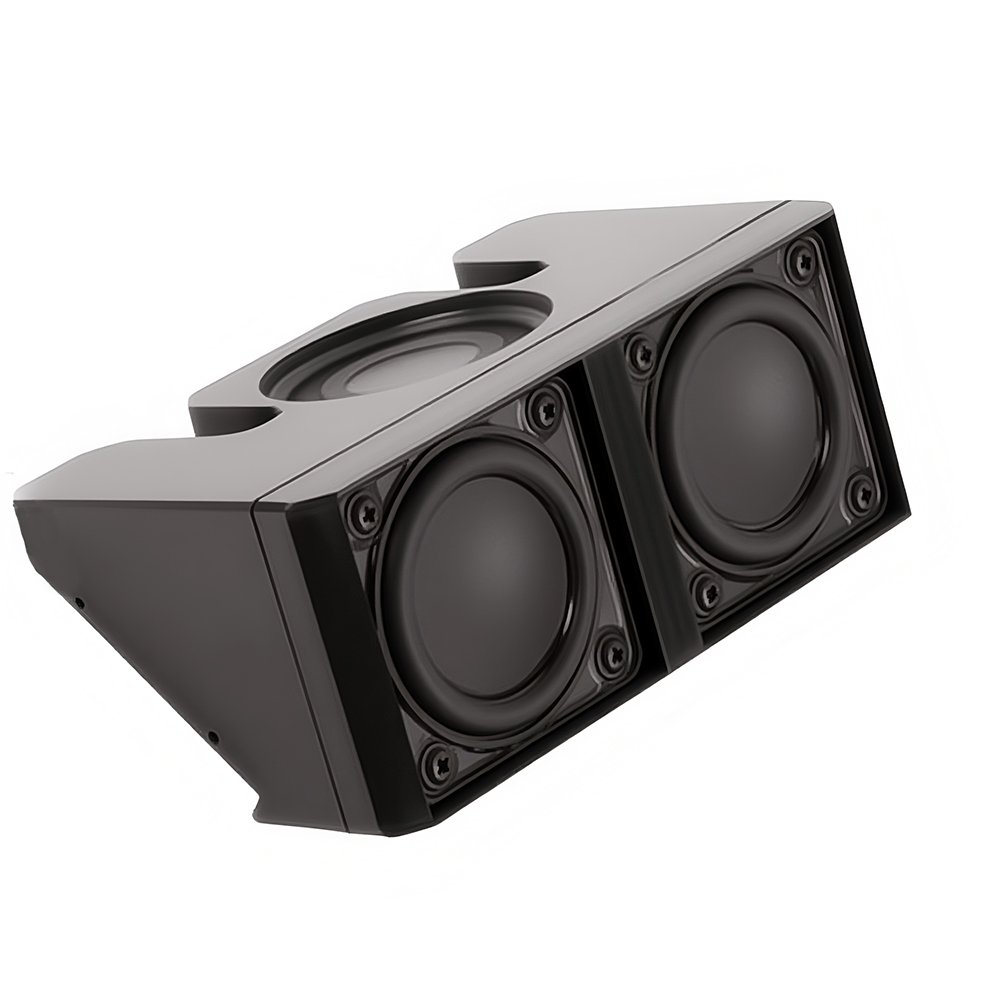
The Fundamentals of IP Ratings and Environmental Protection
Waterproof speaker design begins with understanding the International Protection (IP) rating system that defines exactly how resistant electronic devices are to environmental intrusions. The first digit following “IP” indicates solid particle protection (6 being dust-tight), while the second digit represents liquid ingress protection. For waterproof audio products, the critical second digit typically ranges from IPX7 (immersion up to 1 meter for 30 minutes) to IPX8 (continuous immersion beyond 1 meter). The engineering challenge lies not merely in achieving these ratings but maintaining them while preserving acoustic fidelity.
This demand has driven structural innovations across three key areas: multi-layered sealing systems, hydrophobic acoustic materials, and pressure-equalization technologies that allow speakers to withstand both freshwater and saltwater environments while maintaining internal electronic integrity.
The most advanced designs now incorporate “triple-barrier” sealing systems that combine:
- Primary silicone gaskets at all housing seams
- Secondary ultrasonic welding on internal baffles
- Tertiary conformal coatings on circuit boards
This approach addresses the reality that most waterproof speaker failures occur not at depth but through cumulative exposure to humidity, condensation, and temperature fluctuations during normal use.
Advanced Sealing Technologies and Acoustic Optimization
The central paradox of waterproof speaker design lies in the competing needs of complete environmental sealing versus acoustic airflow requirements. Traditional speaker operation depends on diaphragm movement that creates alternating zones of compression and rarefaction—a process fundamentally compromised by airtight enclosures. Modern solutions employ sophisticated hydrophobic membranes that allow air movement while blocking water molecules through microporous structures, typically using expanded polytetrafluoroethylene (ePTFE) with pore sizes between 0.2-10 micrometers.
Recent breakthroughs in “acoustically transparent waterproofing” utilize multi-directional mesh laminates that achieve remarkable performance metrics:
- 98.7% acoustic transparency compared to unsealed equivalents
- Pressure equalization times reduced from 15 seconds to under 3 seconds
- Salt spray resistance exceeding 500 hours in ASTM B117 testing
Leading manufacturers like Bose, Ultimate Ears, and JBL now implement dynamic sealing systems that adapt to environmental changes. These systems use shape-memory polymer gaskets that become more pliable in cold temperatures (preventing brittle fractures) and more rigid in heat (maintaining compression). The 2024 Innovation Award-winning design from Sonos even incorporates micro-capillary water channels that actively divert moisture away from critical components while preserving acoustic chamber integrity.
| Technology | IP Rating | Frequency Response Variance | Depth Survival | Saltwater Resistance |
|---|---|---|---|---|
| Traditional Rubber Gasket | IP67 | ±4.2dB | 1m/30min | 100 hours |
| Ultrasonic Welded | IP68 | ±2.8dB | 3m continuous | 300 hours |
| ePTFE Membrane | IP68 | ±1.3dB | 5m continuous | 1000+ hours |
| Dynamic Smart Seal | IP69K | ±0.9dB | 10m continuous | 2000+ hours |
Ageing: UV, salt and thermal cycling
Thermal cycling between -20 and 60 degrees C moves the seal by the difference in expansion between the plastic and the metal insert. A 100-cycle test with an immersion check every 20 cycles finds the designs that rely on compression rather than adhesion; the latter fail at the first cold cycle.
Material Science and Structural Innovation
Contemporary waterproof speakers represent a triumph of materials engineering, moving beyond simple plastic housings to sophisticated composites. The current industry standard utilizes fiber-reinforced polymers combining polycarbonate substrates with glass or carbon fiber strands, achieving exceptional strength-to-weight ratios while resisting corrosion and UV degradation.
Internal structural designs have evolved toward modular compartmentalization , separating the acoustic chamber from electronic components with independent sealing. The acoustic chamber itself now frequently employs hydrophobic nanocoatings on speaker cones and surrounds, with silica-based treatments creating contact angles exceeding 150°—causing water to bead and roll off rather than penetrate.
Battery compartment design has seen particular innovation, with multi-stage ingress protection becoming standard in premium models:
- Primary silicone gaskets with compression ridges
- Secondary latch mechanisms with over-center engagement
- Internal moisture-absorbing desiccant packets
- Optional removable silica gel cartridges for extreme environments
Port covers have evolved from simple rubber flaps to magnetic self-sealing mechanisms that automatically close when plugs are removed, eliminating the most common point of failure in earlier waterproof designs. These implementations have extended the average waterproof speaker lifespan from 2.3 years (2020 data) to 4.1 years (2024 projections) despite increasingly harsh usage patterns.
Manufacturing Processes and Quality Assurance
The manufacturing of waterproof speakers requires precision exceeding most consumer electronics. Laser-assisted component alignment ensures gasket seating with tolerances under 0.05mm, while automated vision systems inspect every seal path for microscopic imperfections.
Pressure decay testing remains the gold standard for quality assurance, but advanced manufacturers now employ helium mass spectrometry for detecting leaks as small as 1×10⁻⁶ cc/sec. Every unit from brands like Denon and Sony undergoes thermal cycling stress testing that simulates years of environmental exposure in 72-hour sequences, with internal humidity sensors verifying performance maintenance.
Combined with real-time data analytics, this approach has reduced waterproofing-related returns by 41% among early adopters.
The future points toward self-healing polymer technology currently in development at Cambridge University and 3M, where microscopic capsules embedded in sealants rupture when compromised, releasing healing agents that restore waterproof integrity.
The sealing stack, layer by layer
The first barrier is the driver's own diaphragm and surround, which are not hermetic. A PET or TPU membrane bonded to the frame provides the seal; its mass and stiffness set the high-frequency loss, and its compliance must not restrict excursion at low frequencies. A 25 micron PET film is a common compromise, but it must be tensioned evenly or it buzzes at 200-400 Hz.
FAQ
What is the difference between IPX7 and IP67?
IPX7 covers water only: immersion at 1 m for 30 minutes. IP67 adds dust tightness (the 6) to the same immersion test. Neither covers jets, which is IPX5, so outdoor products often need both.
Can a waterproof speaker keep its bass?
Yes, but a sealed housing loses the port gain and a membrane costs high-frequency output. The usual solution is a passive radiator, which moves the tuning without an opening, plus a membrane only over the driver.
How should an IP rating be verified?
Test the complete product, not a bare driver, and repeat the acoustic sweep after immersion. A unit that passes the water test but shifts 3 dB at 1 kHz has a leak into the cavity that will fail in the field.
Related reading
- Top 5 Features to Look for in a Waterproof LED Light Speaker
- Portable Speaker Design Trends
- How to Test the IPX Rating of Waterproof Speakers
More on Waterproof Audio.
