
An enclosure does three jobs: it separates the front and rear radiation, it sets the low-frequency alignment, and it controls resonance. Wall material, thickness and bracing decide how much of the driver's energy leaves as sound and how much leaves as cabinet vibration; the two are measured together, because a rigid box with a ringing panel is worse than a slightly flexible box with good damping.
The notes below apply to loudspeaker enclosure materials, with the measurement conditions and production checks that decide whether a claimed figure survives a shipment.
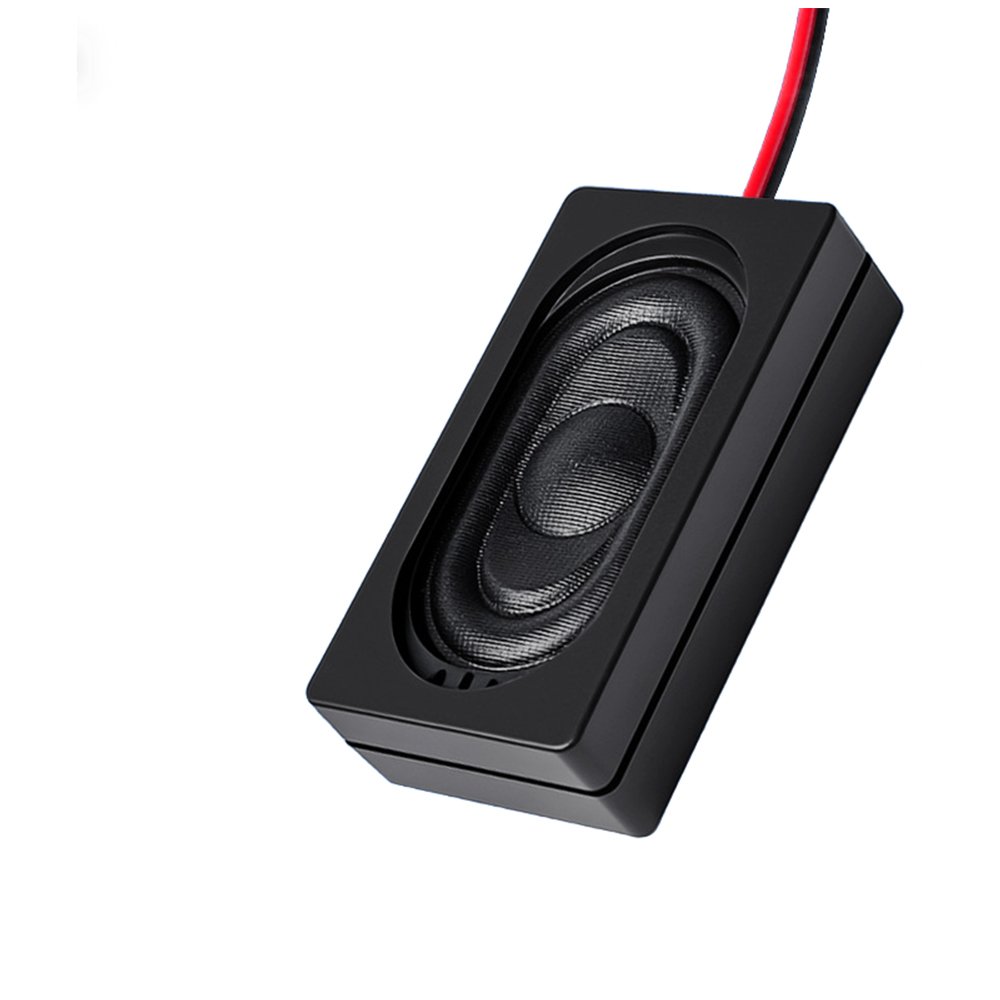
The Heart of the Matter: Diaphragm & Cone Materials
The diaphragm (or cone) is the speaker driver’s voice, the component that physically pushes air to create sound waves. Its material must be rigid to resist deformation (preventing distortion), lightweight for efficient movement, and well-damped to stop ringing after the signal ceases.
- Paper Pulp (Treated): Far from ordinary paper, modern treated paper cones are a sophisticated blend of wood, cellulose, and damping agents like wool or carbon. Brands like Scan-Speak and SEAS excel here. They offer a natural, neutral sound with excellent self-damping, minimizing breakup artifacts. Their main drawback is sensitivity to humidity.
- Polypropylene: A staple in mid-range drivers, this thermoplastic polymer is injection-molded for consistency. It’s highly damped, moisture-resistant, and affordable, often used with additives like mica or talc to increase stiffness. Its sound signature is generally smooth and forgiving.
- Carbon Fiber: Revered for its exceptional stiffness-to-weight ratio. Its distinctive woven pattern is an audio icon. It provides incredible detail and speed but requires careful engineering to manage its relatively high-frequency resonance. Used in drivers from Focal (for midrange cones) and many high-end automotive systems.
- Kevlar/Aramid Fiber: Known for its tensile strength and internal damping. Bowers & Wilkins (B&W) made the distinctive yellow Kevlar cone famous in its midrange drivers. It offers a punchy, dynamic sound with controlled breakup.
- Aluminum & Magnesium: These metals offer high rigidity and low mass, excellent for precise piston motion. They can be anodized or treated. However, pure metal cones can exhibit sharp resonance peaks, leading to a “metallic” sound if not properly damped. Magico extensively uses aluminum alloys, while Accuton is renowned for its ceramic-coated aluminum diaphragms.
- Beryllium: The pinnacle of metal diaphragm materials. It is significantly stiffer and lighter than titanium or aluminum, pushing breakup modes far beyond the audible range. Its cost and challenging manufacturing (vapor deposition onto a mandrel) make it exclusive to ultra-high-end tweeters, like those from TAD , Focal , and Dan D’Agostino .
- Diamond: Not a gemstone, but a vapor-deposited polycrystalline diamond coating on a substrate (like silicon). It is the hardest material available, creating an incredibly rigid, lightweight dome for tweeters. B&W’s Diamond Dome tweeters are a flagship example, offering breathtaking high-frequency extension and clarity.
- Graphene & Nano-Materials: The new frontier. Single-layer carbon atoms arranged in a lattice offer unmatched potential strength and lightness. Companies like Wharfedale have introduced drivers with graphene-infused cones, promising superior stiffness and damping.
| Material | Stiffness-to-Weight Ratio | Internal Damping | Typical Cost Level | Common Use Case | Sonic Characteristic |
|---|---|---|---|---|---|
| Treated Paper | Moderate | Very High | Low to Medium | Midrange Woofers | Warm, Natural, Forgiving |
| Polypropylene | Low | High | Low | General Purpose Mid/Bass | Smooth, Laid-back |
| Aluminum | High | Low | Medium | Tweeters, Midrange | Detailed, Fast, Potentially "Bright" |
| Carbon Fiber | Very High | Medium | Medium to High | Midrange, Bass | Detailed, Fast, Agile |
| Kevlar | High | High | Medium to High | Midrange | Dynamic, Punchy, Controlled |
| Beryllium | Exceptional | Low | Very High | High-End Tweeters | Ultra-Detailed, Extended, Neutral |
| Diamond (Coated) | Extreme | Low | Extreme | Flagship Tweeters | Exceptionally Clear, Transparent |
The Engine Room: Magnet Systems, Voice Coils, & Motor Structures
- Ferrite (Ceramic): The industry standard for decades. Inexpensive and stable but bulky and relatively low in magnetic strength (energy product). To achieve high flux density, ferrite magnets must be large.
- Neodymium (NdFeB): The modern step change. These rare-earth magnets offer magnetic strength 5-10 times greater than ferrite by volume. This allows for much smaller, lighter, and more efficient motor structures. Nearly all modern high-performance tweeters and compact woofers use neodymium. Supply chain volatility can affect cost.
- Alnico (Aluminum-Nickel-Cobalt): A classic from the golden age of audio. Alnico magnets are known for their musical, “vintage” saturation characteristics, which some audiophiles find pleasing. They are less powerful and more expensive than neodymium, leading to a niche, high-end resurgence.
Voice Coils: The wire wound around the former. Material choice balances conductivity, weight, and heat dissipation.
- Copper: The standard. Excellent conductivity.
- Copper-Clad Aluminum (CCA): Lighter than pure copper, allowing faster transient response, but with slightly higher resistance.
- Pure Aluminum: Even lighter, used in some high-speed designs, but requires larger gauge to match copper’s conductivity.
- Advanced Formers: Materials like Kapton or Nomex are used for the voice coil former due to their high heat resistance, preventing deformation under power.
Motor Topology: Innovations like underhung motors (long coil in short gap) for ultra-linear travel and overhung motors (short coil in long gap) for high power handling are now optimized with Finite Element Analysis (FEA) software, using the properties of modern magnet materials.
Covers, mesh and acoustic transparency
Cosmetic covers also have to survive handling. Fabric is tested for pilling and colour fastness, mesh for salt spray and adhesion, and both for pull-off force at the frame. A cover that lifts at 40 degrees C in a car interior is a warranty return; a 72-hour 85/85 humidity test before approval catches most of them.
The Supporting Cast: Suspensions, Baskets, & Cabinet Engineering
A driver cannot operate in isolation. Its performance is defined by the components that support and control it.
Baskets (Frames): Once simple stamped steel, modern baskets are often die-cast aluminum or magnesium . These rigid structures minimize energy transfer and resonance back into the motor system, improving clarity. Open-basket designs with struts reduce air turbulence behind the cone.
Cabinet Materials: The enclosure is arguably as critical as the drivers. Its job is to be acoustically inert.
- MDF (Medium-Density Fiberboard): The universal standard. Dense, consistent, and relatively easy to work with, offering good damping.
- Plywood (Birch, Baltic Birch): Often preferred in professional audio for its superior strength-to-weight ratio and layered structure that helps break up resonance.
- Advanced Composites: High-end manufacturers use carbon fiber , acrylic composites , or laser-cut aluminum for extreme stiffness and low resonance. Wilson Audio is famous for its proprietary materials (e.g., X-Material, S-Material), which are epoxy-based composites with specific damping characteristics.
- Constrained Layer Damping (CLD): A technique where materials with different resonant properties (e.g., bitumen, viscoelastic polymers) are bonded to the primary cabinet wall to convert vibrational energy into minuscule amounts of heat.
The Future Sound: Sustainability, Smart Materials & Additive Manufacturing
- Active & Smart Materials: Integration of piezoelectric elements or shape-memory alloys for active cone control or adaptive damping could emerge.
- Additive Manufacturing (3D Printing): Allows for previously impossible geometries —complex waveguides, integrated horn structures, and optimized bracing printed in metals or advanced polymers. This enables hyper-optimized, driver-specific enclosures.
- Nano-Engineered Hybrids: Continued development of graphene-infused composites , aerogels , and meta-materials designed at the molecular level to control sound radiation and damping with unprecedented precision.
This underscores the intense R&D focus in this field, where every gram, every resonance, and every molecular bond is scrutinized in the pursuit of acoustic truth.
Sealed, ported or passive radiator
The port is a resonant element with its own compromises. Its diameter sets the air velocity, and above roughly 20 m/s at the tuning frequency the port chuffs; its length sets Fb, and a long port in a shallow box needs an elbow that changes the effective length. Measure the impedance curve to confirm Fb, because a 10 % error in port area moves the tuning by about 5 %.
FAQ
Does MDF sound better than plastic for a small speaker?
MDF is better damped per millimetre, plastic allows thinner walls with ribs. Below 100 mm drivers the difference is small; above 100 mm MDF wins on panel resonance unless the plastic housing is heavily ribbed and filled.
How do I choose between a sealed and a ported box?
Use EBP: above 100 favours ported, below 50 favours sealed. Also check the space: a port needs 2-3 times the driver's displacement volume and a clear path at both ends.
What open area should a speaker grille have?
At least 40 % for metal mesh and 50-60 % for fabric, measured over the diaphragm area; below that the high-frequency loss becomes audible and cannot be corrected without changing the crossover.
Related reading
- What Acoustic Damping Materials Are Best for Box Speakers?
- A Guide to Enclosure Materials in High-End Speaker Design
- What Materials Are Best for High Audio Frequency Drivers?
More on Enclosure Design.
